What to see in San José (Almería): a complete guide to discovering the capital of Cabo de Gata
San José is one of those places that seems designed to make you fall in love. This small coastal town in the municipality of Níjar, nestled in the heart of the Cabo de Gata-Níjar Natural Park, combines the essence of an old fishing village with a natural environment that is unique in Spain. Surrounded by volcanic mountains, turquoise waters and some of the most famous beaches in the Mediterranean, San José has become the gateway to legendary spots such as Los Genoveses, Mónsul and Media Luna, true icons of the Almeria coast.

Despite having only 900 registered inhabitants, its population multiplies in summer. However, San José retains a peaceful atmosphere, with no large buildings and a very distinctive Mediterranean aesthetic: white houses, blue details, winding slopes and continuous views of the bay. It is a perfect enclave for both families and travellers seeking nature, unspoilt coves and sustainable tourism.

In this guide, we tell you what to see, what to do and how to organise your visit to San José, with all the practical information and in the characteristic style of The Kompasse, concise and original to help you prepare your getaway.

A bit of history: from military fort to fishing village
Although today we see it as a holiday destination, San José was born with a very different purpose. Between 1733 and 1735, a castle or coastal fort was built here, named San José to defend this part of the coastline. The three artillery batteries guarded two key points: San José Bay and Los Genoveses Bay, places where Barbary pirates used to anchor to stock up on water and food.

During the War of Independence, the fort was stripped of its artillery and fell into disrepair, although it continued to be used for coastal surveillance. In the late 1960s, the Civil Guard Barracks, which still stands today, was built on top of the old batteries. Today, some of the castle’s structures can still be glimpsed among the urban landscape.

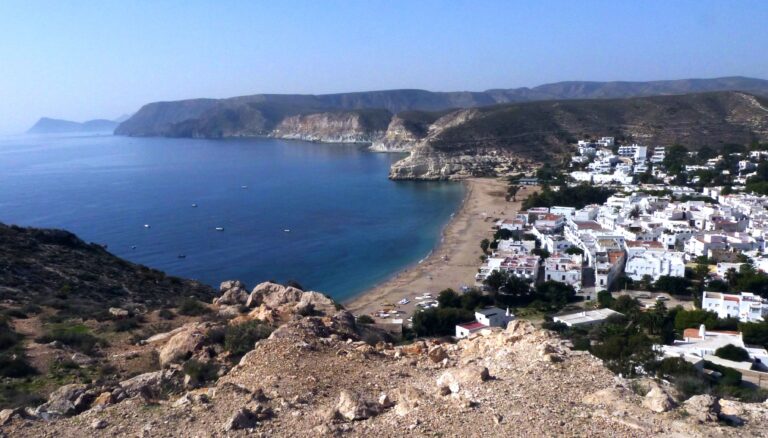
A small fishing village sprang up in the shelter of this military construction. The houses spread out over the hills, adapting to the terrain, until they formed the village we know today: a cluster of white houses overlooking a quiet, sheltered bay.

San José today: the capital of Cabo de Gata
Considered by many to be the ‘unofficial capital’ of the Natural Park, San José is the centre with the most services in the entire protected area. Here you will find hotels, hostels, a campsite, a marina, shops, supermarkets, bike and kayak rentals, ATMs and a wide variety of restaurants. All this without losing its small-town essence.

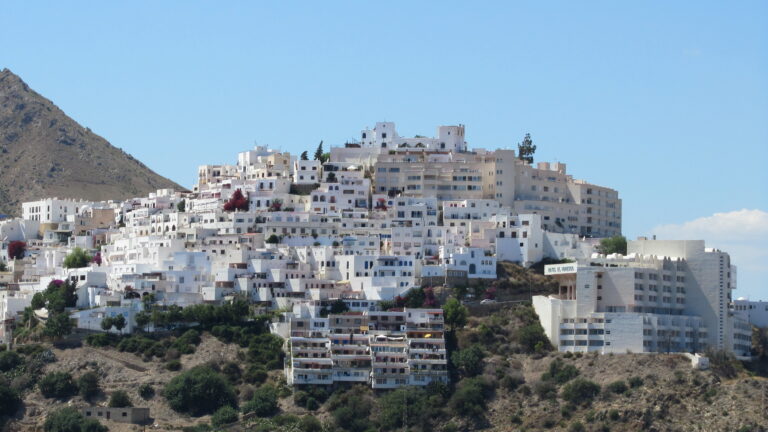
Its appearance is totally Mediterranean: narrow streets, one- or two-storey houses, white façades and urban planning that is strictly controlled by the natural park’s regulations, which prevent the presence of large buildings. Many houses overlook the small cliffs; others climb the hills surrounding the bay, offering spectacular views.

The village has two very lively areas:
- The central square, a space that acts as the true heart of the village. This enclave buzzes with the energy of the restaurants and their terraces, making it a natural meeting point. The presence of a well-kept children’s playground underlines the family-friendly and welcoming atmosphere.

- The promenade, which is the social hub of summer evenings and nights.

The cultural and artisanal pulse of the village is especially evident on public holidays and weekends, when the square and the small promenade are filled with craft stalls. These markets are more than just a commercial activity; they are a window into the bohemian and artistic community that has chosen Cabo de Gata as its home and source of inspiration. Leather goods, shell or metal jewellery and handmade decorative objects are the material expression of these outsiders who have integrated into the park’s ecosystem, earning a living from their creativity.

The best beaches in San José
The real magnetism of San José lies in its status as a gateway to the most famous unspoilt beaches and coves in the Spanish Mediterranean. From the town centre, an unpaved dirt track leads to a trio of sandy beaches that are, in their own right, icons of the Natural Park and international cinema.

1. San José Beach
Before venturing into the unspoilt area, the town itself offers options for swimming. San José Beach, the largest in the town (approximately 850 metres long), is an urban beach with fine sand. Unlike other beaches in the park, here you will find all the amenities:

- Lifeguards
- Showers and toilets
- Adapted ramps
- Beach bars
- Restaurants
- Sports areas
- Beachfront accommodation
The water is very gradual, making it ideal for family swimming and safe enjoyment.

In addition, there is Calilla de San José, a smaller, more sheltered option with calm, crystal-clear waters perfect for snorkelling and an intense turquoise colour, perfect for a more intimate family day out.

2. Los Genoveses Beach: an unspoilt paradise
Just 3 km from the village, Los Genoveses Beach is, for many, the quintessence of Cabo de Gata. It is a huge sandy beach, nestled in a 100% unspoilt environment, where volcanic formations, golden sand and dreamy turquoise waters reign supreme. Its beauty is defined by the total absence of buildings and asphalt.
The water is very shallow at the shore, making it perfect for families. However, caution is advised on windy days due to possible rip currents.

There are no services, except for a restaurant near the car park. The experience is 100% natural.
How to get there:
- On foot or by bike from San José (1 km trail from the end of the village).
- By car on a dirt track (regulated in summer).
- On the shuttle bus that runs continuously throughout the day.

Historical curiosity:
Its appeal is not only scenic; it is deeply historical. Its name refers to a crucial event in the 12th century: it was here that a fleet from the Republic of Genoa camped for almost two months to assist King Alfonso VII in his campaign to conquer Almería, which was in Berber hands. Centuries later, in the 16th century, the bay once again became a strategic point, sheltering part of the Spanish Armada on its way to the famous Battle of Lepanto. This legacy of great fleets in its waters gives the place an epic resonance.

3. Mónsul Beach: the star attraction of Cabo de Gata
While Los Genoveses has historical significance, Mónsul Beach has an unrivalled geological and cinematic dimension. It is the most famous beach in the Natural Park, recognised worldwide for its eroded volcanic formations that create an extraordinary landscape.

The beach is characterised by the tongues of lava that jut out into the sea on both sides, providing much-appreciated natural shade. Its backdrop is a large dune of golden sand that changes colour with the sun. In the centre of this 400-metre stretch of sand stands the unmistakable Roca Punta Peineta, a true icon that dominates the scene.

Mónsul is a recurring film set: it has been the location for internationally renowned films such as Indiana Jones and the Last Crusade (Steven Spielberg), Talk to Her (Pedro Almodóvar), and The Neverending Story, as well as countless music videos (such as David Bisbal’s famous Ave María) and adverts.

4. Cala de Media Luna: the quietest
Cala de Media Luna is the third beach on the itinerary and the least crowded, making it the ideal refuge for those seeking tranquillity without sacrificing beauty. Its name evokes its semicircular shape, an embrace of sand and sea that offers a more intimate atmosphere than its neighbours.
Although its beauty may not be as ‘brutal’ as that of Mónsul, its tranquillity and the protection offered by the volcanic rocks (guaranteeing some shade) make it invaluable. Like the unspoilt areas, it is an enclave without lifeguard services, so it requires a total commitment to conservation and waste collection.

5. Cala Higuera: hidden and charming
To the north of the town centre is Cala Higuera, a small, uncrowded cove that can be reached by car or kayak. It is ideal for those who want to escape the more popular beaches and enjoy snorkelling in a rocky, crystal-clear environment.

6. Access and parking in summer
As the Natural Park is home to such valuable ecosystems, it applies a strict regulation protocol in high season to prevent overcrowding and environmental overload.
Access by car to Genoveses, Mónsul and Media Luna is regulated and limited to a specific capacity during the months of July and August. When the designated car park (which costs €5) is full, vehicle access is closed. It is important to note the severity with which illegal parking is dealt with: leaving your car on the road is prohibited and will result in immediate intervention by the Civil Guard, the removal of the vehicle by tow truck and the corresponding fine.

The fragility of these volcanic ecosystems demands the utmost respect, making it necessary to remember that penalties, although high (between €600 and €60,000), are only effective with real awareness and, if necessary, with increased surveillance during the high season.

To ensure sustainable mobility, an efficient shuttle bus service is available from the village of San José to the vicinity of the coves. The bus, which costs €1.50 per person, runs every half hour from 9:00 a.m. to 9:00 p.m., with key stops in the village.

For hiking and cycling enthusiasts, the alternative access is the most rewarding and respectful option:
- On foot or by bicycle: It is a 3 km walk from the centre of San José to Los Genoveses and 5 km to Mónsul via the official trail.
It is an essential rule of the Park that all visitors must bring their own supplies and, above all, collect all their rubbish, taking care of this environment, which is rightly classified as Zone B4.

What to do in San José
Although the beaches are the main attraction, San José offers a range of activities that are perfect for nature lovers.
- 1. Kayaking, paddle surfing and snorkelling: The coast of San José is ideal for water activities. You can hire kayaks to explore caves, cliffs and places that are inaccessible on foot. There are also paddle surf rentals and guided snorkelling routes.
- 2. Hiking and volcanic routes: The volcanic landscapes of the surrounding area are one of the park’s great treasures. There are some very interesting routes starting from the village:
- Trail to Los Genoveses
- Route to Mónsul via Media Luna
- Climb to the hills surrounding the bay
- Paths to Cala Higuera
- 3. Astro-tourism and stargazing: Thanks to the low light pollution in the park, San José is a good place for astronomical observation, night-time routes or telescope sessions.
- 4. Horse riding or 4×4 excursions: Several local companies organise horse riding routes along nature trails or 4×4 excursions to viewpoints and points of interest in the natural park.

Discovering Almería
Visit other places in Almería and add them to your trip, or make a note for future reference:
- Mojácar: One of the most beautiful villages in Spain, an essential visit in the region.
- Agua Amarga: One of the most charming villages on the Almería coast, with its seafaring essence and leisurely pace.
- Huércal-Overa: An inland town where Holy Week is one of the most important events in Almería.
- Garrucha: A place that combines the vibrant modernity of a tourist destination without losing its fishing soul.
- Albox: Home to one of the most impressive monasteries in eastern Andalusia, the Santuario del Saliente.
Gastronomy and where to eat
As the most important tourist centre, San José offers an outstanding range of restaurants, closely linked to the richness of the Mediterranean. Its marina is not only a mooring point, but also a hub of activity where restaurants specialise in exquisite seafood cuisine.

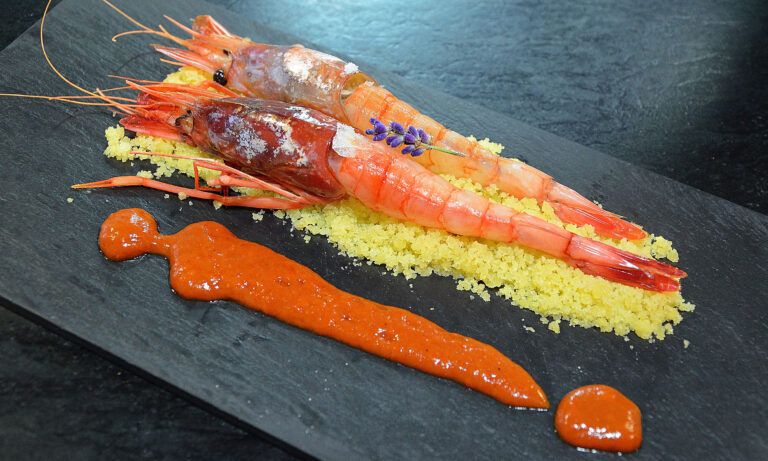
The typical dishes revolve around seafood: fresh fish, shellfish and, most notably, rice dishes that reflect the Valencian and Murcian tradition adapted to the Almerian taste. The offering is varied, ranging from traditional food to more contemporary dishes:
- Renewed Traditional Cuisine: Places such as the Casa Pepe Restaurant, with its sea views, have managed to modernise local cuisine while maintaining its essence of flavour.
- Fusion and avant-garde: The restaurant at La Buganvilla stands out for its excellent fusion of Mediterranean and Asian cuisine, a sign of the cultural openness of the enclave.
- Complete offering: In addition, the town has tapas bars, pizzerias, burger joints and ice cream parlours, ensuring that there is something to suit every palate.

Where to stay in San José
One of the keys to San José’s charm is that the natural park’s regulations prevent large constructions. That is why the accommodation on offer consists of small hotels, hostels and family apartments, many of them with their own unique character.
Recommended accommodation
- Hostal Las Gaviotas: with a swimming pool, solarium and excellent value for money.
- El Dorado Cabo de Gata: rooms with terraces and a very quiet location.
- Apartamentos La Buganvilla: perfect for families, with a kitchen and swimming pool.
- Hostal del Cabo: 200 metres from San José beach, with bright and well-equipped rooms.

Festivals and local atmosphere
San José holds several traditional celebrations. The most notable are:
- San José Carnival
- San José Obrero Festival (19 March)
- Tourist Festival, the second weekend in August, one of the liveliest events of the summer.
During these dates, the town is filled with activities, live music and a very festive atmosphere.

Practical tips for your visit
- Respect the natural park: do not leave rubbish behind, do not climb on the dunes or enter protected areas.
- Park only in authorised areas: fines are common in summer.
- Take water and food to the unspoilt beaches: there are no services.
- Avoid peak times in July and August: places fill up very quickly.
- If you want peace and quiet, choose June or September.
- To get around, the shuttle bus is convenient and inexpensive.
- Footwear: wear trainers to walk to some of the coves.

Why you’ll fall in love with San José
San José is not just a beach destination. It is a place where history, volcanic landscapes, unspoilt coves, seafaring culture and a relaxed atmosphere coexist, captivating visitors from the moment they arrive. Its location within the Cabo de Gata-Níjar Natural Park makes it a strategic point for exploring the most emblematic spots in Almería, but it is also a town with soul, local life and a strong identity.

Here you can enjoy unforgettable days at the beach, dinners by the sea, walks among volcanoes and nights spent gazing at the stars from a white terrace that smells of summer. It is a simple and well-kept destination, but one that is full of beauty.
Photo Credits
Below are the photo credits in order of appearance. Royalty-free photos will not be listed below:
- Cover Image: User: Benreis at wikivoyage shared, CC BY-SA 3.0, via Wikimedia Commons
- Nikater, CC BY-SA 3.0, via Wikimedia Commons
- fraboof, CC BY-SA 2.0, via Wikimedia Commons
- Nikater, CC BY-SA 3.0, via Wikimedia Commons
- Nikater, CC BY-SA 3.0, via Wikimedia Commons
- Olea, CC BY 4.0, via Wikimedia Commons
- Nikater, CC BY-SA 3.0, via Wikimedia Commons
- User: Benreis at wikivoyage shared, CC BY-SA 3.0, via Wikimedia Commons
- Andy Roberts from East London, England, CC BY 2.0, via Wikimedia Commons
- Nikater, CC BY-SA 3.0, via Wikimedia Commons
- Josi, CC BY-SA 4.0, via Wikimedia Commons
- Kevin Pacheco, CC BY-SA 2.0, via Wikimedia Commons
- Maksym Abramov, CC BY-SA 4.0, via Wikimedia Commons
- Dgalan, CC BY-SA 4.0, via Wikimedia Commons
- Rosa-Maria Rinkl, CC BY-SA 4.0, via Wikimedia Commons
- Marc Capdevila, CC BY-SA 4.0, via Wikimedia Commons
- José Antonio JG, CC BY-SA 4.0, via Wikimedia Commons
- Martyn Thompson (Cabo de Gata Photography), CC BY-SA 2.5, via Wikimedia Commons
- Urci dream, CC BY-SA 4.0, via Wikimedia Commons
- ArneACP, CC BY-SA 3.0 ES, via Wikimedia Commons
- SofiPereez, CC BY-SA 3.0 ES, via Wikimedia Commons
- daniel julià lundgren from barcelona, catalonia, CC BY-SA 2.0, via Wikimedia Commons
- isol, CC BY-SA 3.0, via Wikimedia Commons
- Nikater, CC BY-SA 3.0, via Wikimedia Commons
- fraboof, CC BY-SA 2.0, via Wikimedia Commons
- Luis Rogelio HM, CC BY-SA 2.0, via Wikimedia Commons
- Hanarko, CC BY-SA 4.0, via Wikimedia Commons
- Solamente Itan from Andalucía – España – U.E., CC BY 2.0, via Wikimedia Commons
.jpg)

.jpg)


.jpg)


.jpg)


.jpg)


.jpg)
.jpg)

.jpg)