Risco Beach (Lanzarote): the hidden gem beneath the Famara cliff
In an archipelago where wild nature is the norm, Risco Beach or Playa del Risco, also known as Playa Bajo el Risco or Playa de Bajo Risco, stands out as a gem of epic and discreet proportions. It is the antithesis of the overcrowded, a haven of peace and the sweetest reward after an initiatory hike. Located on the north-west coast of Lanzarote, at the foot of the imposing Risco de Famara, this strip of golden sand is not just a beach, it is a destination for reconnection, history and landscape that reconciles you with the island.
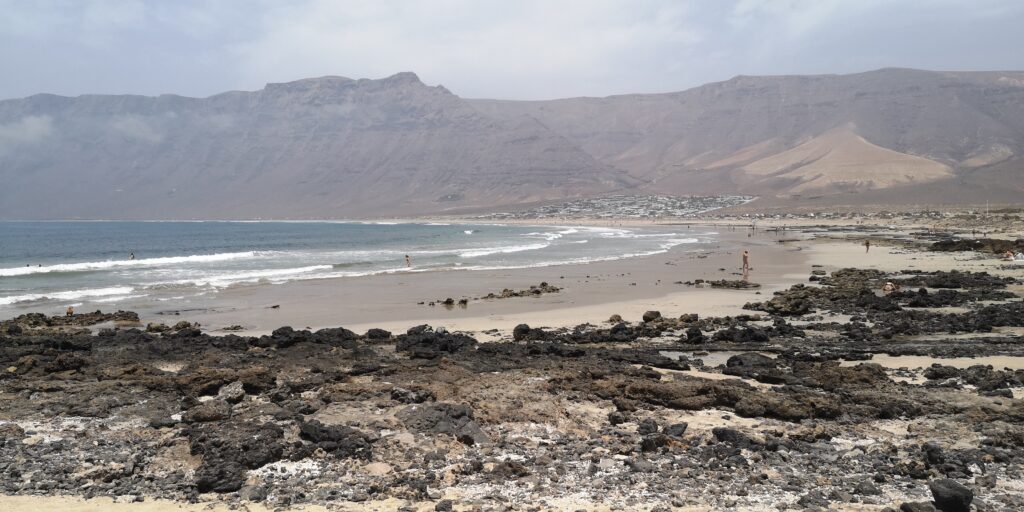
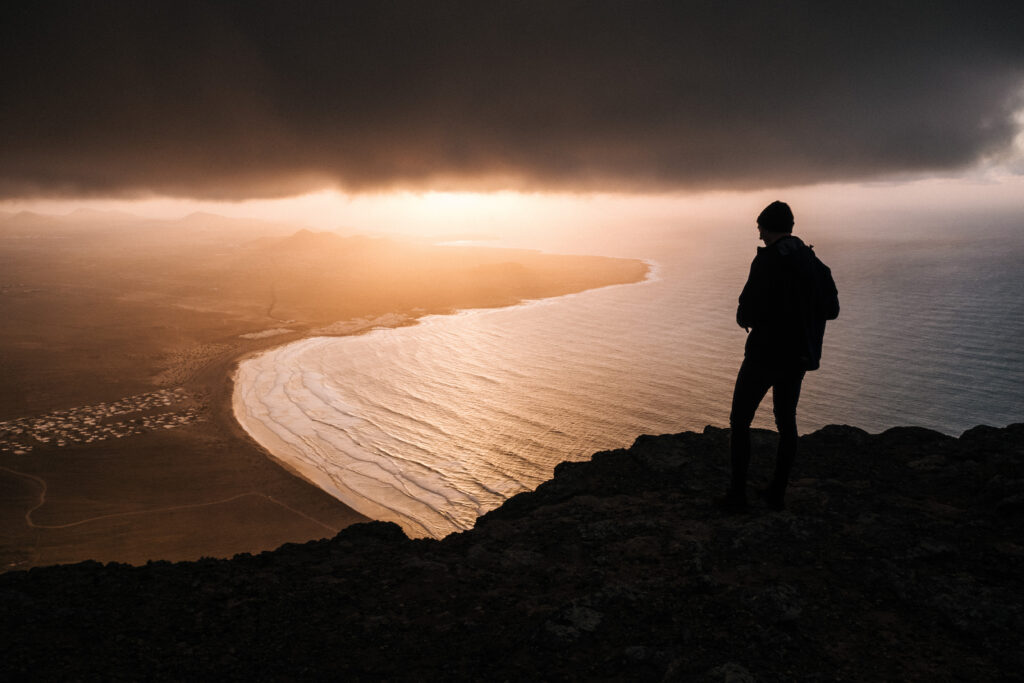
Getting there is part of the adventure. The descent along the historic Camino de los Gracioseros requires strong legs and planning, but it rewards you with a panoramic view that looks like something out of a volcanic postcard. And when you finally set foot on the sand, you understand why those who come once return whenever they can.
Welcome to Playa del Risco, one of the wildest, most beautiful and memorable beaches in Lanzarote.

Location: The Hidden Gem Opposite El Río
Playa del Risco is an unspoilt beach approximately 500 to 845 metres long, depending on the tide, nestled at the base of the Famara Cliffs in the municipality of Haría, near the small village of Yé.
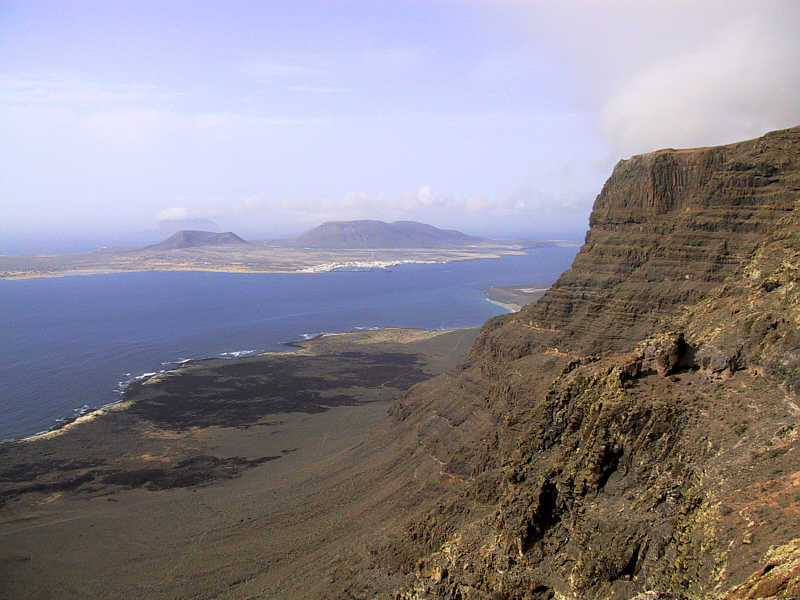
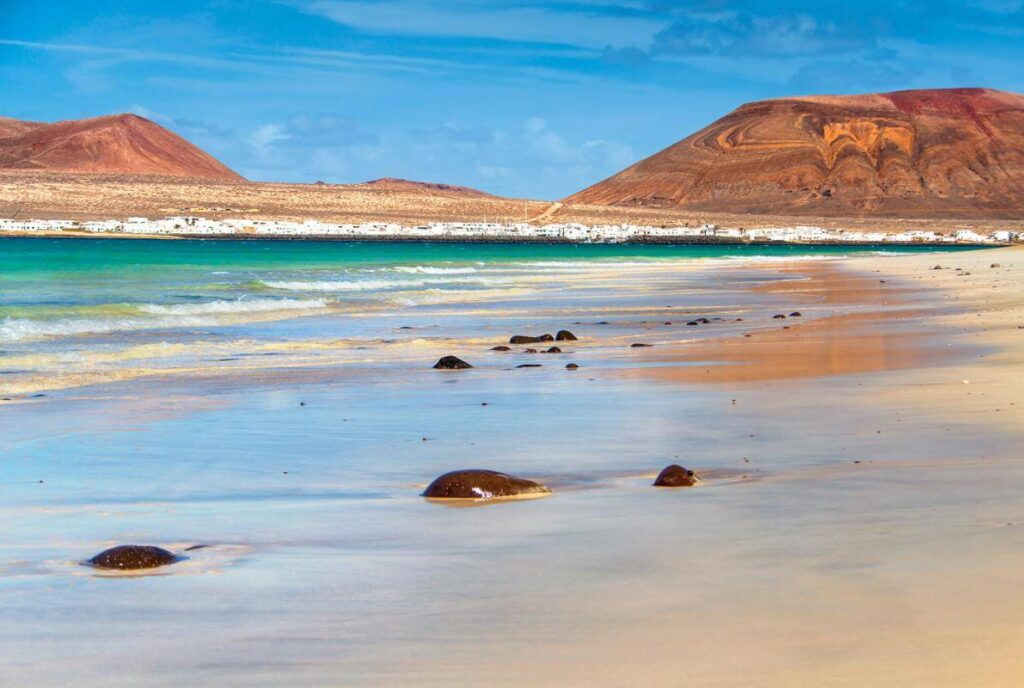
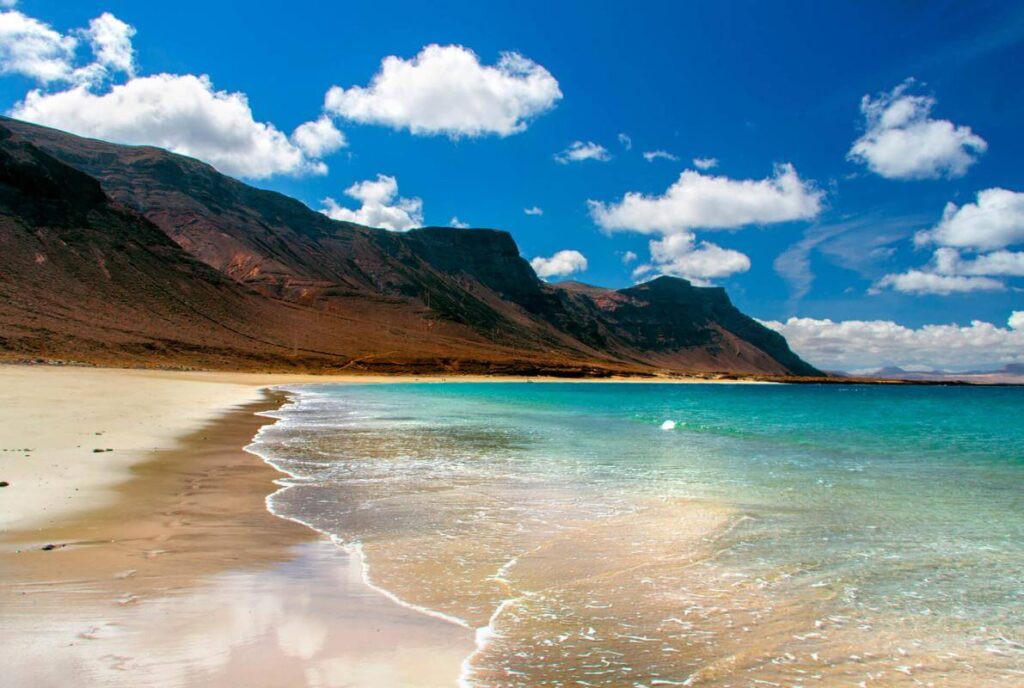
Its location is key to understanding its magic: it is situated just opposite the strait known as El Río, which separates Lanzarote from the island of La Graciosa. This position gives it an unrivalled picture-postcard view, with the silhouettes of La Graciosa, Montaña Clara, Roque del Oeste and Alegranza forming the impressive Chinijo Archipelago. Looking inland, the spectacular natural wall of Risco de Famara rises up, an explosive combination of ochre and reddish tones that provides a dramatic and protective backdrop.
- Key location: At the foot of Risco de Famara, opposite El Río and La Graciosa.
- Length: Varies between 500 m and 845 m.
- Surroundings: Los Volcanes Natural Park, unspoilt.
How to get to Playa del Risco
The isolation of Playa del Risco is intentional, and getting there is a fundamental part of the experience. You won’t find any paved roads or car parks at the foot of the sand; there are two ways to reach this sanctuary:
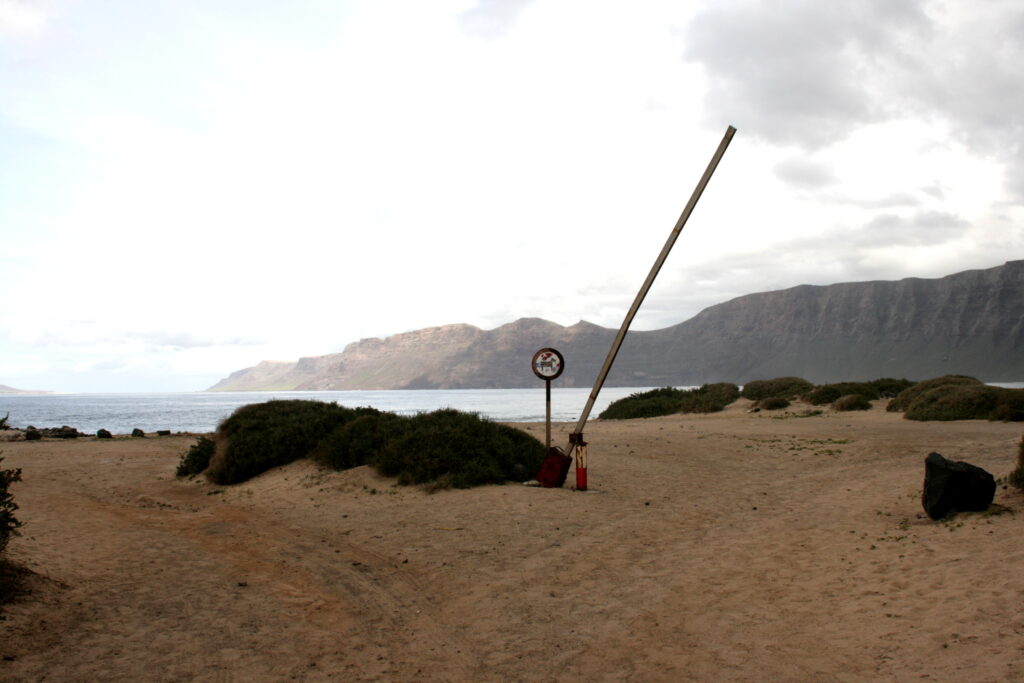
1. On foot along the Camino de los Gracioseros (the most classic and recommended option)
The most iconic and popular option is via the Camino de los Gracioseros. This is a historic trail that was once used by the inhabitants of La Graciosa to communicate with Lanzarote. It is a walk that combines moderate physical effort with spectacular aerial views.
- Starting point: Near the village of Yé and in the vicinity of the Mirador del Río.
- Duration of the descent: 40–60 minutes downhill. The ascent is more demanding and will take longer.
- Duration of the ascent: slightly longer, depending on your physical
- Difficulty: Moderate to medium/high.
- Terrain: rocky, constant zigzagging and sections of loose gravel
- Elevation: Descent of about 350 m.
- Mobile phone coverage: irregular.
Tips for the route:
- Crucial recommendation: Closed footwear with grippy soles (trekking or sports shoes). Flip-flops or open trainers are not recommended due to the gravel and the risk of sprains.
- Bring enough water (at least 1.5–2 litres per person).
- Start early in summer: the cliff provides shade in the morning.
- If it is very windy, consider changing your plan.
The descent, although not technical, requires caution. Take it easy and take your time to take in the landscape. The effort is amply rewarded by the feeling of freedom when you reach the beach.
Parking: Informal parking spaces near the start of the trail in Yé. Please park sensibly, without blocking farms or roads.
2. Access by boat: Comfort and scenery
For those who prefer to avoid the walk, or who are travelling with young children or people with reduced mobility, the alternative is to arrive by sea:
- Combined Routes: There are excursions that combine the descent on foot along the Camino de los Gracioseros and then a boat pick-up to continue on to La Graciosa, disembarking, for example, at the beautiful Playa de Montaña Amarilla or La Cocina.
- Maritime Taxi: A service can be hired from the port of Órzola.
- Private Boat: Hire a boat.
3. How to get there from other areas of Lanzarote
- From Arrecife: LZ-1 → Teguise → Haría → Yé
- From Playa Blanca: LZ-2 → Teguise → Haría → Yé
- From Costa Teguise: LZ-14 → LZ-1 → Haría → Yé
There is no direct public transport, so you will need a car.
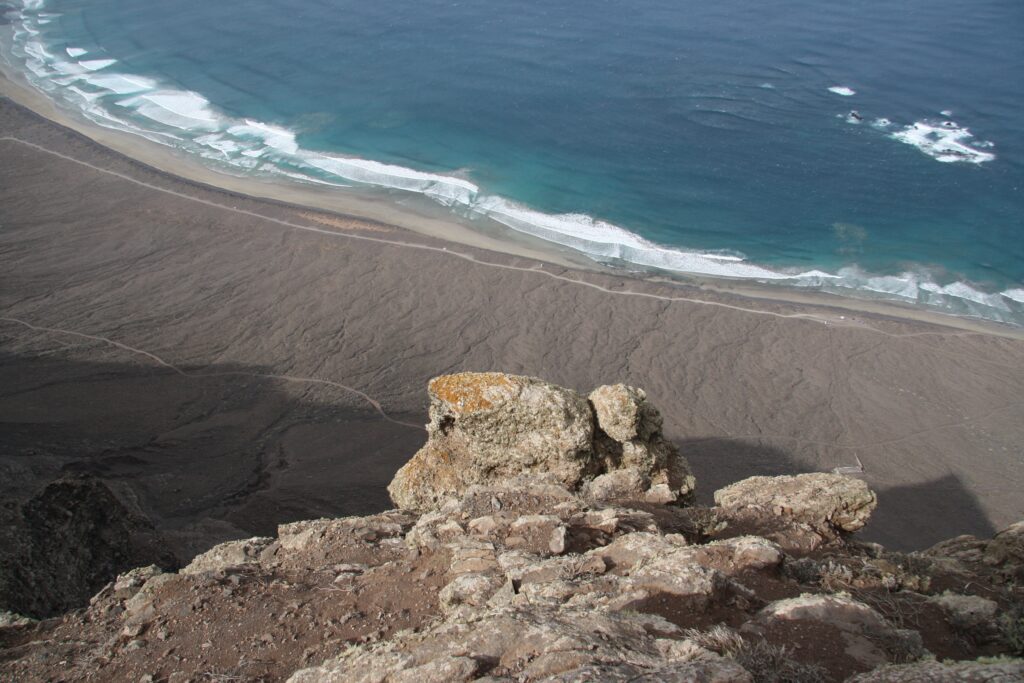
The Playa del Risco Experience: An Unspoilt Paradise
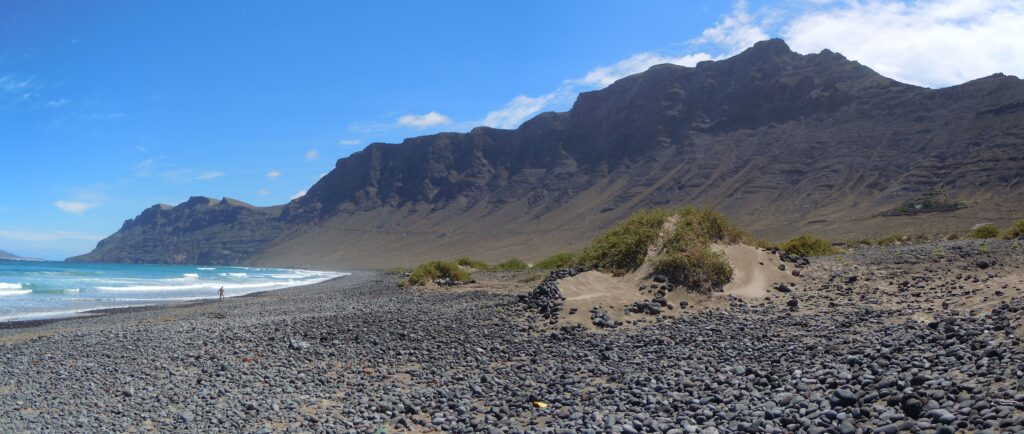
Playa del Risco —or Playa Bajo el Risco, as it is also known— is one of those places that seems to exist outside of time. Its isolated location, protected by the highest cliff in Lanzarote, makes this space a natural refuge where it is impossible not to disconnect.
What makes this beach special is its combination of elements:
- Soft, wide golden sand.
- A transparent and generally calm sea thanks to the shelter of the cliff.
- Spectacular views of the Estrecho del Río, La Graciosa and the rest of the Chinijo Archipelago.
- Absolute silence, interrupted only by the waves and the flight of birds.
The feeling of smallness in front of the enormous volcanic wall that falls into the sea, the light that changes every hour and the total isolation make this beach a sensory experience rather than a simple excursion.
Many locals —especially those from the north— come down several times a year to ‘reset’. And it’s easy to understand why.
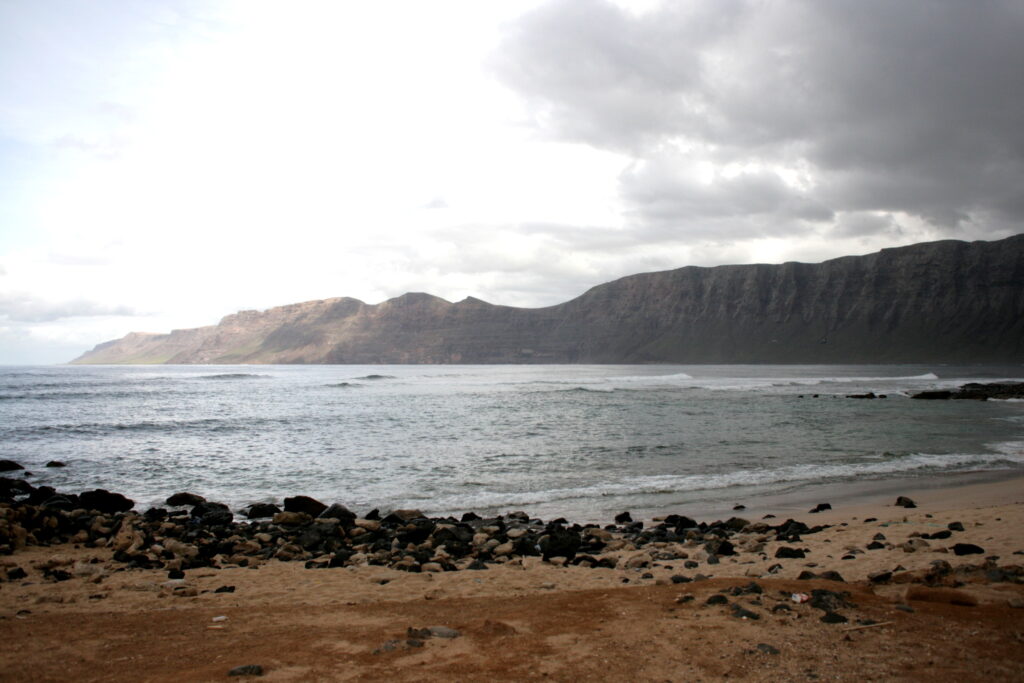
What you will find (and what you won’t)
Playa del Risco is pure nature. Before you go, it’s a good idea to be clear about what it offers… and what it doesn’t.
You will find:
- Absolute tranquillity.
- Spectacular scenery.
- Golden sand and clean waters.
- An unspoilt environment, ideal for unwinding.
- A feeling of isolation and freedom.
You will NOT find:
- Facilities (no toilets, showers or kiosks).
- Lifeguards.
- Rubbish bins.
- Areas sheltered from the wind when it blows strongly.
It is a protected area, so it is essential to take everything with you… and take everything back with you.
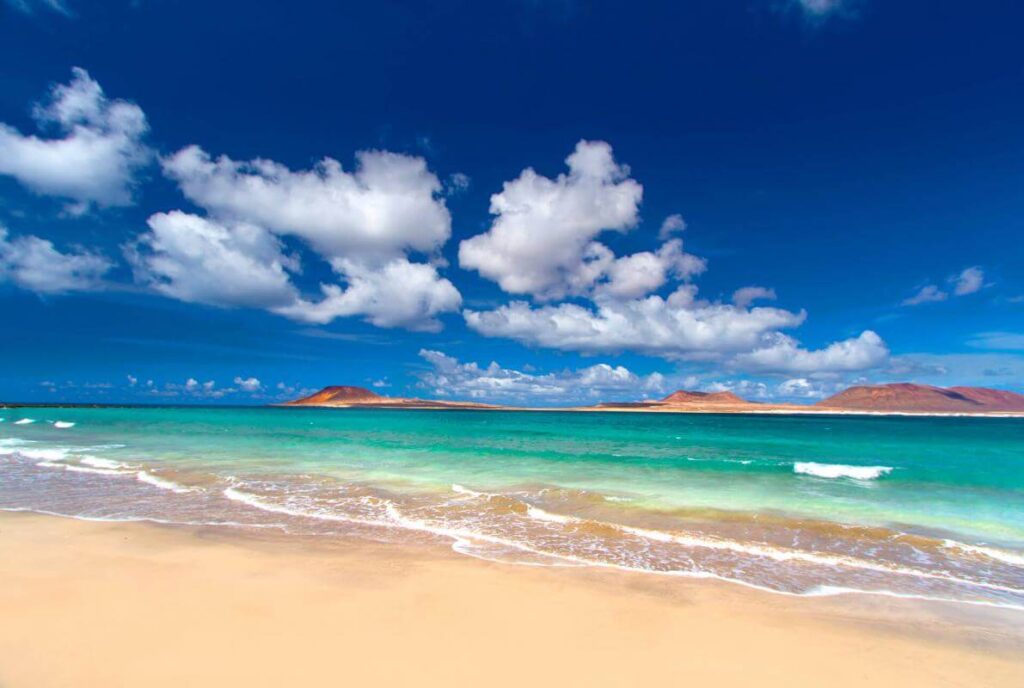
Features of Playa del Risco
| Feature | Details |
|---|---|
| Municipality | Haría |
| Nearest town | Yé |
| Access | A pie o por barcoOn foot or by boatA pie o por barco |
| Length | 500–900 m (depending on the tide) |
| Sand | Golden |
| Waves | Moderate but generally safe |
| Wind | Frequent, especially in summer |
| Occupancy | Very low |
| Facilities | None |
| Surroundings | Natural, protected |
| Nudism | Possible (isolated area) |
| Family-friendly | Yes, if accessed by boat |
| Accessibility | Not adapted |
What makes Playa del Risco unique
- 1. An incomparable volcanic landscape: The view of El Risco from below is impressive: reddish, ochre and grey colours mixed with vegetation that adapts to the arid climate of northern Lanzarote.
- 2. A natural viewpoint towards the Chinijo Archipelago: From the shore you can see a group of islands that form one of the most valuable ecosystems in the Canary Islands:
- La Graciosa
- Montaña Clara
- El Roque del Oeste
- Alegranza
- 3. Calm, crystal-clear waters: The shelter provided by the cliff means that the sea is usually calm, ideal for swimming and snorkelling on days when there is little wind.
- 4. A perfect place to unwind: No noise, no crowds and no services. Just nature.
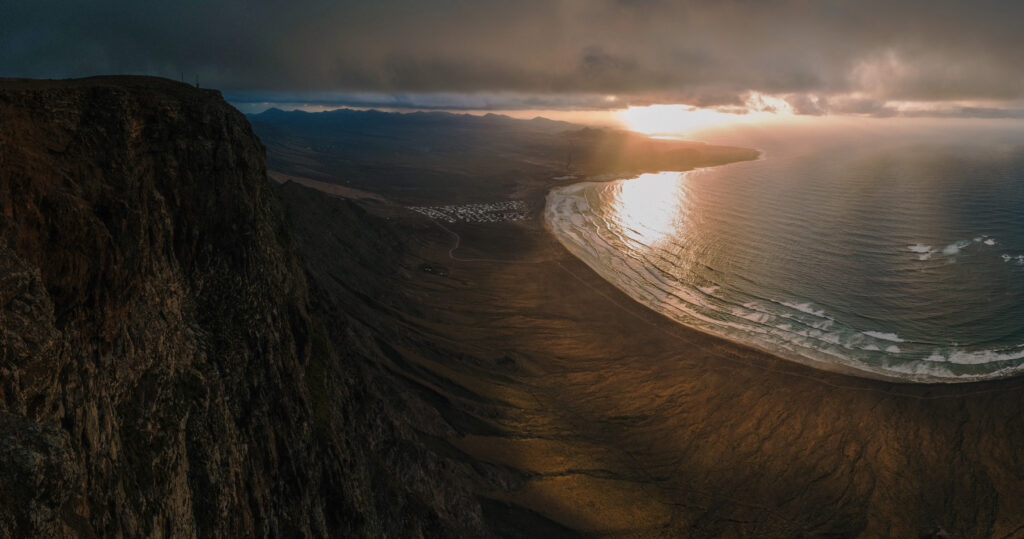
Things to do in Playa del Risco
- 1. Hiking along the Camino de los Gracioseros: The star activity. The trail offers:
- Spectacular views from halfway up the hillside
- Native flora and birds flying over the cliff
- A landscape that changes colour depending on the light of day
Ideal for photography lovers.
- 2. Swimming and relaxing on the beach: Although it is a safe area, it is always advisable to:
- Keep an eye on the waves
- Enter the water gradually
- Avoid swimming alone if the wind is strong
At low tide, the shore widens and the water is perfect for splashing around with the little ones.
- 3. Picnic in front of La Graciosa: The beach invites you to spend hours gazing at the horizon. However, as there are no facilities, you will need to bring everything you need with you.
- 4. Snorkelling on calm days: If the sea is calm, you will find rocky areas where you can observe small fish and sandy bottoms.
- 5. Landscape photography: The play of shadows on the cliff, the volcanic palette and the views of La Graciosa make this beach a dream for photographers.
When to visit Playa del Risco
Playa del Risco changes a lot depending on the season and the wind.
Winter
- Gentle trade winds
- Pleasant temperature
- Good time for photos and hiking
Spring
- Ideal combination of climate and light
- Stable days and less wind than in summer
Summer
- Strong wind
- The climb can be tough
- Better to go early to take advantage of the shade of the cliff
Autumn
- One of the best times
- Moderate wind
- Warm colours and calm sea
Tides
- Low: wide beach, ideal for walking
- High: reduced space, perfect for swimming and relaxing
Practical tips for visiting Playa del Risco
What to bring
- Water (minimum 1.5–2 litres per person)
- Food or snacks
- Sun protection (hat, sun cream, sunglasses)
- Hiking boots
- Towel and something warm if the wind picks up
- Rubbish bag
- A small first aid kit
Safety
- There is no lifeguard: use common sense above all else.
- Avoid the hottest hours of the day in summer.
- Tell someone if you are going alone: there are sections without mobile phone coverage.
- Respect the local flora and fauna.
For families
- The walking route is not suitable for young children.
- The ideal alternative is to arrive by boat from Órzola.
What to see near Playa del Risco
- Mirador del Río
- Salinas del Río
- La Graciosa (excursion from Órzola)
- Malpaís de la Corona
- Local wineries in Yé
What to see in Lanzarote
If you want to make the most of your visit to the island, here are some places we have added to our map:
- Playa Blanca: The ideal base camp for exploring the island. The perfect balance between tranquility, idyllic beaches, modern areas, and natural surroundings.
- El Golfo: with the Charco Verde, it is one of the most striking postcard images of the Canary Islands.
- Las Grietas: A perfect blend of geology, volcanic landscape, and photogenic appeal that attracts more and more travelers.
- Los Charcones: a string of unspoilt natural pools stretching along the south-western coast of the island.
- Punta Mujeres: a small fishing village where the ocean ebbs and flows at will, forming dozens of natural pools.
- Caleta del Mojón Blanco: a small natural treasure where turquoise waters and ocean calm prevail.
- Los Hervideros: one of the most fascinating and mesmerising landscapes on the island.
- Tahíche: Together with the César Manrique Foundation, this is probably the most important cultural space in the whole of Lanzarote.
Conclusion: a reward that is well worth the walk
Playa del Risco or Playa Bajo el Risco is undoubtedly one of Lanzarote’s most precious and least visited gems. It is a destination that demands commitment: the physical effort of descending the Camino de los Gracioseros is the price you pay for accessing a level of peace and a panoramic view that cannot be found anywhere else on the island.
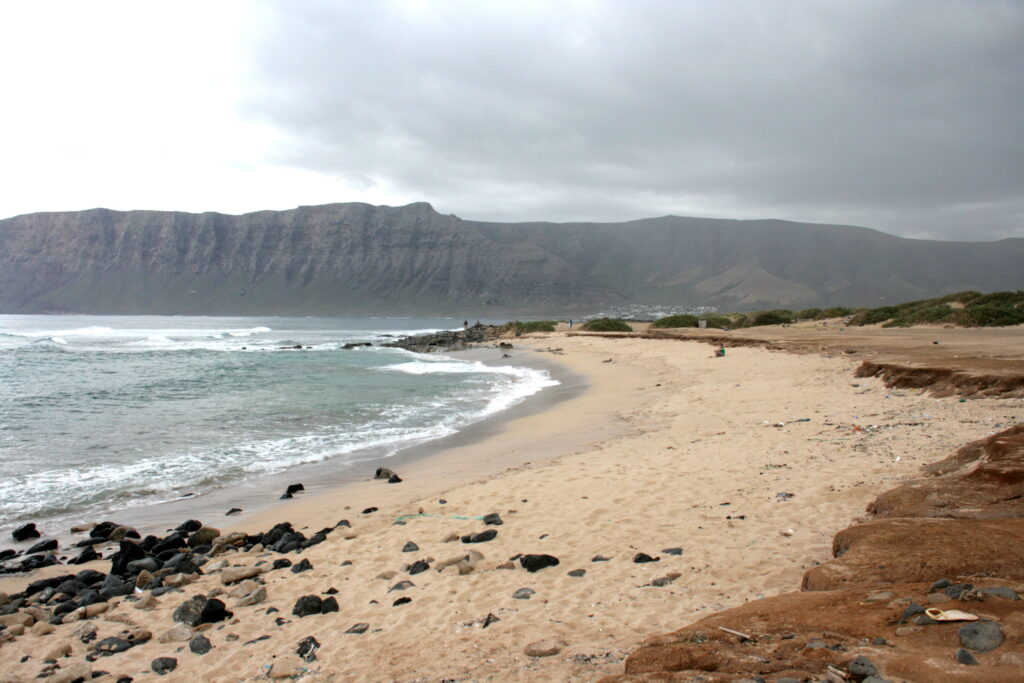
This stretch of unspoilt coastline offers the perfect combination of solitude, scenic beauty and history. As you dive into its crystal-clear waters and contemplate the majesty of Risco de Famara rising behind you, you realise that Playa del Risco is more than just a beach; it is a sanctuary, a refuge and a powerful injection of pure nature that will make you feel free. Pack your rucksack, respect the environment and get ready for one of the most memorable experiences Lanzarote has to offer.
Photo Credits
Below are the photo credits in order of appearance. Royalty-free photos will not be listed below:
- Txapisotegi, CC BY-SA 4.0, via Wikimedia Commons
- Gero Brandenburg, CC BY-SA 3.0, via Wikimedia Commons
- Frank Vincentz, CC BY-SA 3.0, via Wikimedia Commons
- Patrice78500, CC BY-SA 4.0, via Wikimedia Commons
- GerritR, CC BY-SA 4.0, via Wikimedia Commons
- Frank Vincentz, CC BY-SA 3.0, via Wikimedia Commons
- Turismo de Canarias, via holaislascanarias.com
- Turismo de Canarias, via holaislascanarias.com
- Turismo de Canarias, via holaislascanarias.com
- Frank Vincentz, CC BY-SA 3.0, via Wikimedia Commons


_04_ies.jpg)


_03_ies.jpg)
_02_ies.jpg)