Punta Mujeres: The Lava and Salt Refuge that Redefines Serenity in Lanzarote
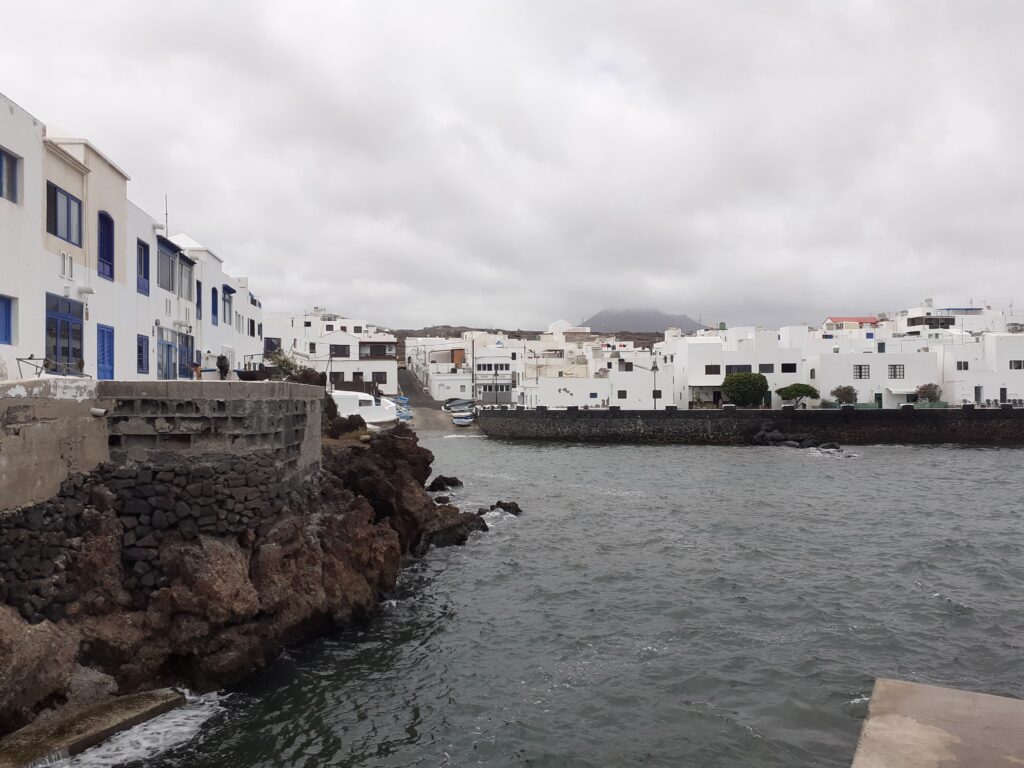
On the northeast coast of Lanzarote lies one of those places that, without the need for great artifice, makes you fall in love at first sight. Punta Mujeres is a small fishing village where time seems to stand still, where white houses blend in with the volcanic rock and where the ocean comes and goes as it pleases, forming dozens of natural pools. It is a quiet, authentic corner, full of tradition and perfect for those who want to get to know the island beyond its tourist areas.
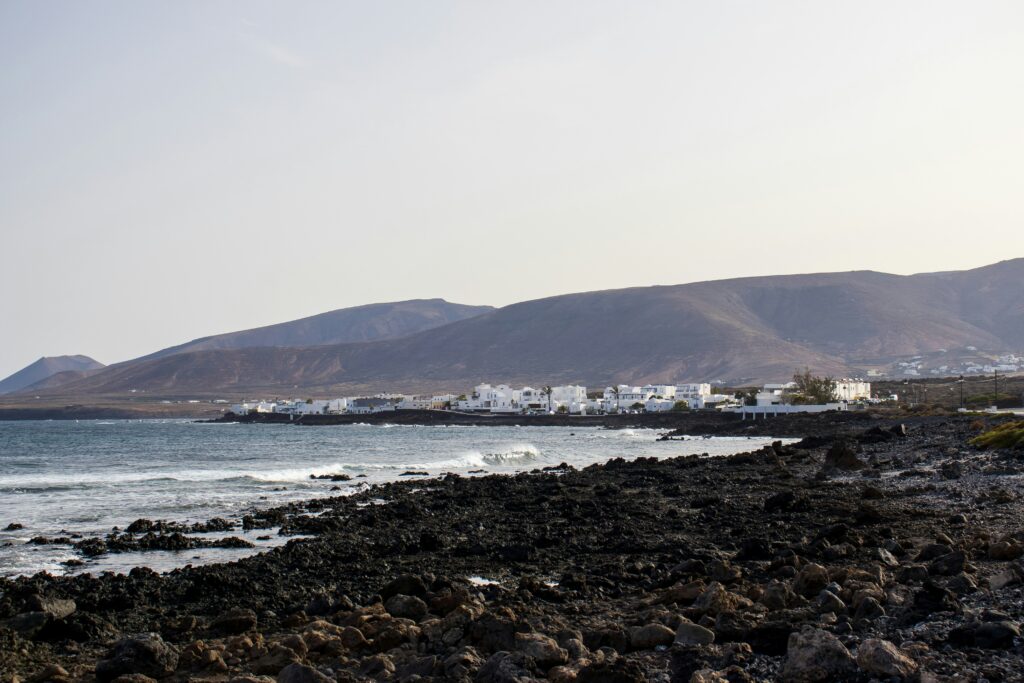
In this guide, we tell you what to see and do in Punta Mujeres, how to get there, where to eat, which pools are the best, and why this small village has become one of our favourite spots in Lanzarote.

Is Punta Mujeres worth visiting?
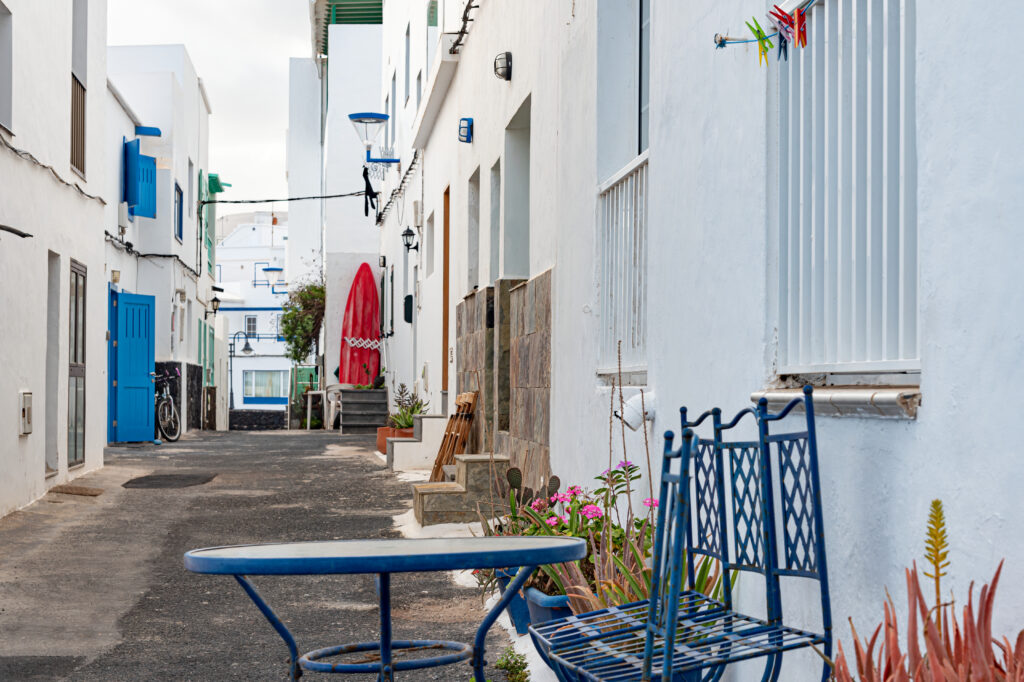
Yes, very much so. Punta Mujeres is one of those villages that preserves the essence of Lanzarote intact: whitewashed houses, blue doors, fishermen preparing their boats, volcanic mountains as a backdrop and an ever-present ocean.
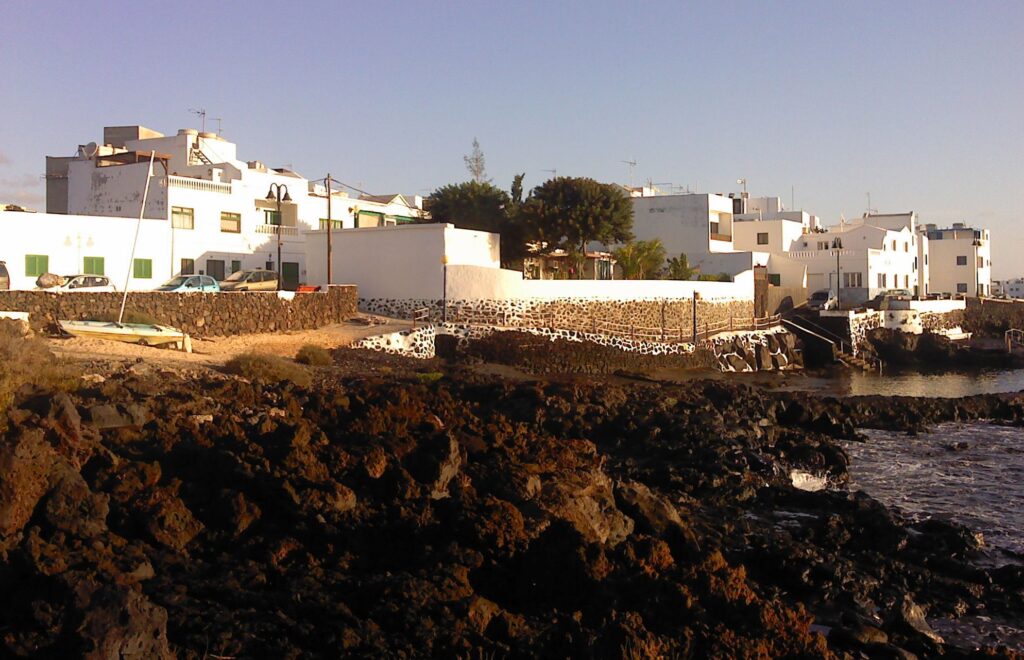
What is most surprising is its balance between nature and local life. Here you won’t find large hotels or avenues full of tourists; you’ll find tranquillity, authenticity and a coastal landscape that looks like it was drawn by lava.
In addition, Punta Mujeres is famous for its more than two kilometres of natural pools, one of the largest groups of pools in the Canary Islands, making it an ideal destination for swimmers, families and lovers of the calm sea.
What to see in Punta Mujeres
Although it is a small village, Punta Mujeres offers several points of interest that combine leisure, nature and culture. These are the essentials.
1. Punta Mujeres promenade: Connection with Arrieta
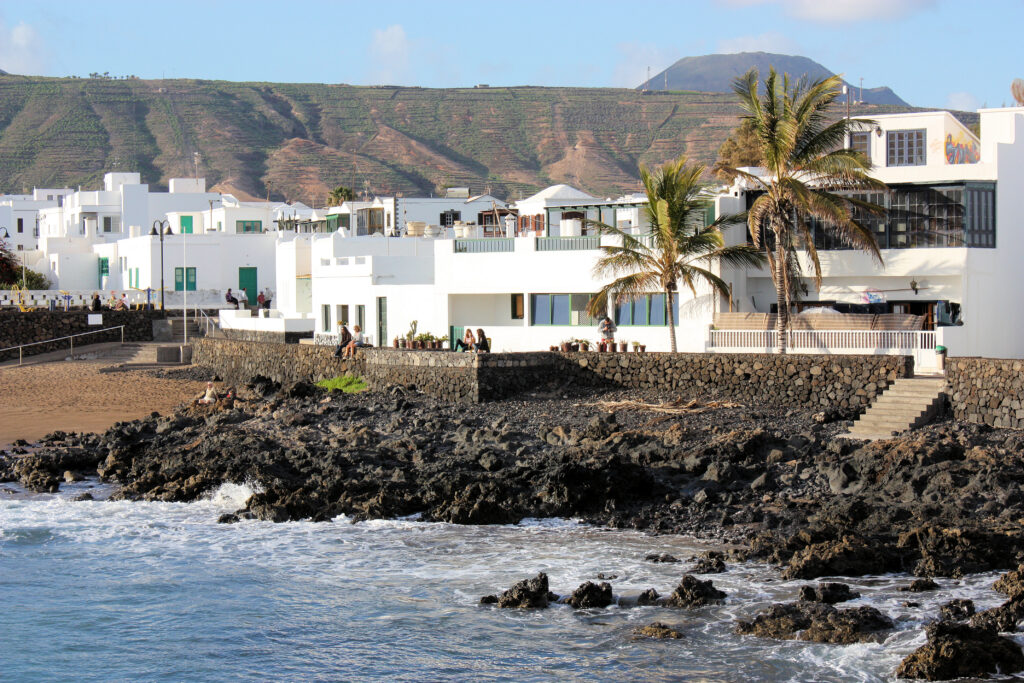
The village is linked to its neighbour, Arrieta (about 2 km to the south), by a pleasant coastal walk. This route is a delight to walk along at sunset or first thing in the morning. The promenade runs along the rugged coastline, lined with dry stone walls and landscaped areas of native flora, such as tabaiba.
It is the perfect place to:
- Enjoy the contrast between the black lava and the pristine white of the houses.
- Observe the mountains of the Corona Volcano in the background.
- Sit on a bench and let yourself be carried away by the peacefulness of the surroundings.
- Watch the locals go down to ‘their’ pools as if they were going down to a private beach.
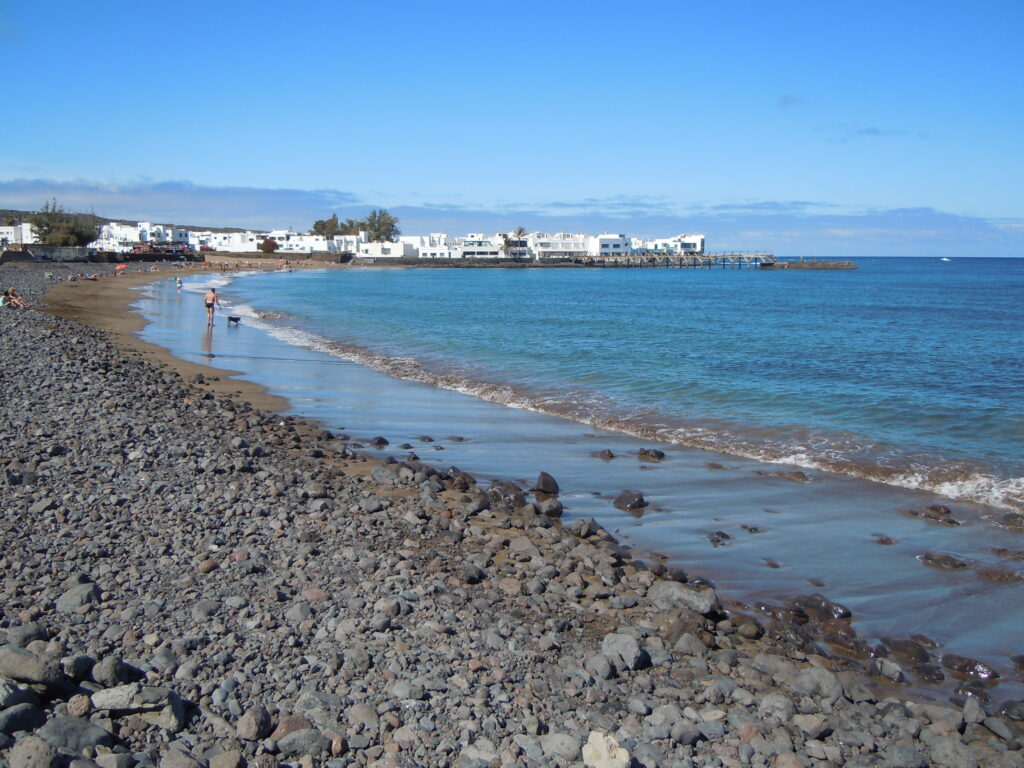
Although Punta Mujeres is known for its pools and lacks conventional sandy beaches, the walkway connects directly to Playa de la Garita in Arrieta. This 800-metre-long beach has fine golden sand and good facilities (restaurants, toilets, car park) and is very popular with locals. The waters are generally calm, making it an excellent alternative if you want sand.
2. Natural pools of Punta Mujeres
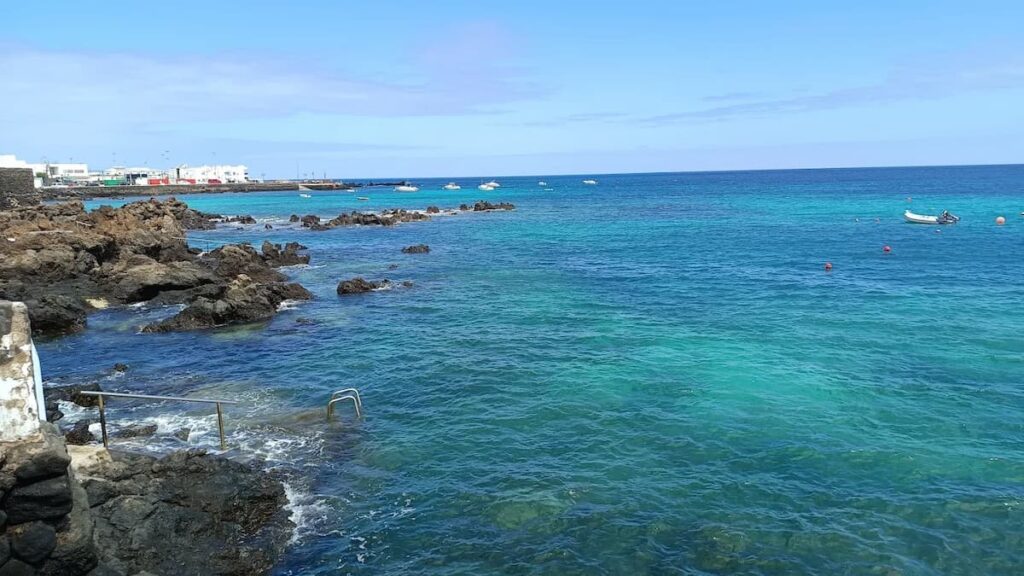
If there is one attraction that defines the Punta Mujeres experience, it is its natural pools. Along more than two kilometres of coastline, hardened lava has created a series of pools and pools, which are filled and renewed by the tides, offering a swimming environment that is as safe as it is spectacular.
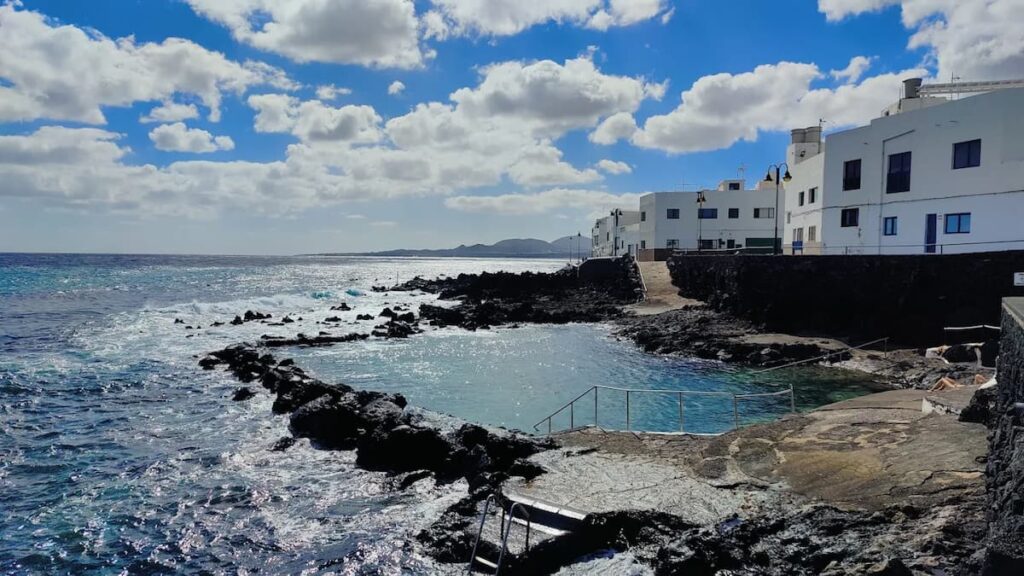
This geological phenomenon has been optimised by the community itself, which over time has built stone walls (walls) to protect the pools from the ‘reboso’ (the swell or strong waves). The result is a series of familiar and varied pools, where swimming becomes a serene pleasure, without the risk of the currents or waves typical of other areas.
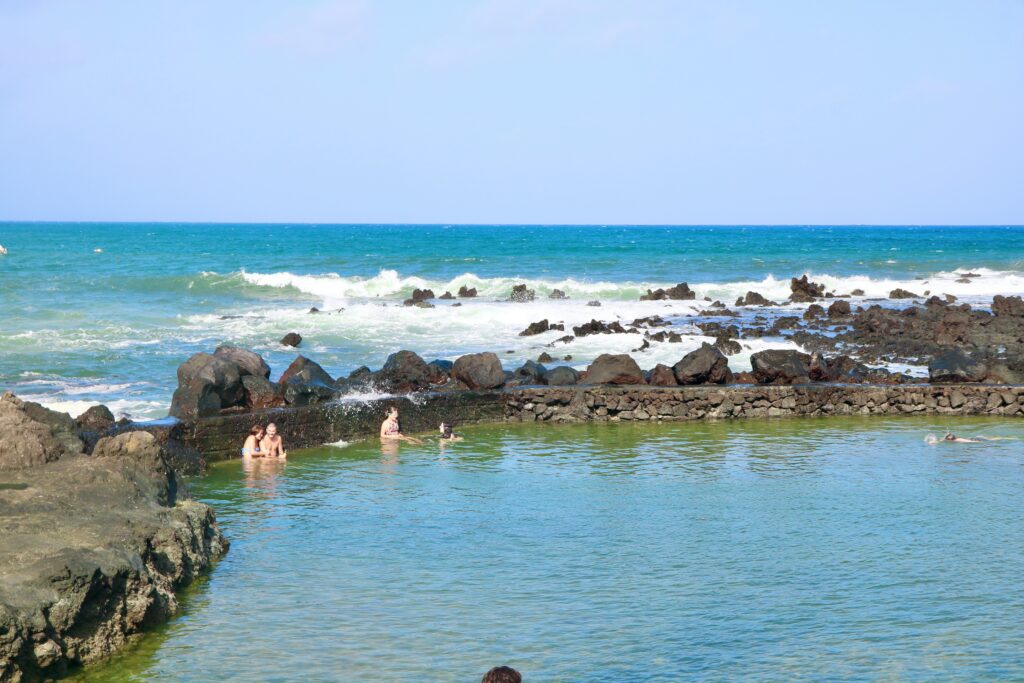
Among the main ones are:
- Susa Pool: Part of the main complex and much appreciated by locals.
- Punta Mujeres Pool (Central): One of the most popular and accessible.
- Las Rosas Pool: Famous for being one of the most protected from the waves, ideal for safe, family swimming. In fact, one of the legends behind the town’s name is linked to the rocks at this very spot.
- Las Nieves Pool: Another of the large formations that invite you to take a dip.
Each one has its own character: some are protected from the waves and are ideal for children, others are perfect for swimming or simply floating in crystal-clear waters while watching the seaweed move with the tide.
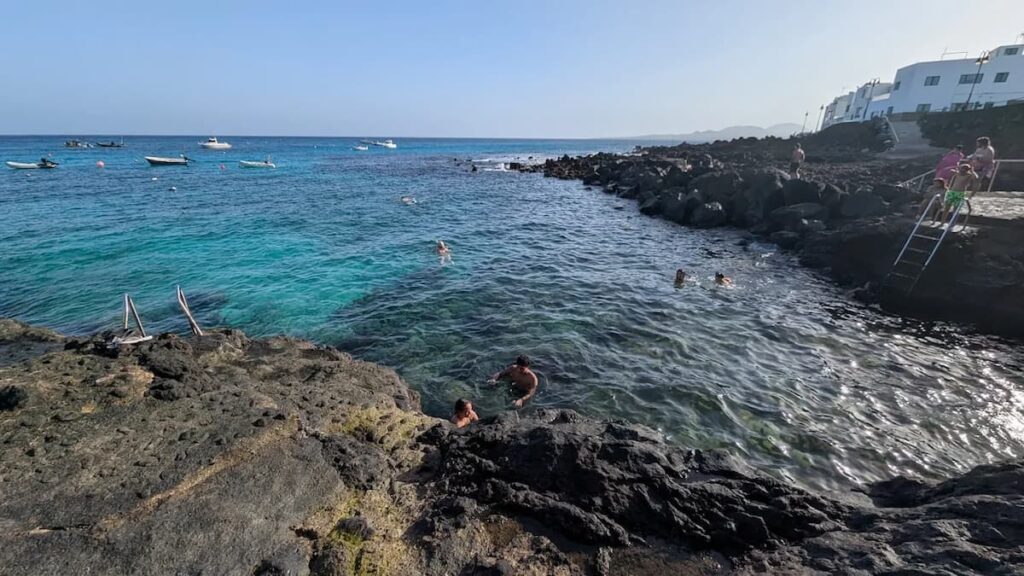
The pools are especially enjoyable at mid or low tide. The recommended tide is mid, as the pools are best enjoyed around low tide, once they have been filled by the high tide. Locals, accustomed to the microclimate of this area, which is often cloudy until midday, suggest that after 12 noon is the best time to enjoy the sun and swimming.
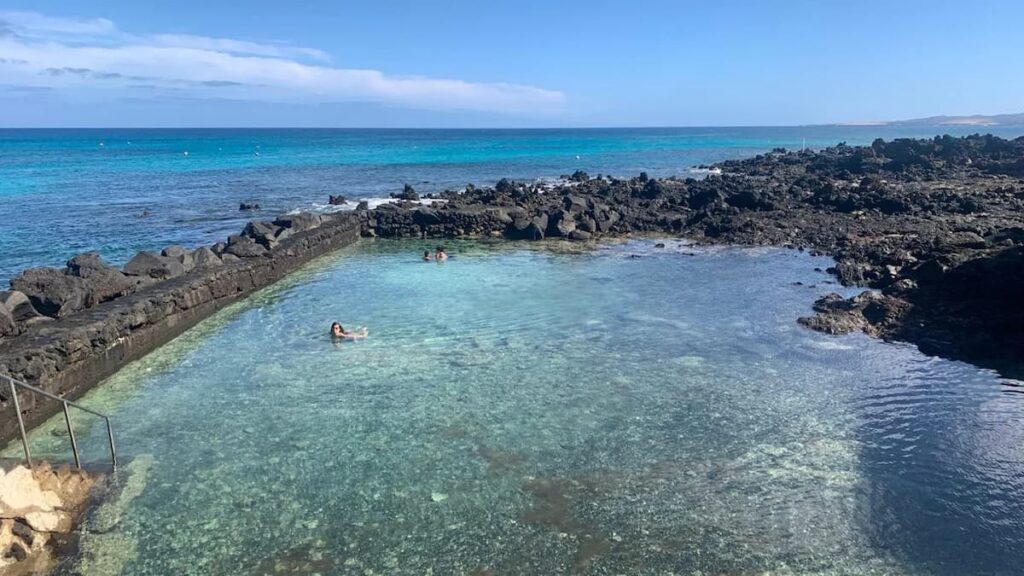
In addition:
- They are free
- They are kept clean by the constant flow of water
- Their surroundings are 100% natural, except for a few access stairs
An authentic natural water park that combines sun, lava and ocean.
3. The village sign and the ‘Molino Salinero’
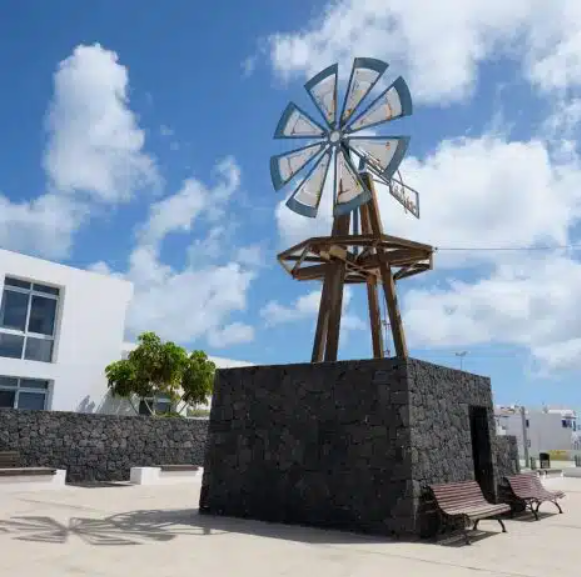
At the entrance to the village you will find a very distinctive sign: a small blue and white structure in the shape of a mini windmill that has become almost an icon of Punta Mujeres. It is simple but has a lot of charm, and represents the aesthetics of the place well.
A few metres away, you can also see the sculpture of the Molino Salinero, a tribute to the island’s past linked to salt flats and traditional work.
4. The seafaring atmosphere and fishing boats
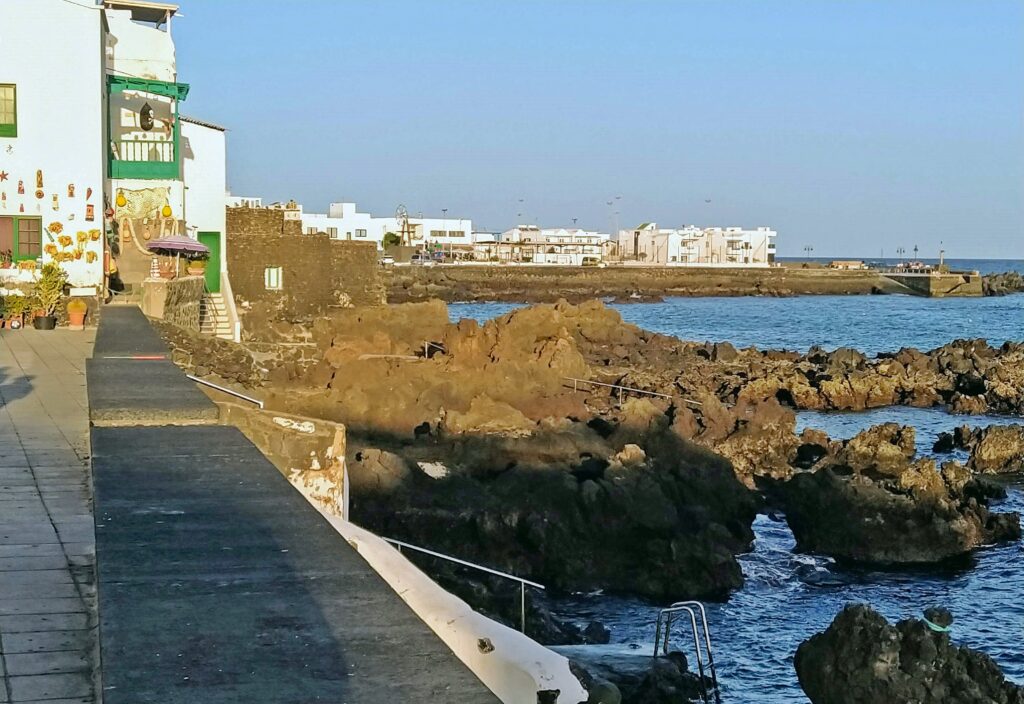
If you walk along the coast at dawn or dusk, you will see traditional fishing boats dotting the horizon. It is one of the most typical images of the village: blue and white boats, nets drying in the sun and fishermen returning with the fresh catch of the day.
The sea is part of local life and can be seen around every corner.
5. Aloe Vera Interpretation Centre
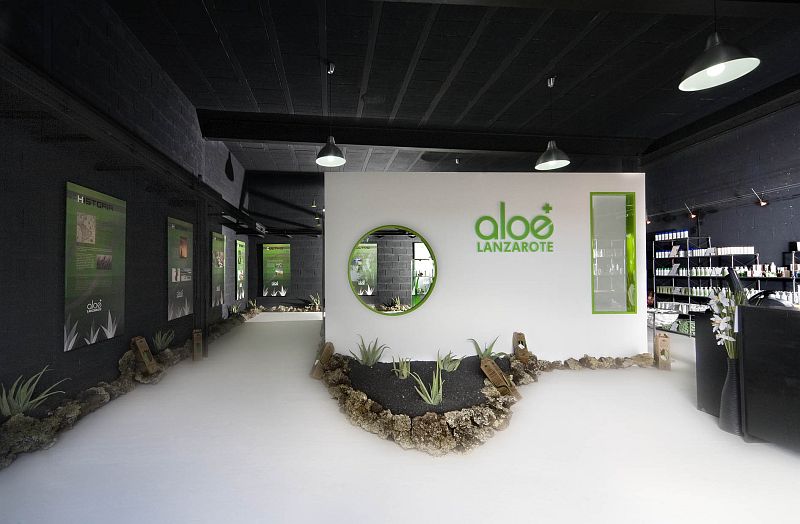
At the back of the village is one of the Aloe Vera interpretation centres. This plant, with its medicinal and cosmetic properties, is widely cultivated on the island. The centre combines a shop with a small museum that offers valuable information about the cultivation, processing and benefits of aloe.
- Access: Free. It is a short but interesting visit, especially to learn about the importance of this natural resource in Lanzarote.
- Opening hours: Open from 9:00 a.m. to 5:00 p.m. (closed on Sundays).
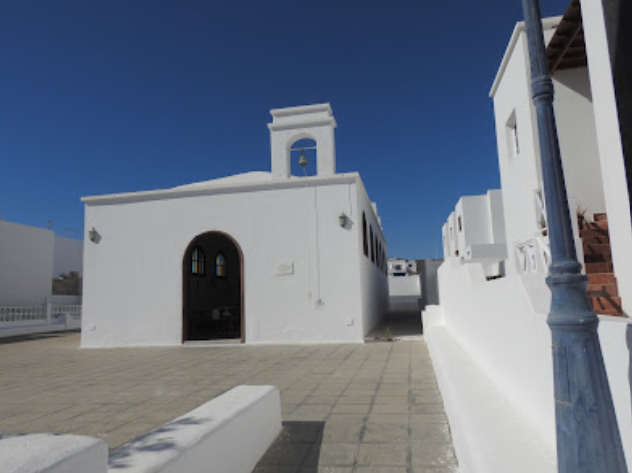
6. Church of Nuestra Señora del Pino
A small white church with a tiny bell tower, it has a simple and very local interior. It is not monumental, but that is precisely why it attracts attention: it is intimate, humble and representative of the spirit of the village.
What to do in Punta Mujeres
In addition to strolling and enjoying the calm sea, and of course enjoying its natural pools, Punta Mujeres is an excellent starting point for nature and cultural activities.
1. Surfing, snorkelling, kayaking or diving
The waters of Punta Mujeres are very clear and protected from the waves, making it ideal for snorkelling. There are also companies that rent:
- kayaks
- paddle surf boards
- diving equipment
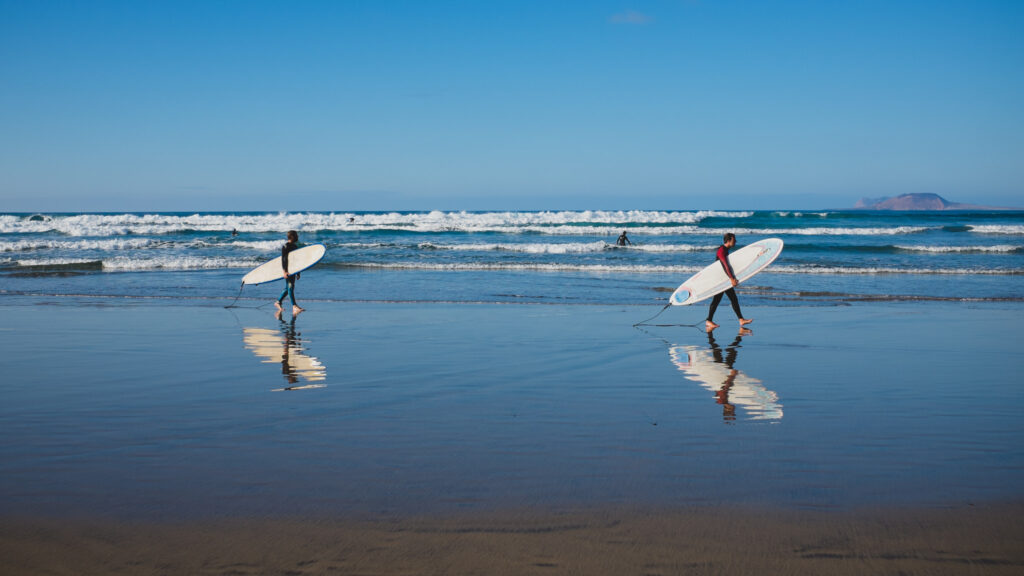
The north coast of Lanzarote is generally known for its stronger wave conditions, ideal for surfing. However, in the Punta Mujeres area, the north sea can easily rise, creating large waves suitable only for intermediate to expert surfers.
- El Espino Spot: This is one of the best waves on the island, but it breaks infrequently and requires very specific conditions of westerly wind and sea height. Extreme caution is recommended for those who venture into these waters.
2. Hiking on the La Corona Volcano
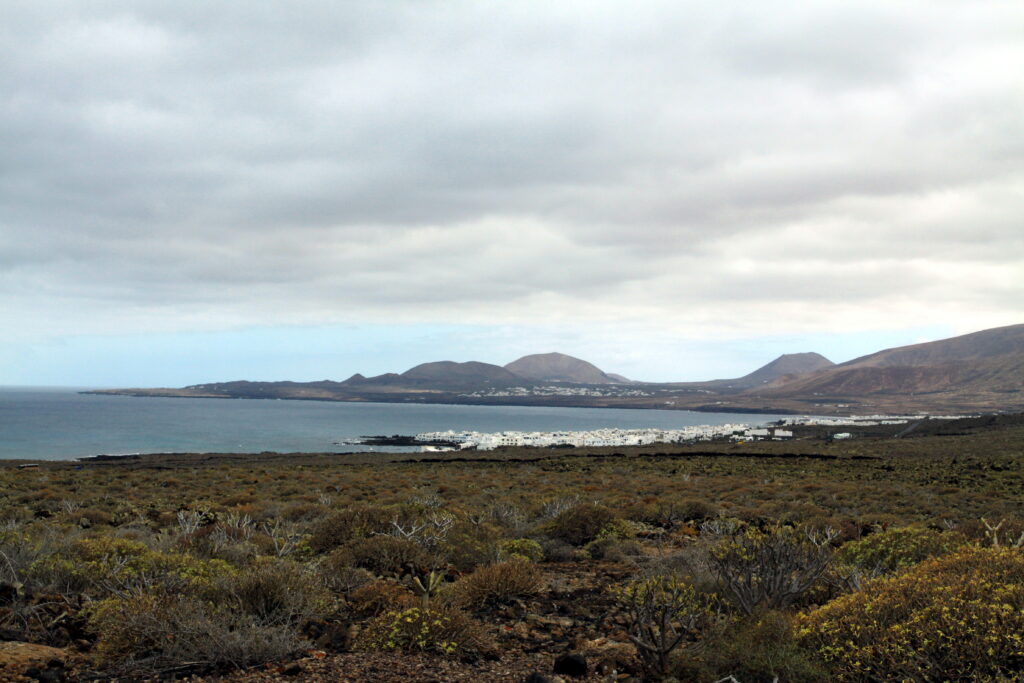
The village sits right on the southern edge of the La Corona Volcano Natural Monument. This volcanic cone, some 600 metres high, is accessible and offers an unparalleled view of the badlands it created, stretching all the way to the coast.
Hiking: For those who love walking, climbing the volcano is an easy to medium difficulty route, requiring good footwear and offering spectacular panoramic views of the north of Lanzarote, including Haría and the coast of Punta Mujeres.
3. Visit the volcanic tubes: Jameos del Agua and Cueva de los Verdes
Punta Mujeres’ strategic location is one of its greatest assets. It is only two kilometres away from two of the most visited tourist centres, representative of the work of César Manrique and the island’s geology.
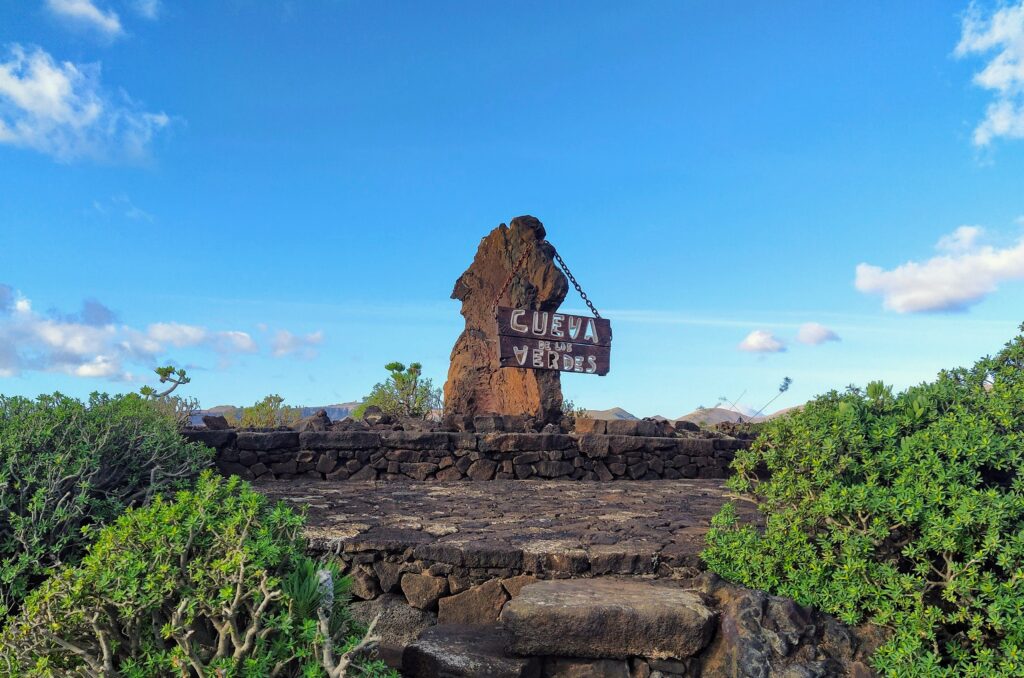
These two natural wonders were formed from the same eruptive event of the Corona Volcano. The volcanic tunnel that extended from the crater to the sea created these cavities:
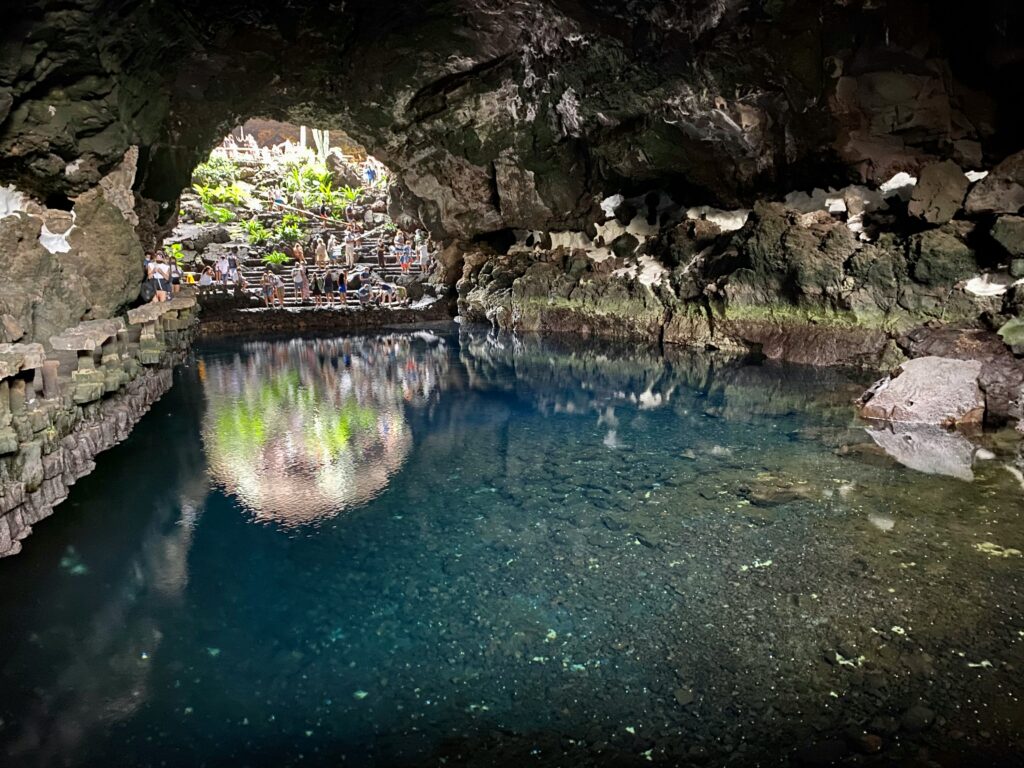
- Cueva de los Verdes: An amazing section of the volcanic tube open to the public, known for its lava formations and a well-kept secret at the end of the tour.
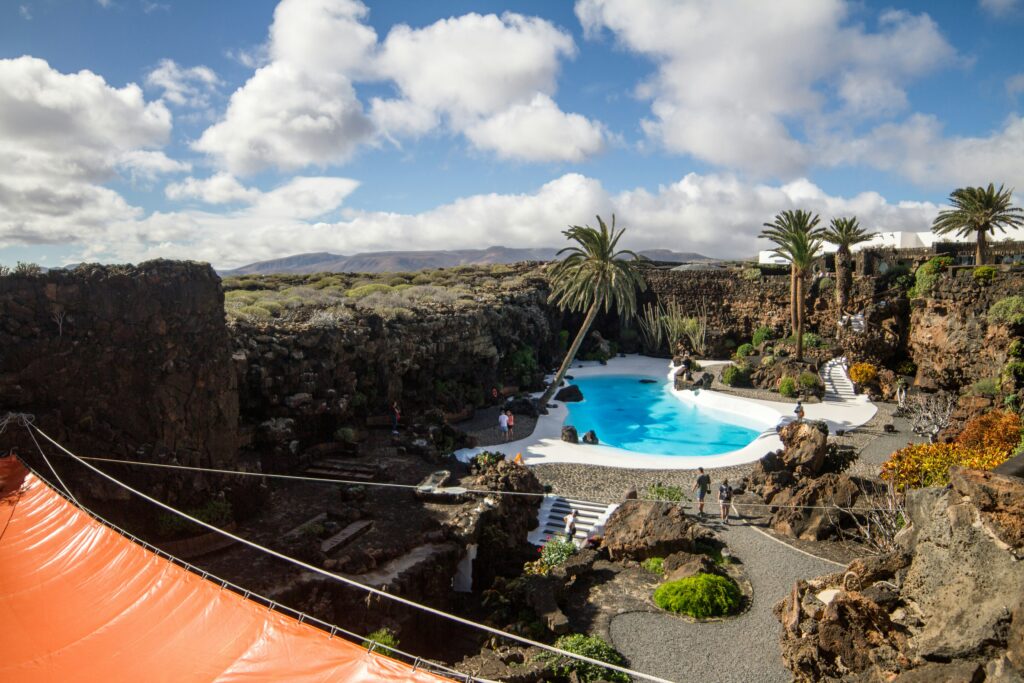
- Jameos del Agua: A section of that same tunnel, transformed by César Manrique into a space for art, culture and nature, where the auditorium, the white pool and the inland lake home to the blind crab (an endemic species) stand out.
Visiting Punta Mujeres without including these two natural and human works of art would be a crime. They are so close that they can be perfectly combined in a morning or afternoon.
Where to eat in Punta Mujeres
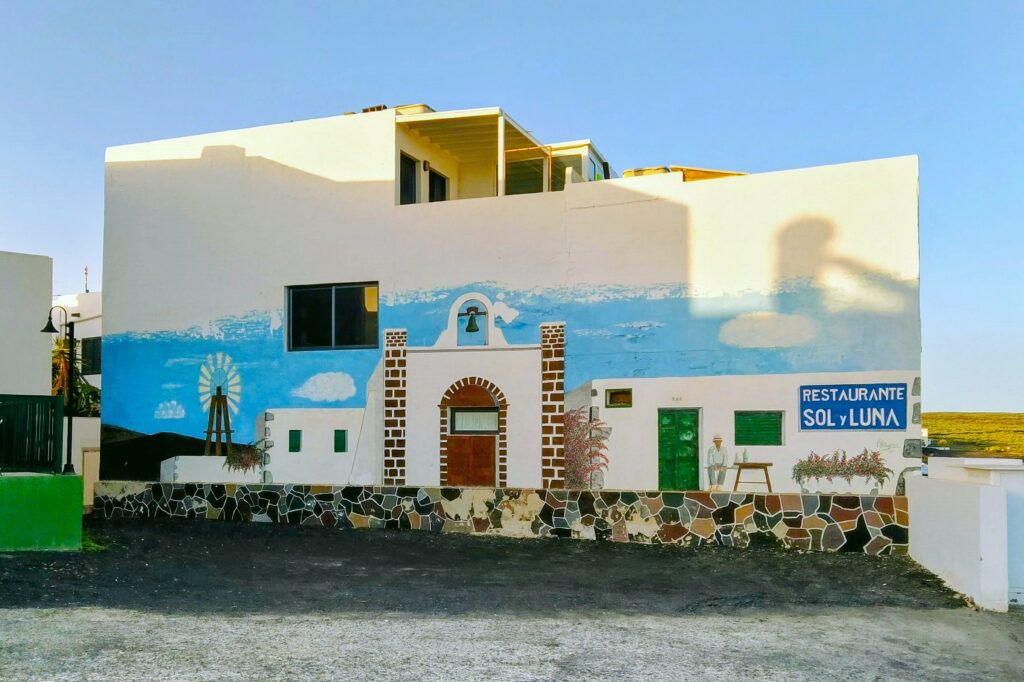
Eating in Punta Mujeres is an experience deeply linked to fresh produce. The local fishing activity ensures that restaurants offer the highest quality seafood and fish. Here, there is no rush and the view is the best condiment. Although it is a small village, it has several highly rated restaurants where you can try fresh fish, tapas and typical dishes of Majorero cuisine.
Recommended restaurants
- El Amanecer: Family restaurant serving home-style cooking. Specialists in fresh fish, paellas and seafood.
- El Charcón: Located by the sea, with a terrace and traditional dishes made with local produce.
- El Pisquito: Ideal for breakfast, tapas or a simple meal. Very good atmosphere.
- Casa de la Playa: One of the classics by the sea, perfect for a long meal enjoying the views.
Local Table Essentials
The cuisine is a fusion of Canarian tradition and Atlantic freshness:
- Fresh Fish: The star dish. Rock fish, wreckfish or sea bass served grilled or baked.
- Papas Arrugadas con Mojo: The essential side dish. Small potatoes cooked in very salty water and accompanied by red mojo (picón) or green mojo (coriander or parsley).
- Lapas and Octopus: Very popular seafood starters.
How to get to Punta Mujeres
Punta Mujeres is located on the north-east coast of Lanzarote, within the municipality of Haría.
Distances
- From Playa Blanca: 1 hour
- From Puerto del Carmen: 35 min
- From Costa Teguise: 25 min
- From Arrecife: 30 min
By car (the best option)
Take the LZ-1 road towards Órzola until it joins the LZ-201. The village is well signposted.
Parking: It is not possible to park on the seafront, but there are large areas of free parking in the streets just behind.
By bus (guagua)
The bus stop is 235, covered by line 9 (Arrecife – Órzola). Although it exists, public transport is less flexible for exploring the rest of the northern area.
By bicycle
A more athletic option for those who want to explore the east coast. It is 35 km from Arrecife, with curves and some slopes.
What to see in Lanzarote
If you want to make the most of your visit to the island, here are some places we have added to our map:
- Playa Blanca: The ideal base camp for exploring the island. The perfect balance between tranquility, idyllic beaches, modern areas, and natural surroundings.
- El Golfo: with the Charco Verde, it is one of the most striking postcard images of the Canary Islands.
- Risco Beach: one of the wildest, most beautiful, and memorable beaches in Lanzarote.
- Las Grietas: A perfect blend of geology, volcanic landscape, and photogenic appeal that attracts more and more travelers.
- Los Charcones: a string of unspoilt natural pools stretching along the south-western coast of the island.
- Caleta del Mojón Blanco: a small natural treasure where turquoise waters and ocean calm prevail.
- Los Hervideros: one of the most fascinating and mesmerising landscapes on the island.
- Tahíche: Together with the César Manrique Foundation, this is probably the most important cultural space in the whole of Lanzarote.
Where to stay in Punta Mujeres
Although the village is small, it has several quiet and very cosy accommodation options.
Recommendations
- Apartamentos Punta Mujeres: ideal for being just a few metres from the swimming pools.
- Casa de los Volcanes: rural accommodation with views of the malpaís.
- Hotels in Arrieta or Haría: for more services and variety.
Tips for visiting Punta Mujeres
- Time needed: between 30 minutes and 1 hour if you are just walking around; half a day if you want to swim.
- Best time: morning or afternoon, when the sun softens the colours and the pools are calmer.
- Footwear: wear flip-flops or water shoes for walking on rocky areas.
- Tide: check the tides before you go; mid-tide or low tide is ideal.
Frequently asked questions about Punta Mujeres
Can you swim in the natural pools?
Yes, and it’s one of the best things you can do. They are calm, safe and perfect for families.
Are there restaurants nearby?
Yes, several of them with sea views and fresh fish of the day.
Is it a very crowded tourist destination?
No. Punta Mujeres retains its local essence and relaxed atmosphere.
Is it close to other attractions?
2 km from Jameos del Agua and Cueva de los Verdes; a few minutes from Arrieta and Haría.
Conclusion: Punta Mujeres, an essential spot in Lanzarote
Punta Mujeres is one of the most authentic and peaceful villages in Lanzarote. Its natural pools form a landscape unique in the Canary Islands, its white houses convey calm and its proximity to some of the island’s most emblematic places makes it a perfect destination to spend a morning, an afternoon or even stay for a few days.
If you are looking to disconnect, swim in crystal-clear waters and discover a more local and less touristy Lanzarote, Punta Mujeres should be on your itinerary.
Photo Credits
Below are the photo credits in order of appearance. Royalty-free photos will not be listed below:
- Dguendel, CC BY 4.0, via Wikimedia Commons
- Patrice78500, CC BY-SA 4.0, via Wikimedia Commons
- Nic D, via piscinas-naturales.es
- Paul Lammertsma, via piscinas-naturales.es
- J. Martin Velasquez, via piscinas-naturales.es
- Ren Mills, via piscinas-naturales.es
- Lanzarote.com, via lanzarote.com
- Alberto-g-rovi, CC BY 4.0, via Wikimedia Commons
- Hectorpm, CC BY-SA 4.0, via Wikimedia Commons
- Asociación Comunidad Alianza, via acaec.es
- Daniele Zanni, CC BY 3.0, via Wikimedia Commons
- Chmee2, CC BY-SA 3.0, via Wikimedia Commons
- Alberto-g-rovi, CC BY 4.0, via Wikimedia Commons
- Alberto-g-rovi, CC BY 4.0, via Wikimedia Commons
- Jorge Franganillo, CC BY 2.0, via Wikimedia Commons
- Beta15, CC BY-SA 4.0, via Wikimedia Commons
,_view_from_the_pier_to_the_town.JPG)

.jpg)

.jpeg)

.jpg)
.jpg)
.jpg)
