El Golfo, Lanzarote: complete guide to discovering its green lake and volcanic landscapes
In the south-western corner of Lanzarote, where the sea crashes against the lava cliffs and the wind carries the smell of saltpetre, lies El Golfo, one of those villages that encapsulates everything that makes this island unique: extreme volcanic nature, seafaring traditions, local cuisine and a landscape that seems to come from another planet. Its name, linked for centuries to the small bay that embraces it, anticipates the importance of the sea in the identity of the place.
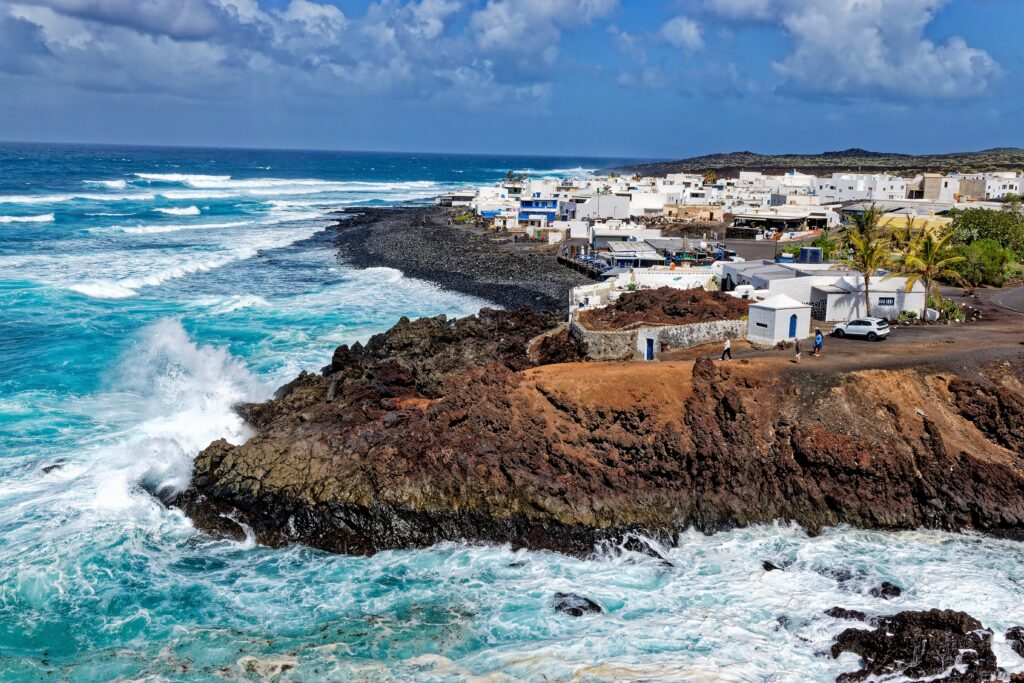
Despite its growing fame, El Golfo retains the tranquillity of an authentic fishing village, with white façades, beached boats and narrow streets that lead to the Atlantic. With just two hundred inhabitants, this small village belonging to the municipality of Yaiza welcomes travellers every day who are looking for one of the most impressive sights in the Canary Islands: the Charco de los Clicos, also known as Charco Verde or, simply, ‘the green lake’.
But El Golfo is much more than its iconic emerald lagoon. It is seafood cuisine, it is a gateway to the volcanic landscapes of the Los Volcanes Natural Park, it is cinema, it is ecotourism, it is tradition and it is one of the best coastal routes in the south of Lanzarote. This guide brings together everything you need to discover it in depth.

A village born of the volcano and the sea
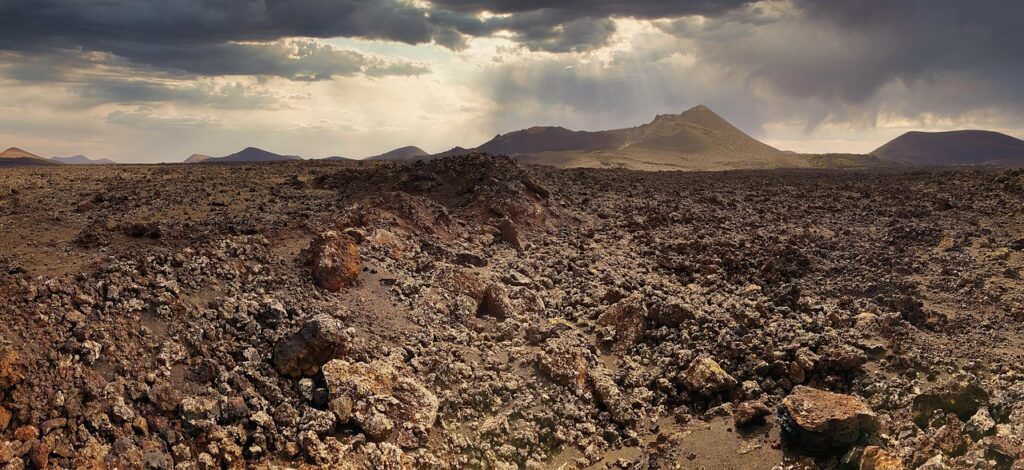
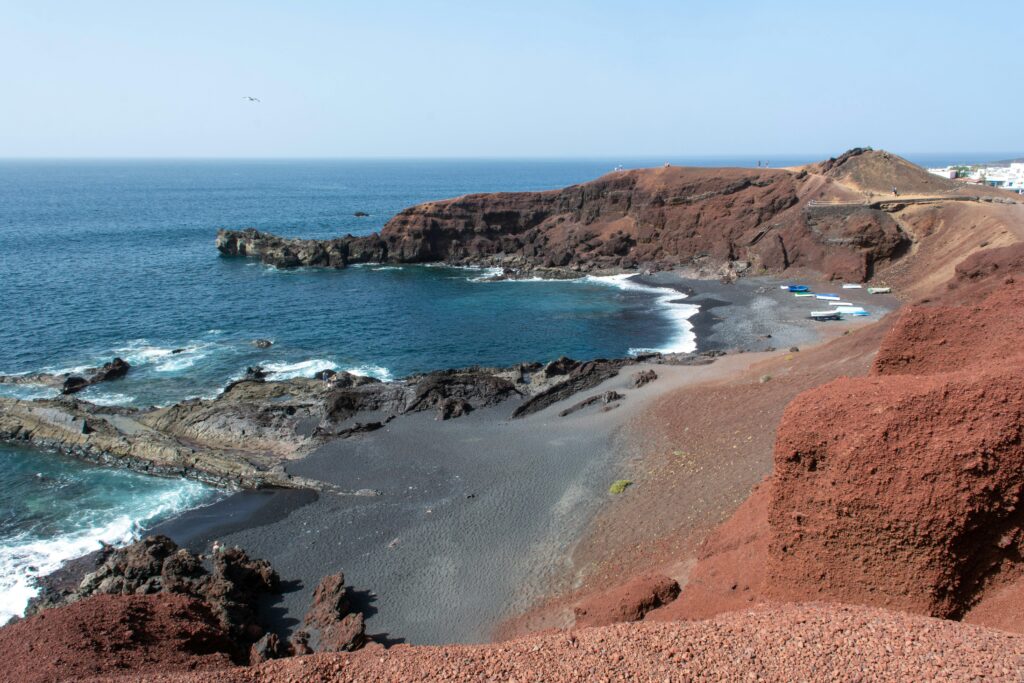
El Golfo literally sits inside an ancient crater open to the ocean. The island’s historic eruptions, especially those of 1730-1736 and 1824, shaped this entire coastline, leaving a landscape of black sand, solidified lava and reddish mountains that contrast with the intense blue of the ocean.
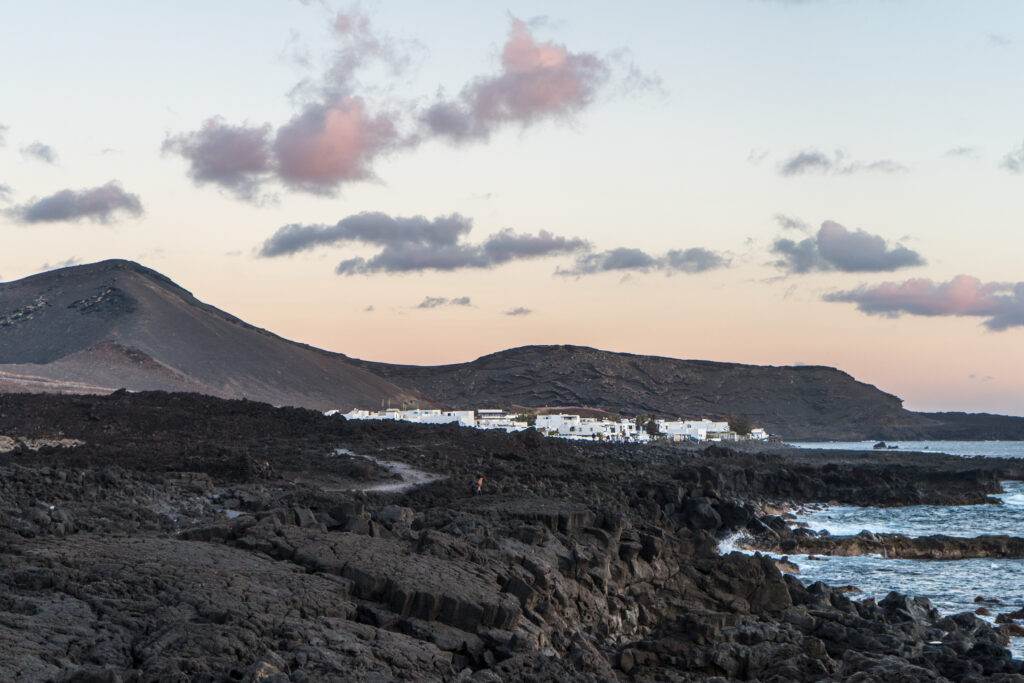
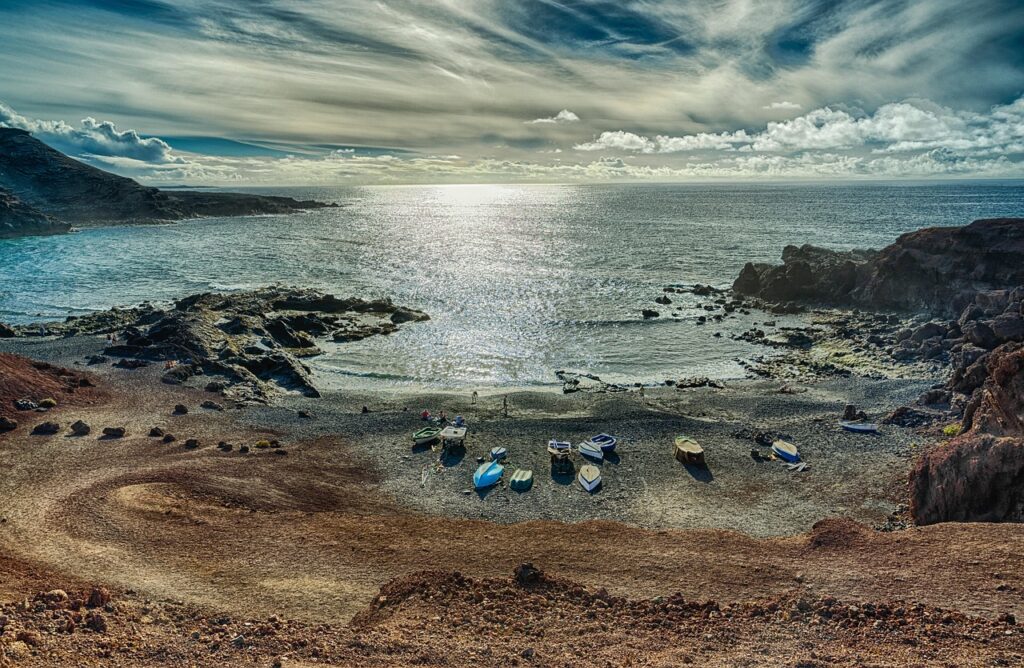
Life here has always revolved around the sea. For generations, the fishermen of El Golfo supplied locals and visitors with cabrillas, old women, limpets, octopuses and moray eels. Today, part of that activity has been redirected to tourism, but the seafaring character continues to set the pace of the village: you will see it in the boats, in the restaurants, in the accents and in the quiet hospitality of its residents.
El Charco de los Clicos: the famous ‘green lake’
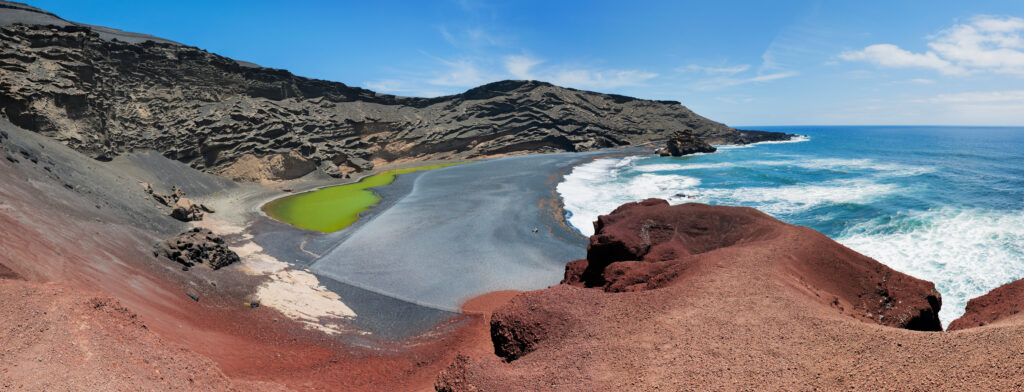
The epicentre of El Golfo’s mystique is undoubtedly its chromatic wonder: El Charco de los Clicos, known worldwide simply as the ‘Green Lake’ or Charco Verde, an emerald green lagoon that looks like a geological rarity from an alien planet.
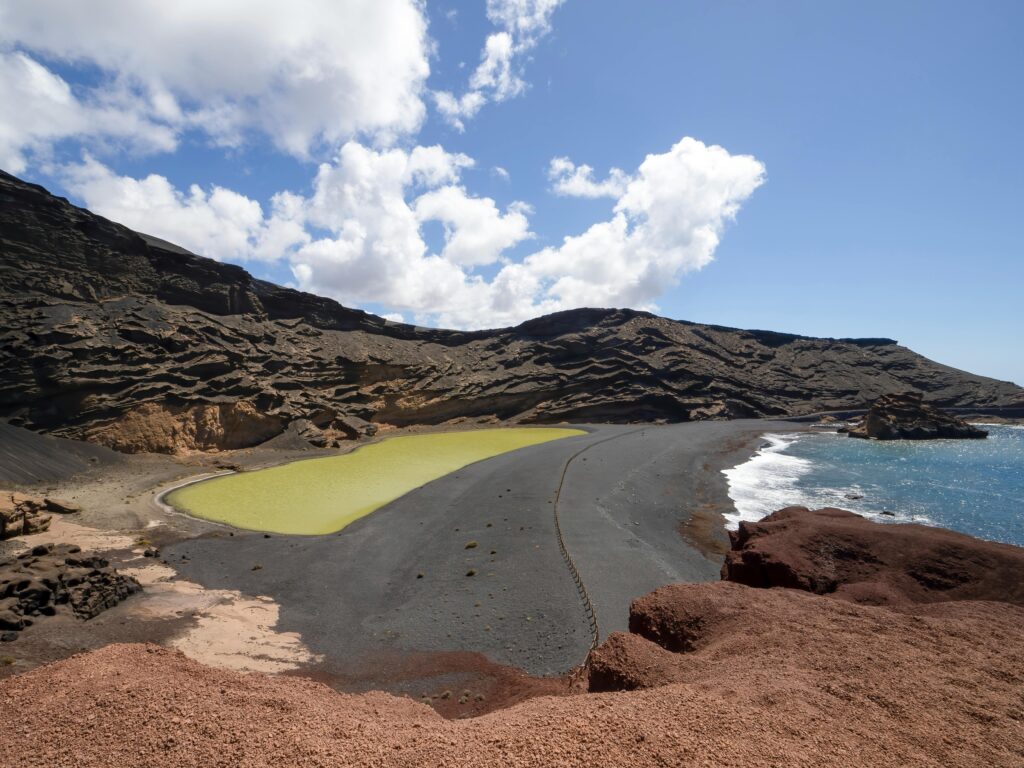
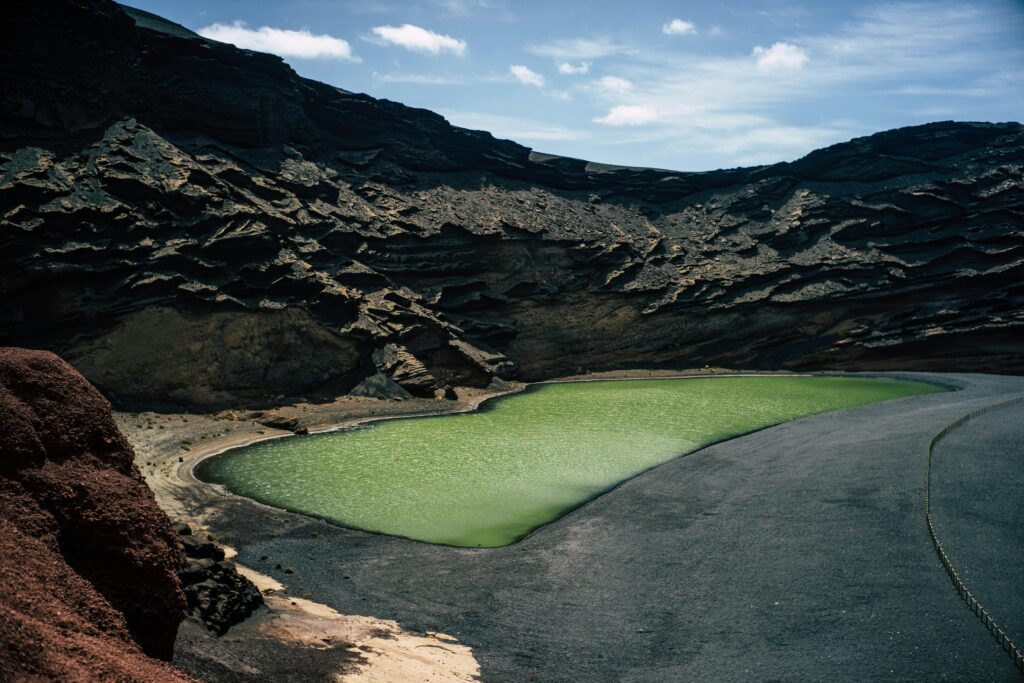
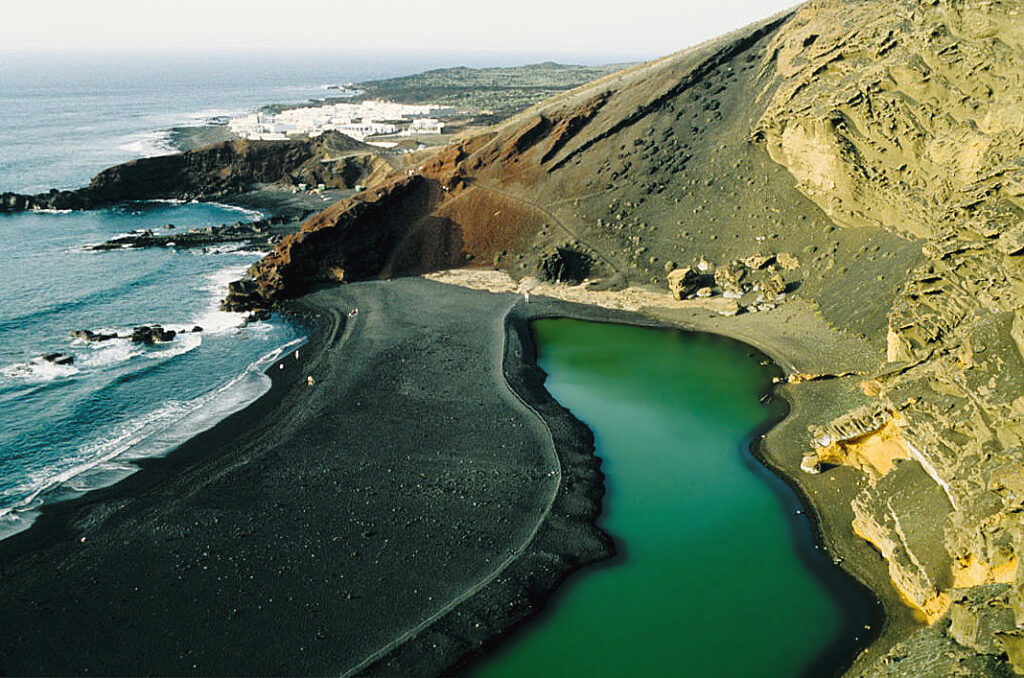
This natural phenomenon is not a common lagoon, but the direct result of the intense volcanic activity that reshaped this part of the island. It is the surviving half of a volcanic crater, the other part of which was devoured by constant erosion from the ocean. The result is a semi-circular open bay, a geological scar where the sea seeps through volcanic ash. Located just two minutes from the village, the other side of the crater is occupied by a black sand beach that creates one of the most photographed images of Lanzarote.
Why is it green?
The colour, a vibrant emerald green that has fascinated curious visitors and filmmakers for centuries, has a surprisingly biological explanation. Although the high concentration of sulphur contributes to the hypersaline environment, the hypnotic hue is due to the proliferation of photosynthetic algae, specifically Ruppia Marítima, which lives in its stagnant waters. This intense green contrasts dramatically with:
- The absolute black of the volcanic sand on the adjacent beach.
- The intense red of the crater walls that surround it.
- The deep blue of the Atlantic just a few metres away.
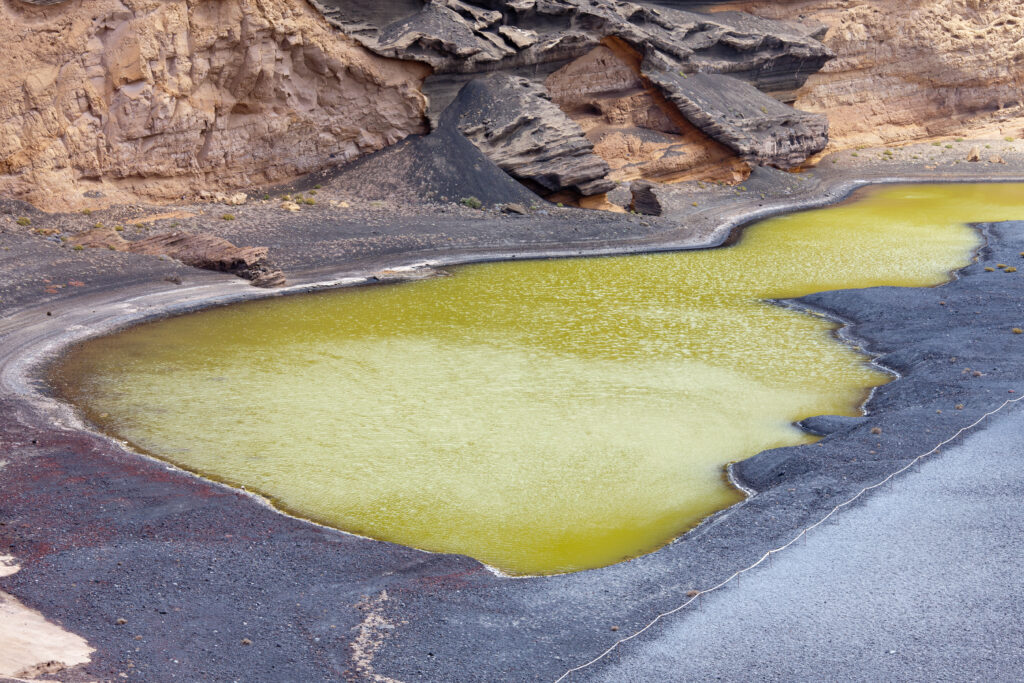
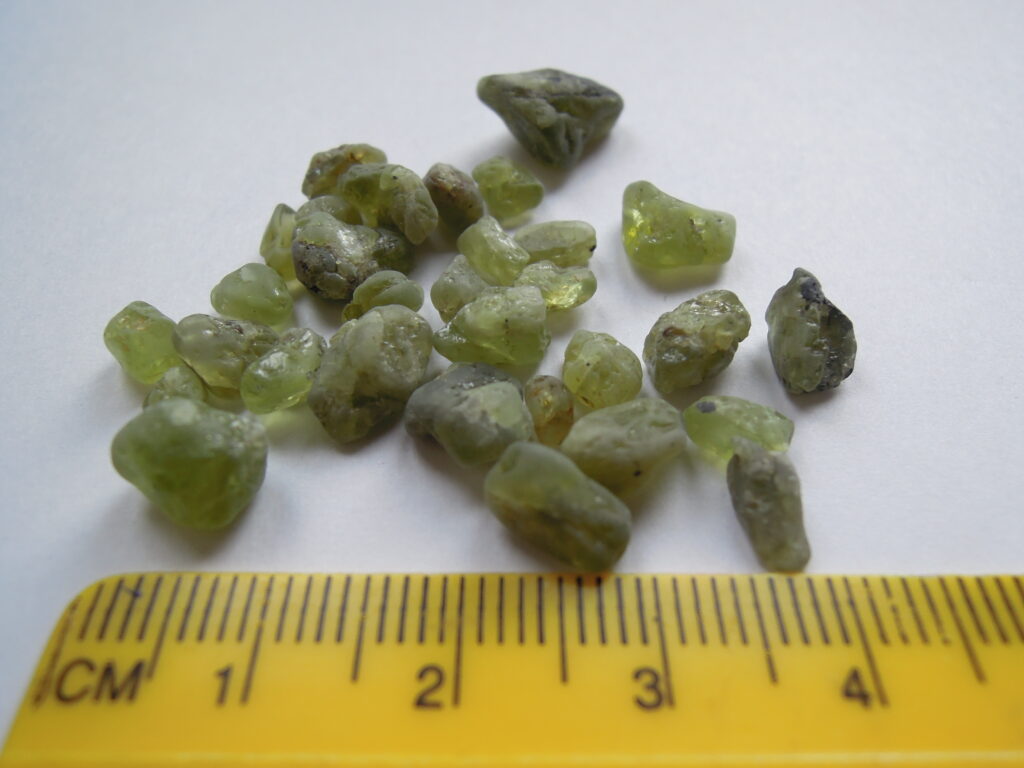
It is important to note that this natural gem is protected. Charco de los Clicos has been declared a Nature Reserve and is part of the Los Volcanes Natural Park protection network, so swimming is strictly prohibited. Local artisans, who are frequent visitors to the area, do take advantage of the mineral wealth of the area, collecting olivine, bright green semi-precious stones that they then turn into original pieces of jewellery, a perfect souvenir of this land of contrasts.
A simple and free visit
Getting there is very easy: from the car park, a short path leads to a small viewpoint from which you can enjoy the best views of the Charco, the entire beach and the surrounding cliffs.
In recent years, restoration work has been carried out to restore it to its original size, which was threatened by the accumulation of sand. Today, the lagoon once again covers an area of around 7,000 m², although it is only a few centimetres deep.
A film set
The magnetism of the green lake has led to it being featured in numerous films. Perhaps the most famous sequence is the one filmed by Pedro Almodóvar in Los abrazos rotos (2009), starring Penélope Cruz and Lluís Homar. Decades earlier, Raquel Welch emerged from its waters in One Million Years B.C. (1966), unwittingly turning the pool into a pop icon.
It has also appeared in westerns, science fiction films and productions inspired by the work of Vázquez-Figueroa. In the words of Almodóvar: ‘For me, it was not a landscape but a state of mind, a character’.
Geology in Motion: Timanfaya and Los Hervideros
El Golfo is located on an axis of geological activity that transforms a visit into an immersion in the eruptive history of Lanzarote.
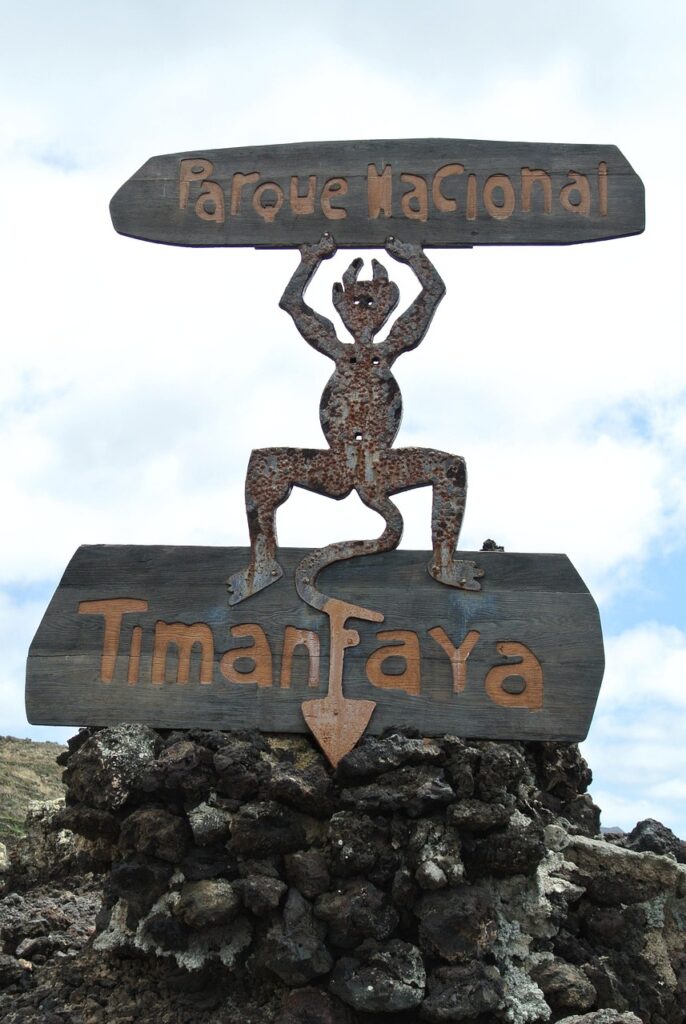
Timanfaya National Park
Just a few minutes’ drive away, Timanfaya National Park stands as the most monumental testimony to the eruptions that ravaged the island between 1730-1736 and, later, in 1824. Visiting Timanfaya is like stepping into a sea of petrified lava, where ochre, brown, red and black tones create an ‘extraterrestrial’ landscape devoid of vegetation.
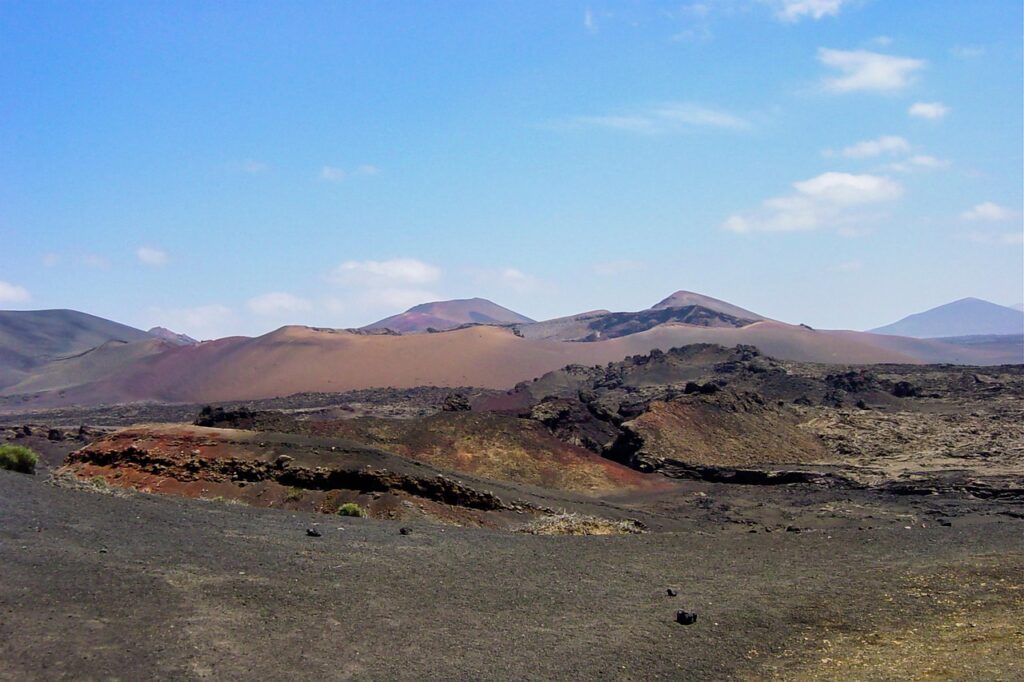
The most popular way to connect with this land of fire is through the Volcano Route, a guided tour by bus that allows you to access the most sensitive areas and appreciate the famous Fire Mountains. For the restless traveller, the park offers fascinating geothermal demonstrations and even the opportunity to taste dishes cooked with the natural heat emanating from the fumaroles in the ground. Timanfaya is not just a park, it is a constant reminder of the primal force that shaped El Golfo.
Los Hervideros: The Fury of the Ocean
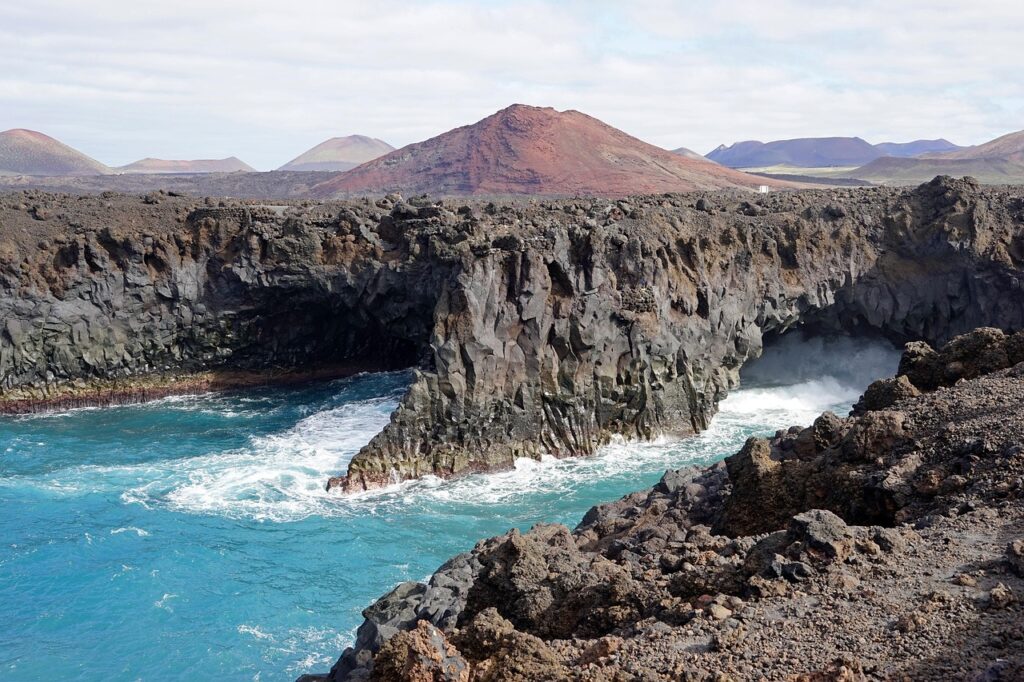
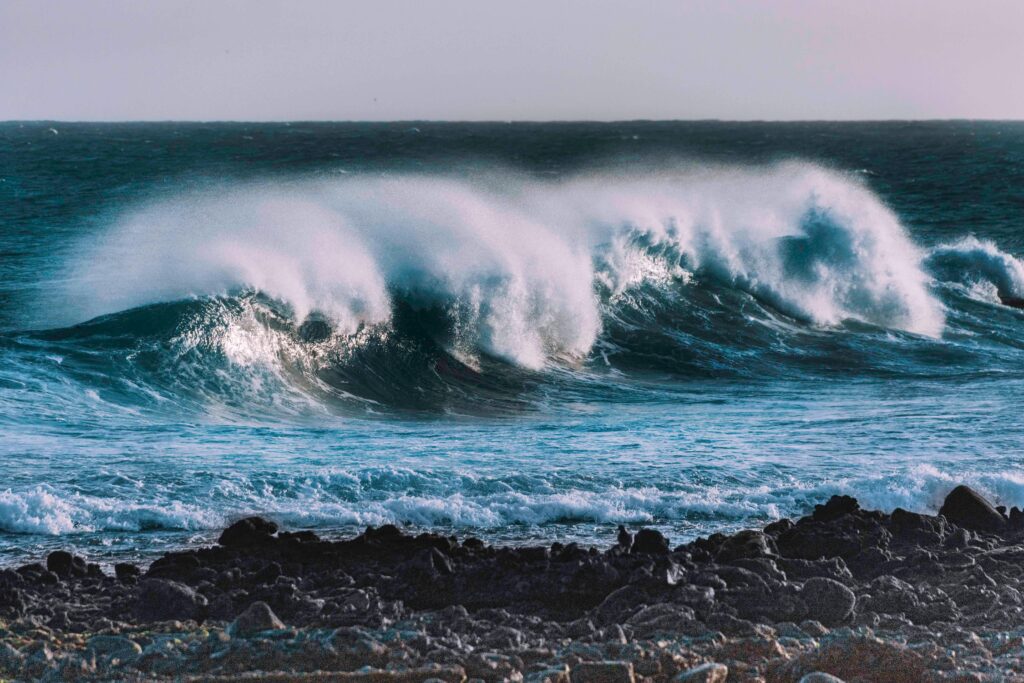
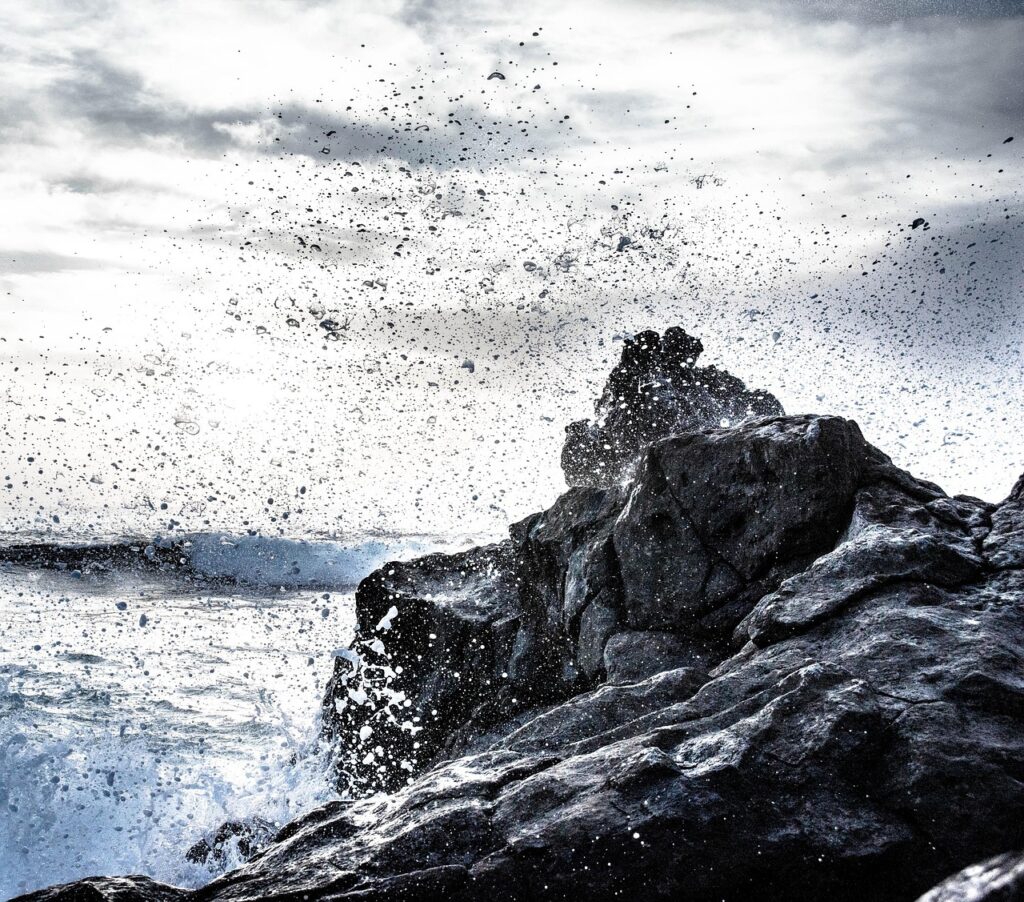
Heading south, the coast offers another spectacle of natural force: Los Hervideros. Its name is no coincidence. Here, the lava that met the sea solidified into whimsical shapes, creating grottos, caves and blowholes. The Atlantic, perpetually rough on this coastline, crashes into these formations, penetrating the cavities and emerging in an explosion of water and foam that simulates an aquatic ‘boil’.
The experience is multi-sensory: the deafening roar of the water as it crashes and the sight of the sea rising against the basalt rocks. It is a place where marine erosion and volcanic architecture come together in a dramatic dance that makes you feel the vibration of the planet beneath your feet.
The Coastal Pulse: Black Sand Beaches and Quiet Coves
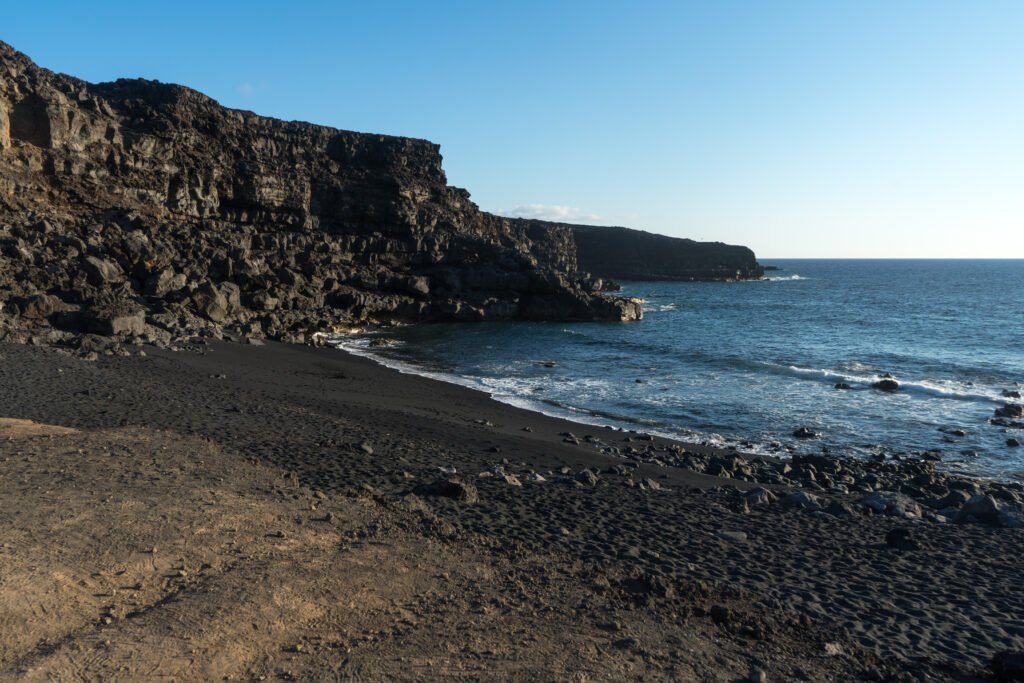
The beaches around El Golfo reflect their volcanic origin: deep black sand and gravel, with strong currents and vigorous waves that invite contemplation rather than swimming.
Charco de Los Clicos Beach
This 300-metre-long beach, which separates the green lagoon from the ocean, is the most scenic in the area. Framed by reddish rock formations and the backdrop of the crater, it is a paradise for photography lovers. Although it is not suitable for swimming due to its dangerous waves, a walk along its dark sand, feeling the energy of the sea, is an act of deep connection with the landscape.
Montaña Bermeja Beach
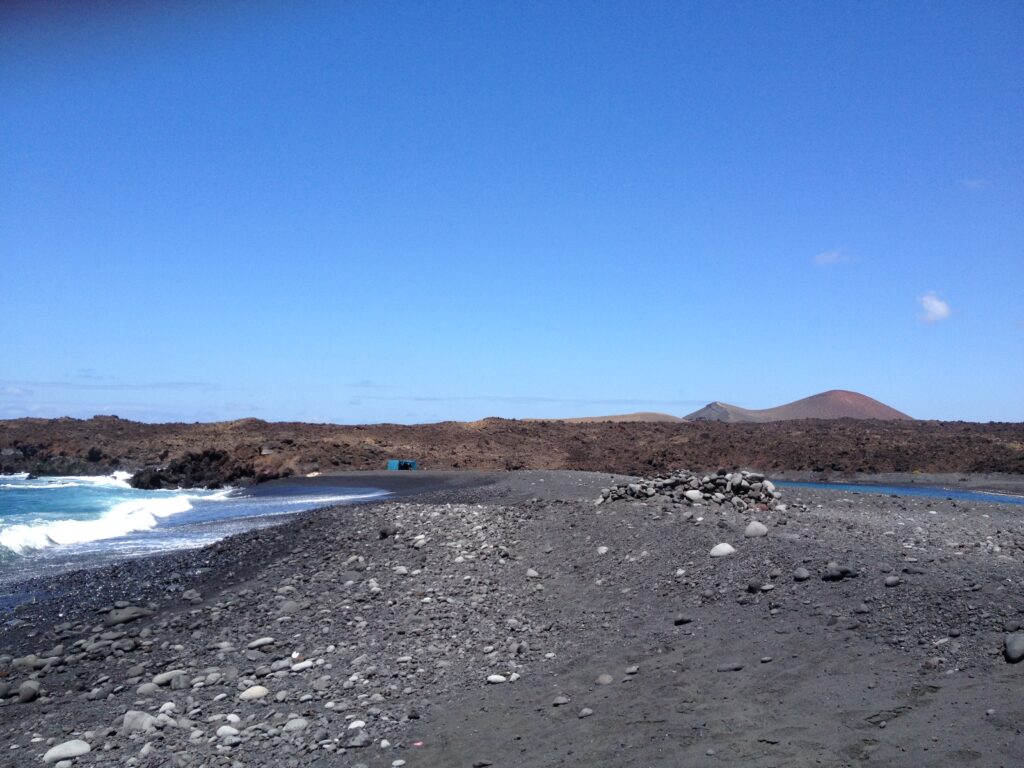
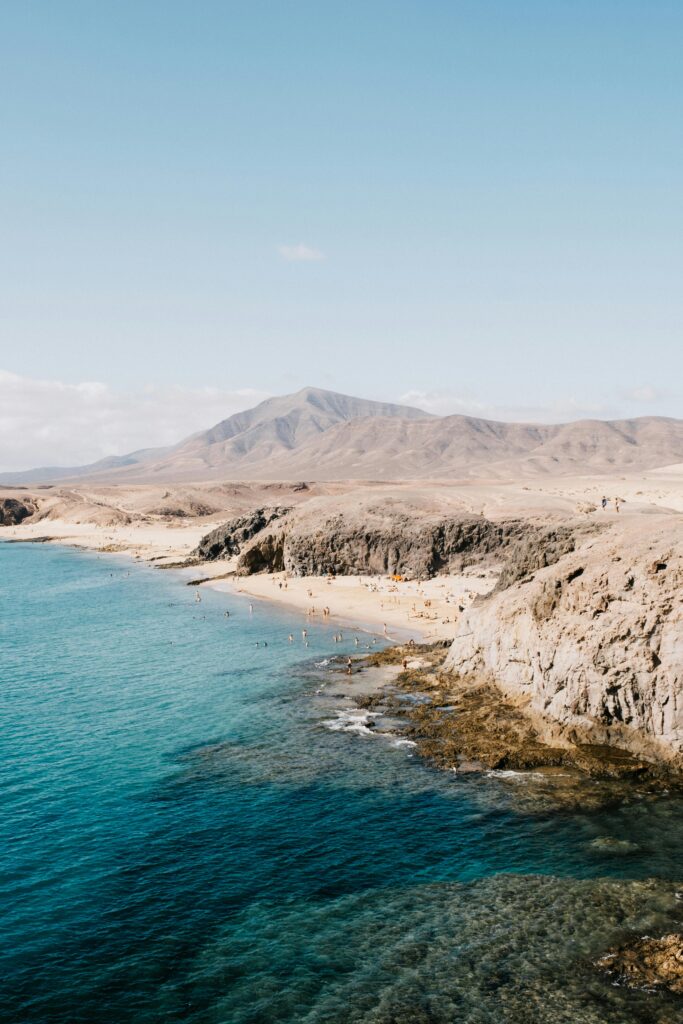
A little further south is Montaña Bermeja, a group of small coves that offer an atmosphere of solitude and silence. Protected by the mountain that gives it its name, this black sand beach with turquoise waters is ideal for a contemplative stop. It lacks services, which accentuates its unspoilt atmosphere. The strength of the currents requires caution if you decide to go into the water, but its desert beauty, with the contrast of the red reliefs and the white foam of the waves, justifies the walk.
The Coastal Route and El Paso Beach
For the active traveller, the Coastal Route is the most intimate way to explore the coast. With a low difficulty level and a length of about 7 kilometres (round trip), this trail starts at the El Golfo car park heading north and runs through the Timanfaya badlands.
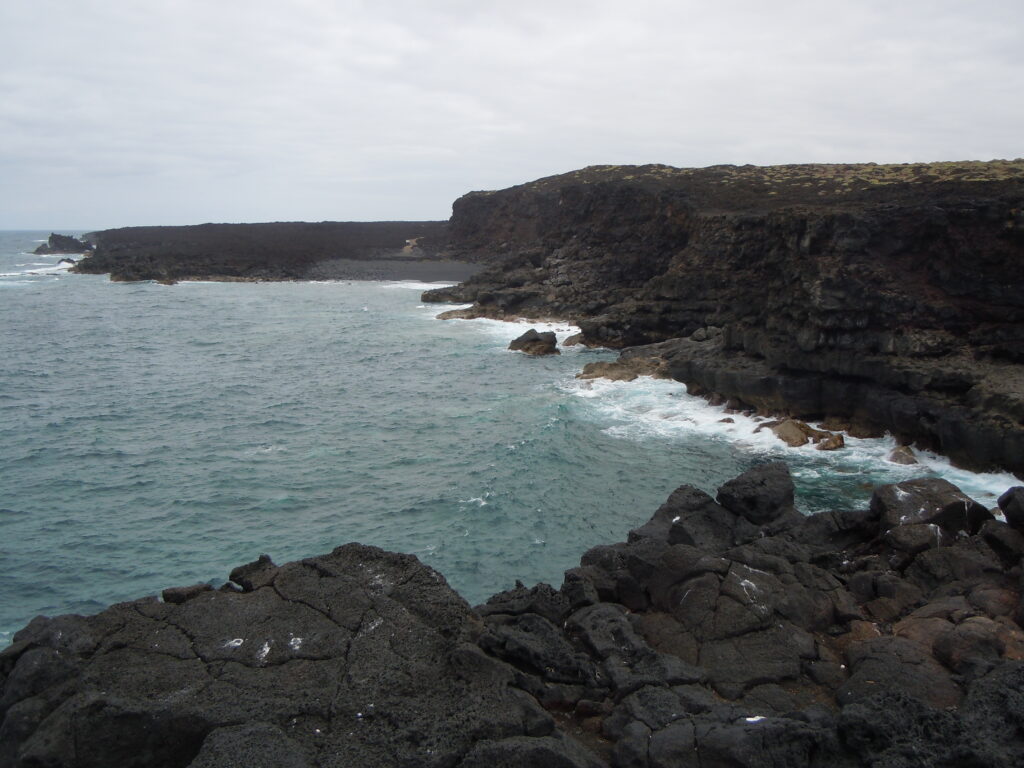
The route ends at the secluded El Paso Beach, a stretch of black sand guarded by cliffs, which is not very busy as it is only accessible on foot. It is on this route that travellers can get a close-up view of the island’s geology, appreciating the turquoise waters that crash against the dark sand and the silhouette of the protected cory’s shearwater, which nests on this coast.
Janubio Salt Flats and Los Charcones: Water and Culture
Adding another layer of colour contrast to the El Golfo route, we find two key points: the salt flats and the natural pools.
Janubio Salt Flats: Architecture and Livelihood
The Janubio Salt Flats are one of the most emblematic natural spaces in Lanzarote. Beyond their aesthetic value, with their ponds reflecting the sky and creating mosaics of ochre and pink tones, they represent a fundamental pillar in the economic history of the island.
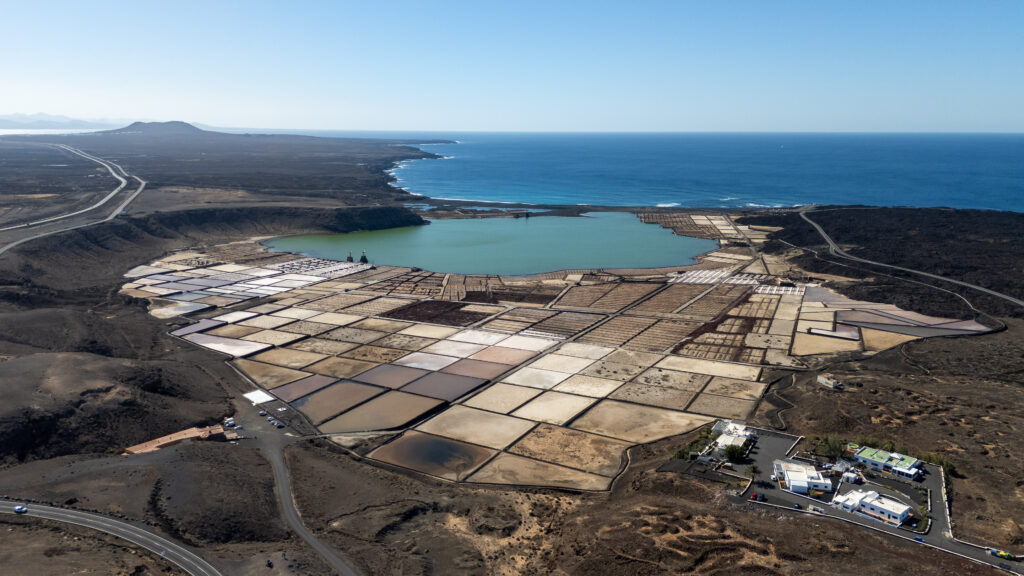
Built with volcanic stone, these salt flats were essential for the preservation of fish in the era of commercialisation, which earned them the designation of Asset of Cultural Interest. Visiting the viewpoint, especially at sunset, when the reflections of the setting sun intensify the colours and the windmill stands out against the horizon, is an experience that combines culture, commerce and scenic beauty.
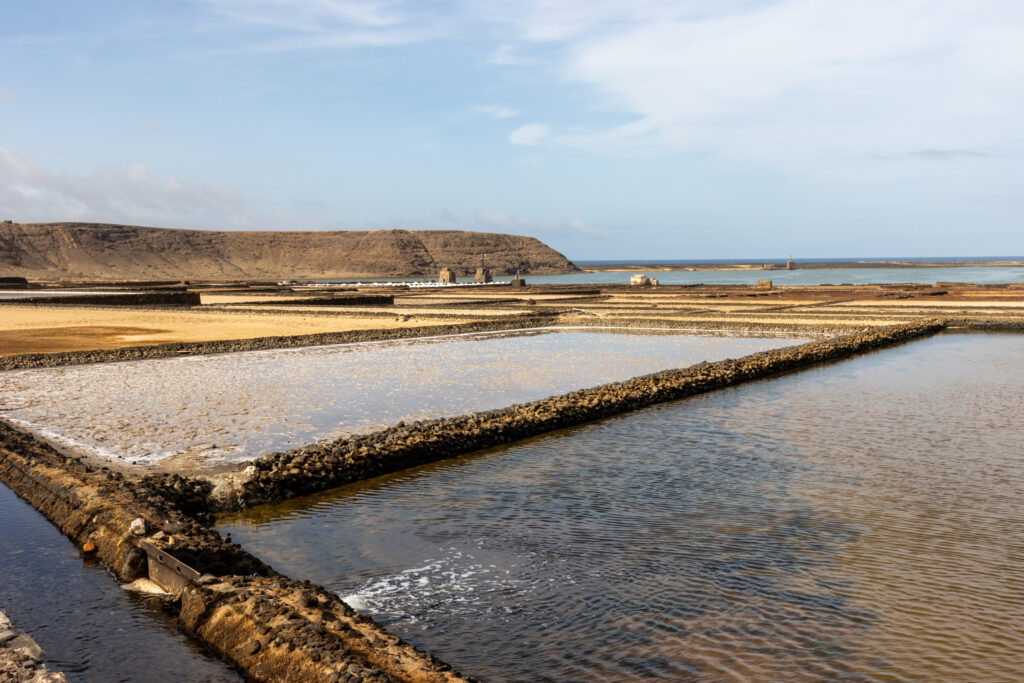
In addition to their historical and cultural value, their geometric palette of whites, pinks, oranges and blacks forms one of the most beautiful landscapes in Lanzarote. You can:
- Visit its viewpoint.
- Buy local salt.
- Stroll along the enormous Janubio Beach, with its volcanic sand.
- Observe protected seabirds such as the shearwater.
Los Charcones: The Secret of the Bath
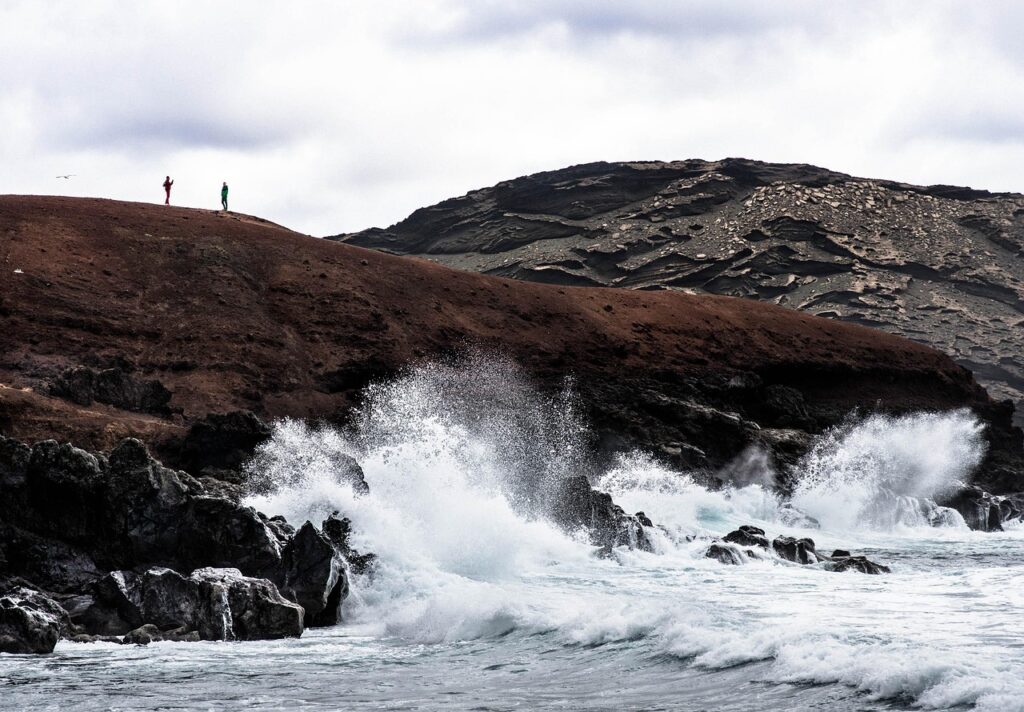
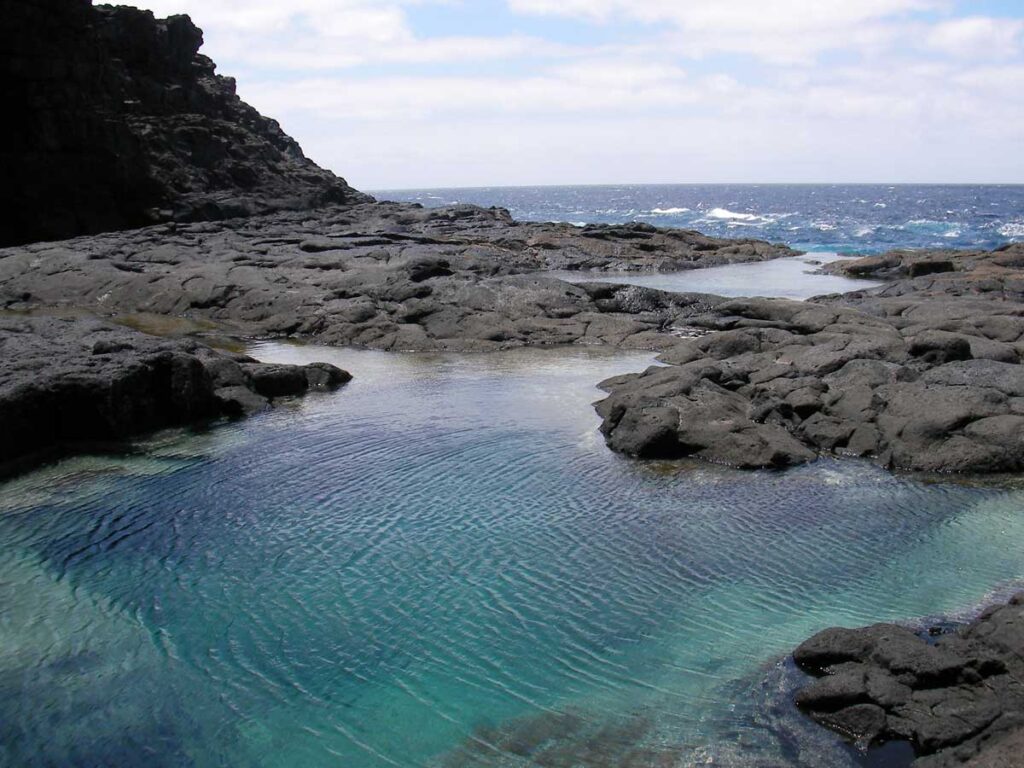
Halfway between El Golfo and Playa Blanca lies one of the area’s best-kept secrets: Los Charcones. This set of natural pools is the ideal place for a refreshing dip, far from the crowds.
These volcanic formations only fill up and reveal themselves in all their splendour at low tide, creating turquoise, calm and safe pools, perfect for enjoying with the family. Although the access road requires a bit of adventure, the reward is an oasis of peace that contrasts with the strong waves of the open coast. It is a swim in a geological setting, an experience that The Kompasse traveller will appreciate.
Gastronomy in El Golfo: seafood flavours facing the ocean
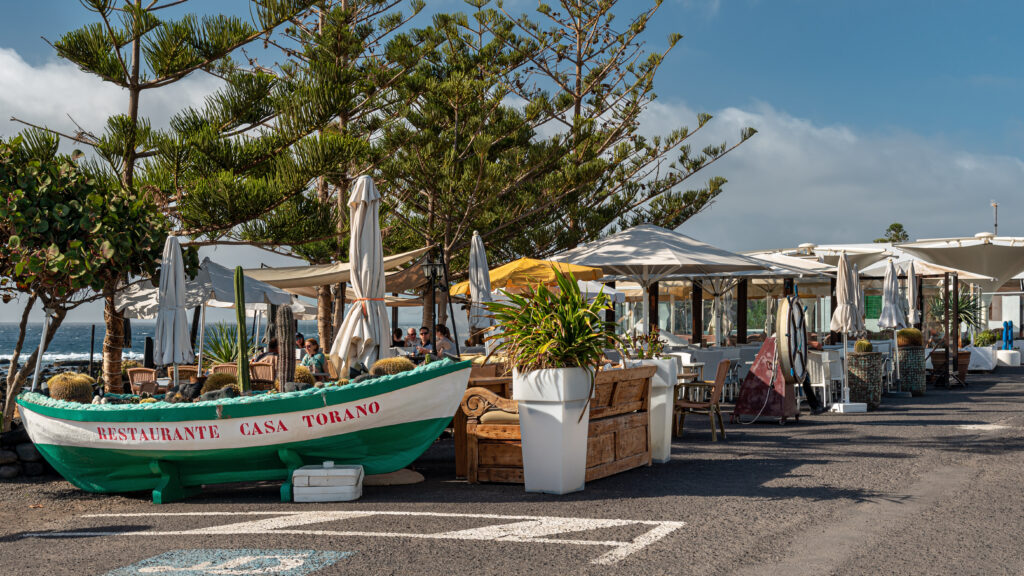
El Golfo, as a small traditional fishing village, has redirected much of its activity towards restaurants, becoming one of the best places in Lanzarote to sample authentic seafood cuisine. The ideal plan here is simple and sublime: eating facing the sea.
The restaurants on the seafront promenade, many of them with privileged terraces overlooking the Atlantic, offer delicacies based on local, fresh produce, caught daily at the fish market. The culinary philosophy is clear: quality produce cooked with simplicity that respects the flavour.
The Experience Menu in El Golfo:
- Fresh Fish: The undisputed star, grilled or barbecued.
- Rice dishes: With local seafood and fish, they are a delicacy that rivals any paella from the mainland.
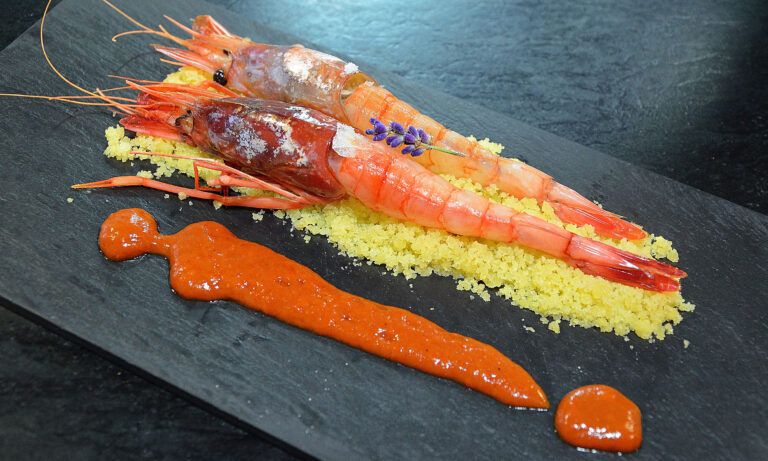
- Seafood starters: Barnacles, octopus, garlic prawns, tuna tacos, and the classic fish broth.
- Canarian tradition: Don’t miss the ceremony of the papas arrugadas (wrinkled potatoes), with their characteristic salty flavour, accompanied by the spicy and intense mojo picón and the refreshing mojo verde. Heartier dishes such as sancocho (stew) or carne de cabrito (kid meat) also have their place in the local cuisine.
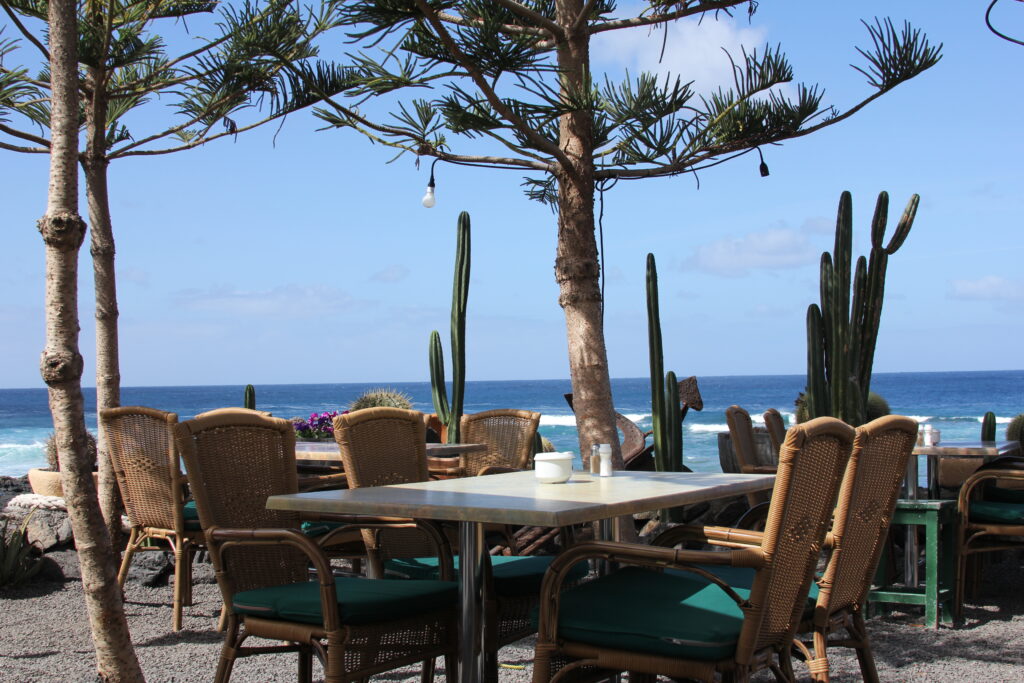
Restaurants such as Casa Rafa, famous for its rice dishes and home cooking; Mar Azul, with its unbeatable views and daily specials; or La Lapa Negra, which honours authentic Canarian cuisine, are must-visit stops to complete your cultural and gastronomic immersion in the area.
Festivals and traditions: La Pardela
At the end of October, El Golfo celebrates its popular festivities, known as La Pardela, in honour of the protected seabirds that inhabit this coast.
Over several days, the following events are organised:
- Popular races
- Open-air dances
- Children’s games
- Food tastings
- And the famous Pardelator, a 10.5 km race that has been held for years on lava tracks and trails
A perfect excuse to get to know the more local and festive side of the town.
El Golfo and Adventure: Energy and Disconnection
El Golfo not only attracts photographers and geology enthusiasts, but also those who seek to connect with the landscape through movement and sport.
Runner Energy: The Pardelator
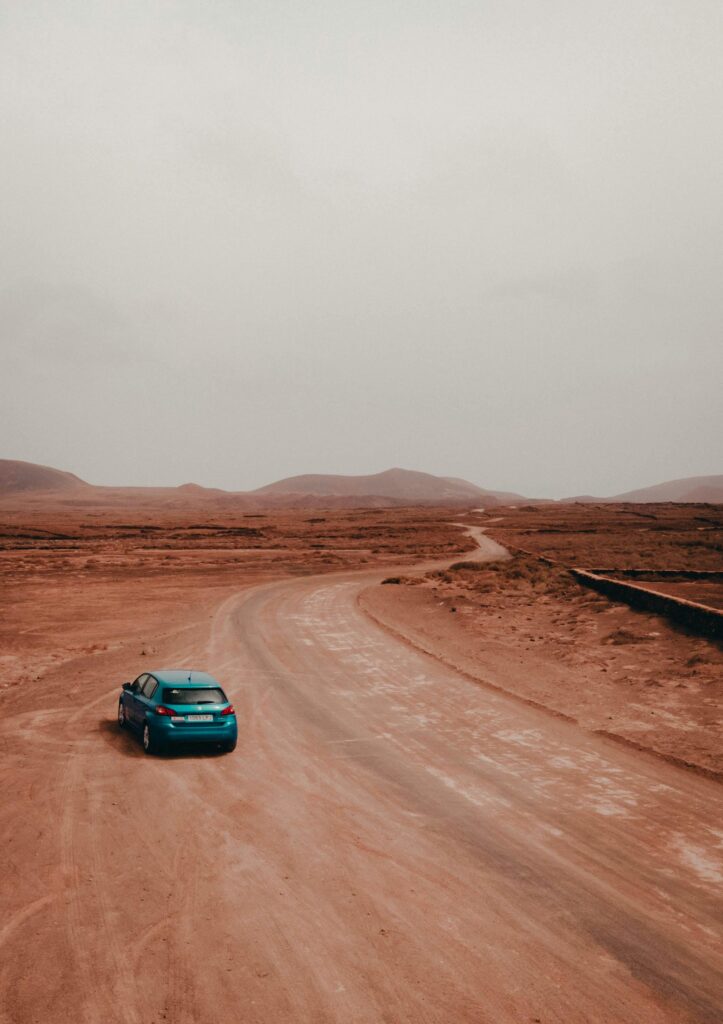
The vitality of this environment is evident in events such as the Pardelator de El Golfo, a popular 10.5-kilometre race held in mid-October. The route runs along spectacular trails and pressed lava tracks, offering runners a unique experience in an environment that seems unchanging. It is an intense way to absorb the energy of the malpaís.
The Calm of Sunset
However, the ultimate expression of the Gulf’s energy comes at the end of the day. After exploring the crater, feeling the force of Los Hervideros and walking on the black sand, the great reward is to choose a quiet spot — perhaps a terrace overlooking the sea or a corner near Charco de los Clicos — and admire the sunset.
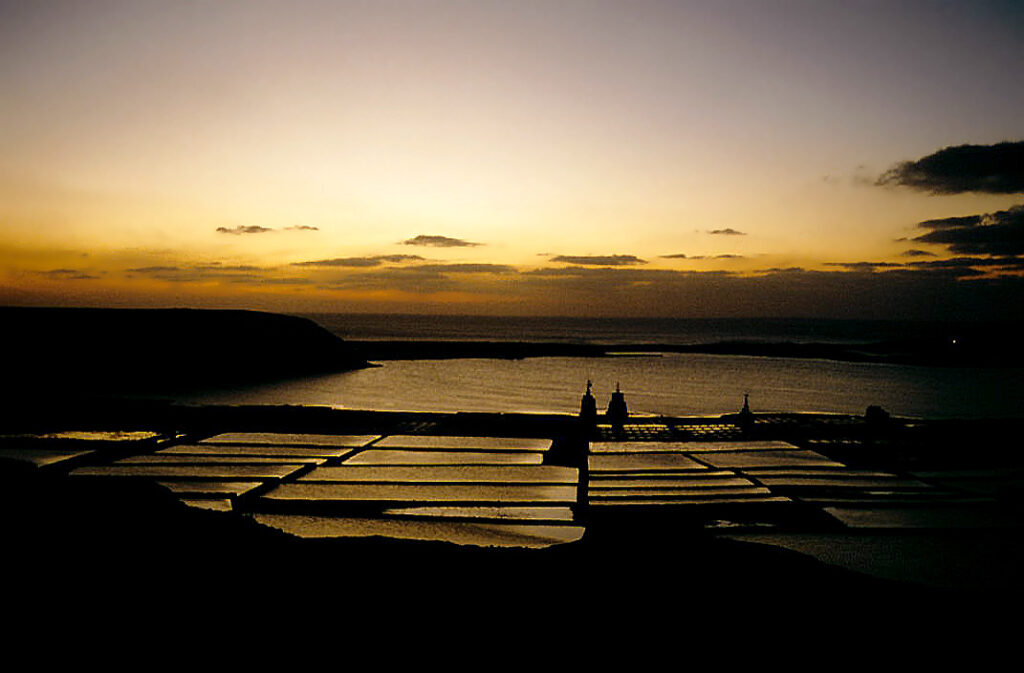
Lanzarote offers magical sunsets, but El Golfo, facing west, maximises them. The sun dips into the Atlantic, painting the sky with hues that are reflected in the dark lava, the Janubio salt flats and the calm waters of Los Charcones. It is a moment of tranquillity that seals the experience, allowing the energy of the place to settle in the traveller’s spirit.
Accommodation near El Golfo
Although the village has small houses and charming rural accommodation, most travellers choose to stay in nearby towns. Among the best options are:
- Barceló Lanzarote Active Resort: Focused on active guests, with an Olympic-size swimming pool, professional cycling centre and a multitude of outdoor activities. Ideal for those who enjoy sport and active tourism.
- Barceló Lanzarote Royal Level: The most exclusive option within the same complex, with private access and premium services. Perfect for those seeking tranquillity and comfort.
- Barceló Teguise Beach – Adults Only: Adults only, with an elegant design, wellness services, good swimming pools and an excellent location next to Playa de las Cucharas.
The perfect tour of the El Golfo coast
Few areas of Lanzarote convey as much energy as this one. The combination of strong tides, volcanic colours, silence, wind and local cuisine creates an atmosphere that is difficult to explain.
The Kompasse’s recommendation for enjoying it to the fullest:
- Start at the Janubio Salt Flats and walk in silence among birds and colourful ponds.
- Stroll along the viewpoints of Los Hervideros, letting the roar of the sea envelop you.
- Stop at Playa Bermeja, one of the most powerful volcanic postcards on the island.
- Go to El Golfo at midday and enjoy fresh fish overlooking the ocean.
- Visit the Charco de los Clicos viewpoint at sunset. Its green, black and blue tones at this time of day are pure magic.
- If you still have energy left, explore the natural pools in the area, such as El Caletón.
- And most importantly: choose your favourite spot and watch the sunset.
What to see in Lanzarote
If you want to make the most of your visit to the island, here are some places we have added to our map:
- Playa Blanca: The ideal base camp for exploring the island. The perfect balance between tranquility, idyllic beaches, modern areas, and natural surroundings.
- Risco Beach: one of the wildest, most beautiful, and memorable beaches in Lanzarote.
- Las Grietas: A perfect blend of geology, volcanic landscape, and photogenic appeal that attracts more and more travelers.
- Punta Mujeres: a small fishing village where the ocean ebbs and flows at will, forming dozens of natural pools.
- Caleta del Mojón Blanco: a small natural treasure where turquoise waters and ocean calm prevail.
- Tahíche: Together with the César Manrique Foundation, this is probably the most important cultural space in the whole of Lanzarote.

Other interesting visits near El Golfo
- Marina Rubicón, near Playa Blanca, ideal for shopping and a nautical atmosphere.
- Charco de San Ginés, in Arrecife, a beautiful urban lagoon.
- Pueblo Marinero (Costa Teguise), with markets and leisure activities.
Conclusion: why El Golfo is a must-see in Lanzarote
El Golfo is not just a beautiful place. It is a compendium of what makes Lanzarote special: its volcanic origin, its seafaring identity, its gastronomy, its wild energy and its ability to thrill. The green lake, the salt flats, the cliffs, the black beaches, the lava trails and the seafront restaurants form a perfect combination for spending a whole day during your trip.
Those looking for nature, photography, gastronomy or simply a place to stop and admire the power of the Atlantic will find El Golfo an unforgettable destination.
Photo Credits
Below are the photo credits in order of appearance. Royalty-free photos will not be listed below:
- Holger Uwe Schmitt, CC BY-SA 4.0, via Wikimedia Commons
- Alexey Komarov, CC BY-SA 4.0, via Wikimedia Commons
- LBM1948, CC BY-SA 4.0, via Wikimedia Commons
- Luis Miguel Bugallo Sánchez (Lmbuga), CC BY-SA 3.0, via Wikimedia Commons
- Jan Helebrant (Juhele_CZ on Flickr) https://www.flickr.com/people/96541566@N06/, CC BY-SA 2.0, via Wikimedia Commons
- MoveinBlue, CC BY-SA 3.0, via Wikimedia Commons
- Patrice78500, CC BY-SA 4.0, via Wikimedia Commons
- Alexey Komarov, CC BY-SA 4.0, via Wikimedia Commons
- MiljenkoSuljic, CC BY-SA 4.0, via Wikimedia Commons
- Photograph by Mike Peel (www.mikepeel.net)., CC BY-SA 4.0, via Wikimedia Commons
- LBM1948, CC BY-SA 4.0, via Wikimedia Commons
- Ocio Lanzarote, via ociolanzarote.com
- Jorge Franganillo, CC BY 2.0, via Wikimedia Commons
- trolvag, CC BY-SA 3.0, via Wikimedia Commons
In this article you will find some affiliate links. If you book or buy something through them, you help us to continue creating independent and useful content, at no extra cost to you. Thank you very much for making this possible!


.jpg)
