Caleta del Mojón Blanco (Lanzarote): a white paradise between black lava and turquoise water
Lanzarote is often associated with a harsh volcanic landscape, shaped by an ocean of lava and black basalt that seems to have stood still in time. However, the island is also home to surprising contrasts. One of these is Caleta del Mojón Blanco, a small natural treasure where white sand, turquoise waters and calm seas completely break with the image of ‘volcanic Lanzarote’. Located on the north coast, very close to the fishing village of Órzola, this cove is a wild, intimate and luminous corner, a place where nature shows itself in its purest form.
This intimate and surprising corner is not just a beach; it is a manifesto of nature, a constant dialogue between petrified fire and the wind-blown breath of the Sahara. In this article, you will discover how to get there, what to expect, how to enjoy it responsibly, why it is such a special place and what you should bear in mind to make your visit unforgettable.

Where is Caleta del Mojón Blanco?
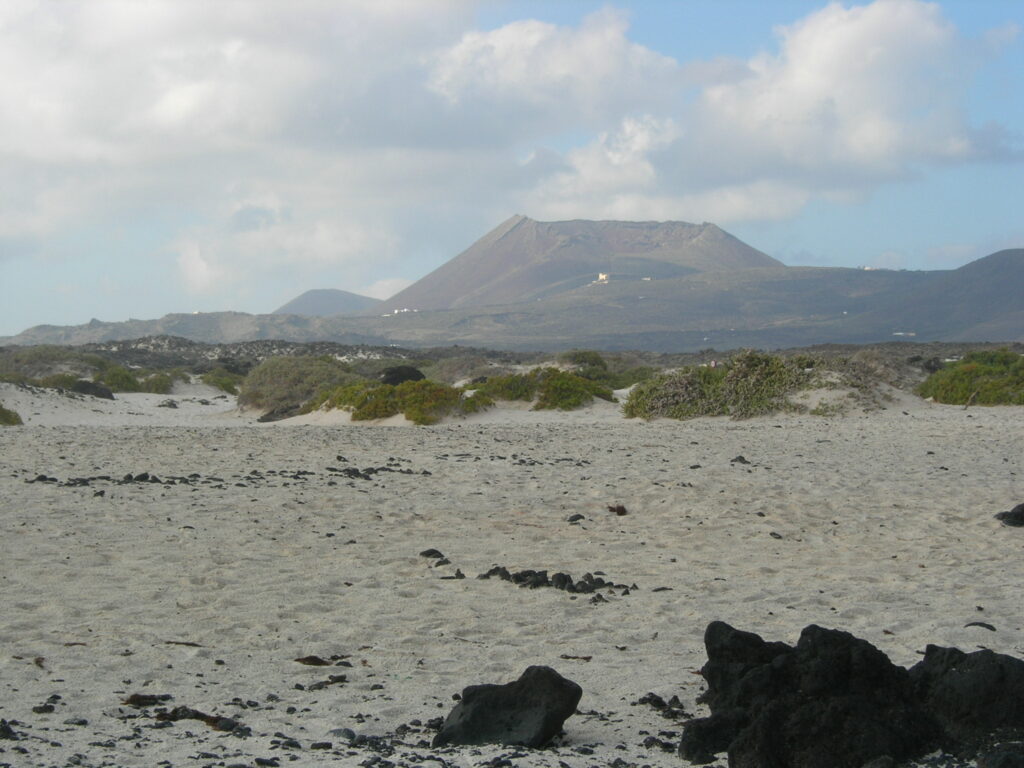
Caleta del Mojón Blanco —also known as Caleta del Mero— is located on the coast of Órzola, within the area known as Los Caletones, a group of coves, pools and small natural beaches that form between the badlands of the Volcán de la Corona and the Atlantic Ocean.
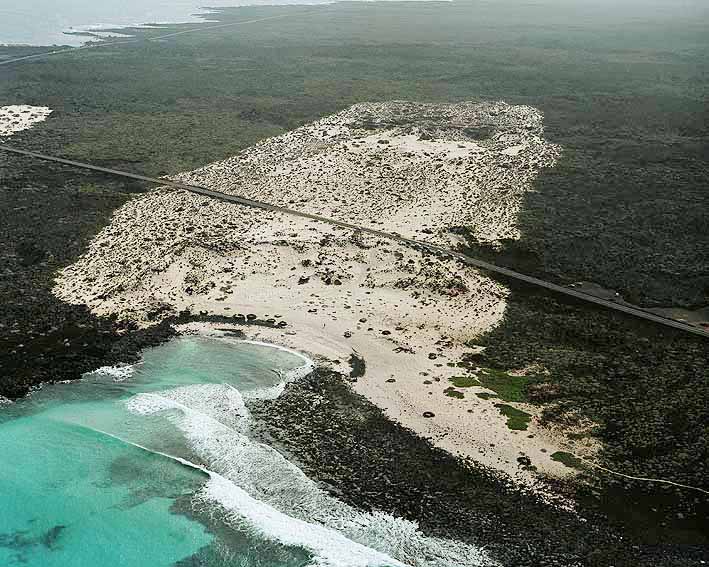
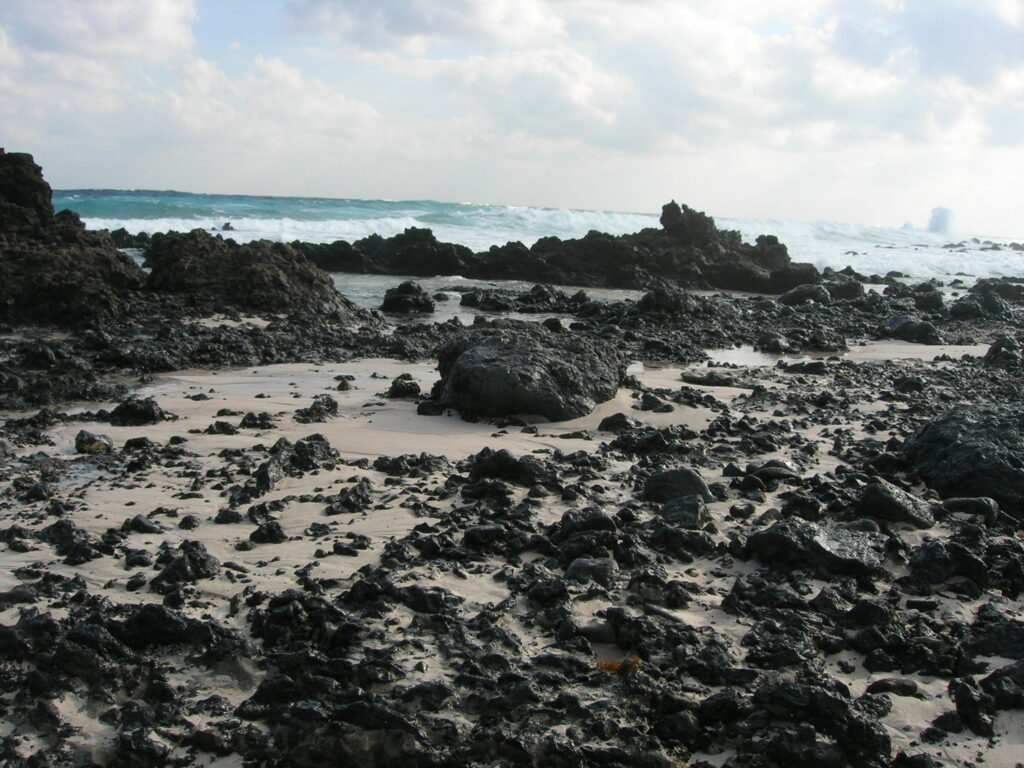
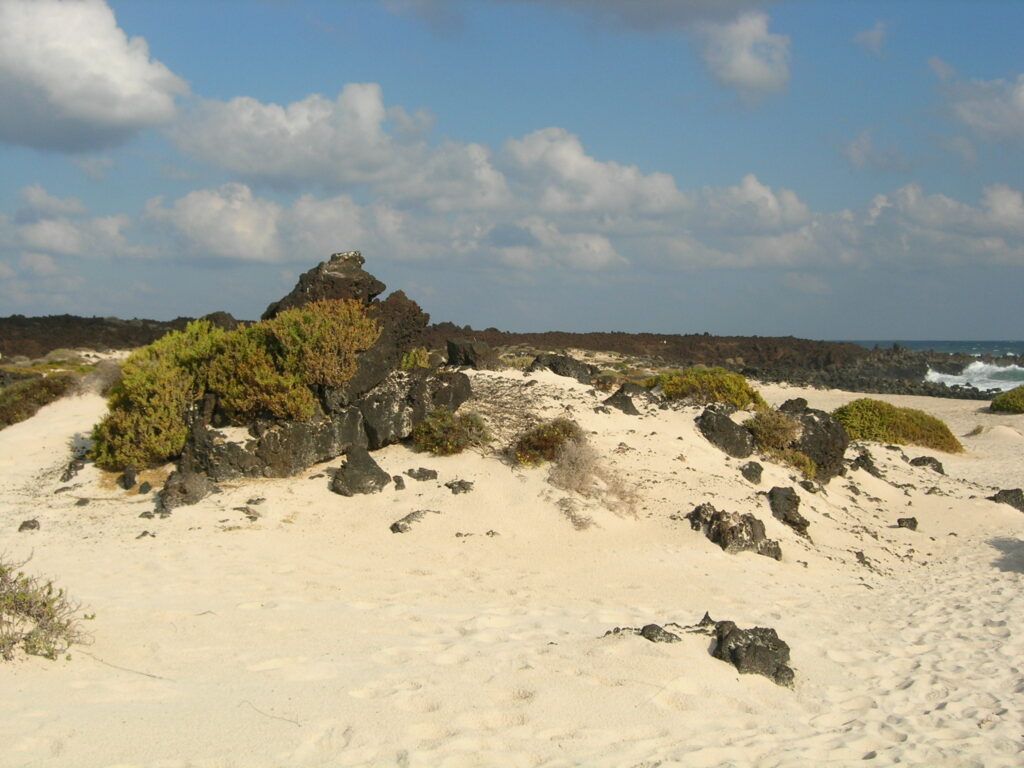
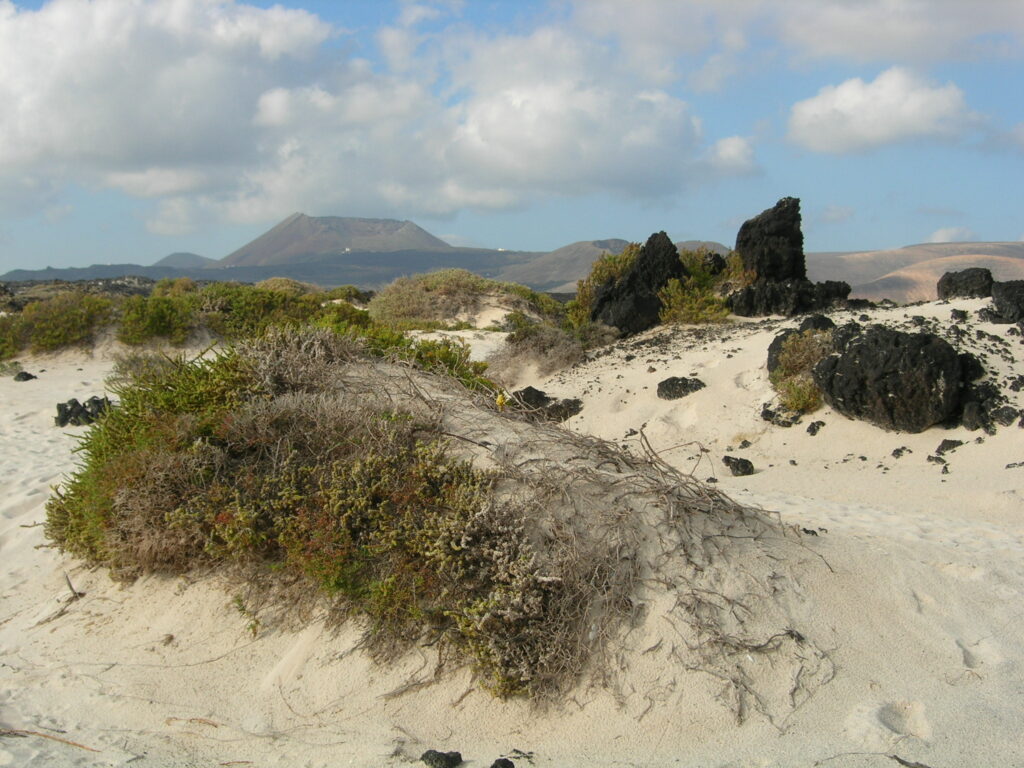
This part of the island is famous for its almost lunar landscape: a sea of petrified lava in whimsical shapes that is suddenly interrupted by patches of white sand and natural pools of crystal-clear water. Among them all, Mojón Blanco stands out for its balance between wild beauty, tranquillity and colour contrasts.
A Pure Experience: Swimming, Contemplation and Surfing
La Caleta del Mojón Blanco offers an experience far removed from standardised tourist amenities. There are no lifeguards, showers or beach bars here, just direct dialogue with the Atlantic. This calls for caution, especially as the waves can be strong at high tide and the entrance to the water can be rocky.
Swimming and the Lagoon
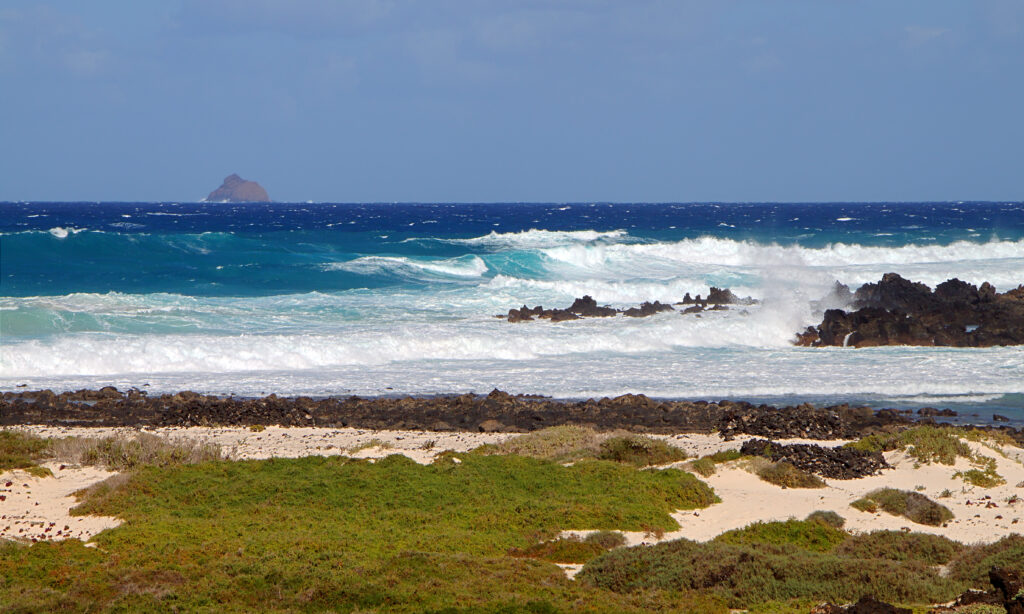
Despite the moderate waves and the possible difficulties of the rocky entrance, the cove has an ace up its sleeve: the formation of a lagoon area or protected pool. This natural harbour, shallow (waist-deep) and with water warmed by the sun, provides an ideal refuge for a peaceful swim. It is the perfect place to float and observe the different shades of turquoise blue, surrounded by fish and a blanket of seaweed.
Corralitos and Privacy
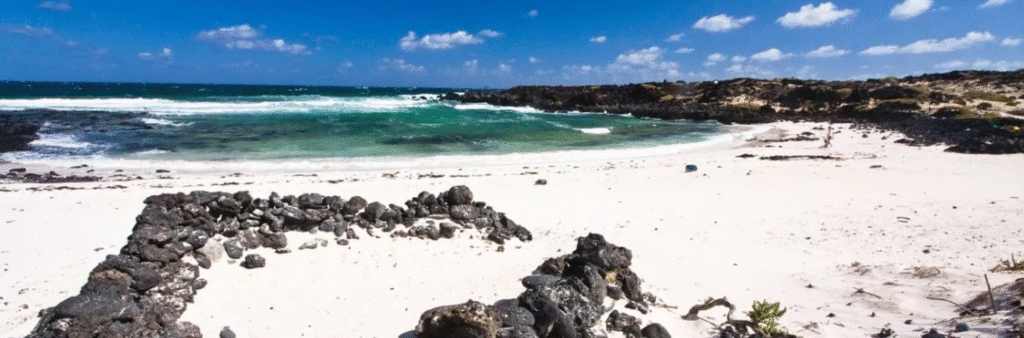
To protect themselves from the constant northeast wind that buffets the coast, visitors have built small corralitos or socos: circular walls made of callaos (lava stones rounded by the sea). These shelters, although essential, remind us of the fragility of the environment and the need to limit our visual and ecological impact.
Nudism and Isolation:
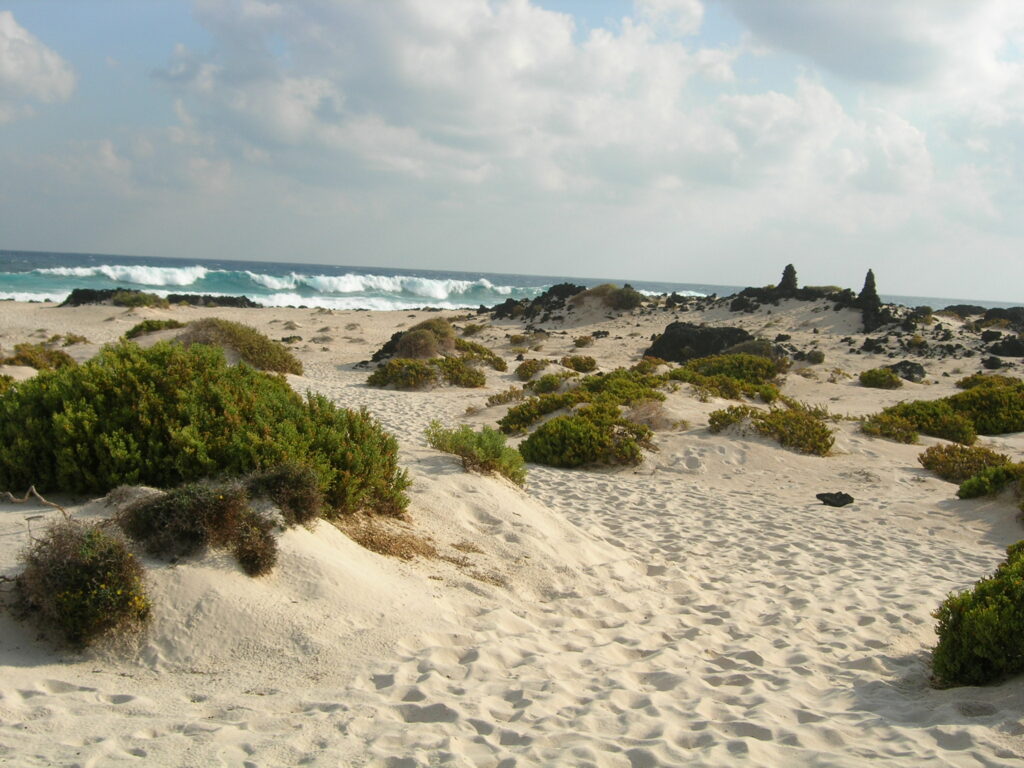
The relatively isolated location of the cove has made Caleta del Mojón Blanco a popular beach for nudism. The serene atmosphere and sense of privacy invite you to enjoy the sun and sea in complete freedom. However, respect and discretion are the basis of the culture of this beach.
The Surfing Treasure: The Tubera Wave
For experienced surfers, Mojón Blanco is not just a place to swim, but a place of pilgrimage. When the conditions are perfectly aligned, the cove offers one of the most impressive and least crowded waves in Lanzarote.
- Ideal Conditions: The magic happens with a combination of a calm northeast sea and southern wind.
- The Impressive Right: Under these conditions, a spectacular right breaks very close to the coast, considered by many to be one of the best formations on the island.
- The Tubular Wave: This is a wave that can handle quite a bit of size, known for its potential to form movie-worthy tubes. Its quality is such that it has been immortalised in professional surfing magazines.
- Frequency: The only drawback is that this gem does not break regularly, making it a special event when it does, often with few people in the water, intensifying the wild experience.
What is Caleta del Mojón Blanco Beach like?
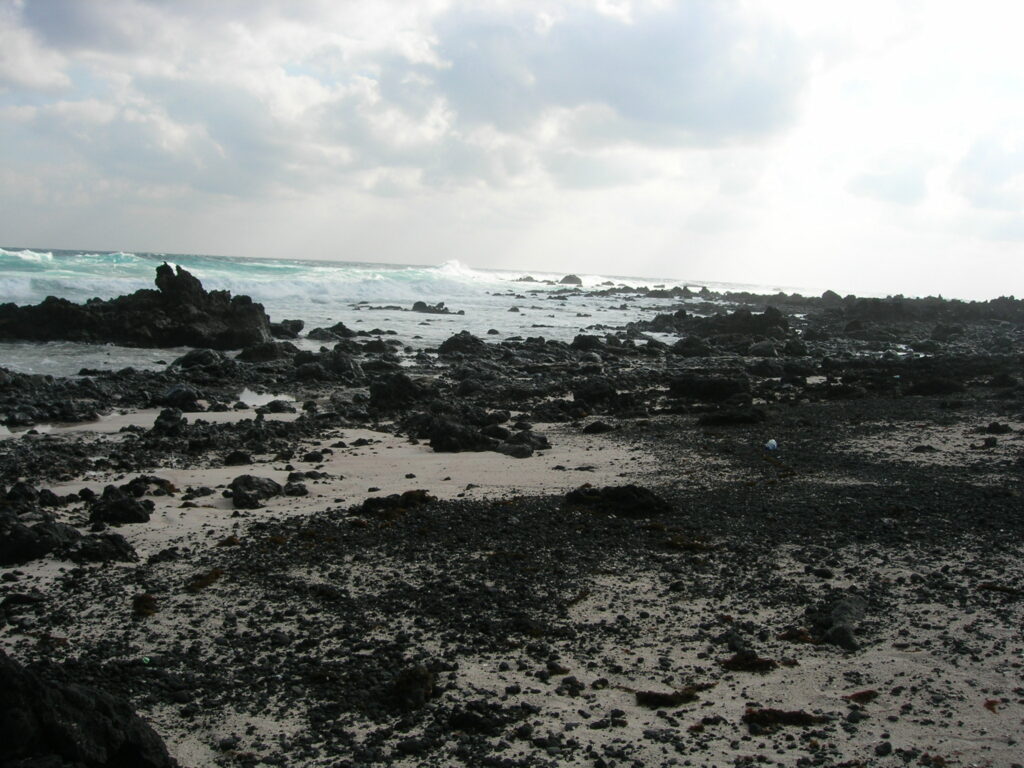
Although some sources describe it as a large beach, it is actually a small cove, intimate and somewhat hidden among the badlands.
- Length: approx. 200 metres
- Width: approx. 40 metres
- Type of sand: fine white sand
- Waves: moderate
- Wind: frequent, although there are sheltered areas
- Crowds: low, even in high season
- Atmosphere: peaceful, respectful, ideal for unwinding
In several places you will find stone corrals (small circular walls made by hand) that serve to protect you from the wind and allow you to enjoy the sun without the constant trade winds.
A place to enjoy in peace (and without disturbing nature)
The ecological fragility of Los Caletones is evident. There are no infrastructures, no services, no surveillance, and this must remain so in order to preserve its value.
For this reason, Caleta del Mojón Blanco is not a beach for loud music, noisy games or large groups. It is a place for:
- walking among the pools,
- sunbathing,
- enjoying the breeze,
- swimming in clean, cold water,
- watching fish in the deeper areas,
- contemplating a virtually untouched landscape.
The key is to enjoy yourself without leaving a trace.
Practical and essential information
Services
Here there are no:
- toilets
- showers
- beach bars
- sun lounger hire
- lifeguards
- walkways
- shaded areas
You must bring everything you need: water, food, sunscreen, a hat and something to protect you from the wind.
Tides
Very important:
The morphology of the beach changes considerably depending on the tide.
- At low tide: pools form that are ideal for walking and exploring.
- At high tide: the waves can cover a large part of the sand.
Check the tide table before you go.
Wind
The usual wind in the area is from the northeast.
On days with winds of more than 15–16 knots, it can be uncomfortable. On calmer days, the experience is spectacular.
How to get to Caleta del Mojón Blanco
Caleta del Mojón Blanco is strategically located in the area known as ‘Los Caletones’, a section of the north coast near the picturesque fishing village of Órzola. Órzola is not only known for its fishing tradition, but it is also the mandatory port of departure for the island of La Graciosa, the eighth Canary Island.
The approach is part of the experience. It is easily accessible via the LZ-1 road, the backbone of northern Lanzarote. The change in landscape is a warning: the road crosses the stretch of white sand just before arriving in Órzola.
- By car: From the airport, the route is clear: LZ-2 towards Arrecife, then LZ-1 north towards Órzola. Approximately 200 metres before entering the village, the turn-off to the cove and its car park is clearly visible on the left.
- Parking: The area has embankments and a small unattended car park made of volcanic stones (less than 50 spaces). Although access is easy, the beach itself requires walking about 200 metres along a dirt path after crossing the road. It is crucial to park responsibly and never leave valuables in plain sight, given the rustic nature of the car park.
- Public transport: Although line 9 passes through the area, there is no immediate stop, making the car the most practical option for this adventure.
What to see and do in the surrounding area
The coast of Los Caletones is ideal for wandering around at a leisurely pace:
- Caletón Blanco: calmer pools, perfect for families.
- Las Cocinitas: another wild cove, more spacious.
- Órzola: fishing village and port towards La Graciosa.Mirador del Río: one of the most impressive views in the Canary Islands.Volcán de la Corona: hiking among lava and natural panoramas.
The entire area combines beaches, natural pools and volcanic terrain unique to the island.
What to see in Lanzarote
If you want to make the most of your visit to the island, here are some places we have added to our map:
- Playa Blanca: The ideal base camp for exploring the island. The perfect balance between tranquility, idyllic beaches, modern areas, and natural surroundings.
- El Golfo: with the Charco Verde, it is one of the most striking postcard images of the Canary Islands.
- Risco Beach: one of the wildest, most beautiful, and memorable beaches in Lanzarote.
- Las Grietas: A perfect blend of geology, volcanic landscape, and photogenic appeal that attracts more and more travelers.
- Los Charcones: a string of unspoilt natural pools stretching along the south-western coast of the island.
- Los Hervideros: one of the most fascinating and mesmerising landscapes on the island.
- Tahíche: Together with the César Manrique Foundation, this is probably the most important cultural space in the whole of Lanzarote.
Accommodation and medical services nearby
There is no accommodation in the immediate area, as it is a natural environment.
The best options are in:
- Órzola, 2 minutes away by car
- Arrieta
- Punta Mujeres
- Haría
The nearest hospital is the Hospital Molina Orosa, in Arrecife.
Safety and recommendations
- This is not the best beach for small children, especially at high tide, as the seabed is very rocky.
- There is no lifeguard service: take extreme care when swimming.
- Wear suitable footwear for walking on volcanic rock.
- Respect the areas of vegetation and do not move stones from the corrals.
- Do not camp: this is only permitted with authorisation from the Cabildo.
- Take your rubbish with you.
Conclusion: a corner of Lanzarote that seems like another planet
Caleta del Mojón Blanco is one of those places where Lanzarote shows itself as it really is: an island rich in contrasts, capable of combining lava, dunes, turquoise water, wind and calm in a single space.
It is not a beach with amenities. It is not a beach for crowds. It is not a place to go in a hurry.
It is a corner to feel nature, to disconnect, to let time flow slowly between the sound of the wind and the gentle waves. If you are looking for a different cove in Lanzarote, wild, intimate and beautiful, Caleta del Mojón Blanco deserves a prominent place on your itinerary.
Photo Credits
Below are the photo credits in order of appearance. Royalty-free photos will not be listed below:
- Cover Image: Prensa Malagueña, S.A., via diariosur.es
- Enric, CC BY-SA 4.0, via Wikimedia Commons
- H. Zell, CC BY-SA 3.0, via Wikimedia Commons
- Alessandro, via isoladilanzarote.com
- Enric, CC BY-SA 4.0, via Wikimedia Commons
- Enric, CC BY-SA 4.0, via Wikimedia Commons
- Enric, CC BY-SA 4.0, via Wikimedia Commons
- Enric, CC BY-SA 4.0, via Wikimedia Commons
- Enric, CC BY-SA 4.0, via Wikimedia Commons
- Blaurart, CC BY-SA 4.0, via Wikimedia Commons