The Forgotten Bastion of La Mancha: Chinchilla de Montearagón, the Medieval Jewel in the Shadow of Albacete
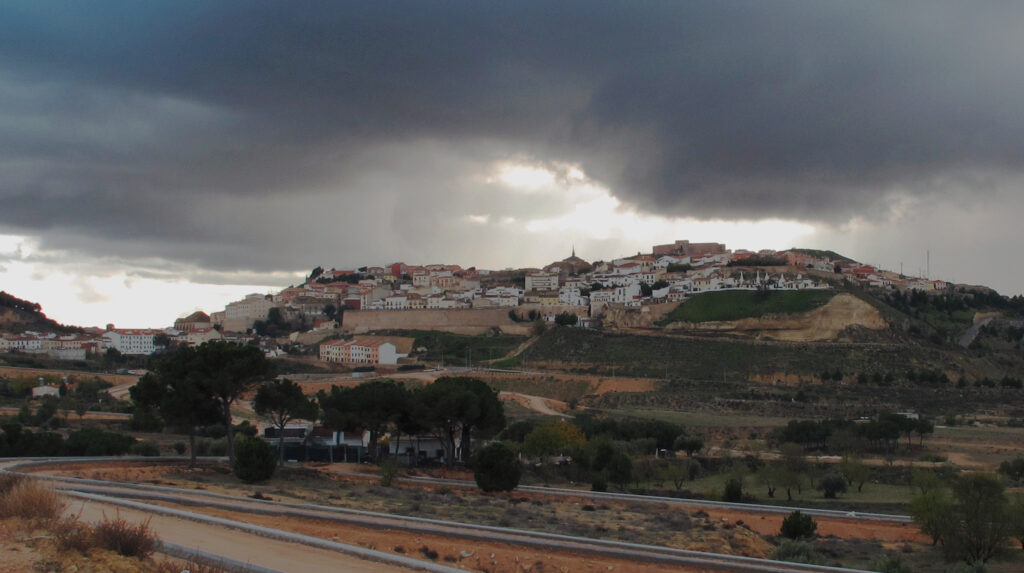
Chinchilla de Montearagón is not just a simple village on the plains of La Mancha; it is a stone time capsule erected on the hill of San Blas, an imposing promontory that rises 897 meters above sea level. Just 13 kilometers from the bustling capital, Albacete, this town, declared a Historic-Artistic Site, represents the glorious and strategic past of the region, a place where history was carved in stone before fate changed the course of the capital.
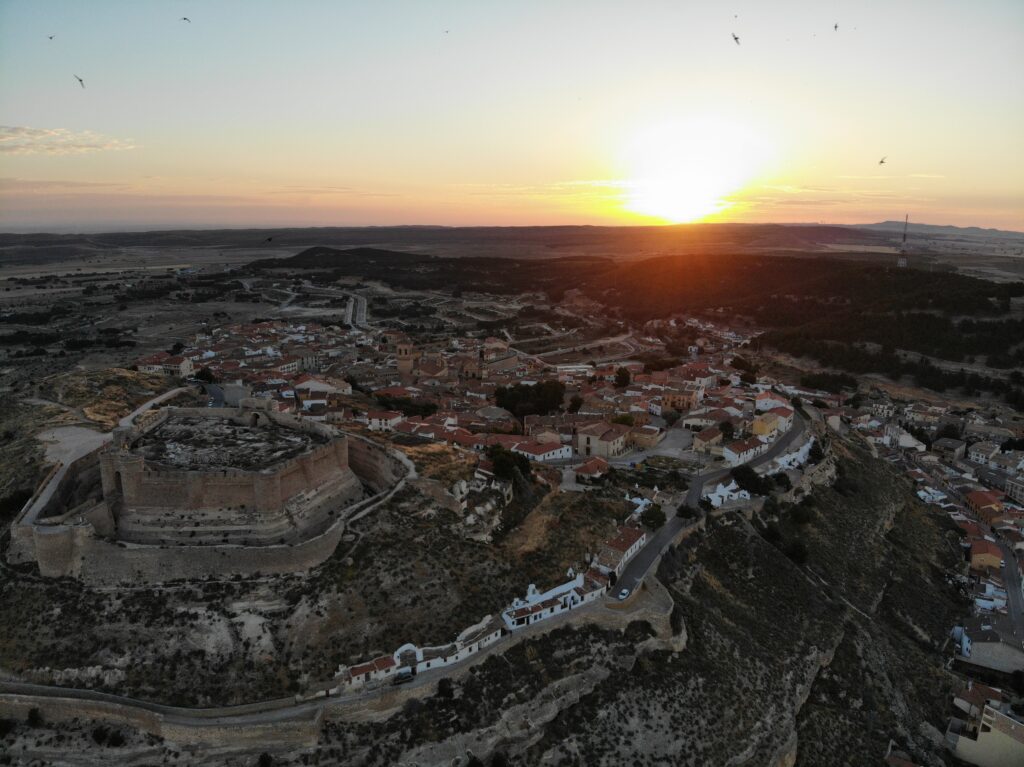
This enclave not only dominates the landscape visually, but also exerts a powerful historical influence on its neighbor Albacete, with which it has been intrinsically linked since its remote origins. Chinchilla held, albeit briefly between 1822 and 1823, the title of capital of a province that would be the seed of the current province of Albacete, a role that would ultimately fall to its neighbor, which was growing precisely at its expense. Losing this primacy did not mean the decline of its monumental wealth, but rather the preservation of an unaltered medieval layout, a labyrinth of narrow, defensive streets that invite a deep immersion into the memory of Castile.

Ghenghalet, Saltigi, Chinchilla: A Crossroads of Millennial Paths
The importance of Chinchilla de Montearagón is anchored in its geostrategic position, a factor that elevated it to a communications hub and military stronghold throughout civilizations. Its origins are as remote as they are unquestionable, documented by remains dating back to prehistory. The discovery of the Iberian necropolis that housed the monumental Pozo Moro—a 6th-century BC funerary tower and now a landmark of peninsular archaeology—already points to the importance of the place for ancient cultures.
Under Roman rule, the site, linked to the ancient Saltigi, became established as a mansio or essential stop on the Via Augusta, confirming its role as a key crossroads. Later, the baton was passed to the Visigoths.
However, it was the Muslim period that would give it a resounding name and notoriety. Known as Ghenghalet, and later as Yinyalá or Sintinyala, the town became a nerve center of the Kingdom of Murcia from 928 onwards, during the Caliphate of Cordoba, thanks to its impregnable fortress.
The Reconquista arrived in 1242, with the troops of Alfonso X, the Order of Calatrava, and James I of Aragon. After this change of command, Chinchilla became part of the powerful Marquisate of Villena. Its political rise culminated in 1422, when John II of Castile granted it the title of City. Decades later, its loyalty to Isabella I of Castile during the civil war against Juana la Beltraneja earned it the nickname “Very Noble and Very Loyal” and its direct incorporation into the Crown of Castile in 1480.
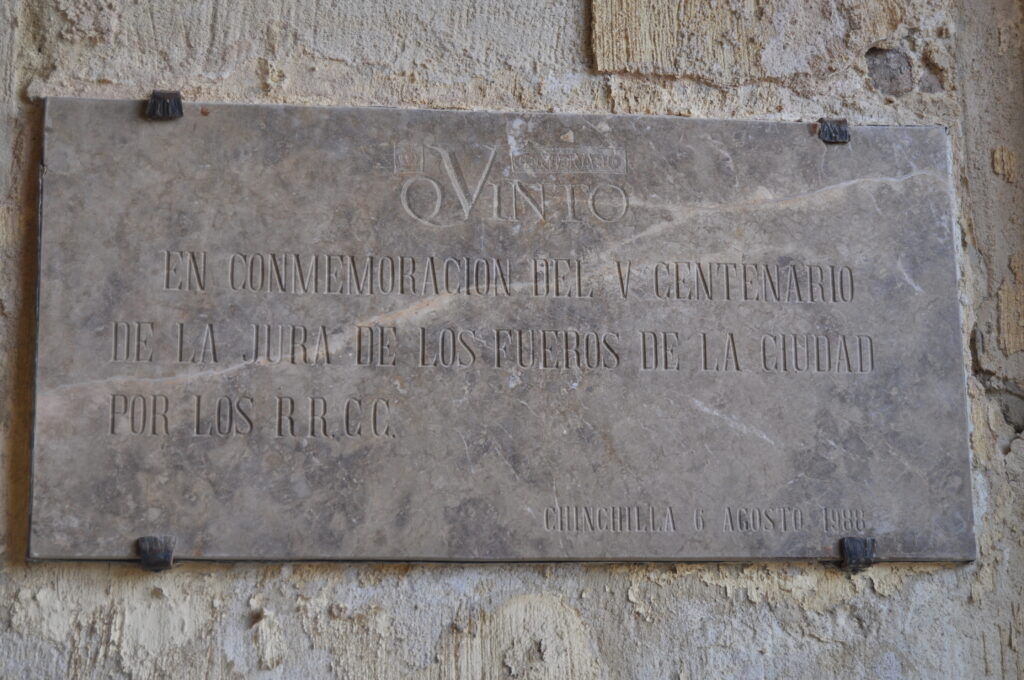
This accumulation of titles and achievements gave it its own identity, which was temporarily reaffirmed in the 19th century under Ferdinand VII, when it was named “Most Loyal” and capital of a province that would eventually lose its preeminence to neighboring Albacete with the territorial division of Javier de Burgos in 1833.
The Castle-Fortress: Sentinel of History
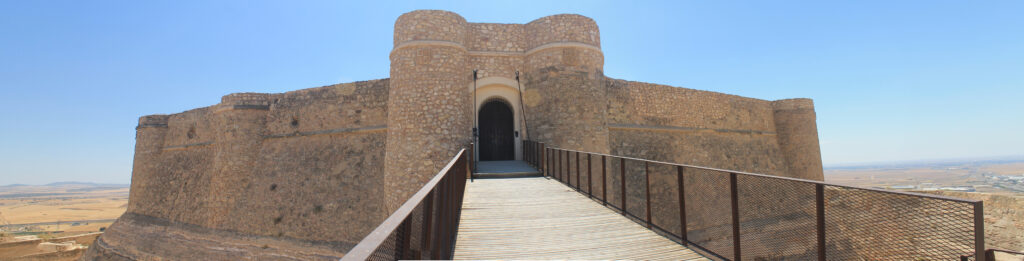
The Castle of Chinchilla de Montearagón is the unmistakable symbol of the city and the main visual and historical landmark of the entire La Mancha plain. Its location, dominating the plain from the summit of the San Blas hill, has been coveted and used by Iberians, Romans, and Arabs.
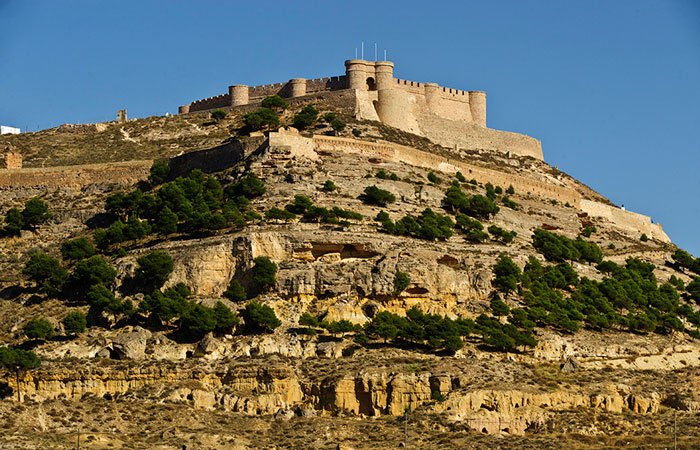
The imposing bastion we see today, often referred to in historical sources by its Arabic name Xerif-El-Edrisi, is essentially a 15th-century work, erected by Juan Pacheco, Marquis of Villena. This castle represents a milestone in military architecture, as it was designed and renovated to adapt to the use of artillery, the new weapon of the time, which is reflected in its robustness and layout.
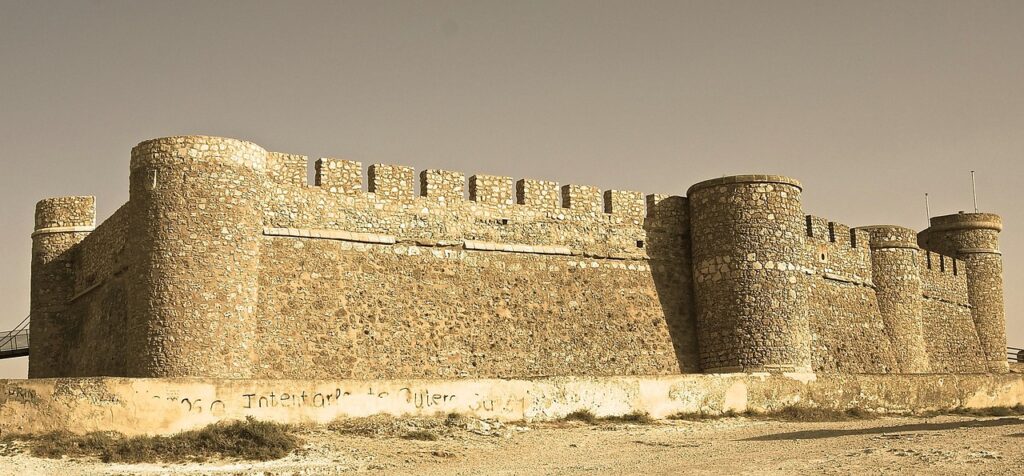
- Moat Carved into the Rock: One of the most dramatic and defensive elements is the colossal moat. Carved directly into the rock, this formidable obstacle reaches a width of up to ten meters and a depth of six, causing a sensation of vertigo and testifying to the impregnability that was sought.
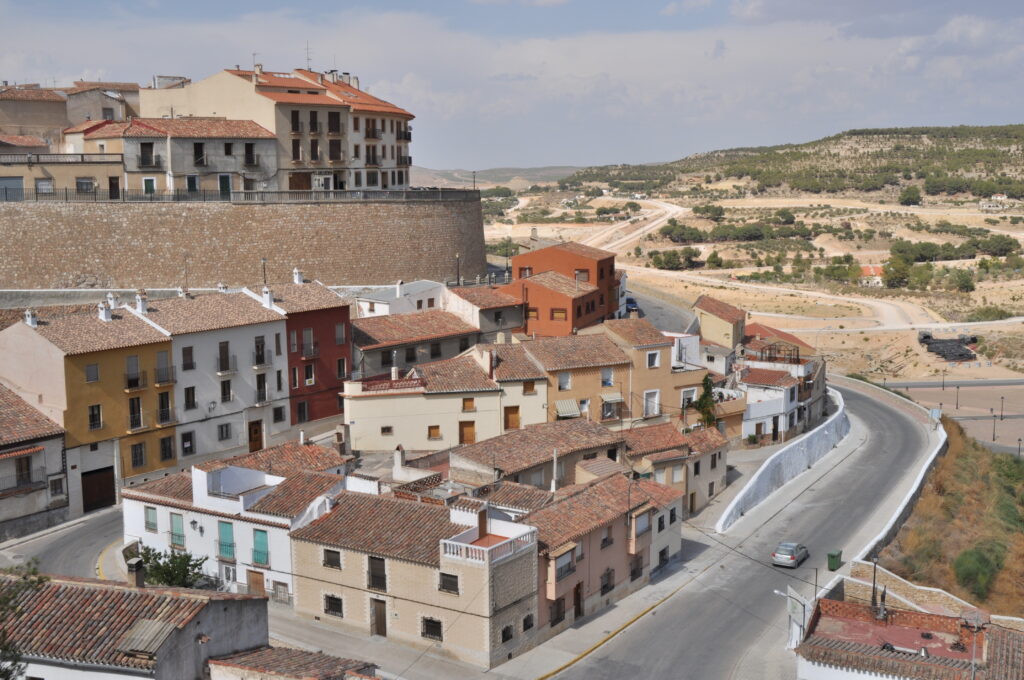
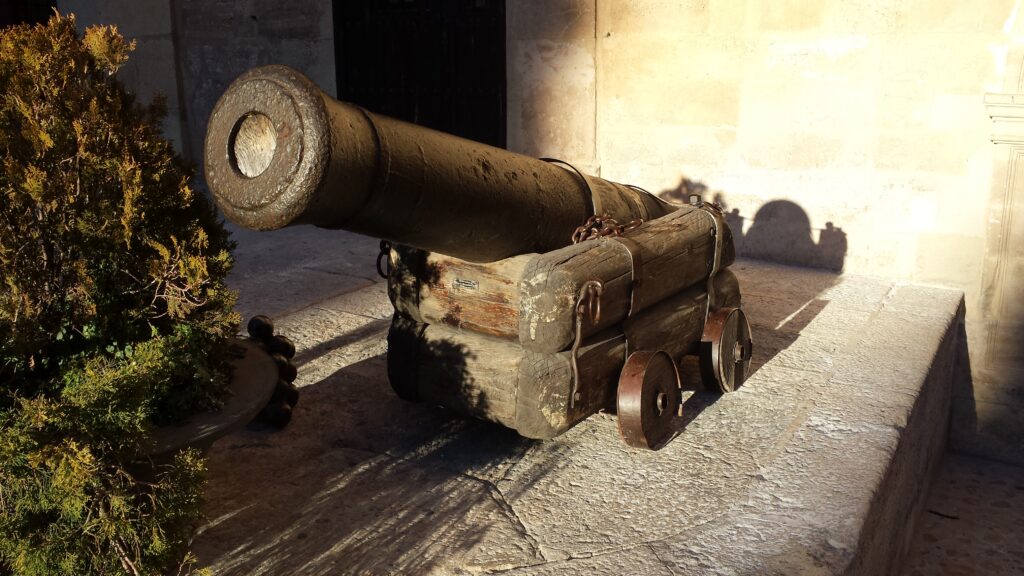
- Adaptable Wall: The castle is complemented by the Arab wall that embraces and protects the old town. Its different heights are masterfully adapted to the terrain, flanked by historic gates such as the Arco de la Ciudad (City Arch), which guards cannons recovered from the moat, and the Puerta de Diablos y Tiradores (Devils and Shooters Gate).
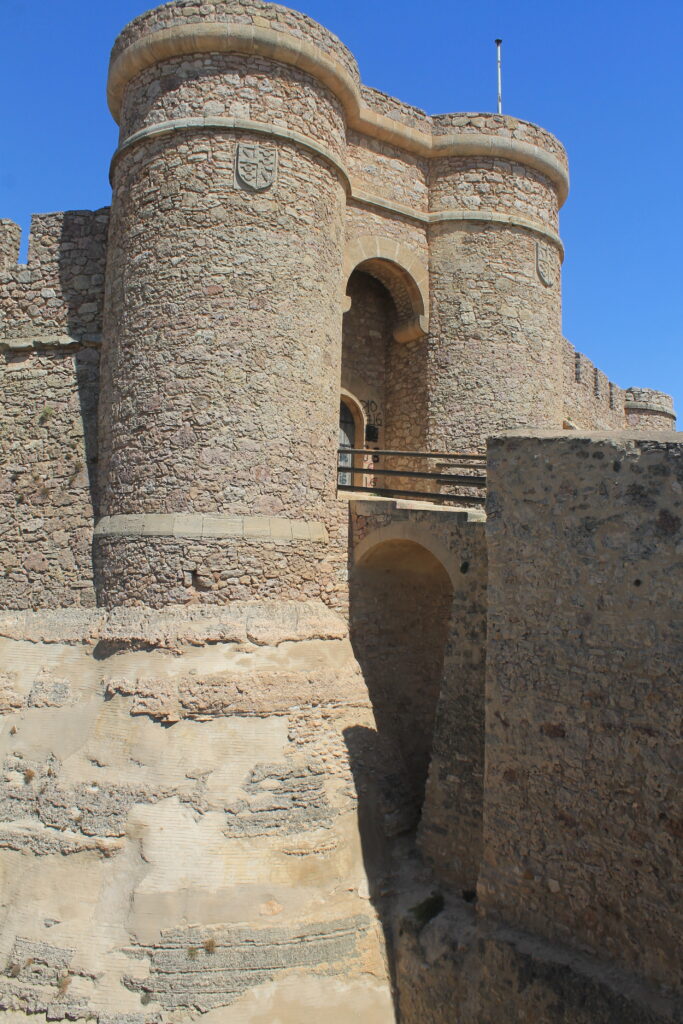
The castle, which in the 20th century was used as a prison and suffered the demolition of its keep by French troops during the War of Independence, has undergone constant renovations that keep it in excellent external condition. Although its interior has been inaccessible at times, its external presence is sufficient to understand its central role in the military and social history of Chinchilla.
The Stone Soul: Monuments and Sacred Architecture
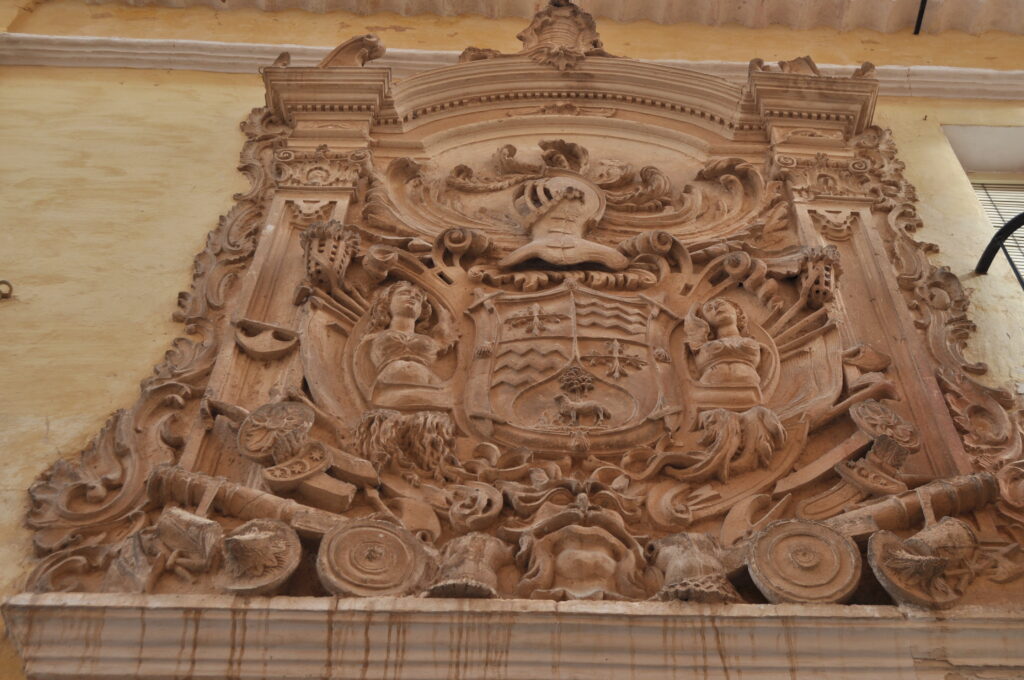
The historic center of Chinchilla, declared a Historic-Artistic Site, is a catalog of architectural styles that narrate the overlapping of cultures and eras. The stone mansions with coats of arms attest to the presence of ancient noblemen, but it is the religious and civil architecture that defines its unique character.
The Plaza Mayor: Neuralgic Center and Baroque Setting
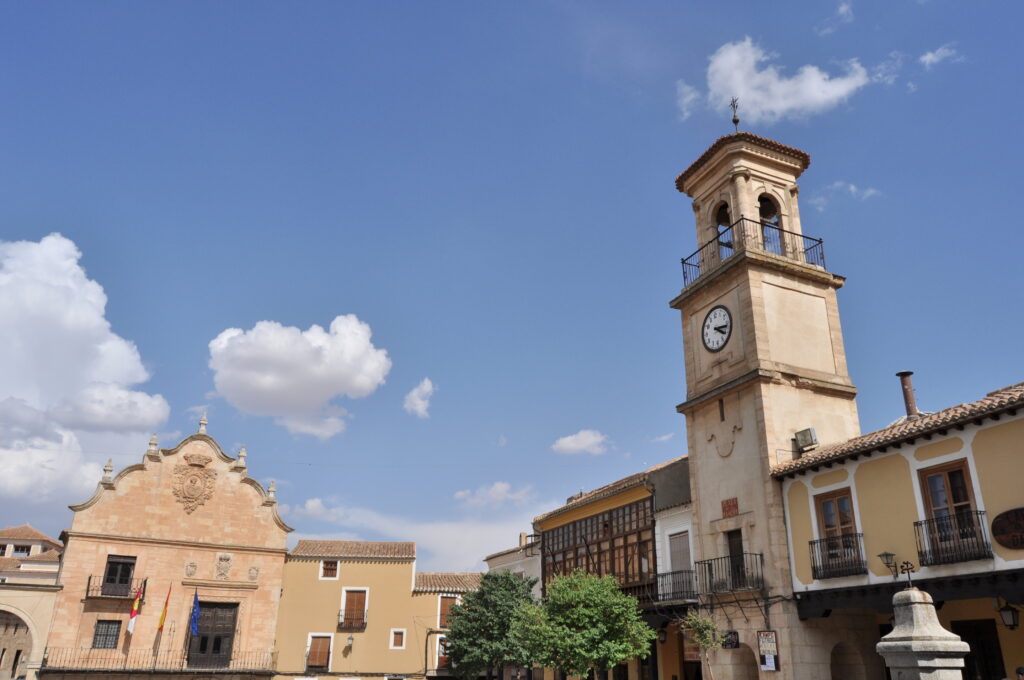
The Plaza Mayor, also known as the Plaza de la Mancha, is the vital heart and indispensable setting of the city. Its current configuration dates back to the 18th century, featuring an elegant rectangular layout surrounded by elements of great value:
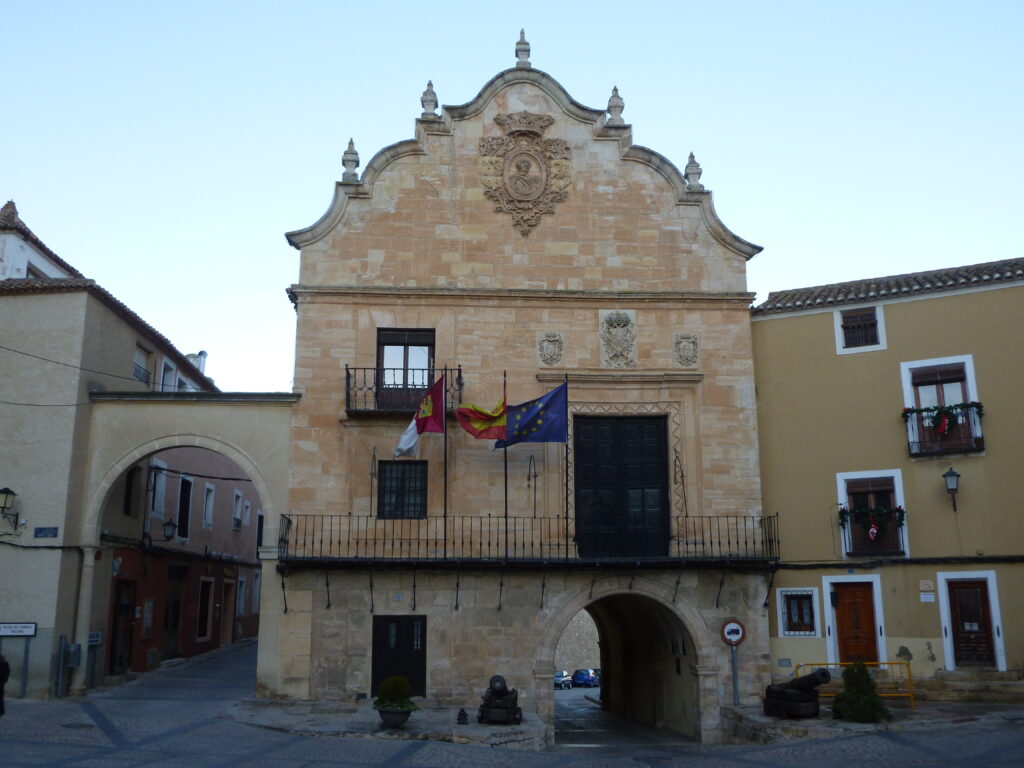
- Town Hall: Presiding over the square, with a Baroque façade displaying the medallion of Charles III, this building combines elements from the 16th and 18th centuries. At its feet, two cannons from the castle are preserved, a reminder of the destruction wrought by Napoleon’s troops in 1812.
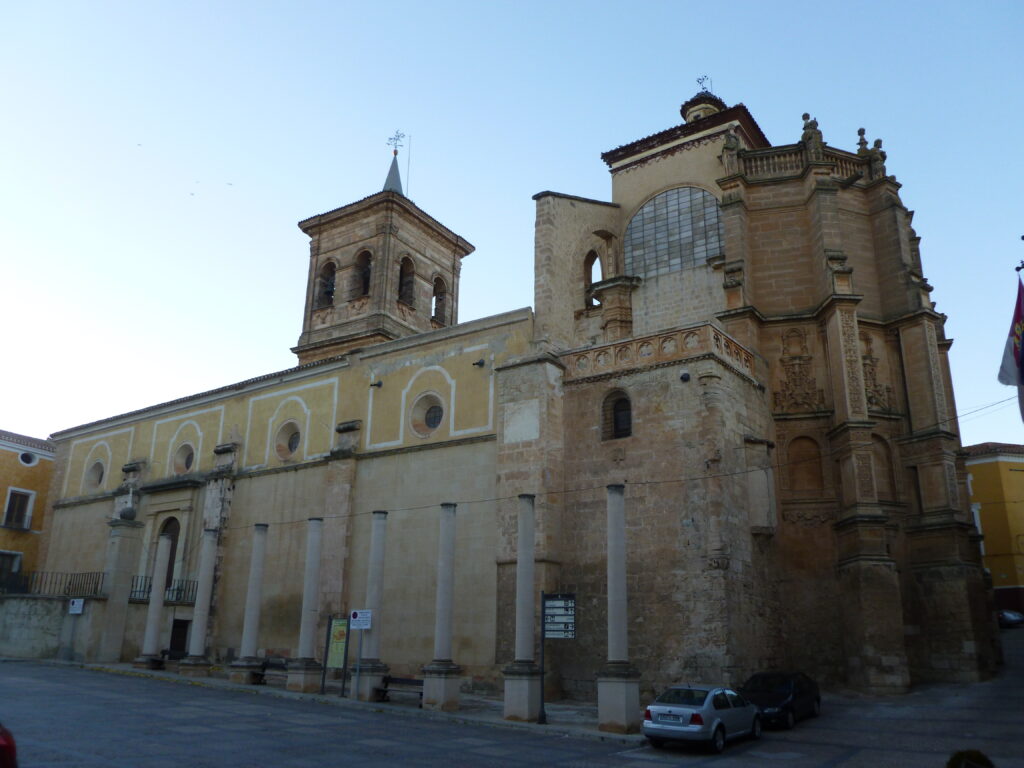
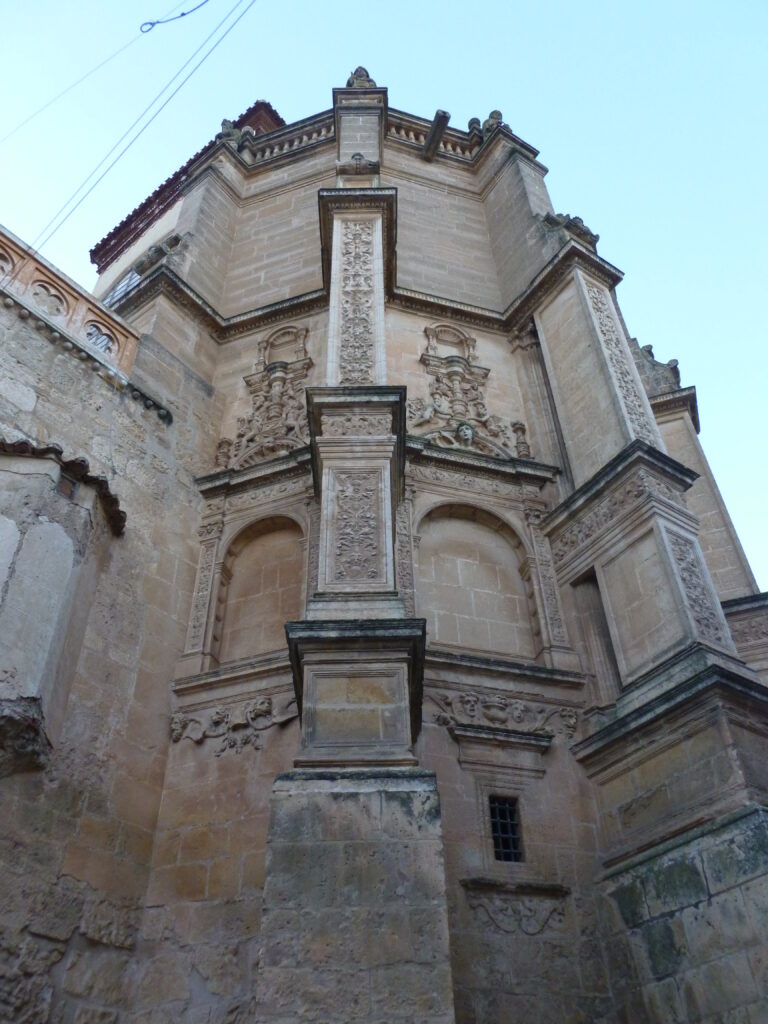
- Arciprestal Church of Santa María del Salvador: Occupying one entire side of the square, its presence is an amalgam of styles ranging from Gothic-Mudejar to Neoclassicism. Its Gothic façade contrasts with a deeply Baroque interior, with overlapping plasterwork, which nevertheless leads to a beautiful Renaissance apse.
- Interior Treasure: Inside, it houses the image of the Virgen de las Nieves, patron saint of the city. The railing of the main chapel stands out, one of the most refined Gothic works in the region, signed and dated 1503 by Antón de Viveros, a key figure in Spanish metalwork. The old sacristy, with a Renaissance coffered ceiling with rhomboidal panels, houses the Parish Museum of Sacred Art.
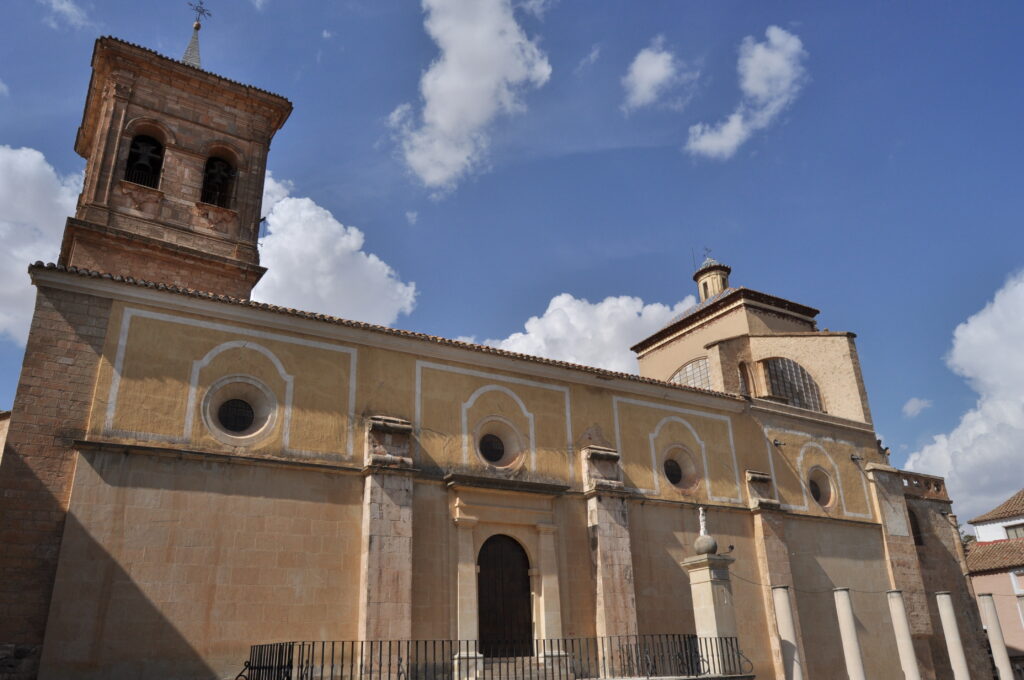
- Clock Tower: Neoclassical in style, it completes the architectural ensemble.
Convents and Other Religious Landmarks
- Convent of Santo Domingo: A building that preserves elements of the Mudejar temple.
- Convent of Santa Ana: Built on top of an ancient complex of Islamic origin.
- Hospital of San Julián: A foundation of medieval origin that was re-founded in the 18th century.
- Hermitage of San Antón: A traditional point of interest, especially during the January festivities.
Troglodyte and Civil Architecture: Life Under the Rock
Chinchilla de Montearagón offers a unique architectural dimension, that of the cave houses, testimony to human adaptation to the terrain.
The Cave Houses: Cuevas del Agujero and Patios Altos
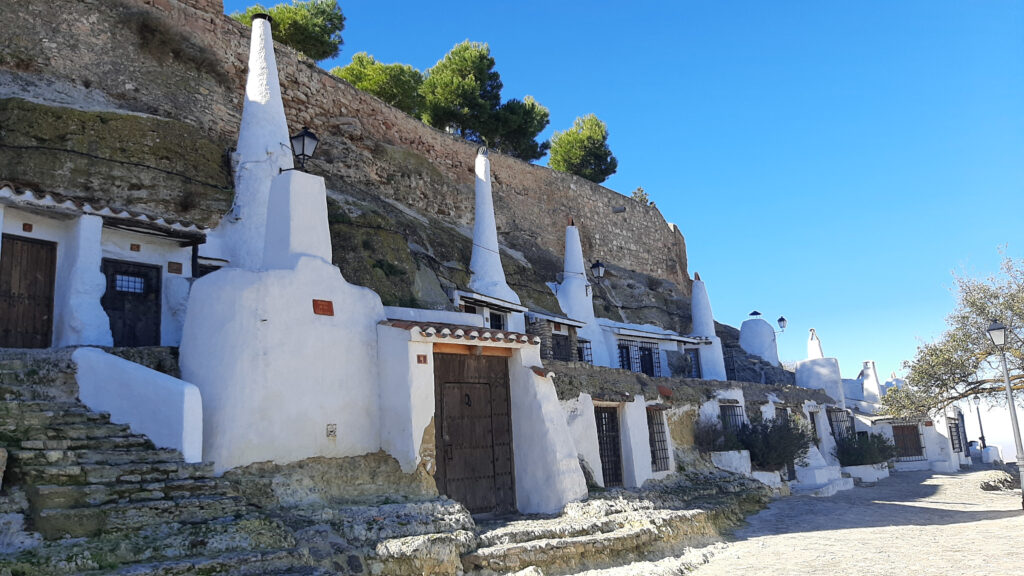
At the foot of the wall, in the El Hondón neighborhood, is the phenomenon of cave houses, excavated directly into the rock and easily recognizable by their white chimneys that open to the outside. Their origin probably dates back to the early centuries of Arab rule, but their massive construction intensified from the 16th century onwards, as an alternative form of housing for marginalized populations following the expulsions.
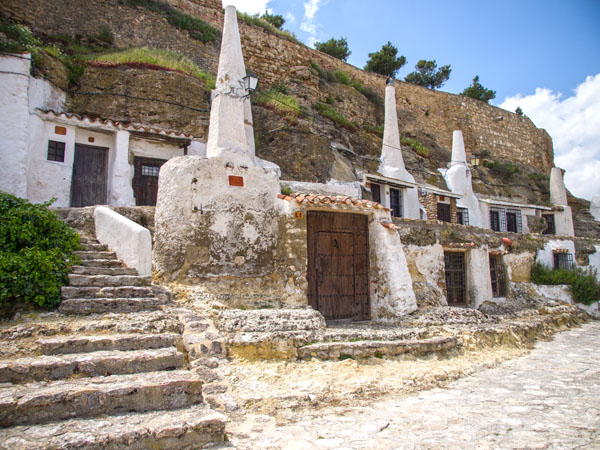
These troglodyte dwellings offer a symbiosis between human work and nature. Their most appreciated feature is their ideal and constant temperature, remaining around 20°C in winter and 18°C in summer, making them a natural bioclimatic solution and one of the biggest attractions for rural tourism in the area, valued for their intimate, rustic, and soundproof environment. Places such as the Cuevas del Agujero caves are the most original feature of Chinchilla, partly restored thanks to local initiatives by families such as the Belmonte-Useros.
Civil and Heritage Gems
- Judeo-Arab Baths: Dating back to the 11th and 12th centuries, these baths are a Site of Cultural Interest with Monument status, reflecting the refinement of life in the Muslim and Jewish periods.
- Town Hall: Already mentioned, it stands out for its imposing façade.
- Casa de la Tercia and Old Granary: The Granary, or Pacheco Granary, is a beautiful Renaissance-style building that now houses the Tourist Office.
- Palaces and mansions: The town is dotted with emblazoned mansions such as the Patio Barroco de la Notaría (Palace of the López de Haro family), the Palace of the Barnuevo family, and the Casa del Muro, which reflect the importance of the noble families who inhabited the city.
- Alcalde Galindo Public School: A unique building from the Republican era, notable for its brick architecture and its internal features (wrought iron roof, high ceilings, fireplaces in the classrooms). Its use as barracks for the “quinta del chupete” during the Civil War is a historical fact of great value.
The Cradle of Ceramics: National Pottery Museum
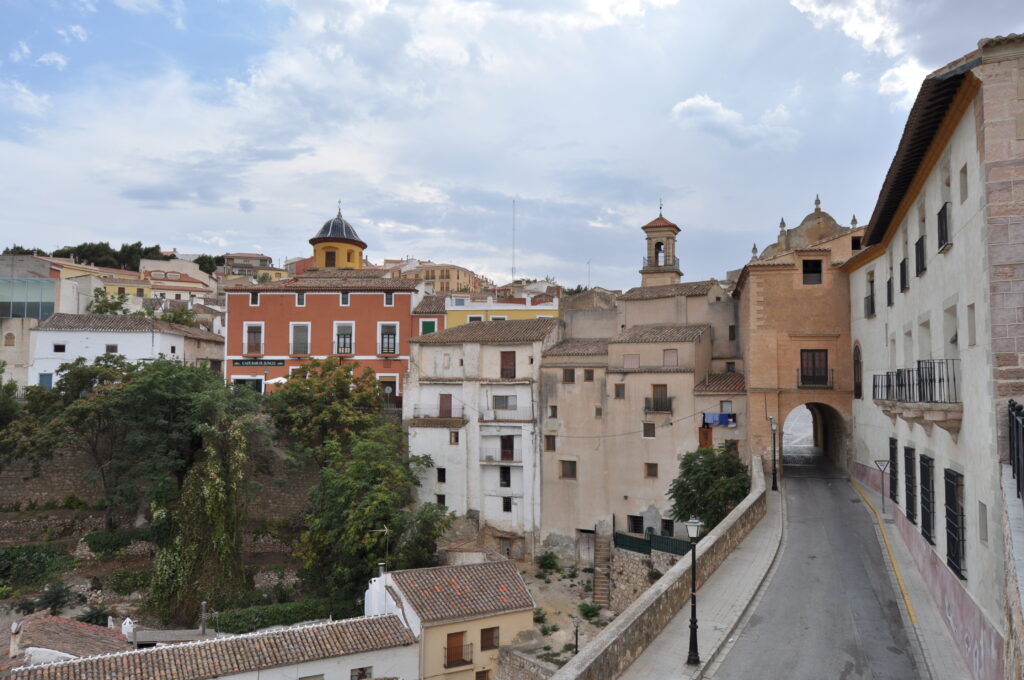
Chinchilla de Montearagón has historically been the cradle of traditional pottery in the province. This legacy is celebrated in the Spanish Ceramics Museum, which opened in 1980. The museum was born out of the extensive collection and fieldwork of the married couple Manuel Belmonte Martínez and Carmina Useros Cortés.
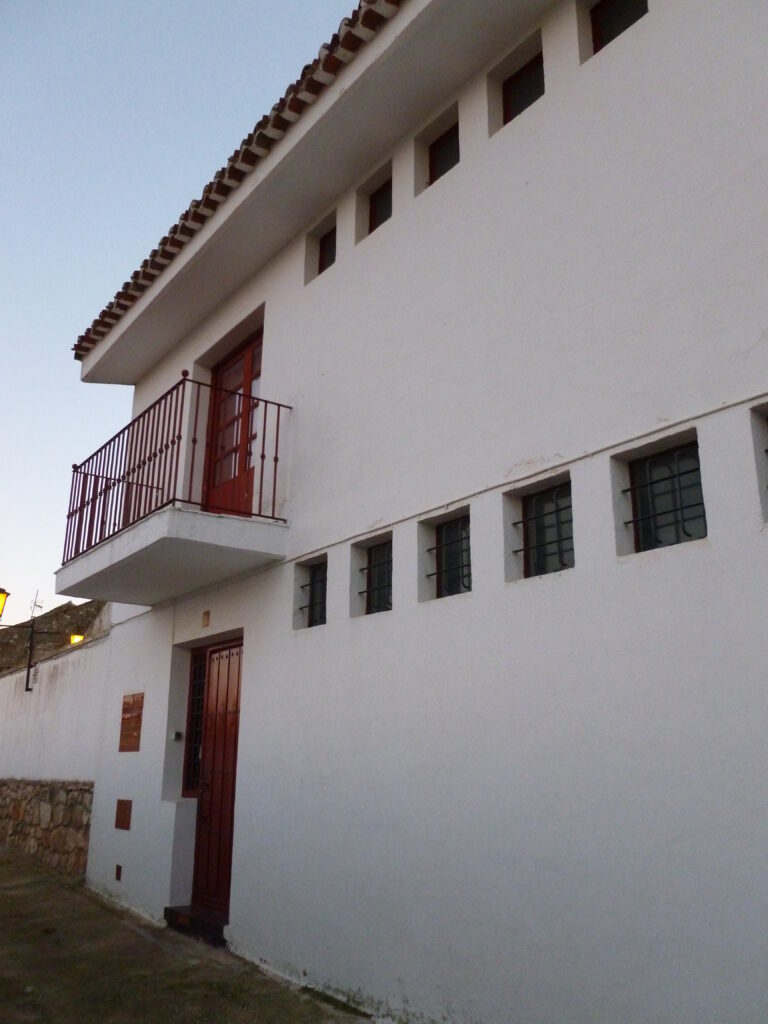
The collection is exceptionally rich, housing nearly 2,000 pieces representing 576 Spanish potteries, many of which no longer exist. The museum not only exhibits the work of Albacete’s workshops, with a special focus on Chinchilla, but also honors the memory of the former local artisans, whose techniques and pieces are a testament to an art that lasted until recent times.
The Natural Environment: Trail and the Forest of Words
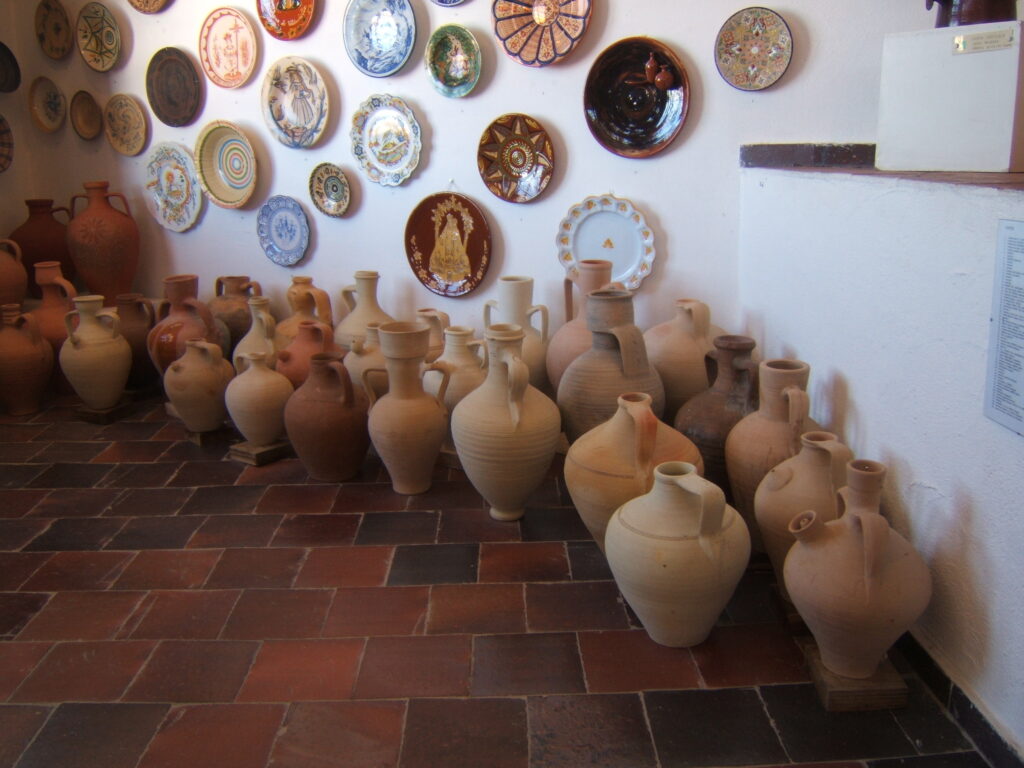
Beyond its built heritage, Chinchilla de Montearagón offers a privileged location for connecting with the natural environment of the La Mancha plain. The hill of San Blas is the starting point for hiking and mountain biking trails that explore the communal mountains.
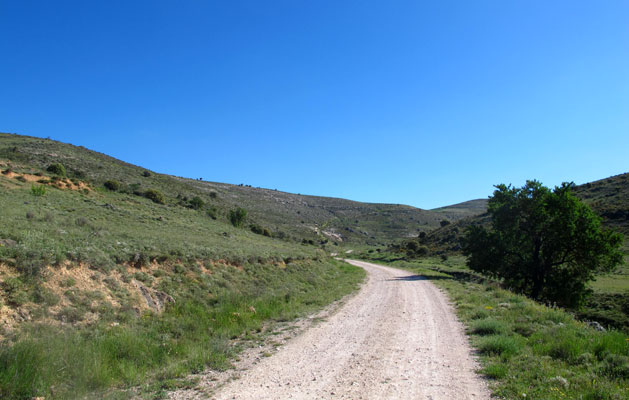
A popular circular route, about 15 km long and of medium difficulty, allows visitors to experience the unique terrain and enjoy unbeatable views of the castle and the plain.
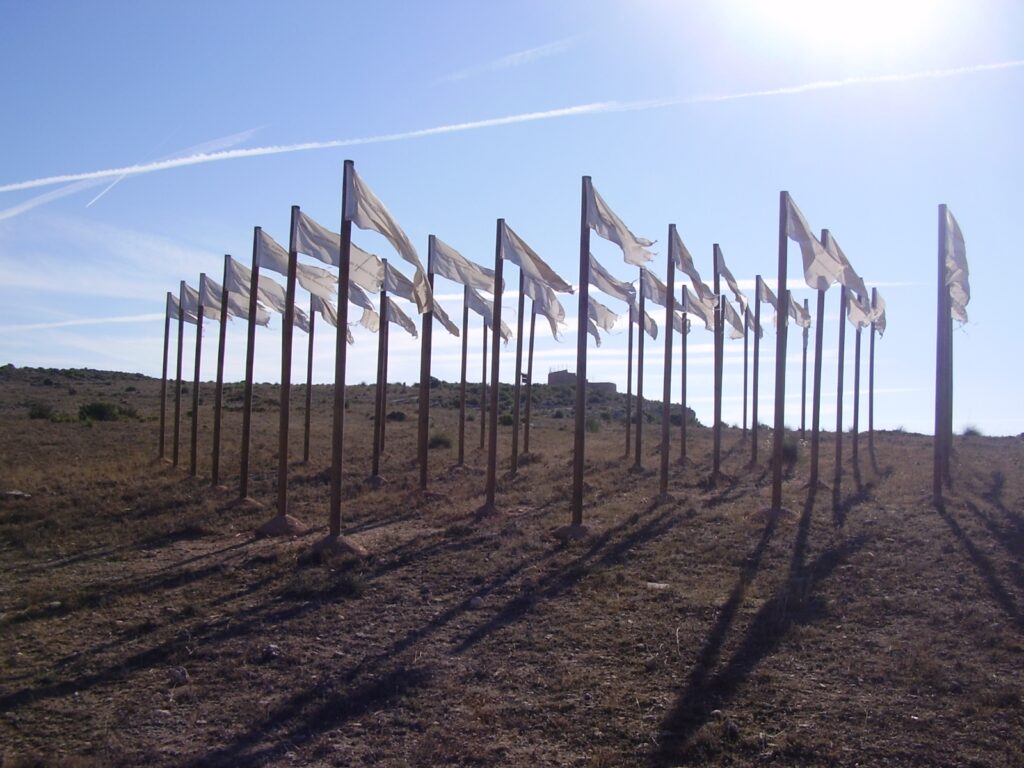
The main point of interest on these routes is the Forest of Words, a “magical place” for reflection. Here, 3-meter-high totems hold flags that wave in the wind with anonymous messages, wishes for happiness and prosperity, symbolizing the idea that the wind carries the words across the fields.
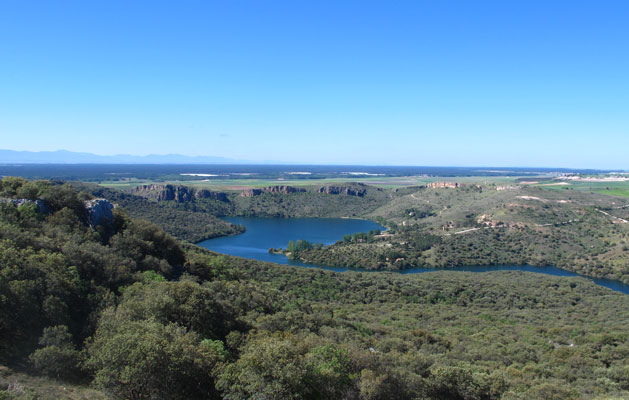
From the Mirador de la Sala viewpoint, there are beautiful views of the cereal-growing area that stretches towards Pétrola. The terrain includes challenging sections such as the Senda del Peligro (Path of Danger), a path with small cliffs that culminates in a natural viewpoint, offering the reward of the best panoramic views of the medieval village and its stone sentinel.
Crossroads: The Way of St. James
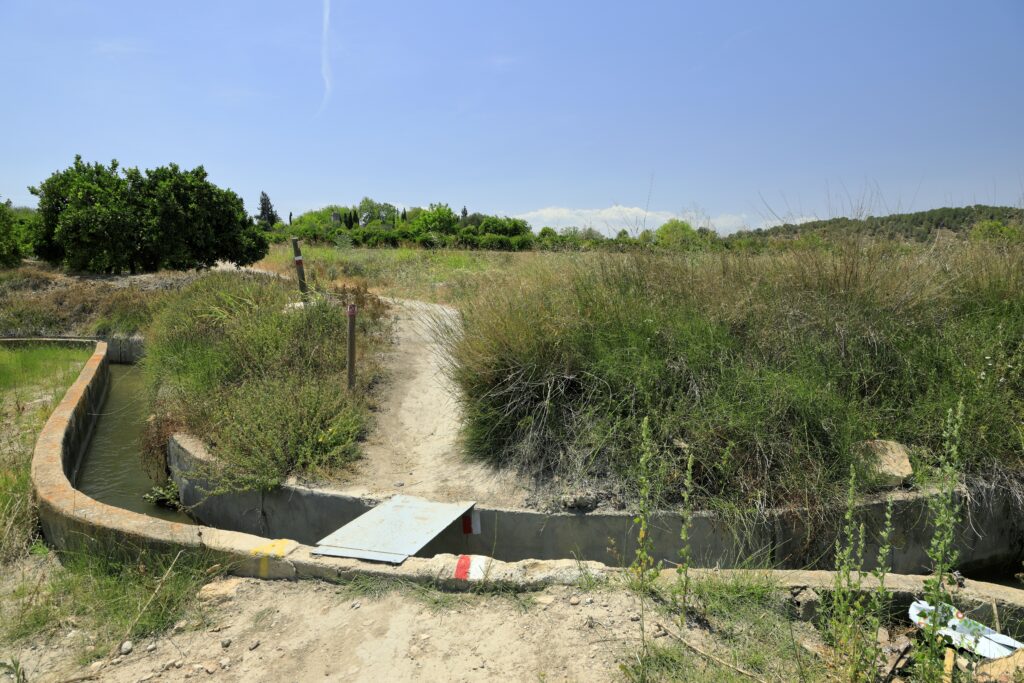
The strategic position of Chinchilla de Montearagón is confirmed today by its inclusion in the Camino de Santiago de Levante. This pilgrimage route, which links the city of Valencia with Zamora (where it connects with the Vía de la Plata), crosses the province of Albacete, passing through Hoya-Gonzalo, Chinchilla de Montearagón, Albacete, La Gineta (we recommend visiting the article) and La Roda. The town, which was a crossroads in Roman and Arab times, remains a meeting point and resting place for pilgrims today.
Rituals and Festivities: The Identity of Chinchilla
Life in Chinchilla de Montearagón revolves around a vibrant calendar of festivals and traditions, many of which are centuries old and rooted in unique rituals.
Holy Week: Regional Tourist Interest
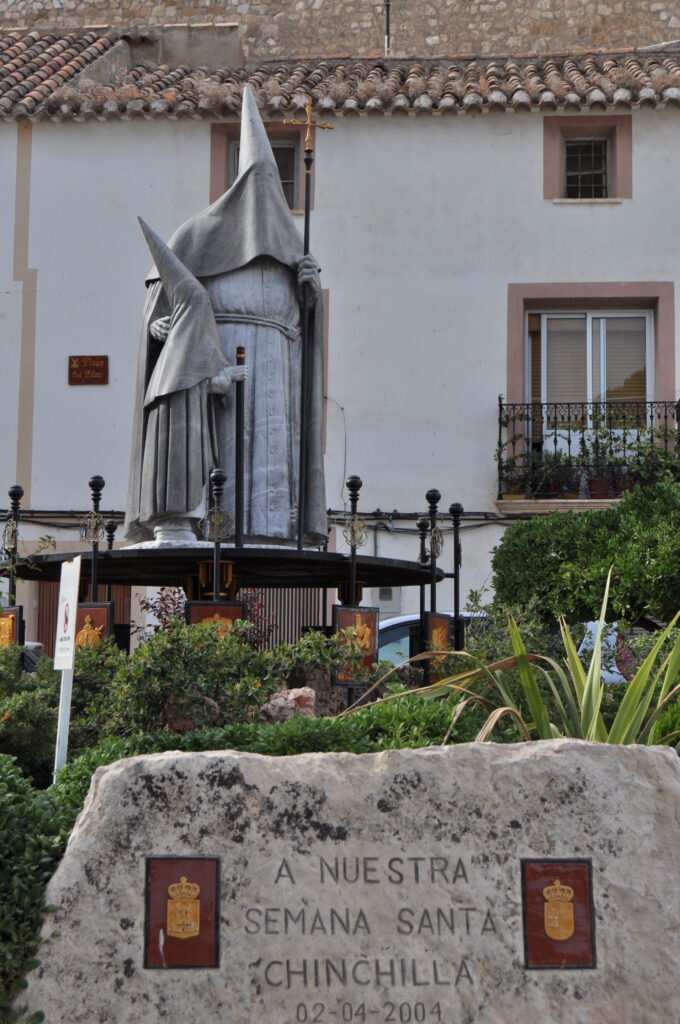
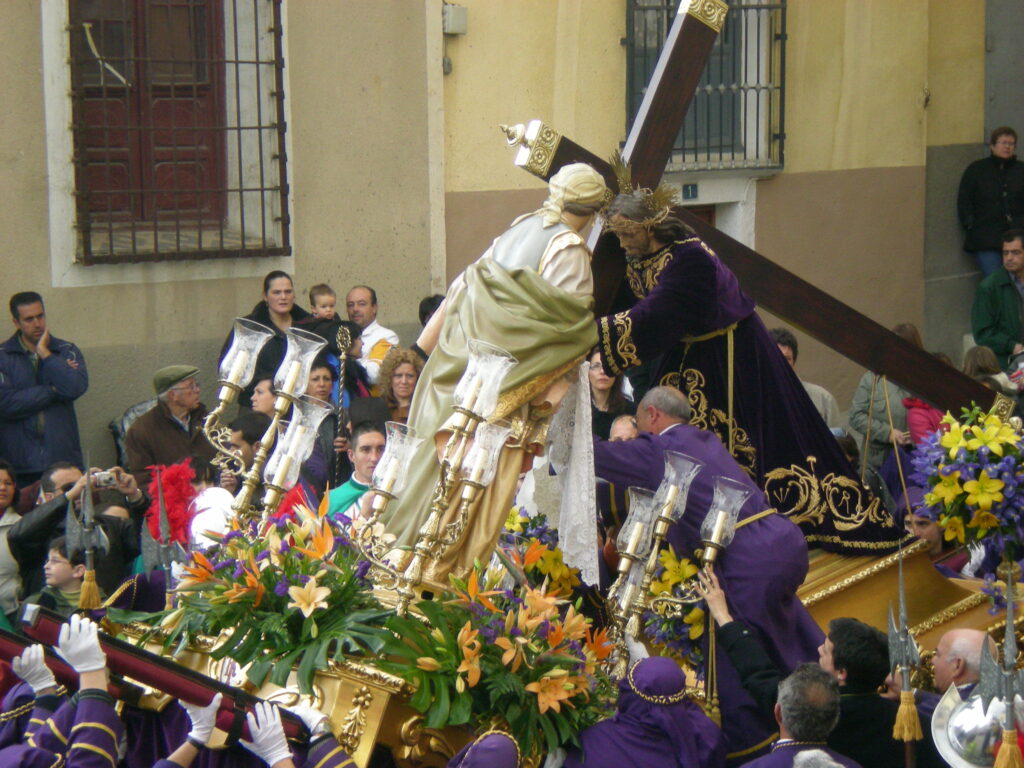
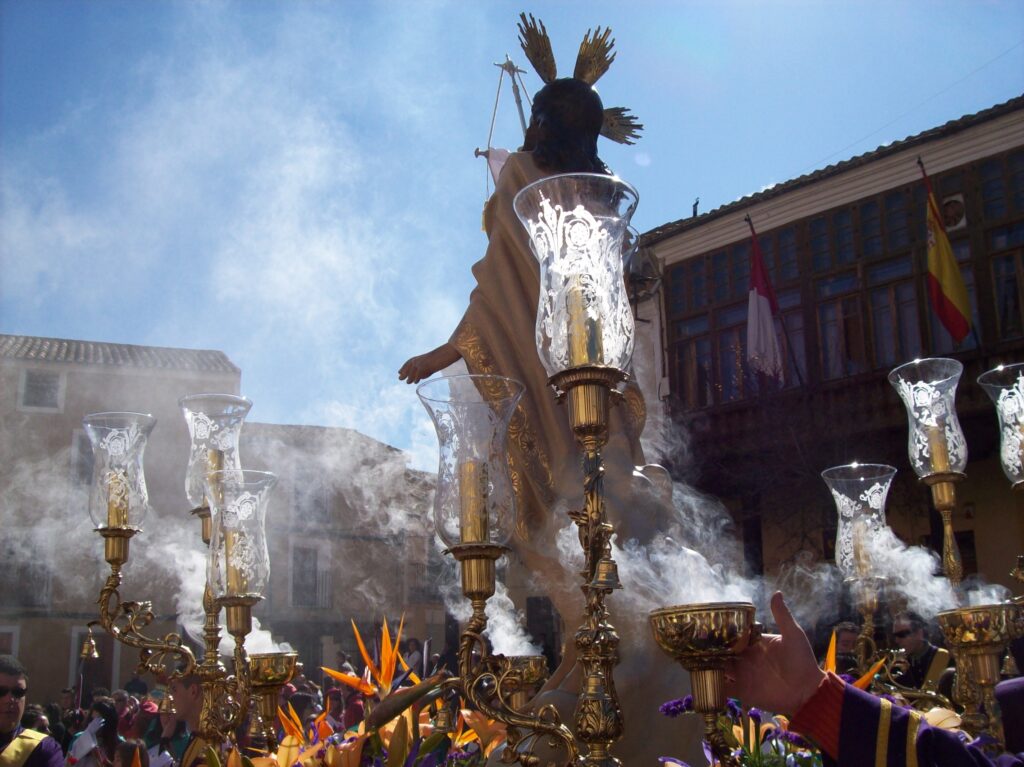
Declared of Regional Tourist Interest in 2002, Holy Week in Chinchilla dates back to 1586. Its distinctive character lies in several unique features:
- Las Bozainas: Every Saturday during Lent at 11 p.m., these long metal instruments, which can reach up to 3 meters in length, break the silence with a somber melody of possible Eastern origin, announcing the arrival of the Passion through the streets of the historic center.
- Song of the Passion: Of particular emotional significance is the Procession of the Encounter on Good Friday morning, where the ancestral Song of the Passion of Chinchilla is performed, a musical tradition that probably dates back to the 18th century.
Major Festivals and Unique Traditions
- Major Festivals: These are celebrated during the week of August 5 in honor of the patron saint, the Virgen de las Nieves.
- La Soldadesca: An event in honor of the patron saint that always coincides with the third Sunday in May.
- “Los Miércoles” (Ash Wednesday): A partially recovered tradition that consists of the representation of everyday scenes in the streets using puppets created by the inhabitants themselves. This celebration is currently in the process of being declared a Festival of Regional Tourist Interest.
- City of Chinchilla Classical Theater Festival: A famous and prestigious event held in July, taking advantage of the city’s incomparable monumental surroundings.
- The Monumental Nativity Scene: Famous for its quality and for the custom of including a new castle from the Spanish territory each year.
Complement your route in Albacete
If you are visiting Albacete, don’t hesitate to lose yourself in other destinations we have on the map:
- Bogarra: A village where you can disconnect, find authenticity, and enjoy natural beauty in its purest form.
- Nerpio: A hidden gem that surprises visitors with its archaeological heritage and natural wealth.
- Letur: Known as ‘the village of water’, it has the best-preserved medieval layout in the entire province.
A finale with a taste of La Mancha
Chinchilla de Montearagón is, in short, an epitome of the history of La Mancha. Its medieval layout, its buildings that juxtapose Gothic, Mudejar, Renaissance, and Baroque styles, and its formidable castle bear witness to a powerful past that, although today it is overshadowed by its neighbor Albacete, continues to shine with its own unmistakable light. It is a must-see to understand the historical depth and unshakeable identity of this corner of Castilla-La Mancha.
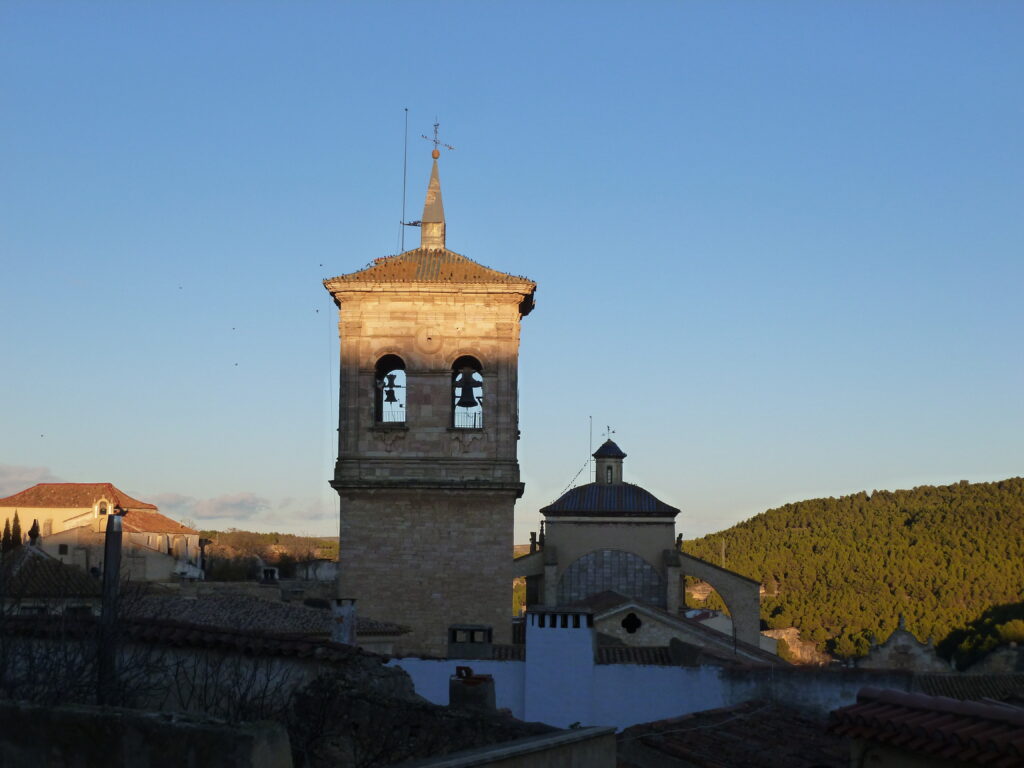
Photo Credits
Below are the photo credits in order of appearance. Royalty-free photos will not be listed below:
- Cover Image: Pitamakan7, CC BY-SA 4.0, via Wikimedia Commons
- Luis Rogelio HM, CC BY-SA 2.0, via Wikimedia Commons
- jacilluch, CC BY-SA 2.0, via Wikimedia Commons
- Luis Rogelio HM, CC BY-SA 2.0, via Wikimedia Commons
- ‘El País’ newspaper, CC BY-SA 4.0, via Wikimedia Commons
- Ripoll531, CC BY-SA 4.0, via Wikimedia Commons
- Ripoll531, CC BY-SA 4.0, via Wikimedia Commons
- Luis Rogelio HM, CC BY-SA 2.0, via Wikimedia Commons
- Millars, CC BY-SA 4.0, via Wikimedia Commons
- Millars, CC BY-SA 4.0, via Wikimedia Commons
- Luis Rogelio HM, CC BY-SA 2.0, via Wikimedia Commons
- Luis Rogelio HM, CC BY-SA 2.0, via Wikimedia Commons
- DavidDaguerro, CC BY-SA 4.0, via Wikimedia Commons
- Luis Rogelio HM, CC BY-SA 2.0, via Wikimedia Commons
- Millars, CC BY-SA 4.0, via Wikimedia Commons
- Milartino, CC BY-SA 3.0, via Wikimedia Commons
- Terranostrum, via terranostrum.es
- Rogelio Guerrero González, via iealbacetenses.com
- Terranostrum, via terranostrum.es
- Falk2, CC BY-SA 4.0, via Wikimedia Commons
- Luis Rogelio HM, CC BY-SA 2.0, via Wikimedia Commons
- Millars, CC BY-SA 4.0, via Wikimedia Commons
- Millars, CC BY-SA 4.0, via Wikimedia Commons

.jpg)
_(cropped).jpg)
.jpg)
.jpg)

.jpg)
.jpg)

_22.JPG)
.jpg)
.jpg)

.jpg)


.jpg)
_23.JPG)
_29.JPG)