Piedralaves: The Hidden Charm of the Tiétar Valley, a Magical Corner of Ávila
In the heart of the Tiétar Valley, south of the Sierra de Gredos, lies Piedralaves, one of the most picturesque and visited villages in the province of Ávila. Just 95 km from Madrid and 85 km from the capital of Ávila, this village retains the charm of its traditional architecture, the coolness of its gorges and the warmth of its festivals and traditions. With just over 2,100 inhabitants, Piedralaves has earned the title of ‘the Andalusia of Ávila’ thanks to its climate, its folklore and the open nature of its people, earning itself the distinction of Magical Village.
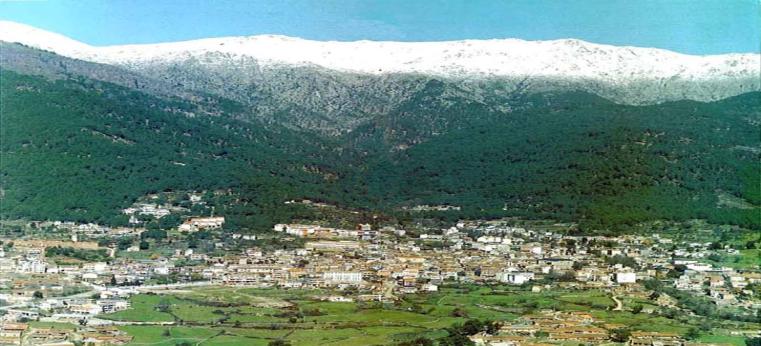
A village described by Camilo José Cela as ‘beautiful and tiny like a flower’ and which today combines the flavour of rural life with a growing range of tourist attractions that appeal to both weekend travellers and long-stay holidaymakers.
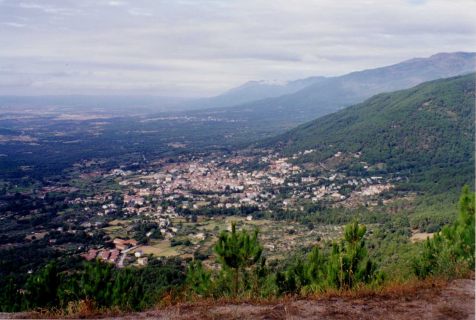
Below, we tell you what to see and do in Piedralaves, its most famous festivals, its historical heritage, its natural spots and the curiosities that make it a unique destination in the Sierra de Gredos.

History and origins of Piedralaves
The name Piedralaves already appears in Alfonso XI’s Libro de la Montería (Book of Hunting), which mentions the mountain known as La Sarnosa. The place name has given rise to different interpretations: some relate it to the expression ‘at the foot of the rock’, others to possible Basque roots due to its similarity to Álava, and even Arabic and Vettone origins are considered.
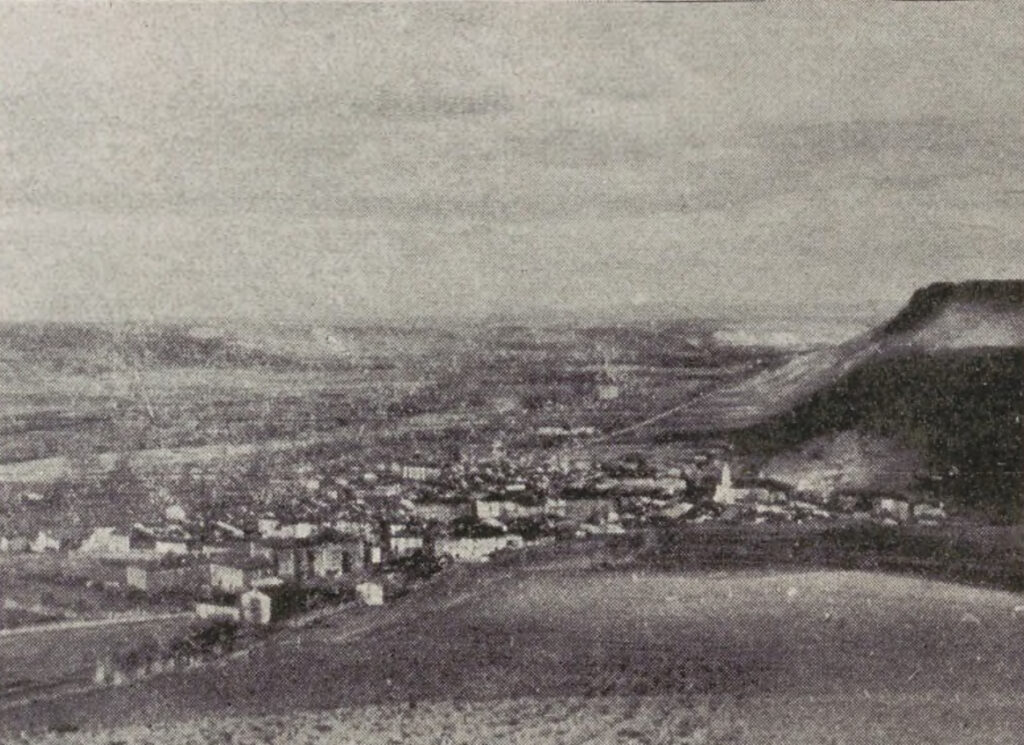
What is certain is that the population centre was consolidated around the 15th century as a village dependent on La Adrada. However, the great milestone came in 1639, when Philip IV granted it the charter of villazgo, granting it administrative independence in exchange for a large sum of money. From then on, Piedralaves began to write its own history.
For centuries, it was a small agricultural and livestock village, with an important beekeeping industry and iron furnaces. In the mid-19th century, it had barely 713 inhabitants and some 200 houses. The big change came in the second half of the 20th century, when rural tourism began to flourish in the Tiétar Valley, attracting visitors in search of nature, tranquillity and authenticity.
Strolling through Piedralaves: heritage and architecture
The current name, ‘Piedralaves’, has been the subject of etymological study, suggesting a connection with the mountainous geography that surrounds it. This link with the land is reflected in its popular architecture, characterised by the use of local materials such as granite stone and oak, pine and chestnut wood, which shape its houses with narrow façades, wooden balconies and overhanging eaves.
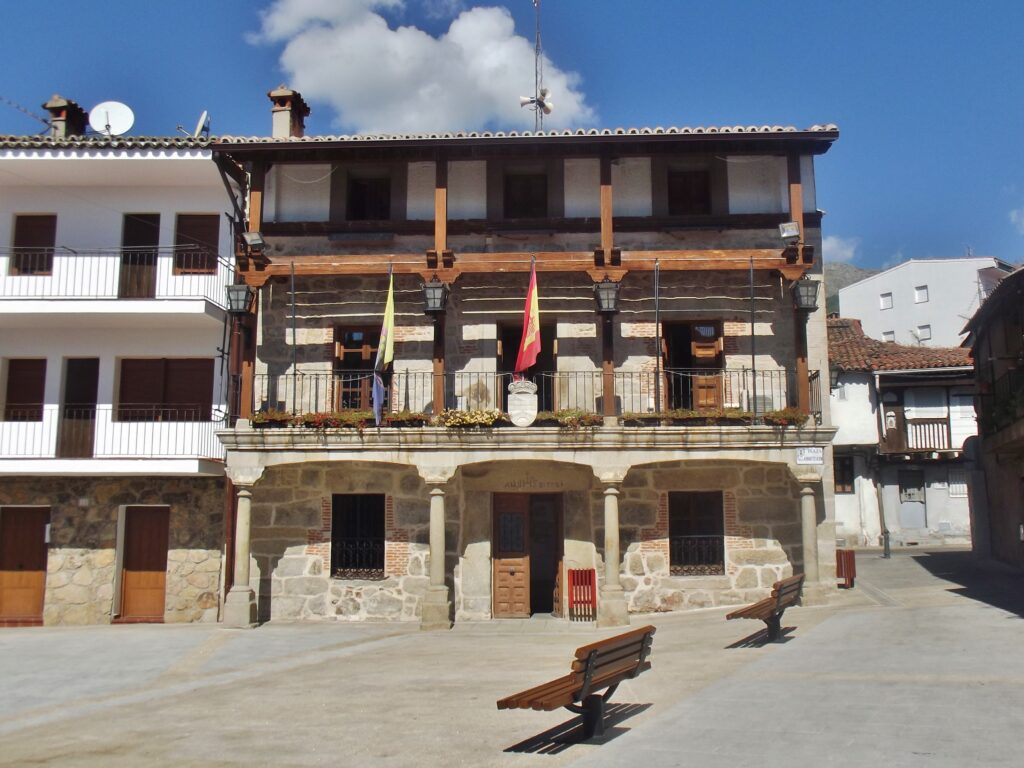
The urban layout of Piedralaves is a perfect reflection of its adaptation to the terrain. Built on the side of a mountain, its old town consists of narrow, irregular, cobbled streets that wind their way between granite houses and wooden balconies. Places such as El Venero, El Horderón and El Cerrillo retain a medieval atmosphere that surprises visitors at every turn.
Church of San Antonio de Padua
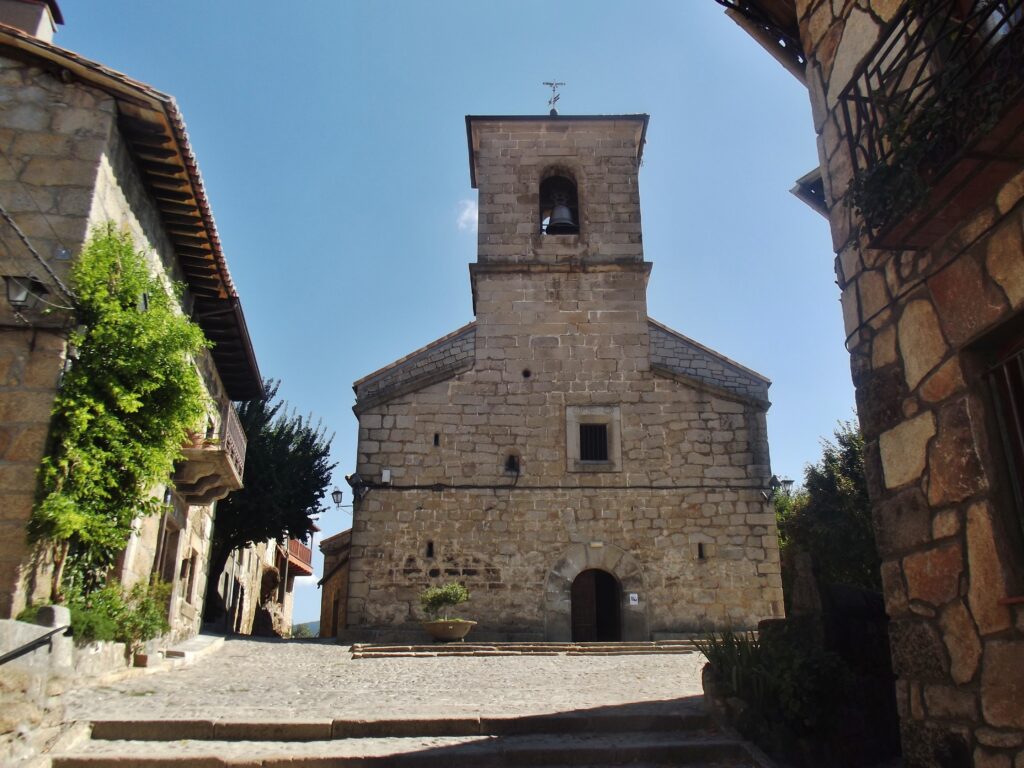
The main church in the village dates from the late 18th century and is dedicated to San Antonio de Padua. Its interior surprises visitors with its magnificent Mudejar coffered ceiling and a polychrome Baroque altarpiece, presided over by the image of the patron saint. Its stone walls and barrel vault convey Castilian sobriety and, at the same time, the artistic fusion of the area.
The Lovers’ Cross
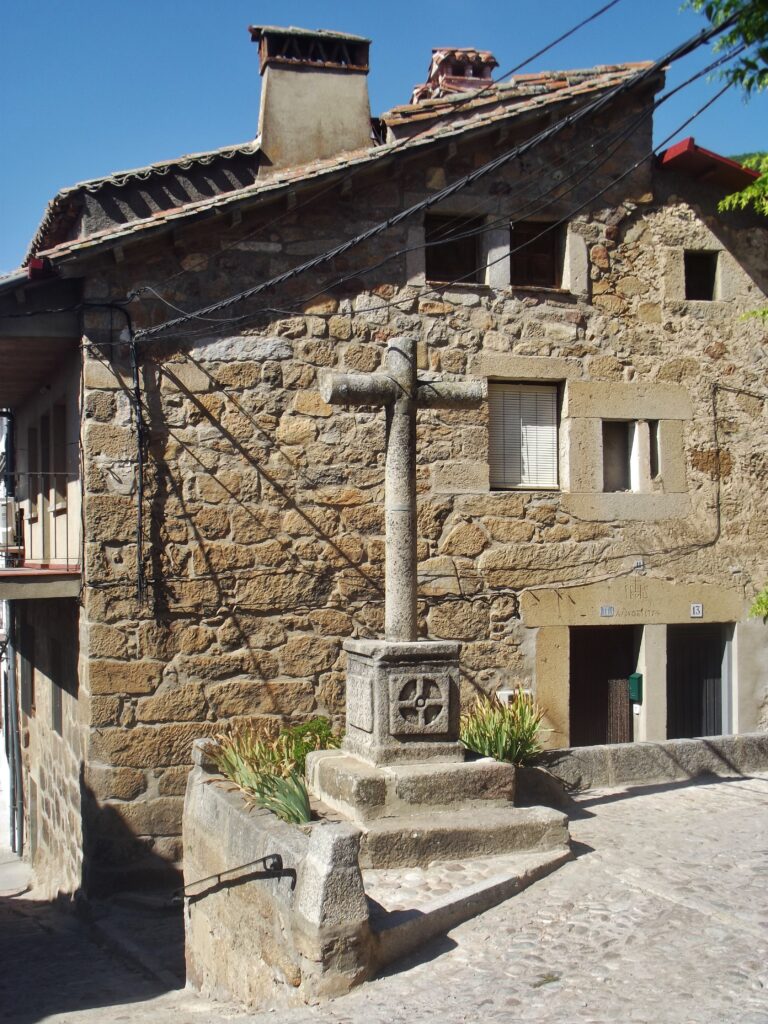
Right in front of the church stands one of the most photographed symbols of the municipality: the Lovers’ Cross. Placed there in 1681, for centuries it was the meeting point for couples after mass. Today it remains a place steeped in romance and tradition.
Plaza de la Constitución and Clock Tower
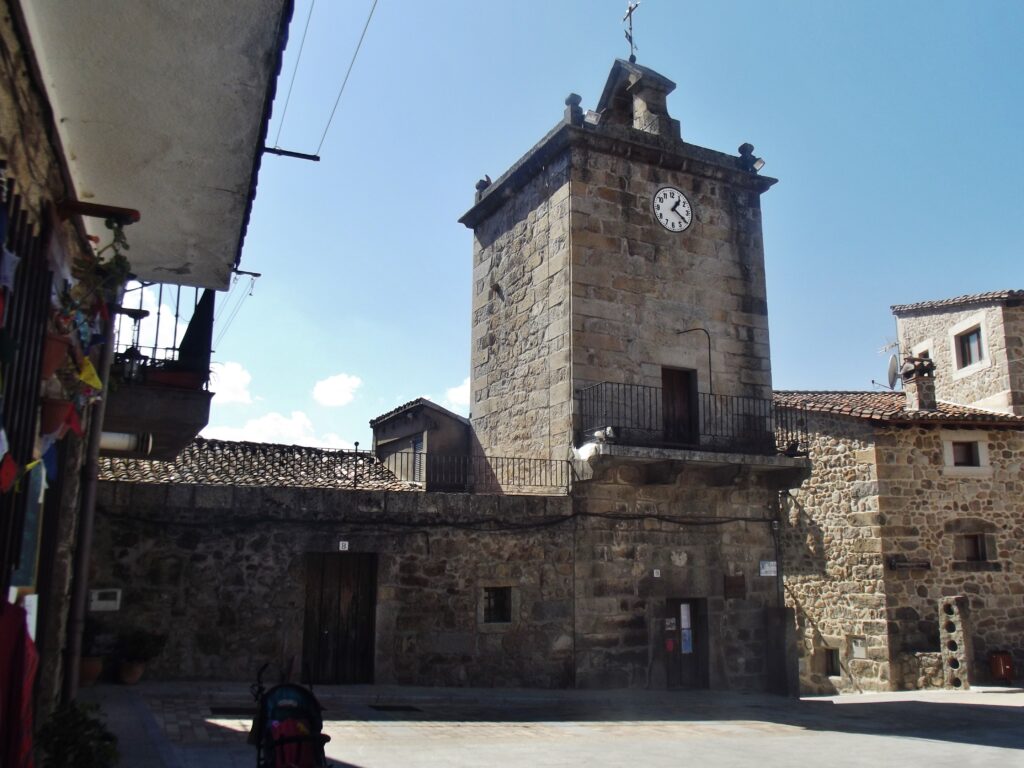
The social heart of Piedralaves is the Plaza de la Constitución, presided over by the Town Hall. Opposite it stands the sturdy 18th-century Clock Tower. Built in stone and crowned with a mechanical clock, it is accessed via a narrow spiral staircase carved from stones from the gorge. It currently houses the Tourist Office.
Chapels
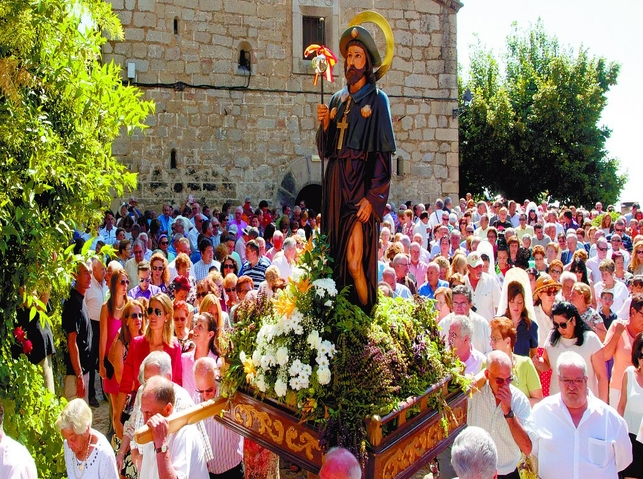
- San Roque Chapel: located in the park of the same name, on the road to Arenas de San Pedro. It was built in the 14th century and rebuilt in 1775. Every 7th of August, the saint is carried in procession to the church to begin the novena before his feast day.
- Hermitage of La Concepción: dating from 1500, it was the first church in the village. Today it presides over the Municipal Park, the venue for concerts and cultural events in the summer.
Roman Bridge and Popular Architecture
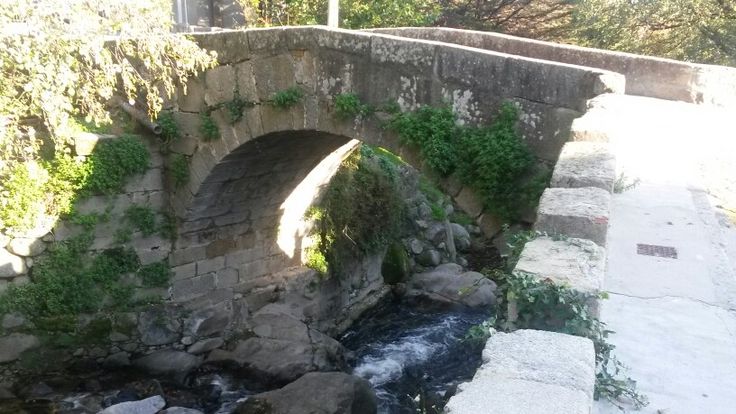
We must not forget the Roman Bridge, although of medieval origin, which was once a crucial crossing point on the route from Madrid to Plasencia. However, the charm of Piedralaves undoubtedly lies in its traditional houses, where granite stone and oak, chestnut or pine wood are combined in balconies, beams and eaves. In the past, these houses were not only homes, but also agricultural work spaces, with cellars, corrals and warehouses. The Casa de los Balcones, also known as the Casa de los Cartagena, is a notable example of this architecture.
Nature and surroundings: gorges, ponds and springs
The beauty of Piedralaves lies not only in its architecture, but also in its privileged natural surroundings. Located on a mountainside, surrounded by pine and olive groves, the municipality benefits from a Mediterranean climate with an oceanic influence, offering mild winters and dry, hot summers. Rainfall, concentrated in spring and autumn, nourishes the lush vegetation that varies according to altitude, from holm oaks and cork oaks in the lower areas to Pyrenean oaks and broom in the higher areas.
The Nuño Cojo Gorge
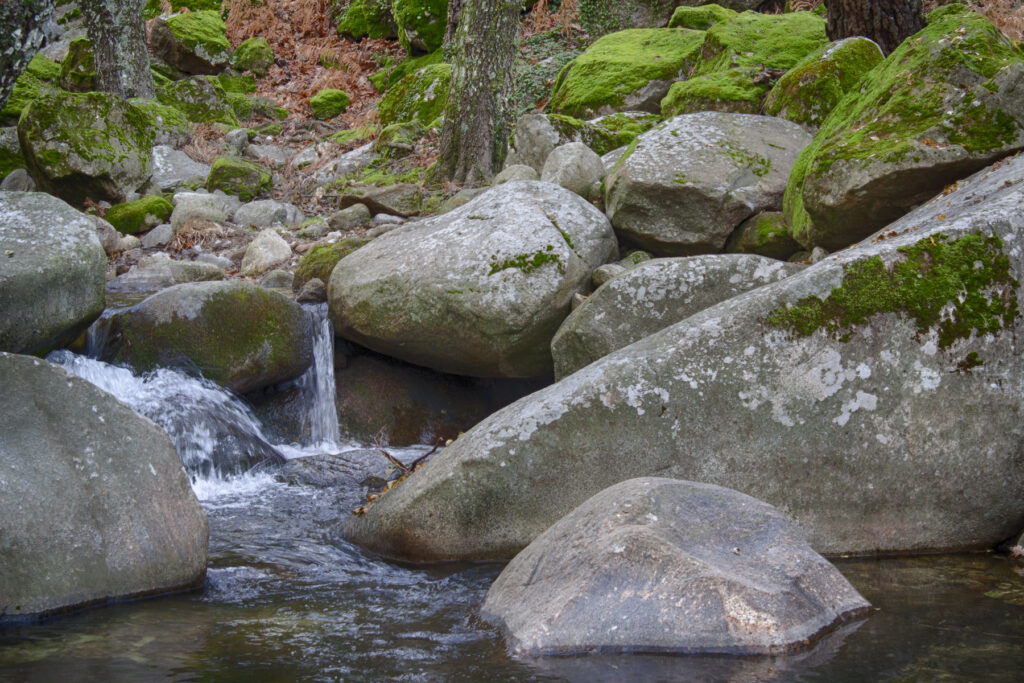
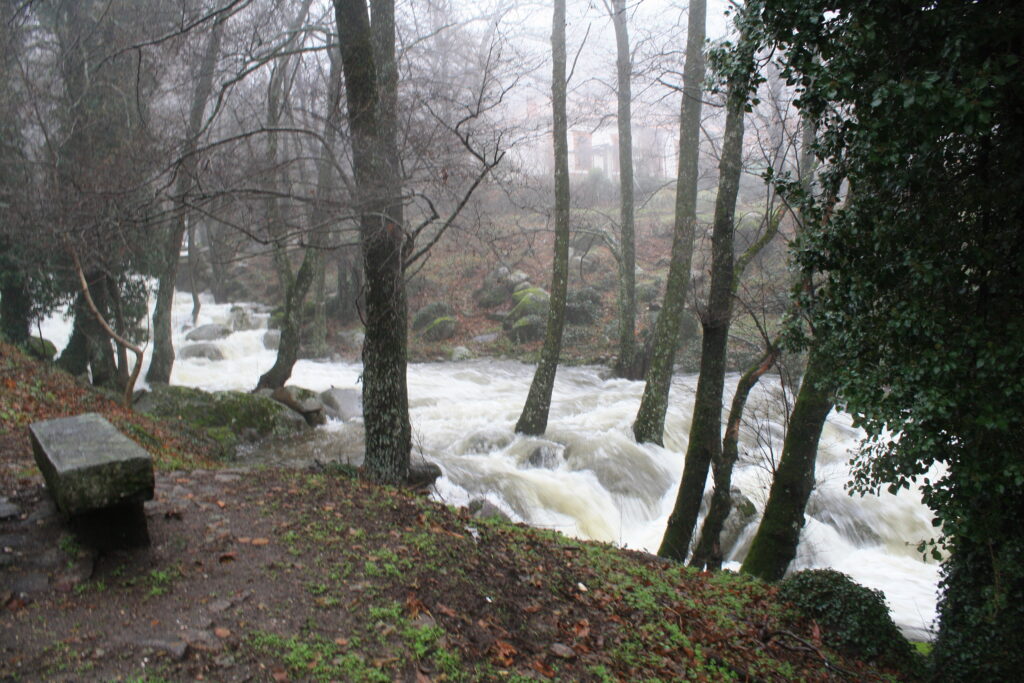
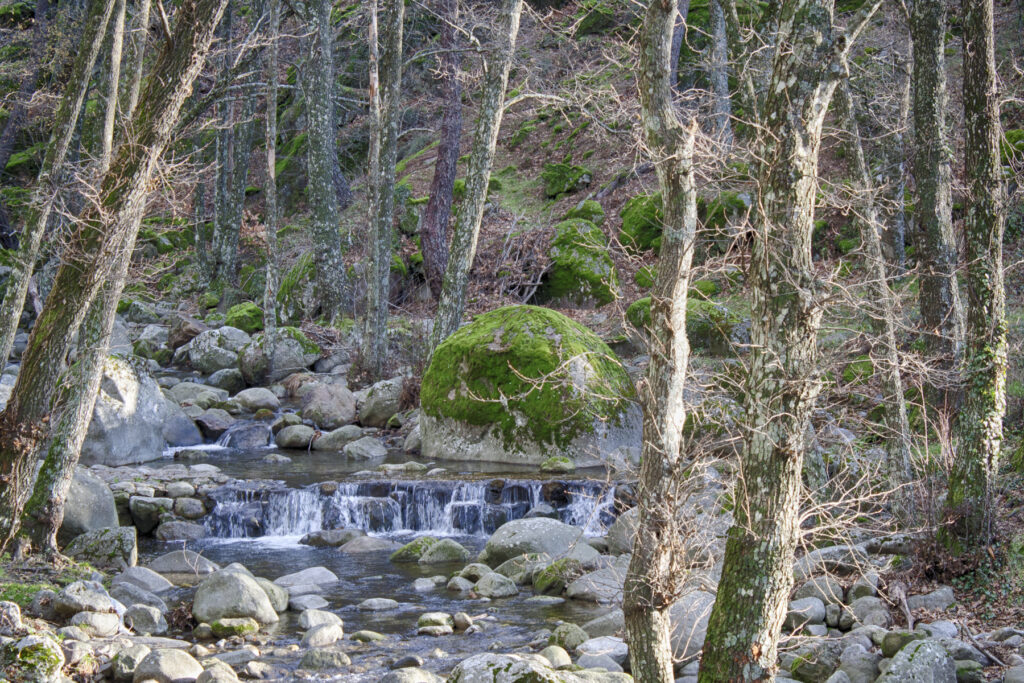
The main watercourse that runs through the town is the Garganta del Nuño Cojo, which flows from the Horcajo dam to its mouth on the Escorial river. Along its course, it receives water from other gorges such as Matavacas, La Graja, El Retamalejo and La Serradilla, forming a water landscape of great beauty.
La Charca de la Nieta
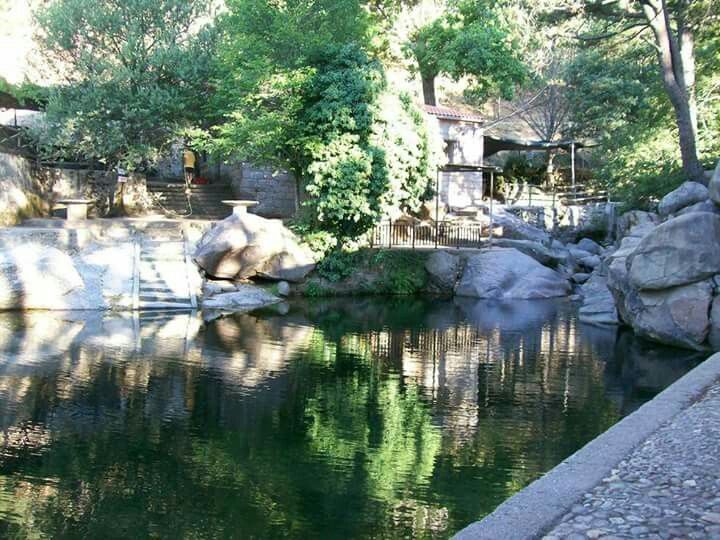
This is one of the most visited places in summer. Originating from an old weir, it was remodelled in the 1950s and today functions as a natural swimming pool where locals and tourists can cool off surrounded by vegetation.
The Horcajo Dam
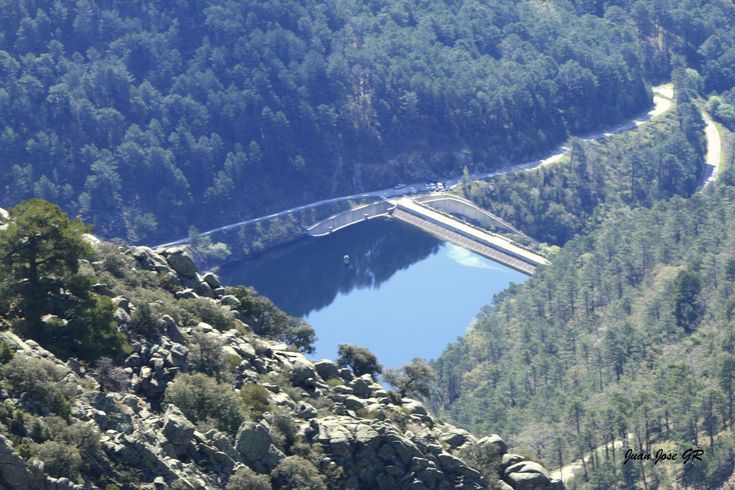
Inaugurated in 2000, it collects water from several gorges and offers a beautiful setting for walking and enjoying contact with nature.
Fountains and parks
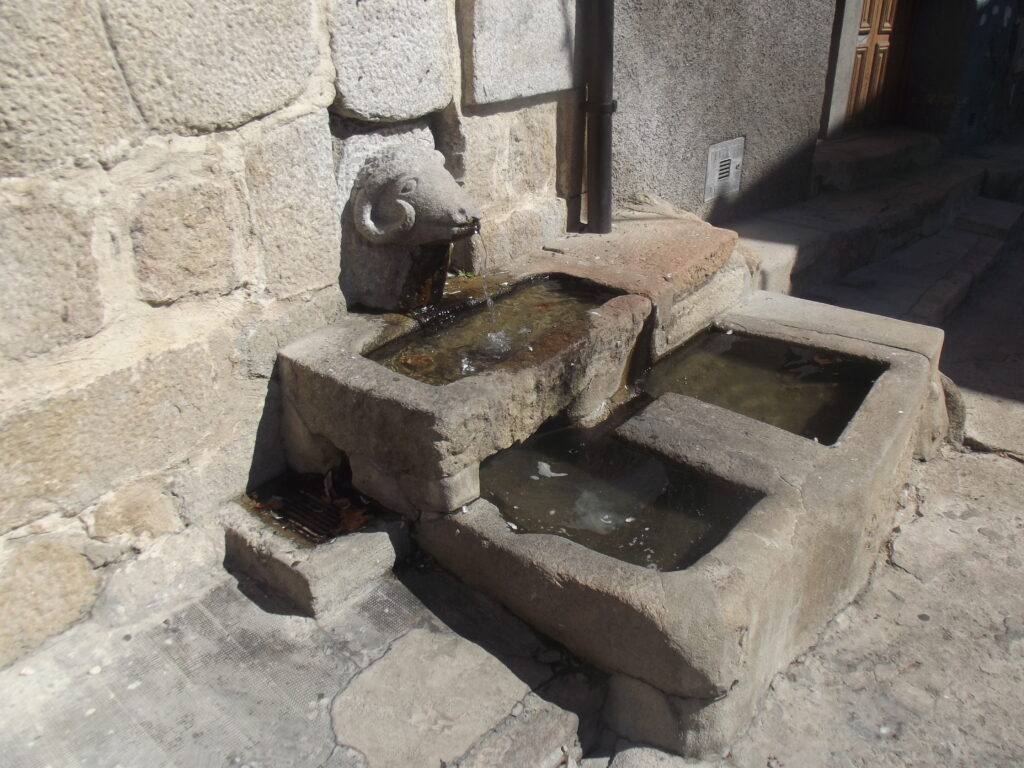
Piedralaves has up to 20 traditional fountains, such as the Venero and the Horderón, which once supplied the neighbourhoods. The Parque del Venerito, built around a legendary fountain, is one of the most beloved spots, especially on summer nights.
Where to stay in Piedralaves
Piedralaves is a destination that invites you to enjoy it at a leisurely pace, which is why most travellers opt for the charm of country houses. Surrounded by nature, they are perfect for a quiet getaway, as a couple or with the family, combining tradition, relaxation and proximity to the Sierra de Gredos.
If you prefer comfortable, central accommodation, the best option is the Hostal Mainz, which offers cosy rooms, good value for money and an ideal location for exploring the village on foot.
Festivals and traditions
Piedralaves is synonymous with festivities. Its calendar is full of celebrations that combine the religious, the popular and the playful, attracting both locals and visitors.
- Carnival: probably the best known in the area. Four days of costumes, parades, dances and carnival buns. The quintos (young men who have completed their military service) are the protagonists of competitions and traditions passed down from generation to generation.
- San Roque Festival: from 13 to 18 August, with the main day on the 16th. Processions, bulls, dances, music and family reunions turn the town into a hive of activity.
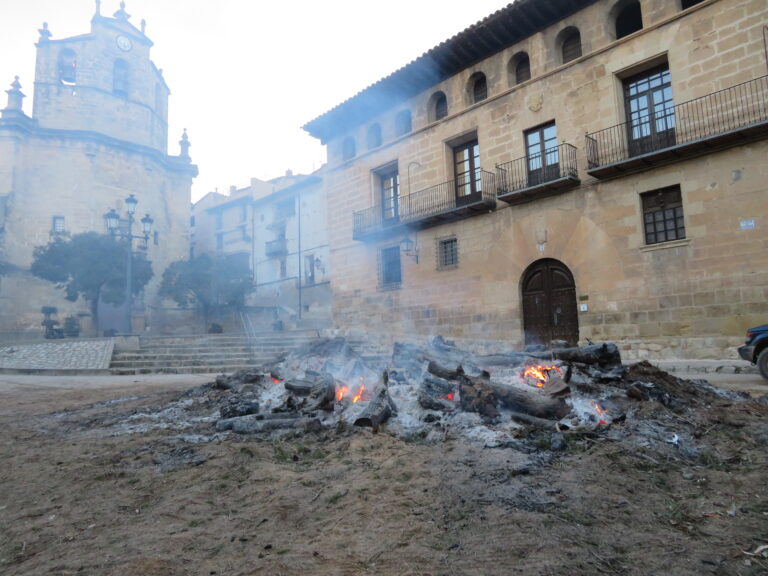
- Luminarias de San Isidro: every 14 May, young people light bonfires with rosemary and rockroses, filling the town with aromas. The next day, the pilgrimage takes place, with horses, flamenco and a large paella in the meadow.
- Romería rociera: a more recent tradition, celebrated on the Saturday closest to 15 May. Horsemen ride through the village, the Salve Rociera is sung and music and gastronomy are enjoyed in the countryside.
- Calbotada: on the first weekend in November, the residents roast chestnuts (calbotes) and share stories around the fire.
- Cencerrada de Santa Lucía: every 13th of December, the square is filled with the sound of cowbells announcing the arrival of Christmas.
- Holy Week: deeply rooted, with processions and popular songs such as Juan de Padilla’s Calvario.
These festivals reflect the cultural identity of the town, its strong religious roots and its cheerful character.
A Literary and Artistic Legacy: Illustrious figures and famous visitors
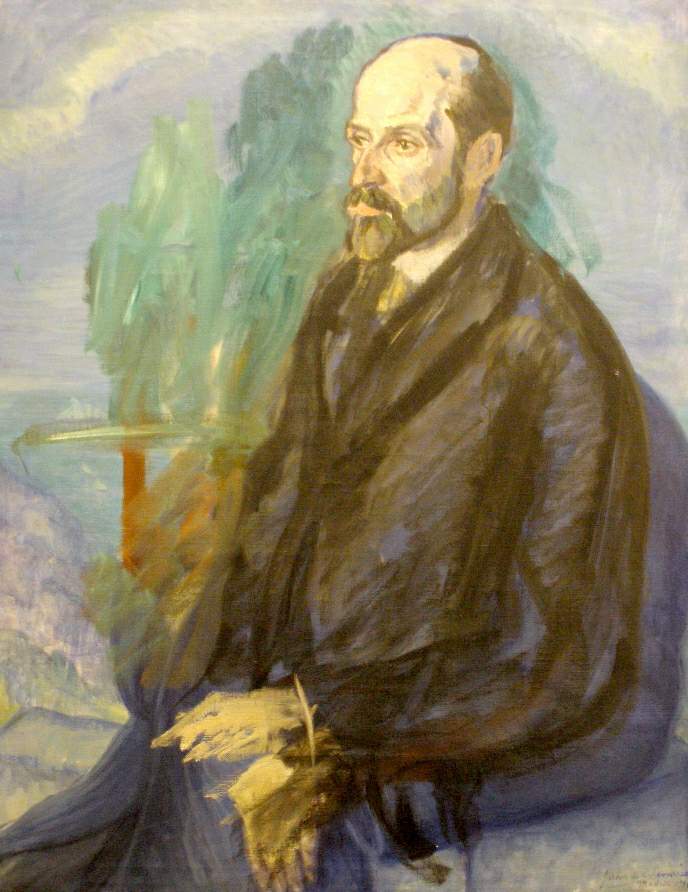
The uniqueness of Piedralaves has transcended the local sphere, inspiring renowned figures in Spanish culture. Juan Ramón Jiménez spent time here, finding inspiration in its landscapes; León Felipe worked as a pharmacist between 1918 and 1919; and Camilo José Cela described it fondly in his work. Pío Baroja, Nicolás Franco, the singer Pastora Imperio and the bullfighter Gitanillo de Triana also visited the town.
The rich folklore of Piedralaves is also evident in its music and dances. The rondas (traditional singing groups) have preserved a rich musical repertoire, whose songs have been performed by important Spanish folk music groups. This cultural heritage, combined with its natural and architectural heritage, makes Piedralaves a destination that invites you to discover it, be captivated by its charm and immerse yourself in the authenticity of its traditions.
Active tourism and leisure in Piedralaves
The natural environment of the Tiétar Valley makes Piedralaves an ideal destination for active tourism. Hiking, cycling, horse riding and climbing are common activities in the area.
- Hiking trails: the Nuño Cojo gorge and the Horcajo dam offer trails that are accessible to everyone.
- La Nieta natural swimming pool: perfect for summer.
- Sports: the town has a sports centre, municipal swimming pool and shooting range.
In addition, Piedralaves is home to children’s camps and nature activities, making it a popular destination for families from Madrid and Toledo in search of fresh air.
Discover Ávila
We recommend visiting these places that we have added to the map in Ávila, to make your trip as complete as possible:
- Peguerinos: an ideal place near Madrid to visit and go on a road trip. 1 hour and 17 minutes via the A502 motorway.
- Navarredonda de Gredos: an idyllic mountain location, visit the Parador Nacional de Gredos. 1 hour and 8 minutes via the CL-501 and N-502.
- Burgohondo: visit an incredible 11th-century abbey. 59 minutes via the CL-501 and AV-901.
- El Barraco: a charming mountain village nestled in the Sierra. 48 minutes via the CL-501 and N-403.
Piedralaves today: tourism and authenticity
Piedralaves, in Ávila, is an essential destination in the Tiétar Valley. Its gorges and pools invite you to take a dip, its chapels and squares tell centuries-old stories, and its festivals convey the joy of a community that celebrates each season with passion.
Whether for a weekend getaway from Madrid or a longer stay, Piedralaves offers travellers nature, heritage and tradition in the privileged setting of the Sierra de Gredos. A place where every corner holds a piece of history and every festival is a reason to return.
Photo Credits
Below are the photo credits in order of appearance. Royalty-free photos will not be listed below:
- Cover Image: M.Peinado from Alcalá de Henares, España, CC BY 2.0, via Wikimedia Commons
- El Porugues Alquilares., CC BY-SA 4.0, via Wikimedia Commons
- Juangargar, CC BY-SA 4.0, via Wikimedia Commons
- Asqueladd, CC BY-SA 3.0, via Wikimedia Commons
- Asqueladd, CC BY-SA 3.0, via Wikimedia Commons
- Asqueladd, CC BY-SA 3.0, via Wikimedia Commons
- Asqueladd, CC BY-SA 3.0, via Wikimedia Commons
- MG, via Pinterest
- M.Peinado from Alcalá de Henares, España, CC BY 2.0, via Wikimedia Commons
- Juan José GR, via Pinterest
- Asqueladd, CC BY-SA 3.0, via Wikimedia Commons
- Juangargar, CC BY-SA 4.0, via Wikimedia Commons
- M.Peinado from Alcalá de Henares, España, CC BY 2.0, via Wikimedia Commons
In this article you will find some affiliate links. If you book or buy something through them, you help us to continue creating independent and useful content, at no extra cost to you. Thank you very much for making this possible!


.jpg)


.jpg)