What to see in Artà, Majorca: history, culture, nature and beaches
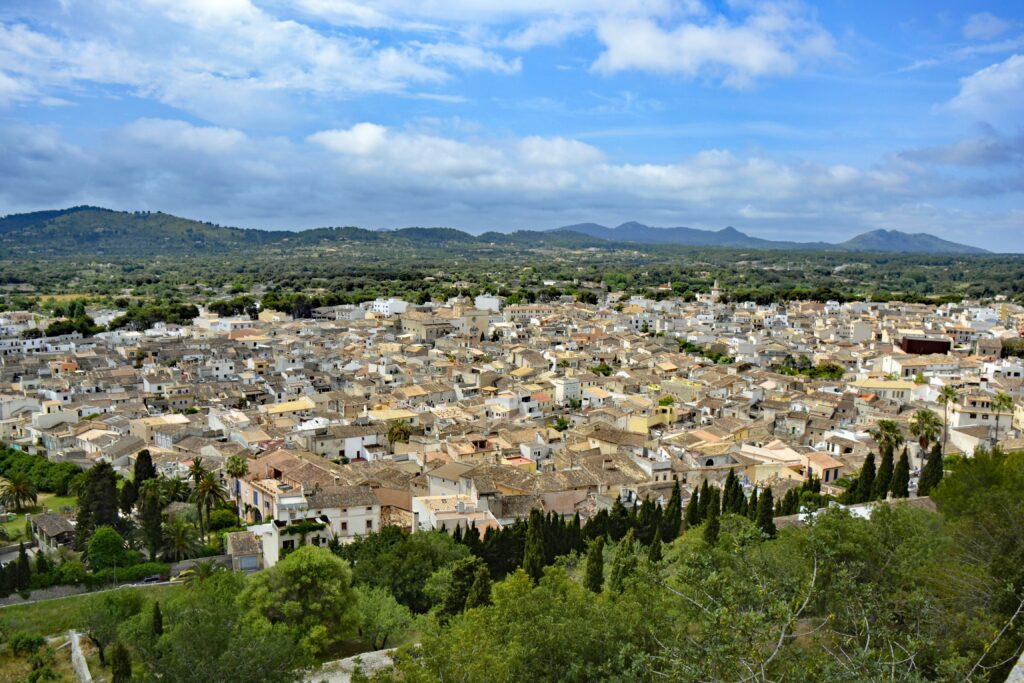
In the northeast of Mallorca, in the heart of the Llevant region, lies Artà, a municipality that preserves the authentic essence of the island like few others. Unlike other places that have succumbed to mass tourism, this picturesque Mallorcan village has managed to maintain its character, traditions and leisurely pace. Here you will find a complete destination: ancient history, charming cobbled streets, unspoilt natural landscapes, wild coves and a unique cultural heritage.

History of Artà: from Yartan to modern-day Mallorca
The origins of Artà date back to prehistoric times. Archaeological remains found in the municipality, such as the famous Talayotic settlement of Ses Païsses, show that the area was already inhabited more than 3,000 years ago. Later, the Romans also left their mark, and during Muslim rule, the peninsula of Yartan was one of the thirteen districts into which Mallorca was divided. In fact, the place name Artà derives from the Arabic yartan, which means ‘garden’. After the Christian conquest, the town gained momentum thanks to the founding of the priory of Santa María de Bellpuig in the 13th century. Until the 15th century, the town was known as Almudaina, and the term Artà referred to the entire district.
The town’s history has also been marked by difficult episodes, such as the bubonic plague of 1820, which claimed more than 1,200 lives. However, Artà has always been characterised by the resilience of its people. Agriculture, crafts and palm heart manufacturing were key activities for local survival well into the 20th century. Today, although tourism is part of its economy, Artà has managed to maintain its authenticity, becoming one of the most interesting villages in Mallorca.
A Stroll Through the Charming Old Town
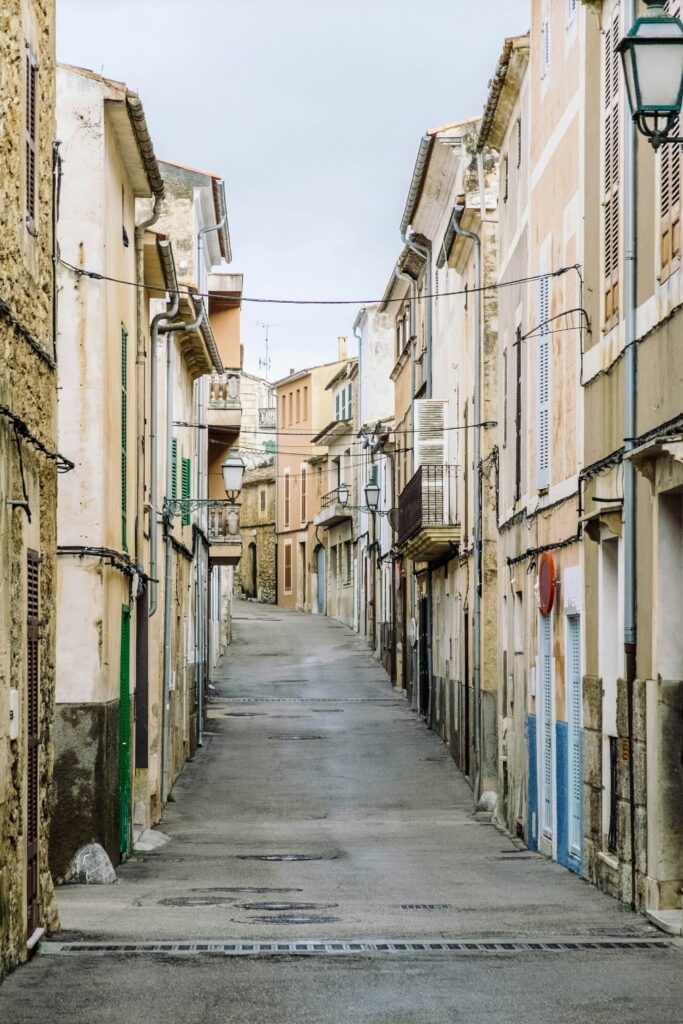
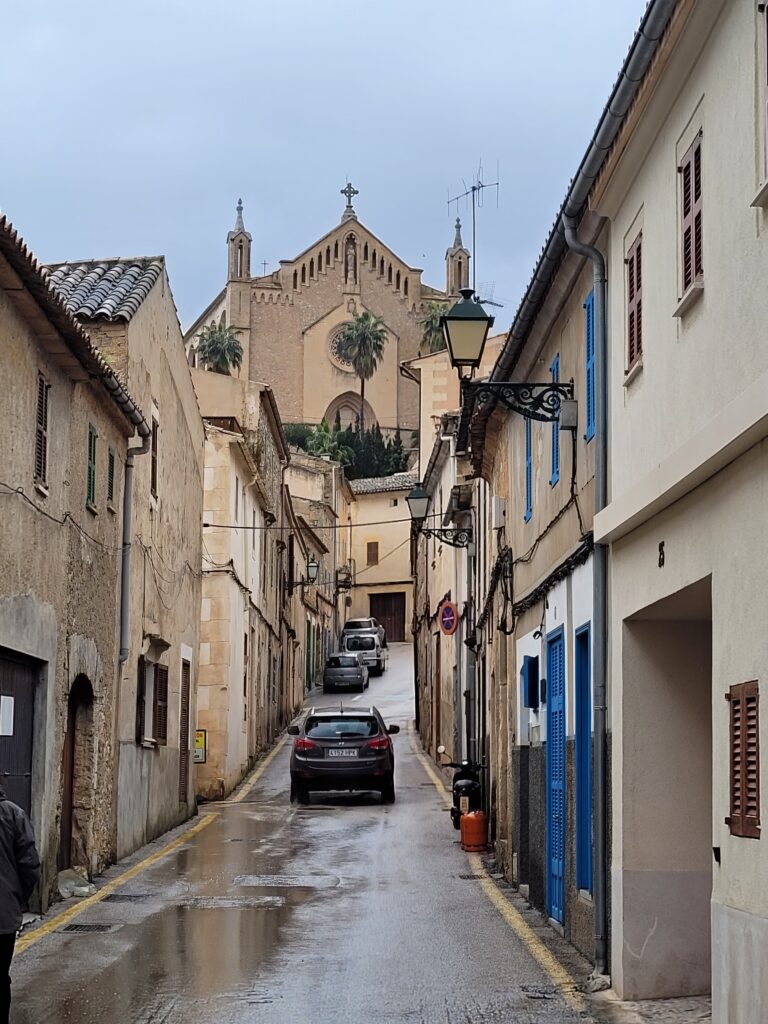
Getting lost in the historic centre of Artà is an unmissable experience. Its cobbled streets, with doors and windows painted green or red, retain their traditional Mallorcan feel. The old town is divided into two areas:
- The working-class neighbourhood, located in the lower part, with modest houses and a quiet lifestyle.
- The aristocratic neighbourhood, in the upper part, where the former landowners built their mansions, some of which have now been converted into museums or accommodation.
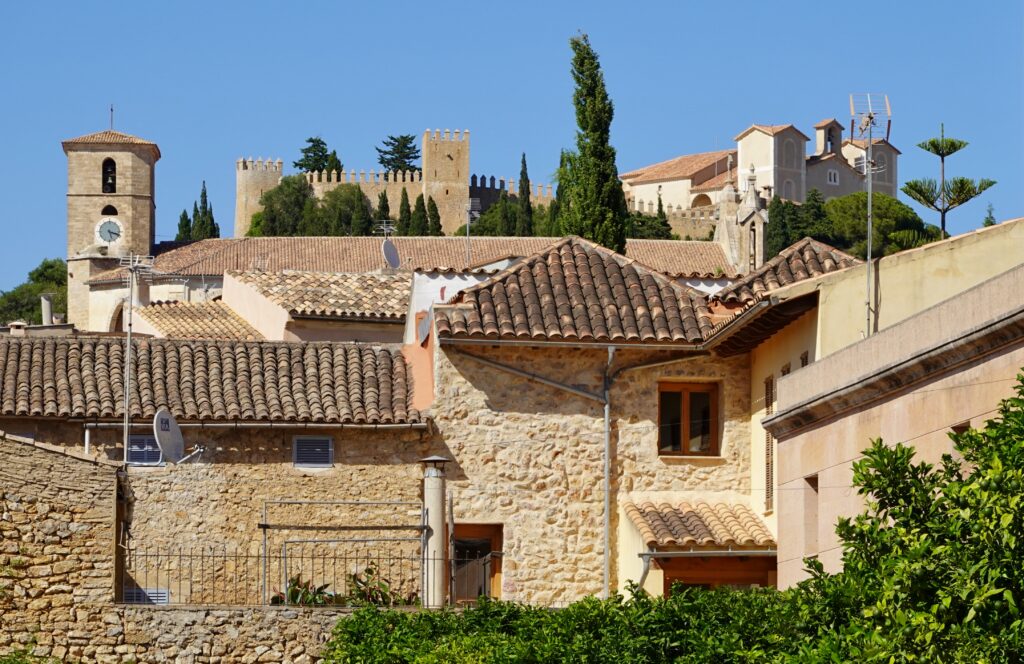
The heart of the village is the Plaça del Conqueridor, perfect for taking a break in the shade of trees brought from America centuries ago. This is also where the weekly market is held on Tuesdays, one of the liveliest on the island, with local products, fruit, vegetables, clothing and crafts. From the medieval fortifications to the charming, winding alleyways, every corner reveals a story, turning the old town of Artà into a living tapestry of history and tradition.
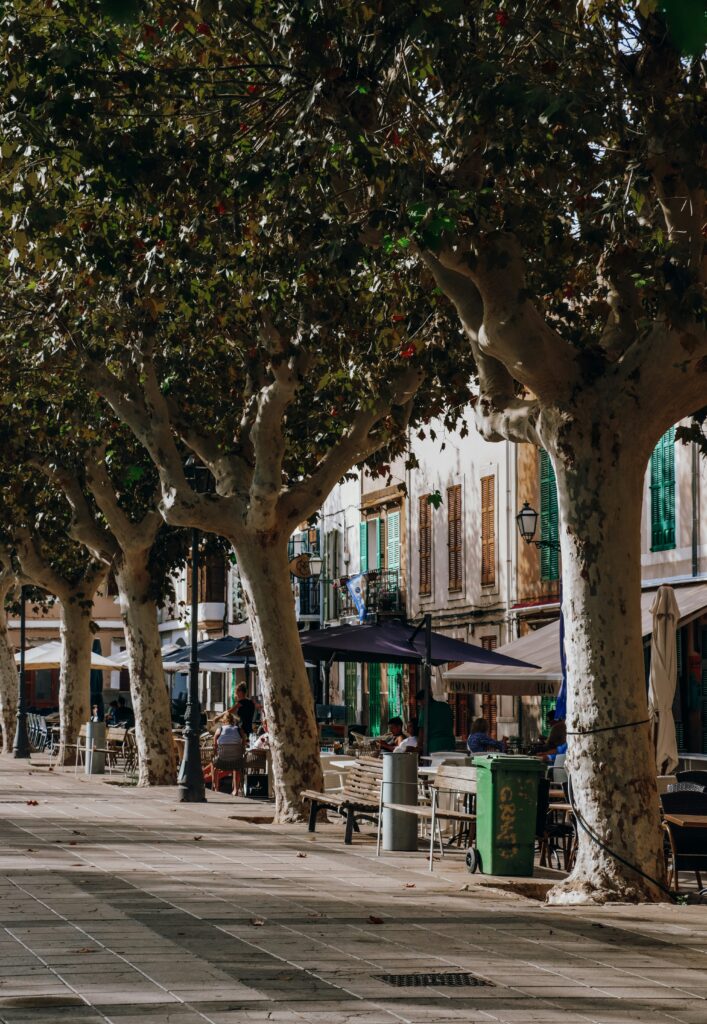
As you meander through the ancient streets, the sound of music and laughter fills the air, creating a cheerful and relaxed atmosphere. The warm and friendly disposition of the locals contributes to a welcoming atmosphere, making every visitor feel like a valued guest in this timeless city. The fusion of rich heritage, delicious cuisine and the tranquil pace of life create an irresistible charm, enticing visitors to engage with the soul of this picturesque city.
Essential monuments and places to visit in Artà
1. The Church of the Transfiguration of the Lord
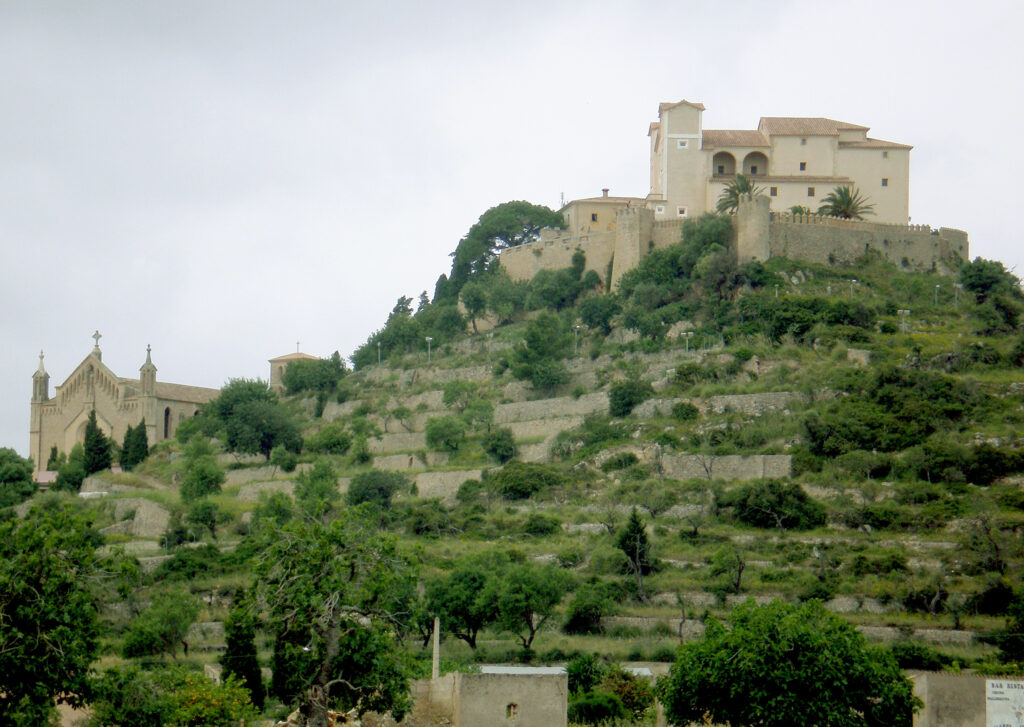
Visible from anywhere in the town, construction of this Gothic church began in 1563 on the site of an earlier temple dating from 1240, although it was not completed until the end of the 19th century. Its imposing neo-Gothic façade dominates the urban landscape. Stone steps lead from the rear to the Sanctuary of Sant Salvador.
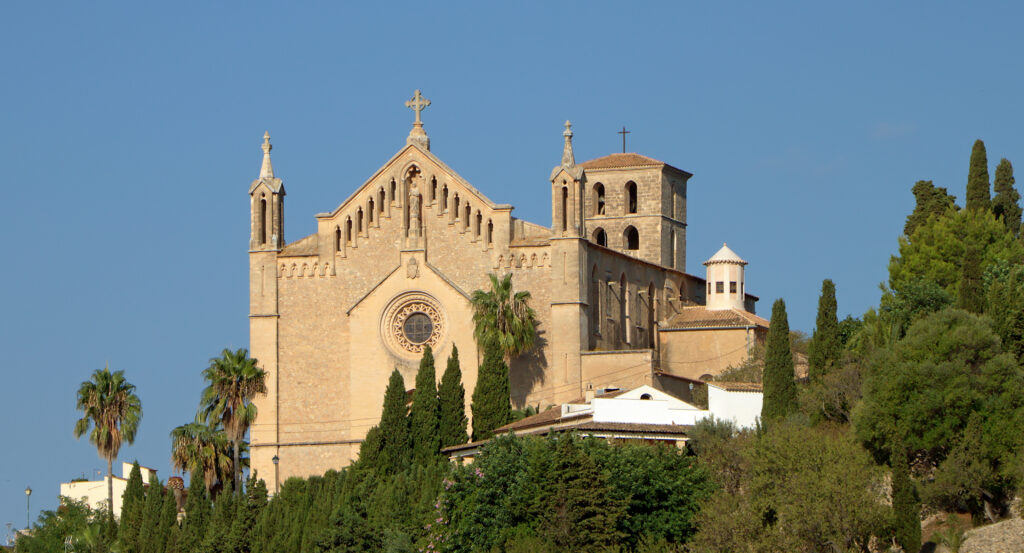
Sant Salvador: the spiritual and historical heart of Artà
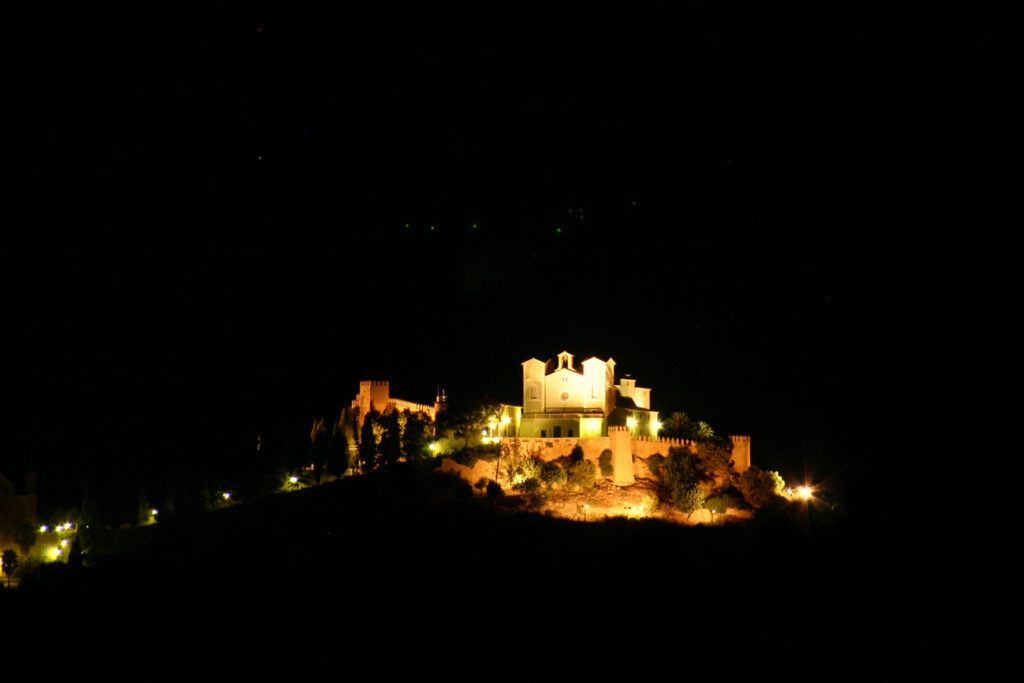
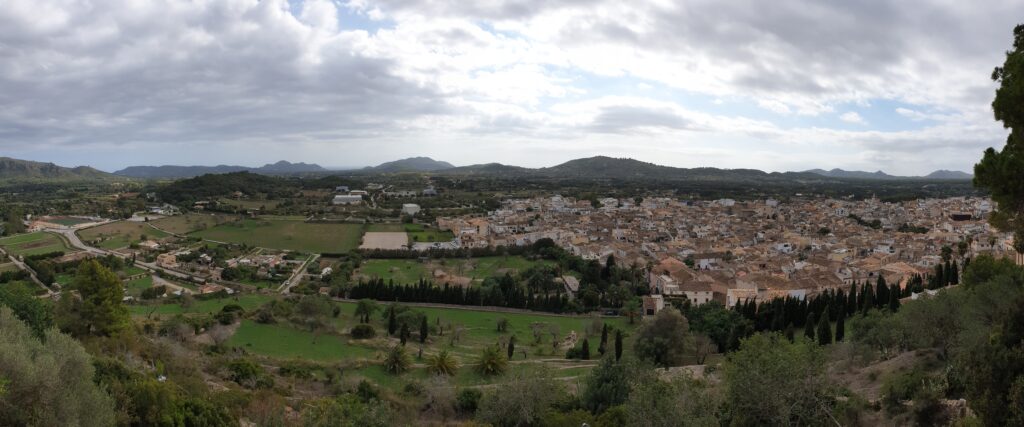
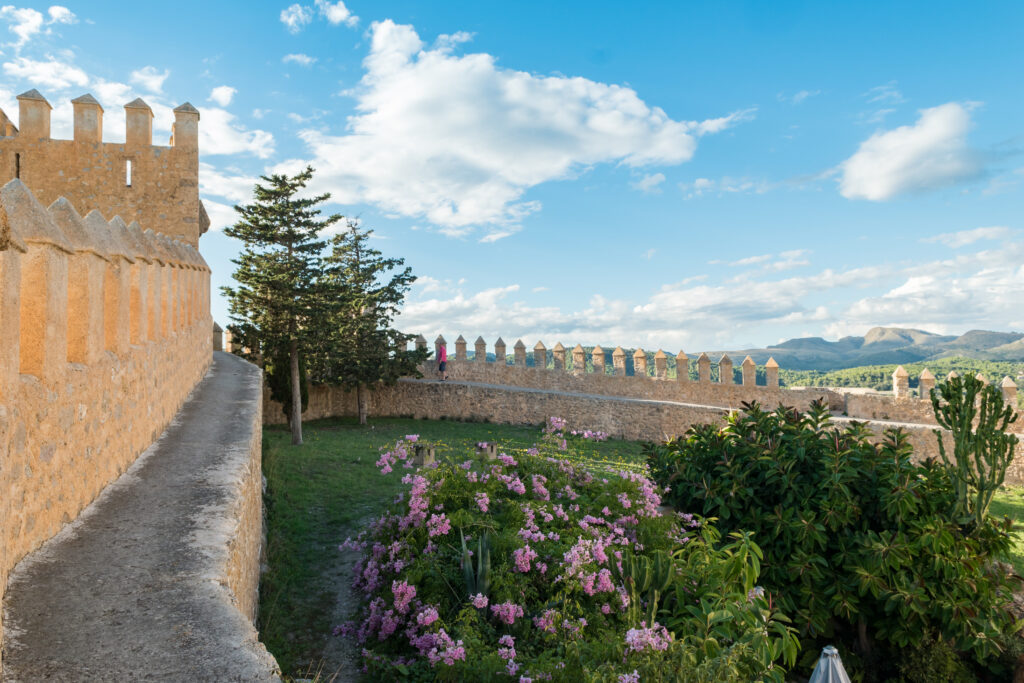
It is Artà’s most recognisable icon. Located at the top of the hill overlooking the town, it is surrounded by a medieval wall. It is accessed by climbing some 180 steps in the shade of centuries-old cypress trees. The view from the top is spectacular: the Artà valley, the Llevant Natural Park and, on clear days, even the silhouette of Menorca.
The sanctuary was originally a Muslim fortress, converted into a Christian temple after the conquest. During the plague of 1820, it was used as a makeshift hospital. Today it is one of the most visited sites in Mallorca due to its combination of history and landscape.
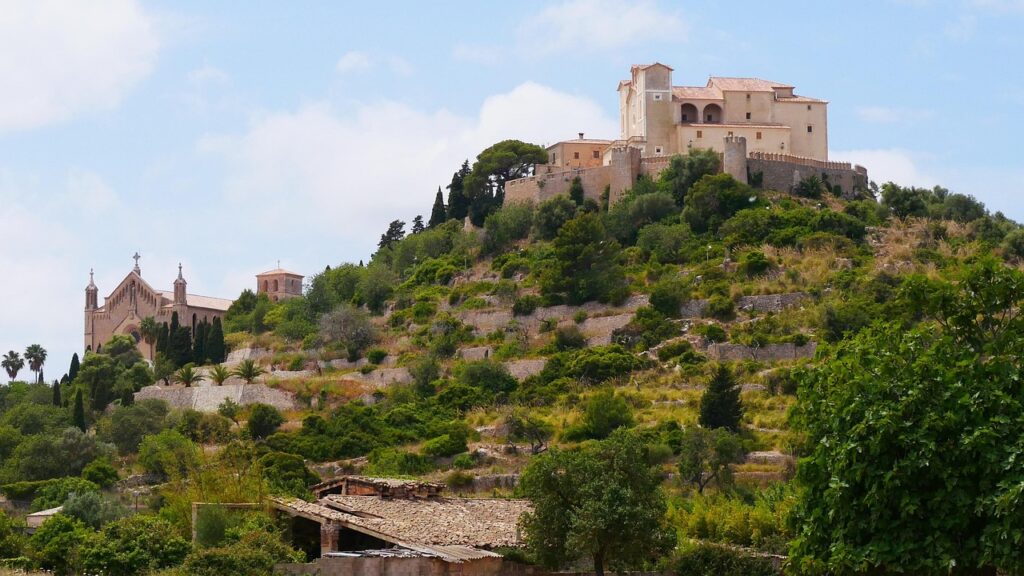
The wall surrounding the sanctuary is oval in shape and has undergone many alterations. In the 16th century it was reinforced to protect the neighbours from corsair attacks, and in the 20th century it was almost completely restored, returning it to its original defensive aspect with battlements and a reconstructed tower. The present church was built between 1825 and 1832 and is a simple but imposing Latin cross church in the neoclassical style. Inside, a dome painted in 1892 with a celestial scene and the Romanesque figure of the Virgin of the Saviour, patron saint of Artà since 1922, which originally came from the monastery of Bellpuig, stand out.
On one side of the enclosure is the house of the Donat, who was responsible for the maintenance of the sanctuary for centuries. This 16th-century house, restored in the 1970s, is one of the best-preserved examples of traditional Mallorcan architecture, with details such as the marés doorway, the latticed windows and an elegant Renaissance window decorated with plant motifs. Climbing Sant Salvador is not only a cultural visit, but also a scenic and spiritual experience. From the top, you can contemplate Artà in all its splendour, with the Sierra de Llevant mountain range in the background, and breathe in that calm that only places with history know how to transmit.
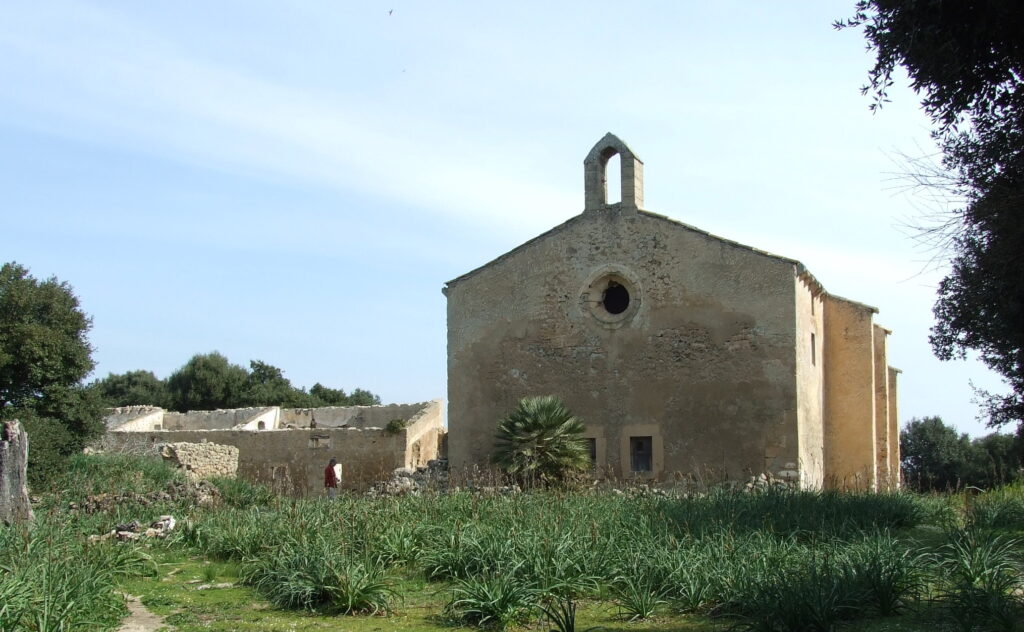
The Monastery of Santa María de Bellpuig
Located a few kilometres from Artà, this ancient monastery dates back to the 13th century and is linked to the arrival of the Premonstratensian monks after the conquest of James I. A place steeped in spirituality and history.
Talayotic settlement of Ses Païsses: a journey into Mallorca’s prehistory
Just 300 metres from the centre of Artà is one of the most important and best-preserved prehistoric sites in Mallorca: the Talayotic settlement of Ses Païsses. Founded around 850 B.C., this settlement grew over time until it became an authentic residential centre, protected by an imposing cyclopean wall that can still be admired today.
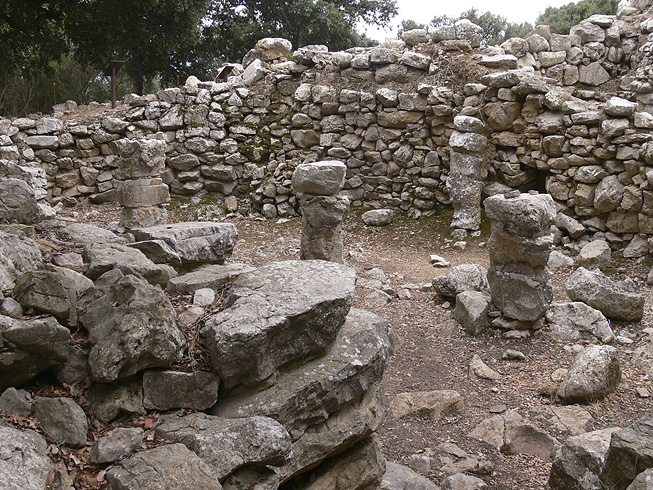
The enclosure is elliptical in shape and occupies more than 13,000 m². Inside, various structures have been preserved, such as the central talayot – the settlement’s point of origin – a hypostyle hall and other constructions that were probably dwellings. Although many areas have yet to be excavated, what has already been discovered offers a fascinating window into the life of the island’s first settlers.
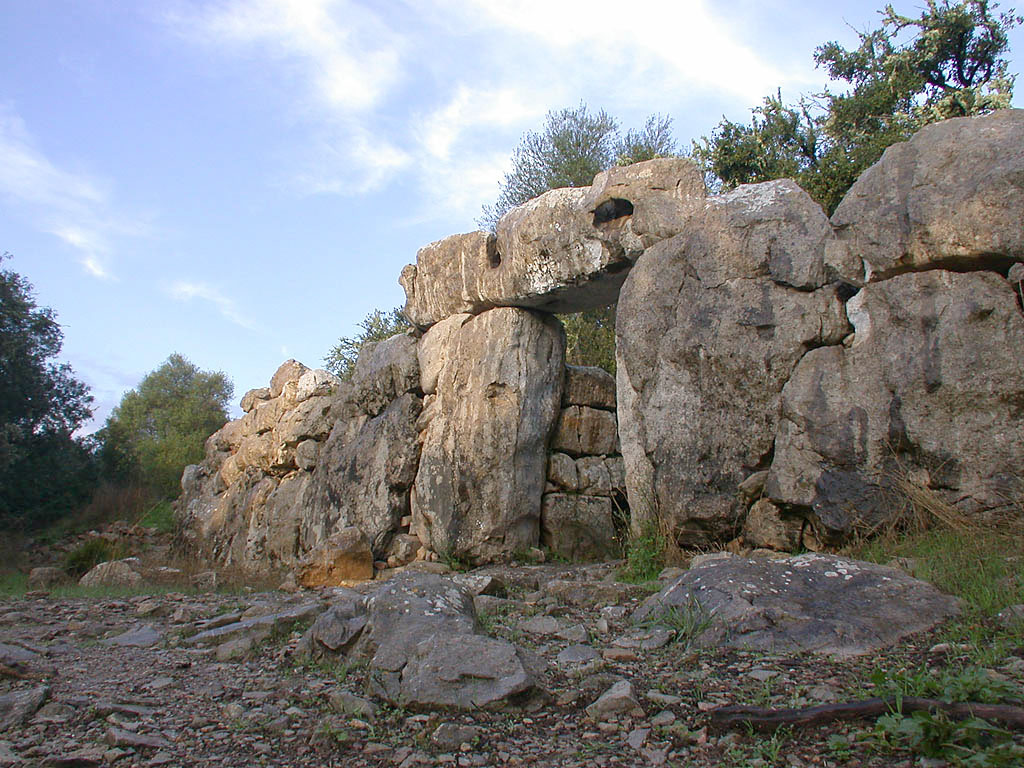
The complex was declared a Historic-Artistic Monument in 1946, and its portal of large interlocking stones, typical of Cyclopean architecture, is one of the most spectacular entrances to this type of settlement. In front of it stands a monolith in honour of the Mallorcan poet Miquel Costa i Llobera, who was inspired by this place for his poem La deixa del geni grec. Visiting Ses Païsses is a perfect way to immerse yourself in Mallorca’s most remote past, right on the doorstep of the charming old quarter of Artà.
Artà Caves: an underground natural spectacle
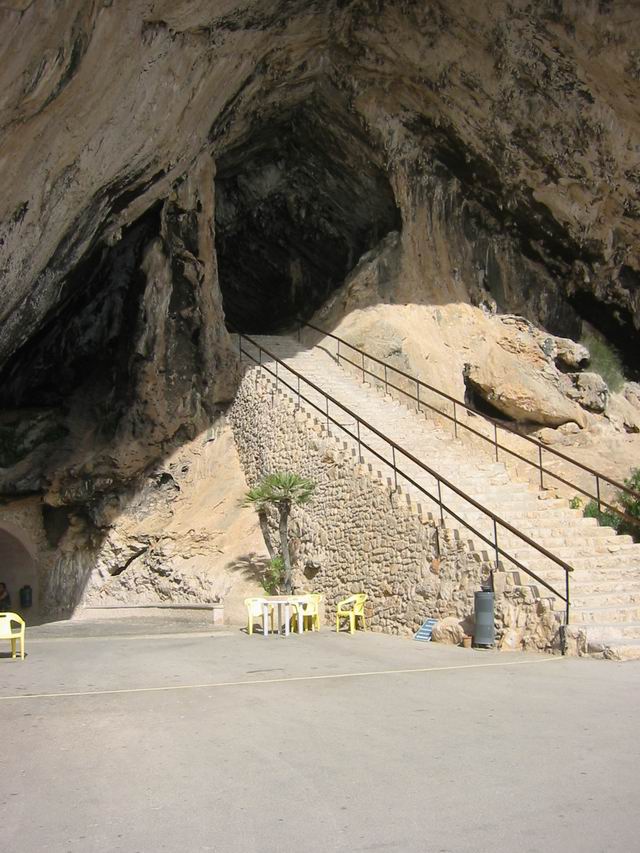
The Artà Caves are located in the cliffs of the Canyamel coast, a geological wonder that has fascinated travellers for centuries. According to legend, during the reconquest, Christian troops found thousands of Muslims hiding here.
The guided tour lasts about 45 minutes and takes visitors through immense chambers decorated with stalactites and stalagmites that form surprising shapes. The ‘Queen of the Columns’, 22 metres high, is the star of this natural spectacle. These were also the first caves to be opened to tourism in Mallorca, long before the famous Caves of Drach.
Península de Llevant Natural Park: wild nature and biodiversity in its purest form
The Península de Llevant Natural Park is one of the great natural treasures of northeast Mallorca. With more than 17,000 hectares that combine mountainous areas, coastal zones, virgin beaches and protected marine areas, this enclave covers part of the municipalities of Artà, Capdepera, Sant Llorenç and Santa Margalida. Here you will find some of the highest peaks of the Mallorcan Llevant, such as Talaia Freda or Puig des Porrassar, as well as imposing cliffs and secluded coves such as Cap de Ferrutx.
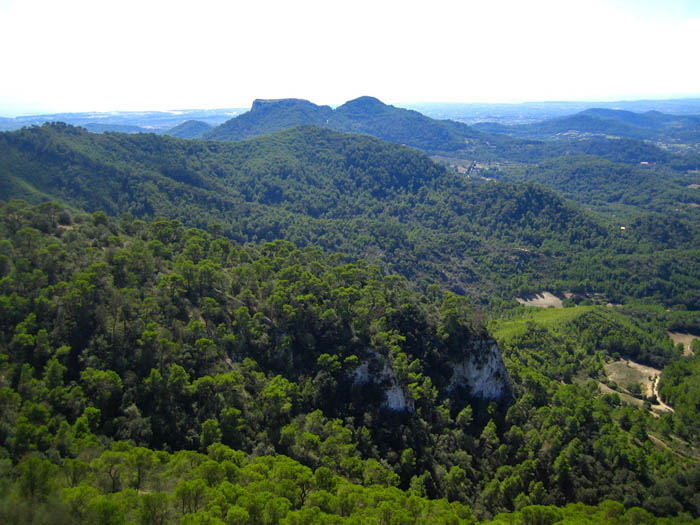
This park, included in the European Natura 2000 network, is a true refuge for endemic species and unique Mediterranean habitats: holm oak groves, pine forests, dune systems and wetlands, which coexist with old agricultural estates and heritage elements such as waterwheels, watchtowers and remains from the Islamic occupation and the Talayotic period. The biodiversity is impressive: from the Balearic warbler to the black vulture, as well as Mediterranean turtles, bats and strawberry tree butterflies. There are also unique plant species such as the Balearic peony and the nun’s buckthorn.
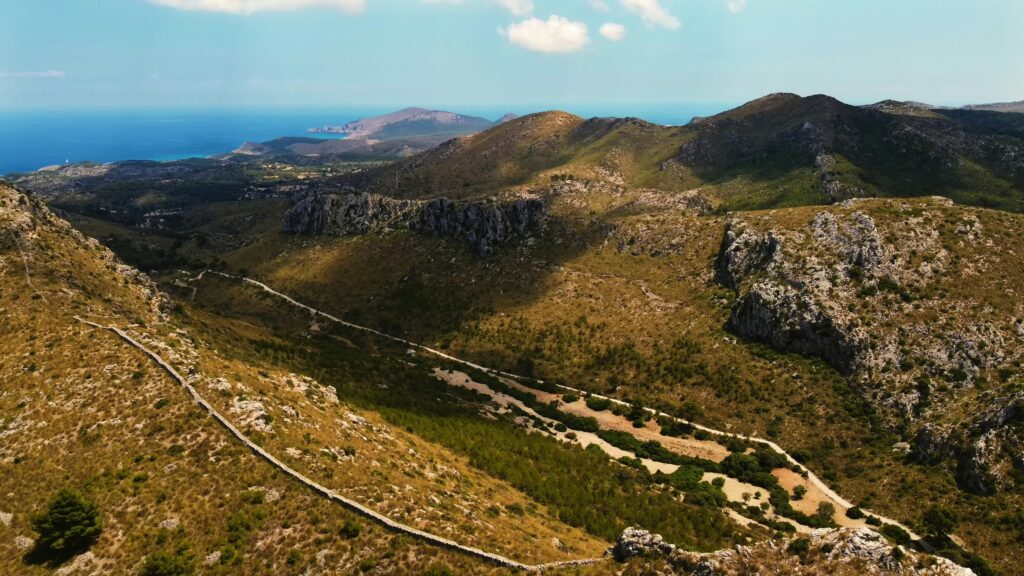
In addition, the posidonia seagrass meadows are in an excellent state of conservation, essential for the health of the beaches. The park has an extensive network of signposted hiking and cycling routes, many of them accessible from the public estates of Albarca, s’Alqueria Vella or Son Real, where there are also shelters, interpretation centres and guided activities. The panoramic views, the tranquillity and the connection with history and the land make touring this area a deeply enriching experience.
Beaches and coves in Artà
Although the town is not located on the seafront, the municipality has some of the wildest and most spectacular beaches in Mallorca. Among the most recommended are:
- Cala Torta: wide, with golden sand and crystal-clear waters. Much loved by locals. We’ll tell you more about it below.
- Cala Mitjana: smaller and more secluded, ideal for those seeking tranquillity.
- Cala Estreta: accessible only on foot, perfect for experiencing the most unspoilt side of Mallorca.
- Cala Mesquida: shared with Capdepera, famous for its dunes and family atmosphere.
- s’Arenalet des Verger: within the Llevant Natural Park, a paradise barely touched by man.
If you are looking for secluded and authentic beaches, Artà is your ideal destination.
Cala Torta: wild nature and crystal-clear waters
Just 10 km from Artà, Cala Torta is one of the most unspoilt coves in the north-east of Mallorca, nestled within the Llevant Peninsula Natural Park. Surrounded by cliffs and with no buildings in sight, this white sandy beach with clean waters is perfect for those seeking total disconnection in the heart of nature. Approximately 200 metres long and 80 metres wide, Cala Torta has no services or beach bars, so it is advisable to come prepared with water, food and sunscreen.
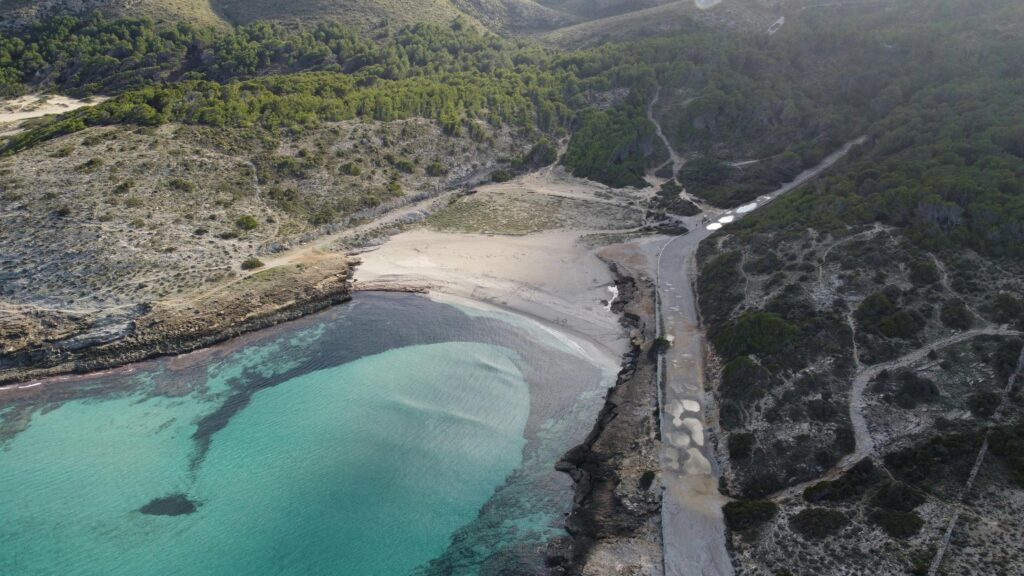
Access is not easy: it is reached by a poorly maintained road that is only recommended for 4×4 vehicles. Many visitors opt to leave the car some distance away and continue on foot. Although not the most comfortable beach for families with small children (the water gets deep quickly), it is ideal for swimming, snorkelling and sunbathing. Nudism is well accepted in some areas. If you want more adventure, you can hike to Cala Mesquida along a signposted route or even join a horseback excursion along the coast. Cala Torta is nature in its purest state, an experience for the senses and a great contrast to the more touristy beaches of Mallorca.
Traditions and popular festivals
Life in Artà revolves around its traditions, which the inhabitants proudly defend. Among the most notable festivals are:
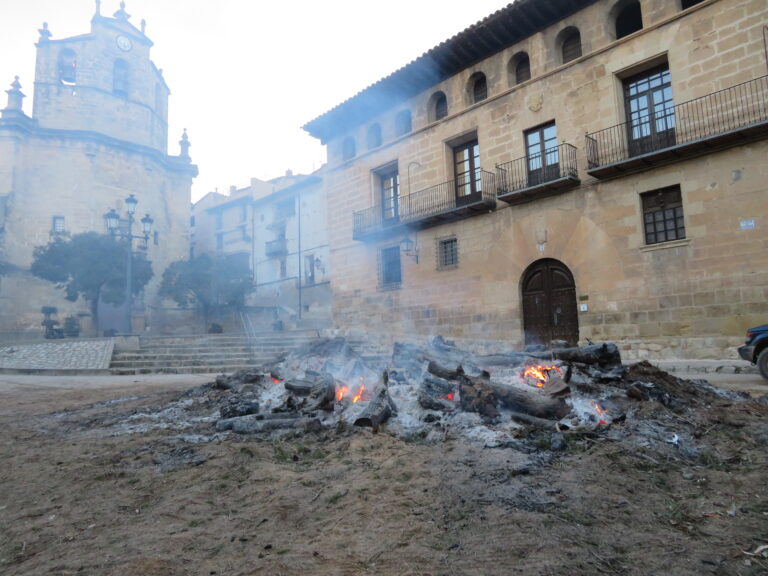
- Sant Antoni (16th and 17th January): with the famous dimonis and foguerons, one of the most intense celebrations in Mallorca.
- Holy Week: with solemn processions through the old town.
- Sant Salvador (first Sunday in August): in honour of the town’s patron saint, with religious and festive activities.
- Fira d’Artà (first Sunday in September): an agricultural and craft fair that attracts visitors from all over the island.
The festive calendar shows that, beyond its history and landscape, Artà is also a lively and participatory town.
What to do in the surroundings of Artà
In addition to everything the village has to offer, from here it is easy to explore other points of interest in the north-east of Mallorca:
- Colònia de Sant Pere: an old agricultural settlement founded in the 19th century, now a quiet coastal village.
- Cala Ratjada and Cala Bona: more touristy, but ideal for an excursion.
- Capdepera: with its imposing medieval castle, just a few minutes’ drive away.
- Manacor: Mallorca’s second city, with more services and an urban atmosphere.
Hiking and cycling routes
Artà is also a paradise for lovers of outdoor sports:
- GR 222: a long-distance trail that connects Artà with the Sanctuary of Lluc, crossing the island from east to west.
- Manacor-Artà Greenway: a 29 km route along the old railway line, now converted into a cycle path and ideal for walking or cycling.
- Route to the Hermitage of Betlem: a beautiful itinerary between valleys and mountains, especially recommended in spring when the almond trees are in bloom.
Where to stay in Artà?
Although Artà is not an overcrowded tourist centre, it offers a selection of charming accommodations that fit perfectly with the peaceful and authentic spirit of the municipality. From boutique hotels in old Mallorcan mansions to rural estates surrounded by nature, sleeping in Artà is an ideal experience for those seeking disconnection, landscape and tradition all in one place. Here are three recommended options to make the most of your stay in this area of Mallorca:
How to get to Artà
- By car: the most recommended way. From Palma, the journey takes approximately 1 hour and 20 minutes on the Ma-15 motorway. Parking in the centre can be difficult; it is best to leave your car on the outskirts and walk in.
- By public transport: there is no direct connection from Palma. You need to get to Manacor by train or bus and then take the 411 bus to Artà, although the service is limited.
- By bicycle or on foot: the Greenway is an excellent option for those who want to get there sustainably while enjoying the scenery.
What to see in Mallorca
During your visit to the island, here are a number of places that we have included on our map in case you want to add them to your itinerary:
-Paradise beaches and coves
- Cala Romántica: this is a hidden cove with pine-covered cliffs and crystal-clear blue waters that invite you to lose yourself.
- Cala Blava: a peaceful, family-friendly atmosphere makes this the perfect retreat for those seeking to escape the island’s more crowded beaches.
- Portal Vells: coastal area with crystal clear waters, three picturesque coves and a historic cave.
- Camp de Mar: chosen by travellers seeking dream beaches, quality cuisine and peaceful surroundings.
- Cala Mesquida: a beach experience in a still wild setting, far from the hustle and bustle of more urbanised areas.
-Charming Places
- Cala Figuera: charming fishing port, known for its natural beauty and peaceful atmosphere.
- Sa Pobla: a place with cultural heritage and a unique natural environment such as the Parc Natural de s’Albufera.
- S’Illot: a place that combines a unique archaeological past, quiet beaches and a relaxed atmosphere.
- Porto Petro: surrounded by crystal-clear coves and framed by the Mondragó Natural Park.
- Santa Margarita: a town that retains its authentic spirit, largely untouched by mass tourism.
- Estellencs: an idyllic coastal village nestled in Mallorca’s Sierra de Tramuntana mountains.
- Santa María del Camí: A village that combines history, wine-making tradition, craftsmanship and local atmosphere.
- Sierra de Tramuntana: Explore and discover the mountainous heart of the island.
- Esporles: A village surrounded by holm oak forests, stone houses and paths that wind through the mountains.
-Tourist Attractions
- Sant Elm: once a humble fishing port, it has been transformed over the years into a peaceful tourist destination.
- Sa Ponsa: a cosmopolitan and vibrant place, full of hotels, restaurants, yacht clubs and golf courses.
- Magaluf: Mallorca’s premier resort, with turquoise waters and fine sandy beaches, modern facilities, shows, theme parks and nightlife.
- Can Picafort: one of the island’s major tourist resorts, just a few decades ago it was a humble fishing village.
- Llucmajor: the perfect balance between history, nature, and quality of life, making it an ideal place to visit or live.
Practical tips for your visit to Artà
- Get up early for the Tuesday market, as it tends to fill up quickly.
- Wear comfortable shoes: both for walking along the cobbled streets and exploring the hiking trails.
- Avoid August if you want to enjoy the coves in peace.
- Try the local cuisine: panades, robiols and sobrasada are a must.
- Enjoy the festivals: they are the best way to feel the soul of the town.
An experience that will enrich your visit
Artà is much more than just a pretty village: it is a compendium of history, culture, nature and tradition. From the Sanctuary of Sant Salvador to the unspoilt coves of Llevant, passing through the hustle and bustle of the weekly market, this corner of north-eastern Mallorca offers an authentic and complete experience. If you are looking for the most authentic Mallorca, away from the tourist crowds but full of life and charm, Artà should be on your list of essentials.
Photo Credits
Below are the photo credits in order of appearance. Royalty-free photos will not be listed below:
- LANOEL, CC BY-SA 3.0, via Wikimedia Commons
- Dronepicr, CC BY 3.0, via Wikimedia Commons
- H. Zell, CC BY-SA 3.0, via Wikimedia Commons
- Matthias Denda, CC BY 3.0, via Wikimedia Commons
- Alfaomega, CC BY-SA 3.0, via Wikimedia Commons
- Olaf Tausch, CC BY 3.0, via Wikimedia Commons
- Strubbl, CC BY-SA 4.0, via Wikimedia Commons
- dronepicr, CC BY 2.0, via Wikimedia Commons
In this article you will find some affiliate links. If you book or buy something through them, you help us to continue creating independent and useful content, at no extra cost to you. Thank you very much for making this possible!

.jpeg)

.jpeg)

.jpg)

.jpg)