Nerpio, Albacete: Where the Heart of La Mancha Embraces the Cosmos and the Border Becomes Rock Art
There is a place on the map of Spain that defies conventional geography, a crossroads where three autonomous communities and four provinces meet in a mountainous and remote embrace. This enclave is none other than Nerpio, the southernmost municipality in the province of Albacete and, by extension, in the whole of Castilla-La Mancha. Located at the end of the Sierra del Segura, Nerpio stands as a geographical heel deeply embedded between the domains of Murcia, Granada, and Jaén. This position, historically strategic and bordering the feared Nasrid Kingdom of Granada, is the key to understanding its character, its robust heritage, and the impressive ecosystem that surrounds it.
With just over a thousand inhabitants, this corner of the Sierra del Segura is a hidden gem that surprises visitors with its archaeological heritage—with more than forty rock shelters with cave art declared a World Heritage Site by UNESCO—its natural wealth and the hospitality of its people. Nerpio is not only one of the most beautiful villages in the province, but also one of the most authentic in the whole of southern Spain.

A border enclave between mountains
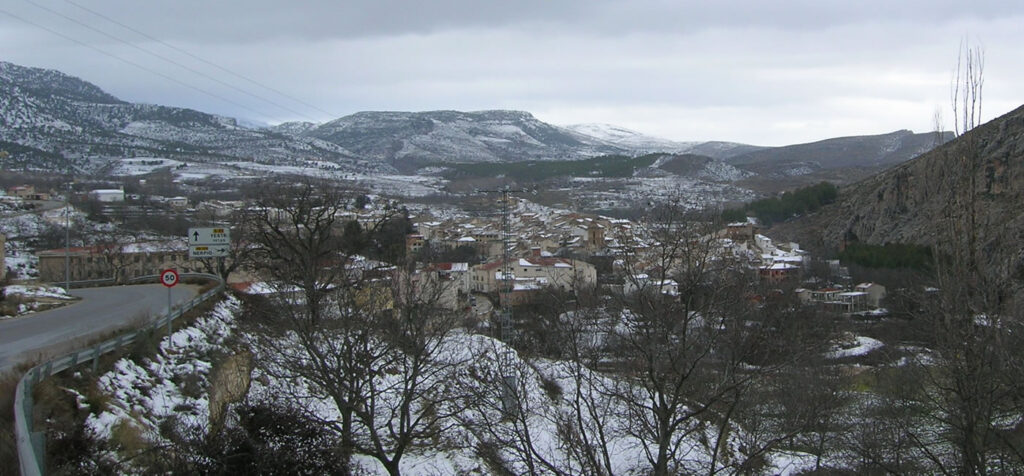
Nerpio is not just a village; it is a cardinal point, a natural lookout point over a thousand metres above sea level. The village is located in an area where juniper and pine forests mix with orchards, walnut trees and mountains over 2,000 metres high, such as the peaks of La Atalaya and Sierra de las Cabras. In this environment of contrasts, nature and history intertwine masterfully. Getting here is already a statement of intent. The route, whether from Albacete or from the capital of Murcia, winds through canyons and gorges, preparing visitors for the rugged and picturesque landscape that awaits them.
This relative isolation, far from the hustle and bustle of the motorways, is precisely what has preserved its most valuable asset: clean air and darkness, which have catapulted it to the forefront of European astronomical tourism. Nerpio is located about 156 kilometres from Albacete and 134 from Murcia, in a landscape of mountains, canyons and fertile valleys crossed by the Taibilla River. Its municipal area is the southernmost in the whole of Castilla-La Mancha, a kind of ‘heel’ that juts out between three provinces of Andalusia and Murcia.
Traces of thousands of years: the rock art of Nerpio
Although its location is spectacular, what elevates Nerpio to the category of an unmissable destination is the density and relevance of its prehistoric legacy. The Sierra del Segura region is home to the largest concentration of rock art in the entire peninsula, and of this immense wealth, more than forty sites are located within the municipal area of Nerpio.
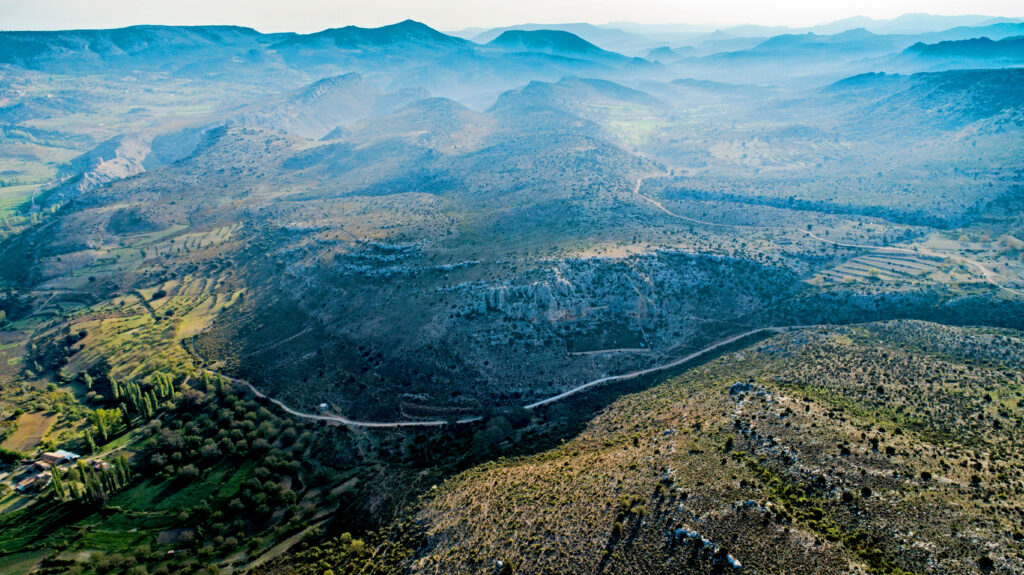
This priceless treasure is a vital part of the Rock Art of the Mediterranean Basin in the Iberian Peninsula, which UNESCO declared a World Heritage Site in 1998. Here, time folds in on itself, and the rocky shelters of Jurassic limestone become the original canvases of the first human narratives, dating from between 9000 and 3000 BC.
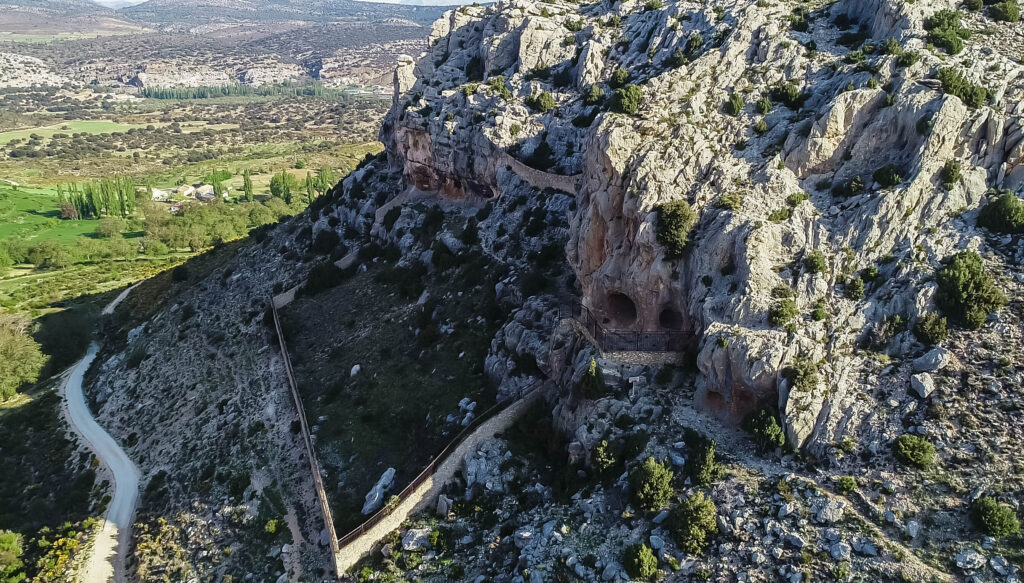
The rock art in Nerpio is divided into two major expressions, both crucial to understanding the cultural development of hunter-gatherers and early Neolithic groups:
- The Levantine Style: Dynamic, naturalistic and deeply narrative figures. It is the art of life, hunting and community. The most outstanding and visitable site is Solana de las Covachas, an authentic compendium of prehistoric life, where nearly 200 representations of archers, deer, goats and, notably, a group dance scene evoking ancestral rites have been recorded. Nearby, the Torcal de las Bojadillas amazes with hundreds of figures using the unique technique of ‘Lifted Pen Stroke,’ a detail of execution unique in Western Europe that demonstrates astonishing artistic sophistication.
- Schematic Art: Later, associated with Neolithic producer groups (6,500-3,200 years before the present). It is characterised by abstract motifs — dots, spots and lines — which possibly reflect an expression more focused on beliefs and symbolic codes. Shelters such as III, V, VI and IX in Solana de las Covachas itself offer an excellent sample of this style.
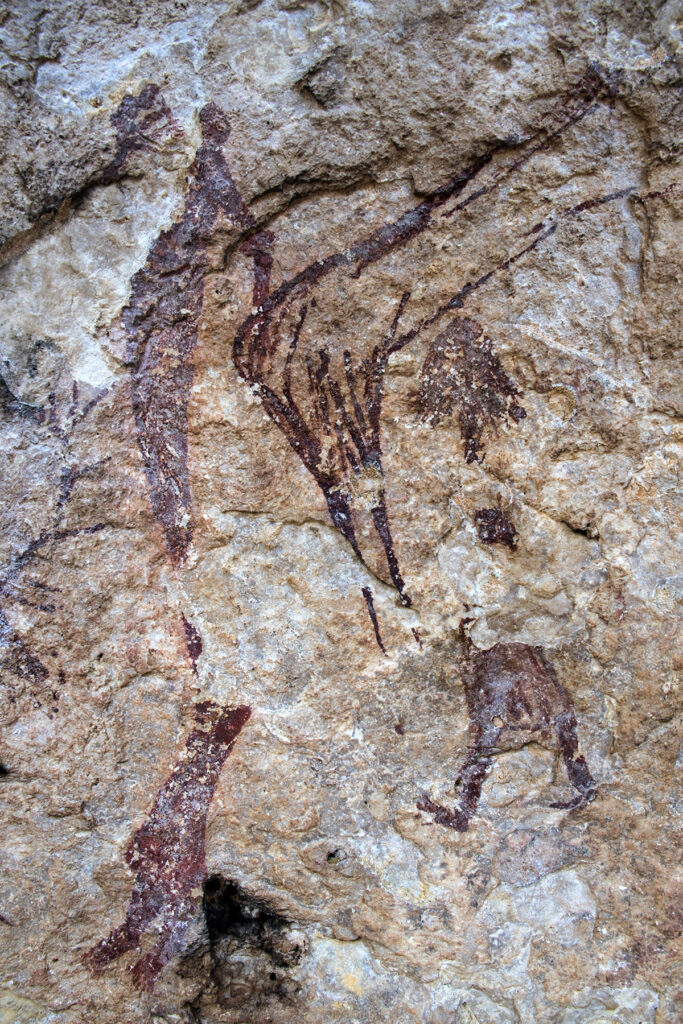
A visit to these ‘hunter sanctuaries’ is not merely an archaeological stroll; it is a guided immersion (requiring a reservation at the Tourist Office, which is essential given the value and fragility of the heritage) that allows us to understand that the prehistoric man of Nerpio did not paint for leisure or aesthetics, but for profound reasons, possibly ritual or belief-related, which we can only guess at today. The fact that this collection accounts for 70% of the rock art in the whole of Castilla-La Mancha underlines its capital importance.
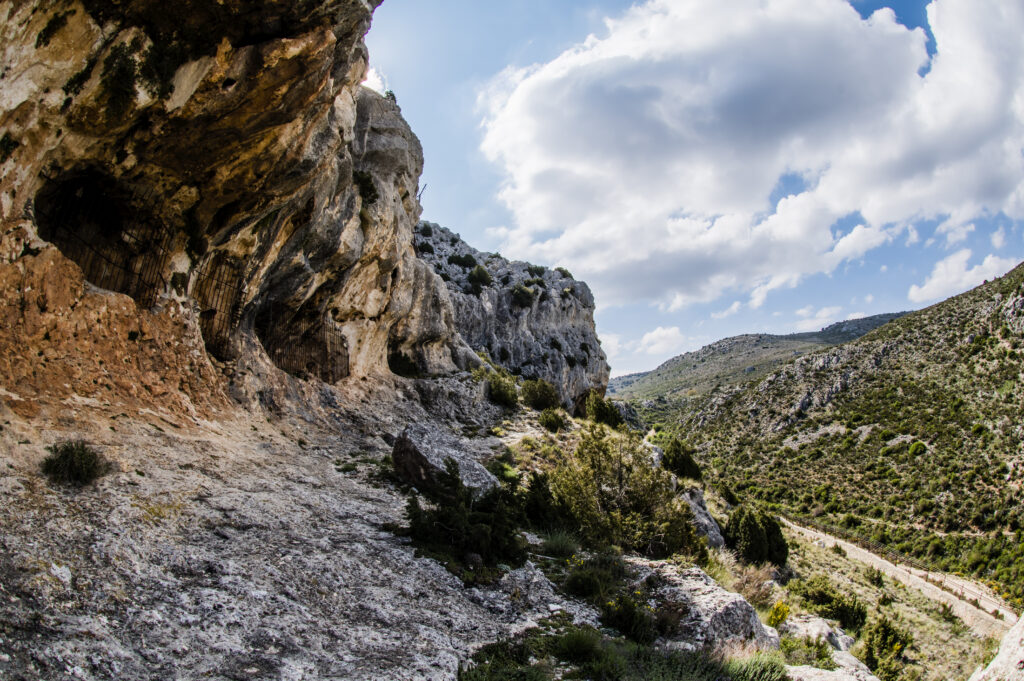
Taibilla Castle: border watchtower
The history of Nerpio does not end in the Neolithic period. Its border location, where Christianity and the Nasrid Kingdom eyed each other warily for centuries, forged an unmistakable military imprint. The most significant monument from this period is Taibilla Castle, built on a rocky plateau overlooking the Taibilla river valley, seven kilometres from the town.
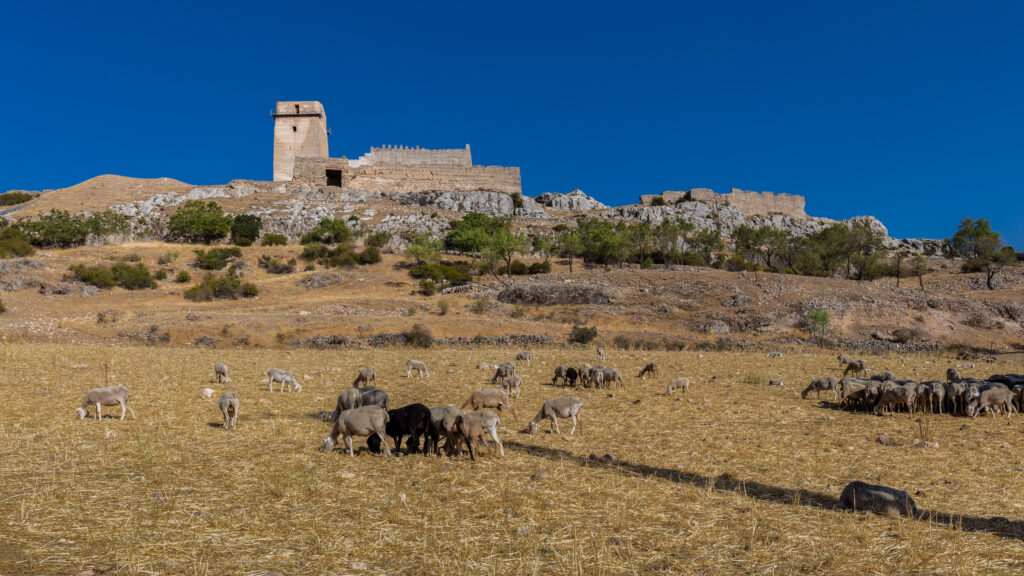
This Muslim fortress (11th century), which played a vital role in the battles of the Reconquista until its capture by Christian troops in 1242, is a testament to cultural struggles and intermingling. Its most iconic feature is the imposing Torre del Homenaje (keep), which not only provided defence but also served as a lighthouse and communication point. Its silhouette against the sky is a recurring image in the local landscape.
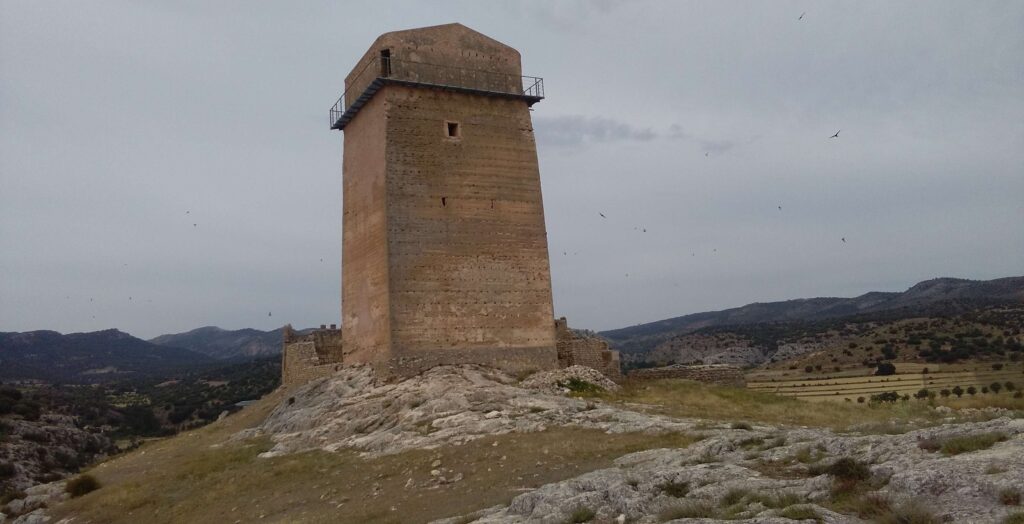
Complementing this defensive system is the Atalaya de Vizcable, a defensive complex of Arab origin that overlooks the valley from another perspective. These military remains, together with the picturesque layout of the village streets, remind visitors that Nerpio was for centuries a place of guard, exchange and resistance.
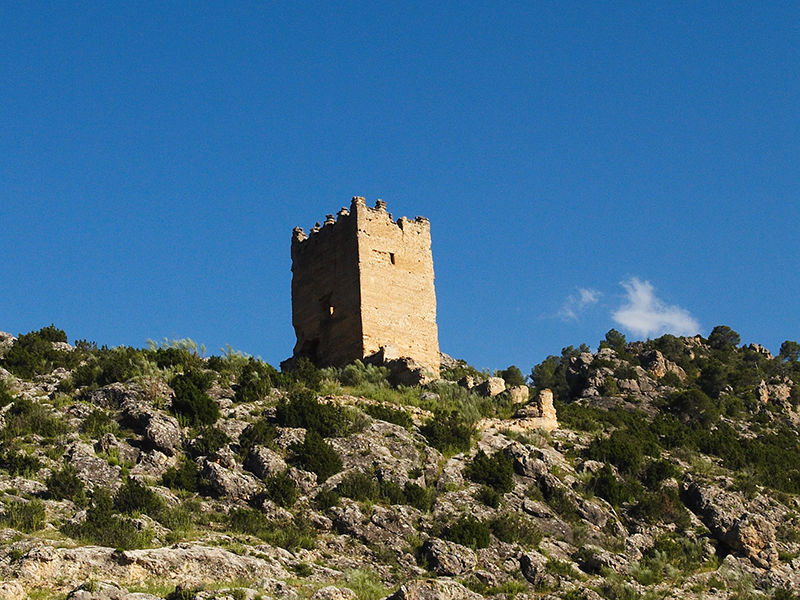
Access to this historic lookout point is free of charge, allowing visitors to enjoy the view at any time of day. To reach the location, you must drive to the small, picturesque farmstead of La Molata, in the Vizcable area. Once there, travellers must complete the journey on foot, following a well-marked path that climbs gently for about ten minutes, offering the first panoramic views of the surroundings before reaching the destination.
Religious heritage and popular architecture
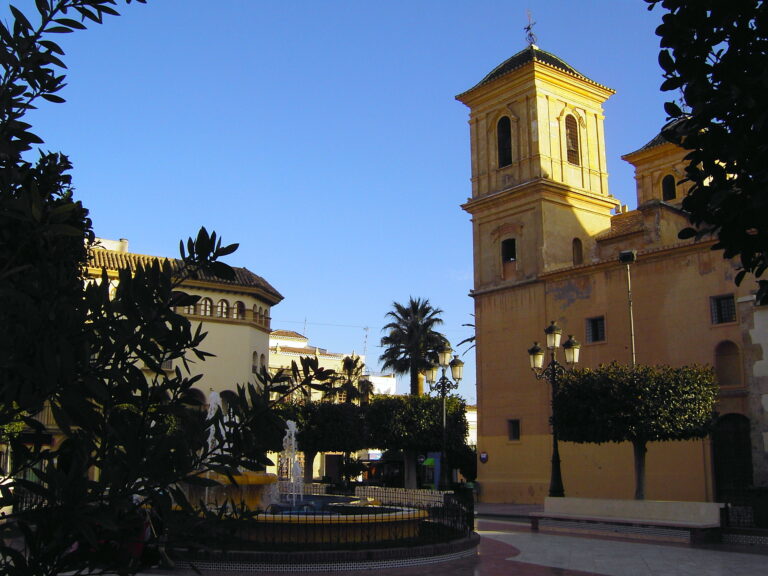
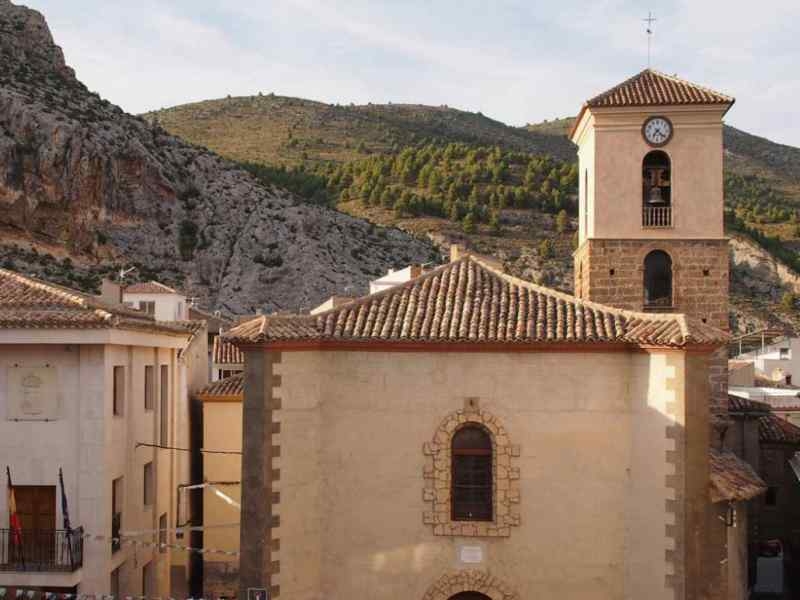
The town centre of Nerpio, with its cobbled streets, fountains and whitewashed houses, retains all the charm of a mountain village. In the heart of the village, the Church of the Immaculate Conception, built in 1602, stands in the Plaza Mayor as one of the most outstanding churches in the south-west of Albacete. With a single nave and Renaissance style, it is a perfect place to stop and enjoy the calm of the surroundings.
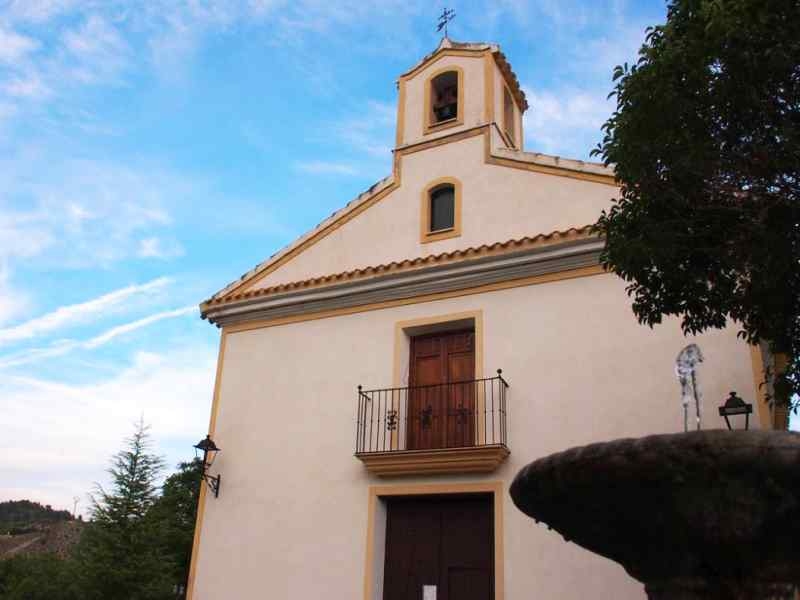
On the outskirts, the Ermita de Nuestra Señora de la Cabeza (Chapel of Our Lady of La Cabeza) is another recommended visit. Surrounded by gardens and fountains, this small 17th-century sanctuary has spectacular views of the valley. Its interior is only open during the celebrations of the Virgen de la Cabeza in May and during Holy Week in Nerpio.
Wild nature: rivers, mountains and centuries-old walnut trees
If Nerpio is an open-air museum because of its rock art, it is also one because of its natural wealth. The municipality is crossed by the Taibilla River, a key tributary of the Segura, which has carved out spectacular canyons and gorges. The area is a paradise for hiking enthusiasts, with more than twenty perfectly signposted routes. Two of them stand out for their scenic and cultural value:
The Route of the Centenary Walnut Trees: The Emblem of Nerpio
The walnut tree is not just a tree in Nerpio; it is an emblem, a hallmark of identity with Designation of Origin. This route, which offers a circular route of 21.7 kilometres (with a shorter linear variant), celebrates the importance of this nut in the local economy and culture.
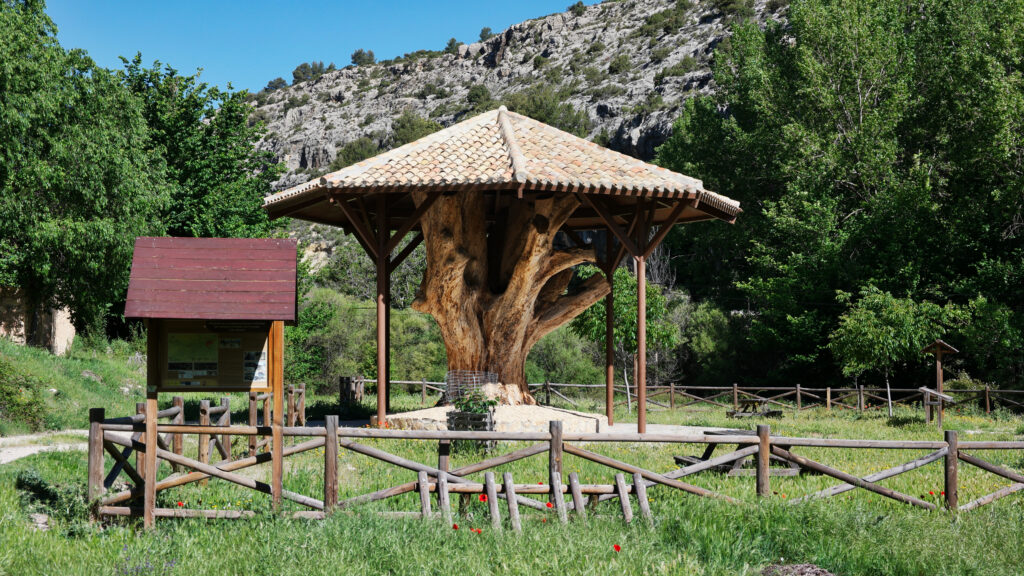
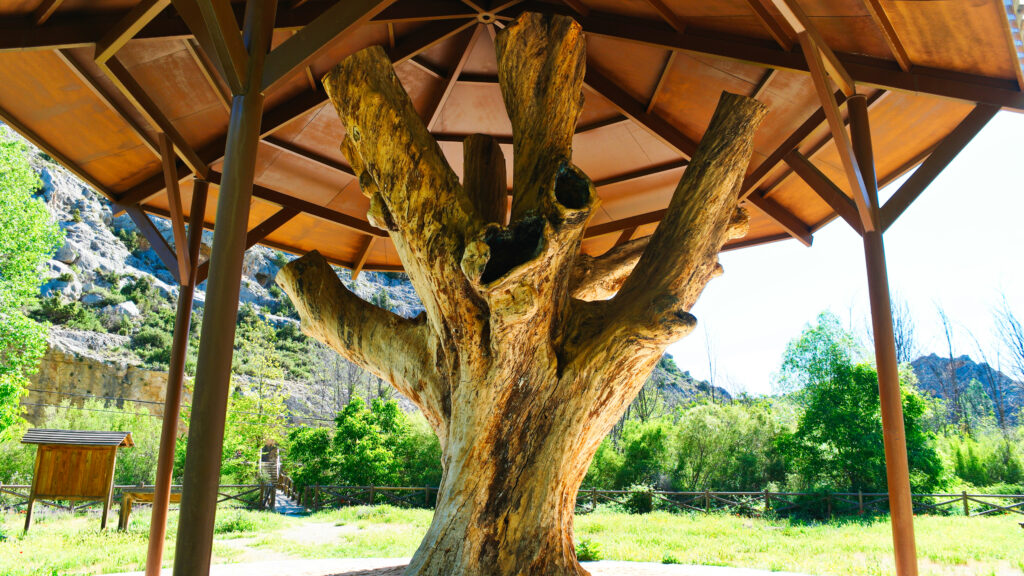
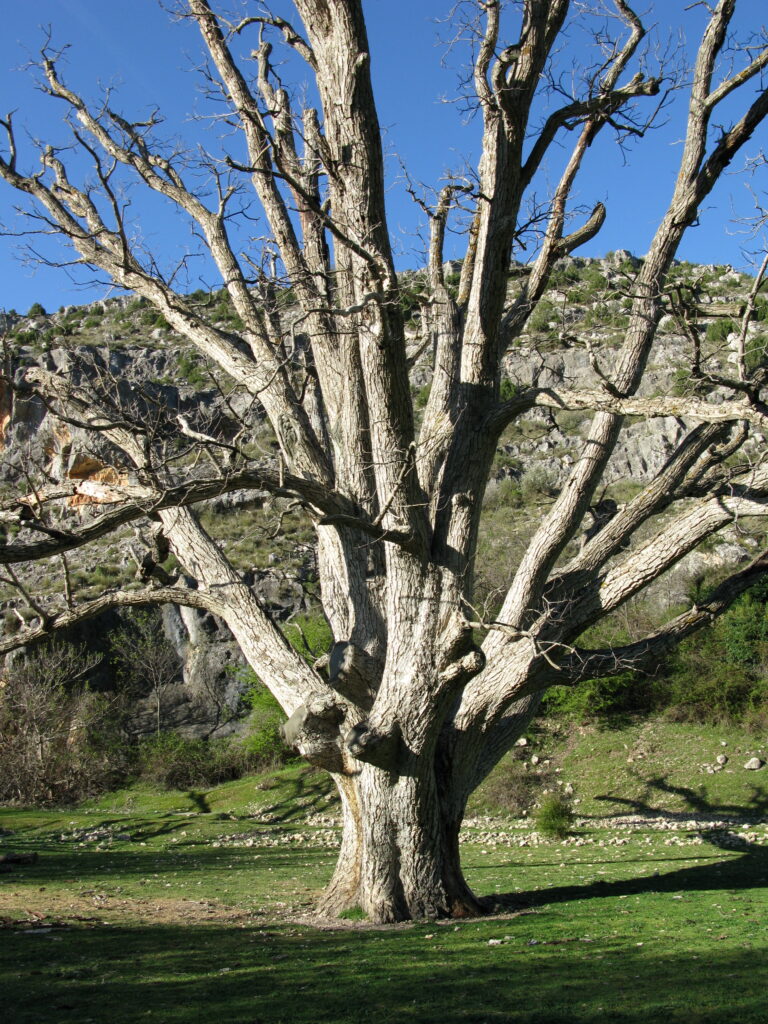
Along the trail, walkers will encounter thousands of examples, but a stop at the Plantón del Covacho is a must. This was listed as the oldest walnut tree in Europe, and although today only its monumental, fossilised trunk remains, it is an imposing reminder of the scale and history of this crop in the area. The route also incorporates heritage as it passes by Taibilla Castle and Solana de las Covachas. Many of the walnut trees in the area are ‘sponsored’, an initiative that seeks to highlight and ensure the conservation of this crucial species.
These trees are the pride of Nerpio and a symbol of its identity. In fact, Nerpio walnuts have a distinctive quality mark and every autumn the Walnut Fair, one of the most important events on the local calendar, is held in their honour.
The Zarzalar Route
The Zarzalar Route is the most popular, and with good reason. It is a circuit of just over nine kilometres and medium-low difficulty, offering a complete and refreshing hiking experience, ideal for summer.
The trail enters the heart of the Taibilla canyon, zigzagging between the limestone walls. The route lives up to its name, and although the council keeps the undergrowth at bay, the feeling of being in a wild landscape is complete. The excitement peaks in the lower part of the canyon, where the route is equipped with suspension bridges and narrow walkways with chains to secure the passage, allowing you to wade across the river and cross from one bank to the other. For the more daring, there is a via ferrata with a zip line of medium difficulty in this area.
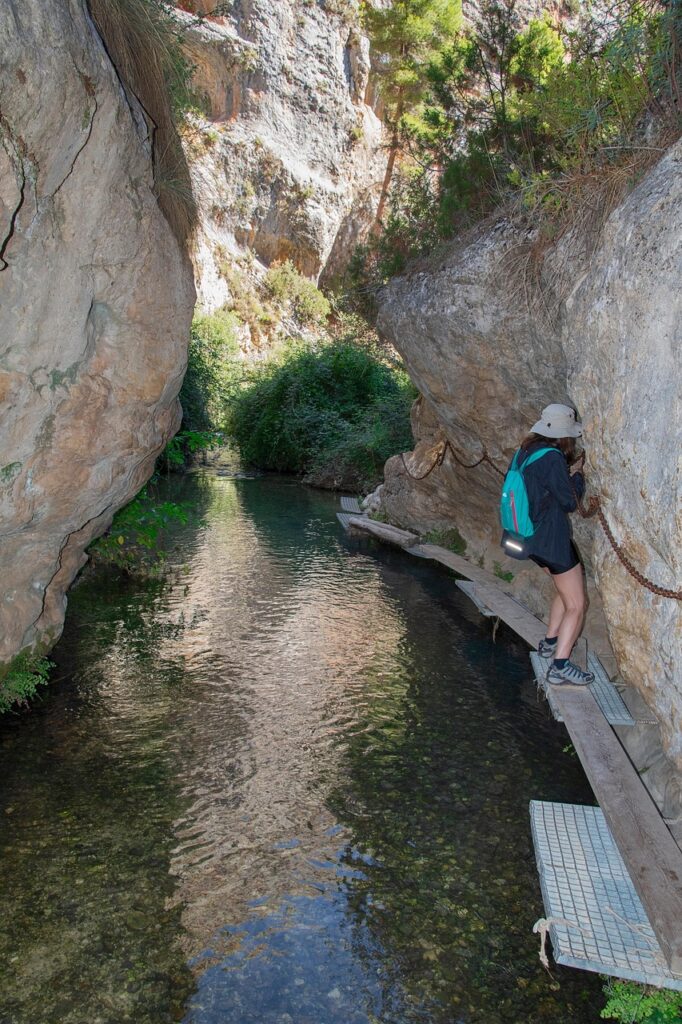
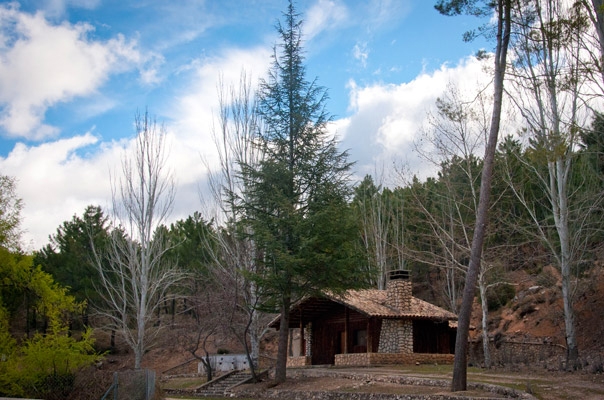
The trail runs under the shade of the riverside forest and the walls of Calar de Nerpio, allowing you to spot wildlife such as Bonelli’s eagle and otters. In addition to hiking, in the surroundings of Zarzalar you will find the Molino de las Fuentes, a recreational area where the Acedas stream originates, a perfect place to rest.
The Taibilla reservoir
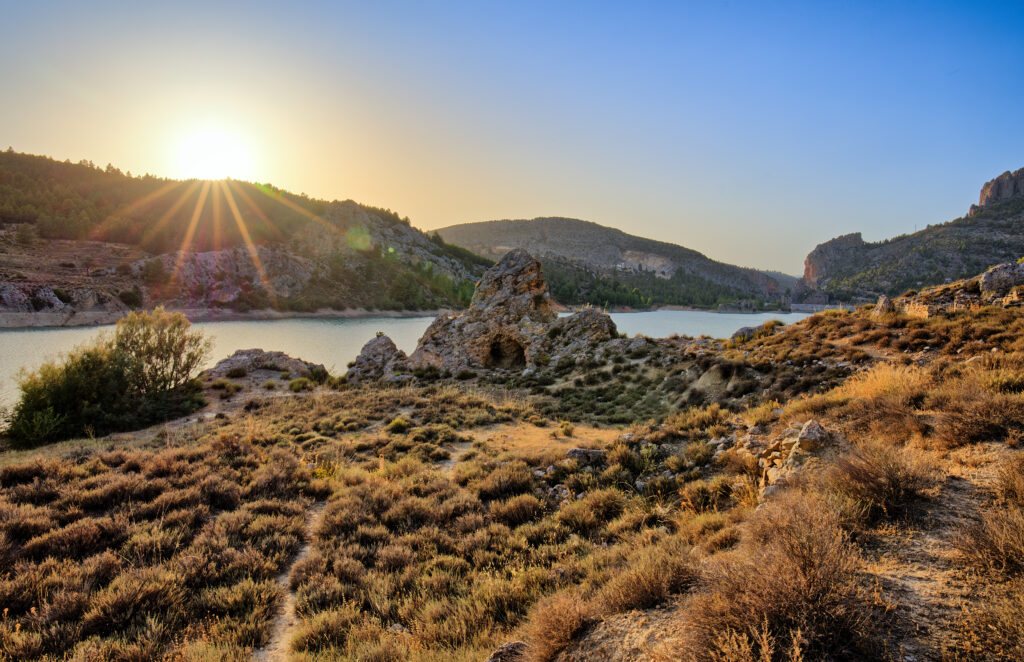
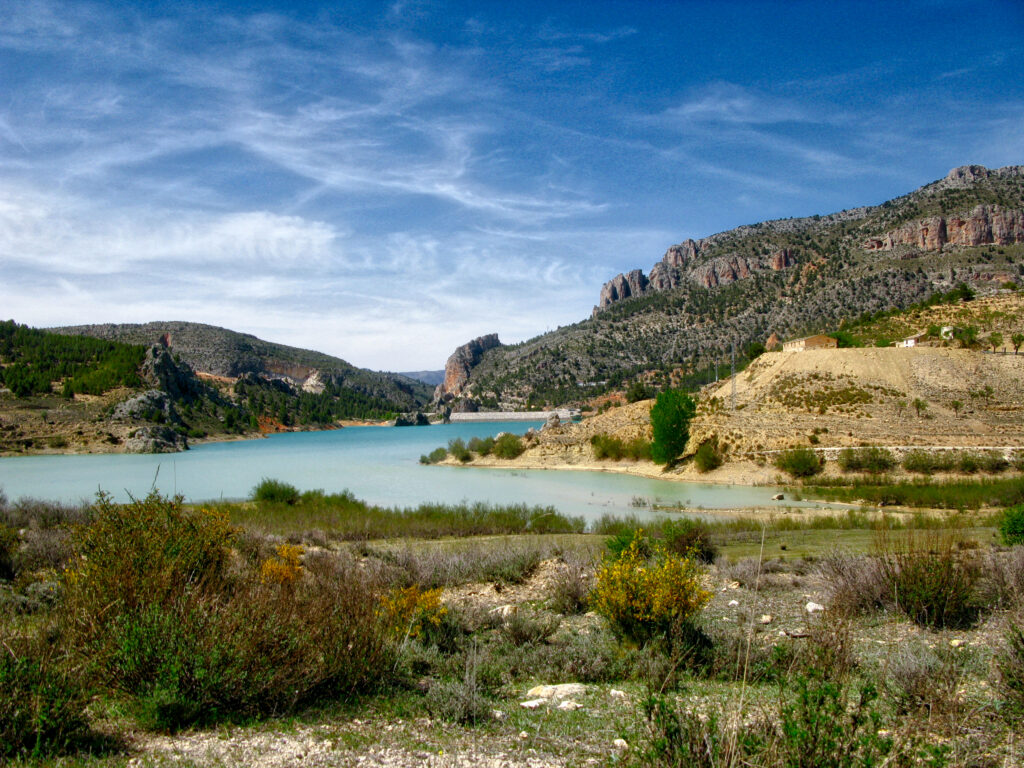
Just a few kilometres from the town centre is the Taibilla reservoir, a place of breathtaking beauty. Its turquoise waters contrast with the limestone mountains that surround it, and its surroundings have been declared a Special Protection Area for Birds (SPA).
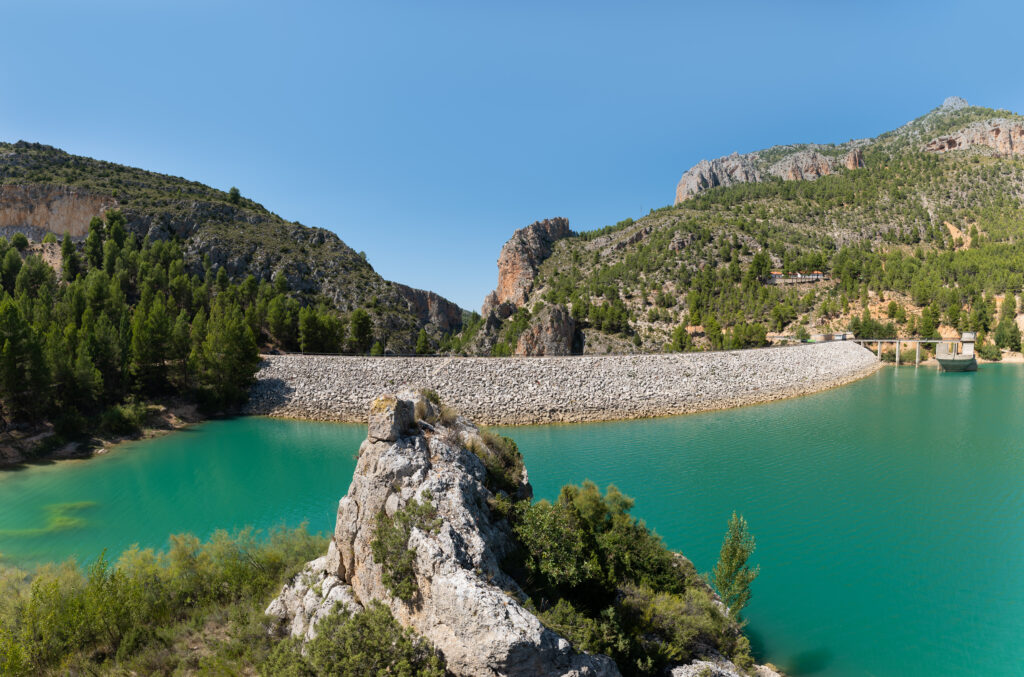
From the viewpoint of the reservoir, you can observe species such as the golden eagle, the griffon vulture and the peregrine falcon, in one of the most important enclaves for ornithology in the region. In total, more than 180 different species of birds have been identified in the municipality, making Nerpio a true paradise for birdwatchers.
Astrocamp: The Sky of Nerpio, a Starlight Sanctuary
The jewel in the crown that sets Nerpio apart in the ecotourism landscape is the unrivalled quality of its night sky. Far from the light pollution of large cities, Nerpio’s atmosphere is one of the cleanest in Europe, which has earned it a place on the prestigious Sierra del Segura Starlight Viewpoint Route.
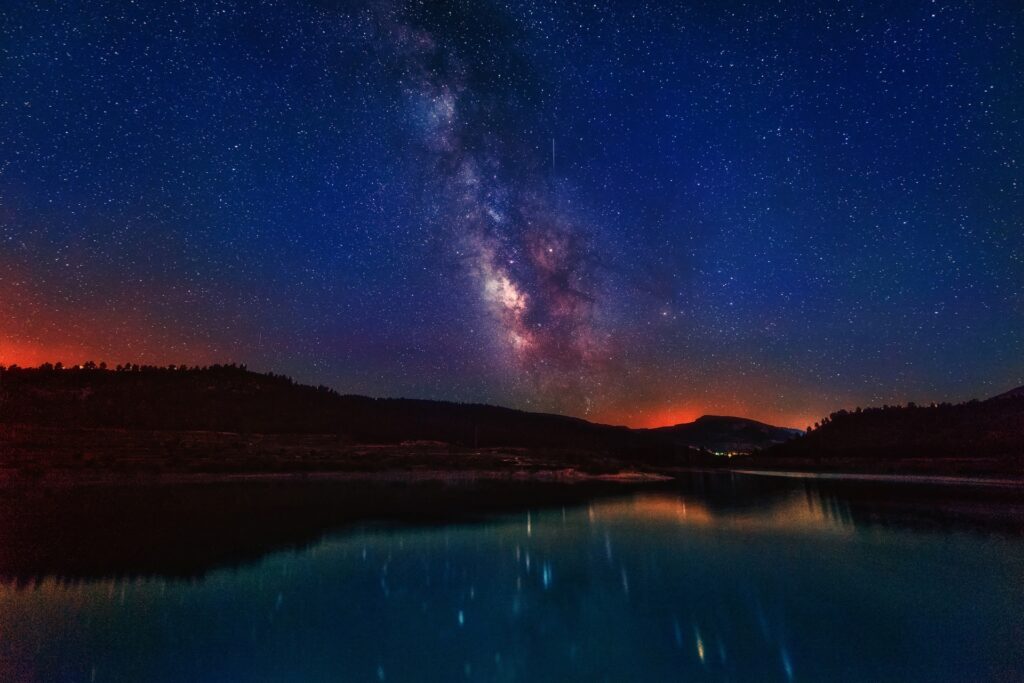
This recognition has crystallised in the AstroCamp project: the first observatory hostel in Europe. This centre not only has the support of renowned figures such as astronaut (and former Minister) Pedro Duque, but has also become a place of pilgrimage for astronomy enthusiasts from all over the world.
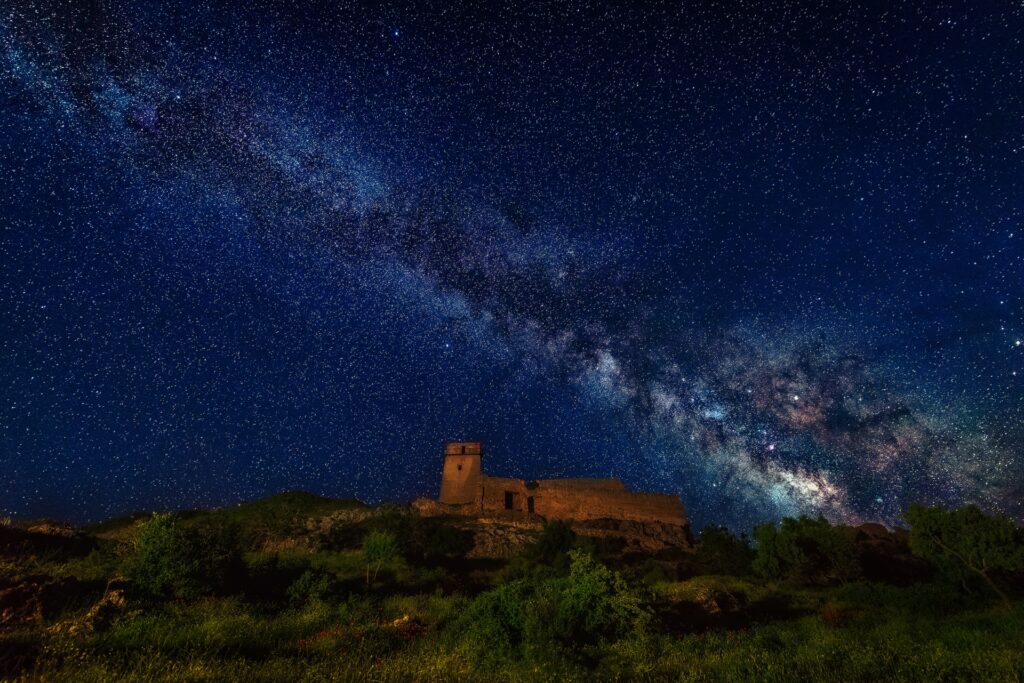
Nerpio offers the opportunity to observe galaxies, nebulae and star clusters with astonishing clarity, celestial phenomena whose light has travelled millions of years to reach the telescopes in this corner of Albacete. The experience of contemplating the universe in Nerpio transcends leisure, connecting visitors with immensity, in the same way that cave art connects with prehistory. It is a destination where the gaze is directed both to the earth, to the traces of hunters, and to the cosmos, to the light of the stars.
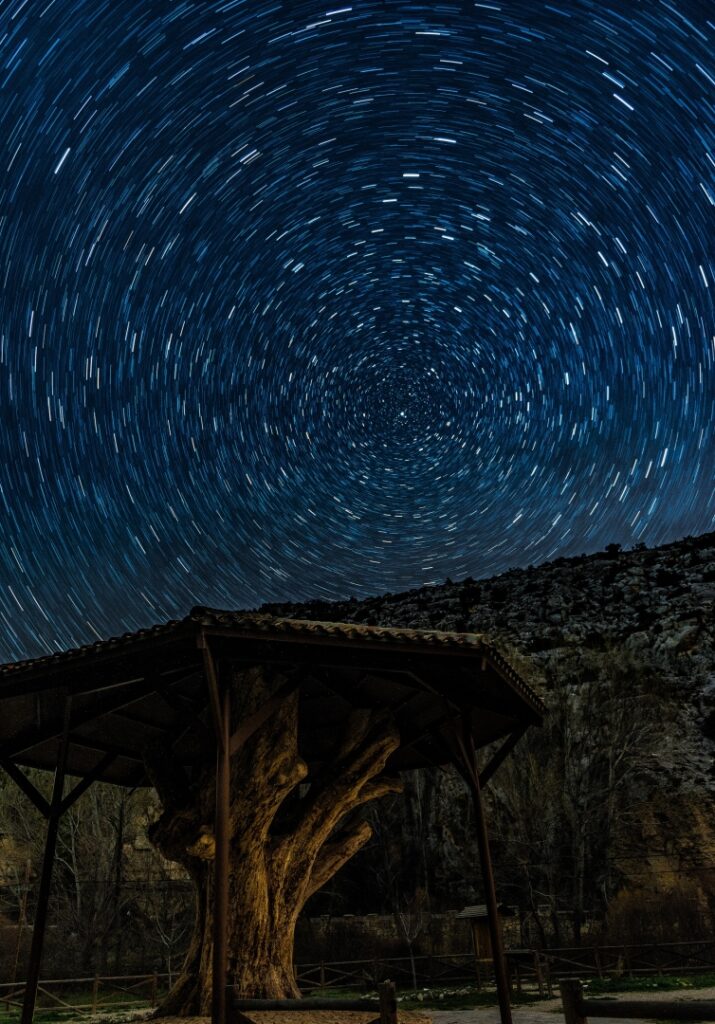
Gastronomy with Designation of Origin: Walnuts and Lamb
The Nerpio experience would not be complete without immersing yourself in its outstanding gastronomy, a mountain cuisine forged in the simplicity and quality of its local products. The local cuisine is rich in traditional dishes from La Mancha, including migas (breadcrumbs), atascaburras (a hearty purée made from potatoes, cod and walnuts), ajo pringue (garlic sauce) and gazpacho manchego (served with tortas cenceñas, a type of flatbread).
However, the spotlight falls on two pillars: lamb and walnuts.

The Nerpio Walnut: The Gold of the Sierra
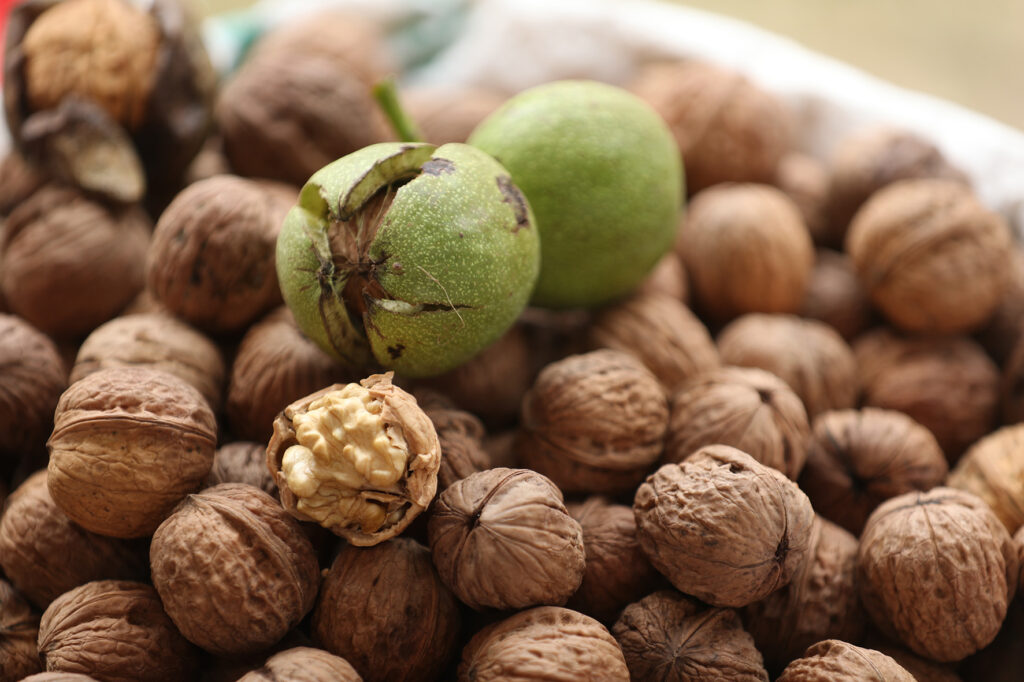
The Nerpio walnut has transcended borders due to its unique properties. It has enjoyed the distinction of Protected Designation of Origin (PDO) since 2023. The peculiarity of the local walnut lies not only in its flavour and texture, but also in its exceptional composition: its antioxidant properties can be up to ten times higher than those of other walnuts. In addition, they are known for their amazing stability and longevity, maintaining their qualities for up to three years, well above the average.
El Plantón del Covacho is proof of their deep roots, and the Walnut Fair, held on the penultimate weekend of November, is the annual celebration of this fruit, where you can taste them raw and in their many forms, from cold-pressed oils (even used in cosmetics) to sweet macerated wines. Eating in establishments such as La Alacena allows you to experience the concept of ‘zero kilometre’ with local products such as honey, oil and, of course, game stews that complement the table.
Segureño kid and lamb
Meat is another unmissable feature. Segureño lamb and Celtibrian kid are the stars of the menu, prepared in stews, roasted or in lomo de orza. The harsh environment has tempered a breed of livestock with an unmistakable flavour, perfect for stews that comfort travellers after a day of hiking in the mountains.

The Festive Heart: The Meeting of Crews
Despite its isolation, Nerpio is a village with deep traditions and a vibrant cultural life. Beyond the patron saint celebrations, the Meeting of Crews, declared a Festival of Regional Tourist Interest, stands out.
Held on the last weekend of February, this event is a major tribute to the purest folklore. Local cuadrillas invite traditional music and dance groups from different parts of Spain, filling the streets with an intense weekend of music, songs, dances and mountain hospitality. It is a unique opportunity to experience the authentic and welcoming character of its inhabitants, who are deeply rooted in their customs.

What to see and do in the surrounding area
The natural environment of Nerpio offers countless places to discover:
- Molino de las Fuentes: a recreational area next to the source of the Acedas stream, perfect for a picnic or a short walk.
- Sierra de las Cabras: an area of great ecological value where pine trees, gall oaks and junipers coexist with a wide variety of wildlife.
- Atalaya de Vizcable: an Arab watchtower with excellent views of the valley.
- Ardal y Tinjarra Micro-Reserve: a protected area of botanical interest, ideal for lovers of flora and geology.
- Puente Viejo and the historic centre: photogenic spots where the sound of water accompanies your stroll.
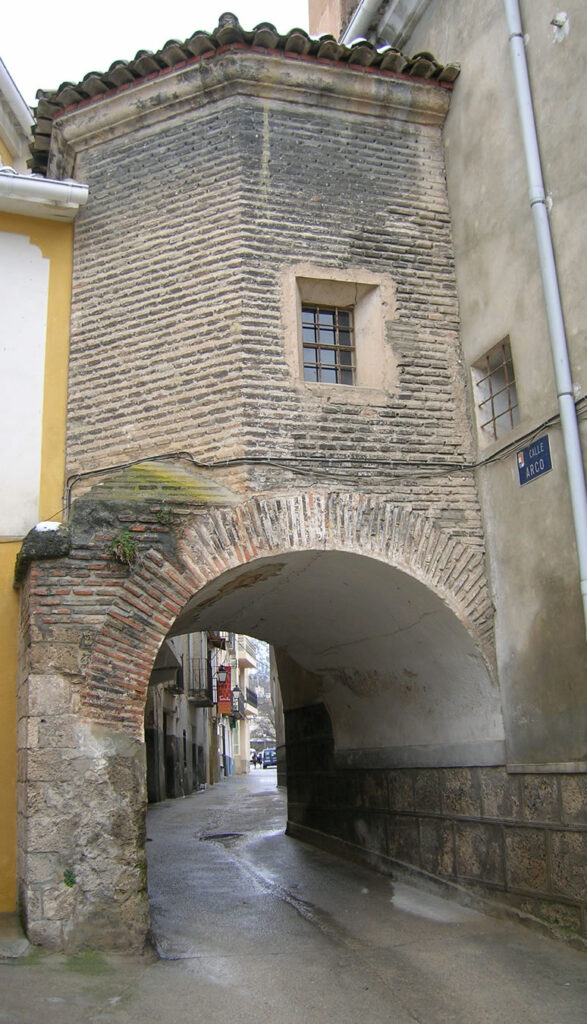
Every corner of Nerpio invites you to lose yourself without haste, breathe fresh air and rediscover the connection between history and nature.
Complement your route in Albacete
If you are visiting Albacete, don’t hesitate to lose yourself in other destinations we have on the map:
- Bogarra: A village where you can disconnect, find authenticity, and enjoy natural beauty in its purest form.
- La Gineta: A village with a Gothic church and a tradition of craftsmanship.
- Chinchilla de Montearagón: a town declared a Historic-Artistic Site, which was the capital before Albacete.
- Letur: Known as ‘the village of water’, it has the best-preserved medieval layout in the entire province.
Nerpio: Beyond the Destination
Nerpio is, in essence, a place of layers in Albacete. It is the historical frontier, the geographical boundary, the cradle of art, the sanctuary of the walnut tree and the viewpoint of the universe. Its richness is not measured in kilometres of road (although there are many to get there) but in the density of the experiences it offers.
It is a destination that challenges hikers on the Ruta del Zarzalar trail, fascinates historians at Taibilla Castle, thrills astronomers under the Starlight blanket, and seduces gourmets with the quality of its PDO walnuts. Nerpio does not ask to be visited; it demands to be discovered at leisure. It is a cultural and natural tourist destination par excellence, an unmissable stop in the Sierra del Segura and, without a doubt, one of the most magnetic spots in the Albacete region.
Photo Credits
Below are the photo credits in order of appearance. Royalty-free photos will not be listed below:
- Cover Image: Werner Wilmes, CC BY 2.0, via Wikimedia Commons
- Marczoutendijk, CC BY-SA 4.0, via Wikimedia Commons
- Castilla-La Mancha, via cultura.castillalamancha.es
- Castilla-La Mancha, via cultura.castillalamancha.es
- Castilla-La Mancha, via cultura.castillalamancha.es
- Castilla-La Mancha, via cultura.castillalamancha.es
- Werner Wilmes, CC BY 2.0, via Wikimedia Commons
- Turismo Sierra del Segura, via turismosierradelsegura.es
- Turismo Sierra del Segura, via turismosierradelsegura.es
- Turismo Sierra del Segura, via turismosierradelsegura.es
- Marczoutendijk, CC BY-SA 4.0, via Wikimedia Commons
- Marczoutendijk, CC BY-SA 4.0, via Wikimedia Commons
- Turismo Sierra del Segura, via turismosierradelsegura.es
- Werner Wilmes, CC BY 2.0, via Wikimedia Commons
- Marczoutendijk, CC BY-SA 4.0, via Wikimedia Commons
- Turismo Sierra del Segura, via turismosierradelsegura.es
- Turismo Sierra del Segura, via turismosierradelsegura.es
- Turismo Sierra del Segura, via turismosierradelsegura.es
- German Abal, CC BY-SA 4.0, via Wikimedia Commons
- Subsecretaría de Turismo. Estado de México, CC BY-SA 4.0, via Wikimedia Commons
- Ayuntamiento de Nerpio, via turismonerpio.com
- Turismo Sierra del Segura, via turismosierradelsegura.es