Garrucha, Almería: With its Red Prawn, What to See and Do in this Fishing Village
In the heart of the Levante Almeriense, between the majestic aridity of the Sierra Cabrera and the deep blue of the Mediterranean, lies Garrucha, an enclave that, against all odds, flourished thanks to the sea. It is not just a coastal town; it is the embodiment of the Andalusian seafaring spirit, a place whose motto, Ex Mari Orta (‘Born of the Sea’), is not just a simple phrase, but the chronicle of its very existence.

Garrucha, 91 km from the provincial capital, Almería, located between Vera and Mojácar, has managed to combine the noble past of a commercial port with the vibrant present of a tourist destination without losing its fishing soul. Its appearance speaks for itself: a kilometre of coastline embraced by the imposing Paseo del Malecón, a white Macael marble balcony symbolising the elegance and prosperity that mining and the sea brought to it in its heyday.

A town born of the sea: a brief history of Garrucha
The history of Garrucha is written by the waves. Since Muslim times, there has been a small coastal settlement here dedicated to fishing and trade. The original place name, Algarrobo, seems to indicate the abundance of these trees in the area. For centuries, it was a secondary port where sailors, merchants and travellers arrived from different parts of the Mediterranean.

The biggest change came in the 18th century, when the mining boom in Sierra Almagrera turned Garrucha into a strategic enclave for exporting lead and silver. From the mid-19th century onwards, the town experienced its golden age: the population grew, stately buildings were erected, port infrastructure was built and the town began to acquire a frenetic commercial life. At that time, coastal defences were also reinforced, which was essential to deter pirate attacks, leading to the construction of San Ramón Castle, now one of the symbols of the municipality.

When mining declined in the early 20th century, Garrucha had to reinvent itself. Fishing, especially the capture of red prawns, became the new economic engine. This seafood, famous for its intense flavour and exceptional quality, has become a hallmark of the town and a staple of Garrucha’s cuisine, to the point that there is a festival dedicated to it every October.

From the 1960s onwards, with the arrival of tourism, Garrucha underwent another transformation. Its beaches, mild climate and seaside atmosphere attracted visitors seeking tranquillity, good food and an authentic environment. Today, the town has managed to combine tourism with its fishing life, maintaining a personality of its own that distinguishes it from the rest of the Almeria coast.
The undisputed queen: the red prawn of Garrucha
If Garrucha has a culinary signature that resonates throughout Spain, it is its red prawn. This crustacean, caught in the rich fishing grounds of the maritime district that stretches from the Murcian border to Cabo de Gata, is more than just a local product; it is an emblem of exceptional quality and an economic driver.
The excellence of this gastronomic gem is due, in part, to the richness of the seabed of the Levante Almeriense, which includes the ZEPIM (Specially Protected Area of Importance for the Mediterranean), home to extensive meadows of the vital Posidonia oceanica.

The Fish Market: The Beating Heart of Tradition
For visitors, the soul of Garrucha is revealed at dusk in the Lonja del Puerto. Built with a modern design in 1995, this space is the setting for an ancestral ritual: the daily auction.
The Garrucha fish market is one of the most authentic places in the town. Every afternoon, when the boats return from fishing, the fish auction begins. It is a fascinating ritual, a fast-paced and gestural affair that reflects the importance of fishing in local life. Here arrive the best catches of the day, including the famous red prawn, the region’s true gastronomic treasure.

Visiting the fish market allows you to understand the identity of Garrucha. The smell of the sea, the frenetic activity, the buyers bidding… it is an experience that stays with you, especially for those who have never witnessed a traditional fish auction. Many of the restaurants in the port work directly with this product, so after your visit, the ideal thing to do is to sit down and taste it.

The port of Garrucha: fishing tradition and water sports
The port, the second most important in the province of Almería, balances its lively fishing area with a modern sports area, offering 221 moorings and a complete infrastructure for sailing.

In the fishing area you will find most of the daily life of the town. Boats coming and going, nets spread out, fishermen preparing for the day… Thanks to its large 170-metre mouth and calm waters, this port is also perfect for recreational boats.

Garruchera Night: Leisure and Sea Breeze
Nightlife is concentrated in the marina area, where numerous establishments offer a relaxed atmosphere with lounge and chill-out music. Having a drink in a bar facing the boats, with the Mediterranean breeze, is the perfect end to a day in this Almeria gem.
What to see in Garrucha: a tour of its must-see places
1. San Ramón Castle: the fortress that guarded the Mediterranean
The strategic and commercial importance of Garrucha over the centuries (from the Iberians to the Christians) made it a constant target, which led to the construction of its main defence: the Castillo de Jesús Nazareno, also known as the Castillo de San Ramón or Castillo de las Escobetas.

San Ramón Castle, built in 1769 by order of Charles III, is one of the essential visits in Garrucha. Its original function was clear: to protect the coast from pirate attacks and control maritime activity at a key point on the eastern coast of Almería. The fortress, with its rectangular layout and sturdy walls, later became a police station and then a barracks for the Civil Guard.

Today it has been completely restored and houses Nautarum, the Interpretation Centre for Fishing and the Marine Environment, which explains the historical relationship between Garrucha and the sea. It is also used as a venue for weddings and cultural events. Even if you don’t go inside, it is worth climbing up for the views: from its heights you can see the entire coastline, with spectacular panoramic views of the Mediterranean.

2. Ermita del Carmen: maritime devotion facing the Mediterranean
The Ermita del Carmen, blessed in 1951, is a small, charming sanctuary dedicated to the patron saint of the municipality and fishermen. Located on a promontory overlooking the sea, it is a peaceful place, perfect for stopping for a few minutes and enjoying the landscape.

Every 16th of July, the image of the Virgin is carried to the sea in an emotional maritime procession. Dozens of decorated boats accompany the main vessel as they sail around the bay. It is one of the most important festivals for the people of Garrucha and a tradition that keeps alive the close bond between the town and the sea.

3. The Promenade — El Malecón: a kilometre of beauty facing the sea
Garrucha’s promenade, known as El Malecón, is one of the most pleasant areas for walking. Its white Macael marble railing — a nod to the valley’s mining tradition — makes it an elegant and bright promenade. It stretches for a kilometre parallel to the sea and is lined with palm trees, benches, beach bars and terraces where you can try fresh fish or simply have a drink while enjoying the breeze.

On Friday mornings, the weekly market is held next to the promenade: clothes, fruit, vegetables, crafts, local products… a perfect plan if you want to combine shopping with a walk by the sea.

4. Churches, squares and small urban gems
Although Garrucha is a small town, it has interesting corners that are worth visiting:

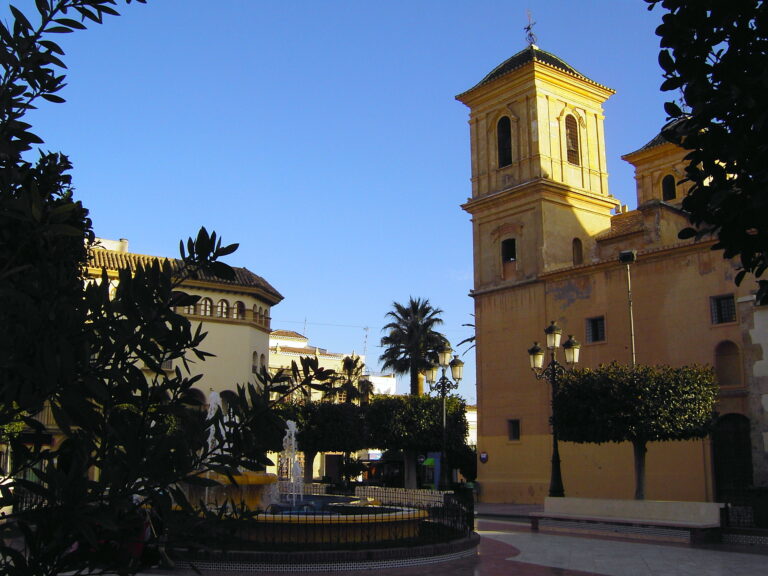
- Parish Church of San Joaquín (1871) (above in the photo), built on the site of an old chapel, its peculiar façade and unique style are testimony to the prosperity of the mining era.
- Plaza de Pedro Gea and Plaza de la Constitución: These are key locations where you will find the Town Hall, the Mercado de Abastos (ideal for local products) and, in the case of the Plaza de Pedro Gea, modern architecture with elements reminiscent of ships.
- Mercado de Abastos, ideal for discovering local products.
- Monuments in white marble, such as the sculptures of the Fisherman, the Emigrant, the Poet Antonio Cano Cervantes and the Virgin of Carmen.
- The old Calvario chimney: Built in the upper part of the municipality, this 72-foot-high pyramidal structure was constructed at the end of the 19th century to evacuate smoke from old foundries, such as the San Ramón Foundry (part of the Heritage of Foundries of the Levante Almeriense). Today it is a viewpoint with unique views.
These are perfect places to stroll leisurely and discover the everyday essence of Garrucha.

The best beaches in Garrucha
The coast of Garrucha offers accessible, well-maintained beaches with all the amenities, perfect for combining with a day of sightseeing.
1. Garrucha Beach (Urban Beach)
The main beach, often referred to as Garrucha Beach or Las Escobetas Beach, stretches for 1,370 metres with fine golden sand. Located right in the centre, it is wide, quiet and ideal for families. Its fine sand and calm waters invite you to swim even on days with a light breeze.

This urban beach, sheltered by the harbour breakwater, offers calm waters and has been awarded the “Q” for Tourist Quality and the Ecoplayas distinction. It also offers a wide range of services, including access and facilities adapted for people with reduced mobility (ramps, amphibious chairs, support staff), making it perfect for spending a whole day without moving your car.

2. Playa del Pósito
More frequented by locals and with a more relaxed atmosphere. Its golden sand and clear waters are ideal for those seeking a quiet Mediterranean beach without crowds.

3. Nearby beaches: Mojácar and Vera
A few minutes’ drive away, you’ll find some of the most beautiful beaches in eastern Almería, such as El Descargador or El Cantal in Mojácar, or the huge unspoilt beaches of Vera, perfect for those looking for wide open natural spaces.

What to do in Garrucha: activities, excursions and plans
Garrucha is not just about the beach and the port. The town is a strategic point for enjoying the sea and nature in many different ways.
- 1. Water sports: Local schools offer courses and equipment hire for:
- Sailing
- Diving
- Windsurfing
- Paddle surfing
- Kayaking
- The waters of the Levante Almeriense are particularly suitable for beginners thanks to their calmness.
- 2. Boat trips and dolphin watching: Excursions depart from the marina, allowing you to enjoy the coast from a different perspective. Some routes reach Mojácar, the Vera area and even more remote places. Dolphin watching is one of the favourite activities for families.
- 3. Hiking and cycling in Sierra Cabrera: The mountain trails begin just a few minutes from Garrucha. Sierra Cabrera offers trails that combine nature, spectacular viewpoints and charming little white villages.
- 4. Excursions to Cabo de Gata–Níjar: This natural park is one of the most beautiful environments in the Mediterranean: volcanic beaches, hidden coves, crystal-clear waters, wild landscapes… From Garrucha, it is an essential getaway.

Where to eat in Garrucha: a paradise for seafood lovers
Eating well in Garrucha is not difficult: it is almost inevitable. Red prawns are the star product, but there is much more.
Typical dishes you must try
- Garrucha red prawns
- Pulpo seco, traditionally sun-dried octopus
- Arroz a banda
- Grilled squid
- Fresh fish from the market
- Tocino de cielo, for those with a sweet tooth
Recommended restaurants
- El Almejero, one of the classic places to try red prawns
- Boracay, first-class seafood cuisine
- Beach bars such as Cala Marina, well known for their espetos (skewered sardines)
In October, the Feria de la Gamba (Prawn Fair) is held, an ideal occasion to sample the best tapas and seafood dishes in the region.

What to see around Garrucha
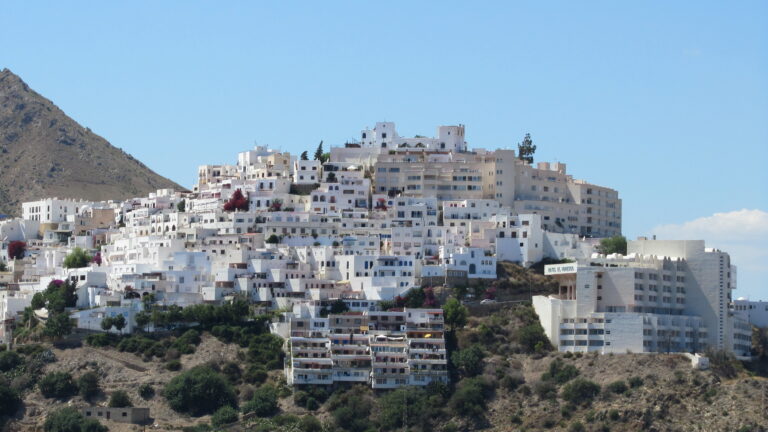
- Mojácar: One of the most beautiful villages in Spain. Whitewashed streets, incredible viewpoints and a bohemian atmosphere that you will fall in love with.
- Cabo de Gata–Níjar Natural Park: A must-see on any trip to eastern Almería. Pristine beaches, volcanic coves and landscapes unique in the Mediterranean.
- Cuevas de Almanzora and Villaricos Archaeological Site: For history lovers, the Phoenician-Roman archaeological site of Villaricos is a fascinating visit.
- Sierra Cabrera: Nature, hiking trails, viewpoints and charming white villages.
- Almería Speed Circuit: About 50 km away, ideal for motor racing fans.
Discovering Almería
Visit other places in Almería and add them to your trip, or make a note for future reference:
- Mojácar: One of the most beautiful villages in Spain, an essential visit in the region.
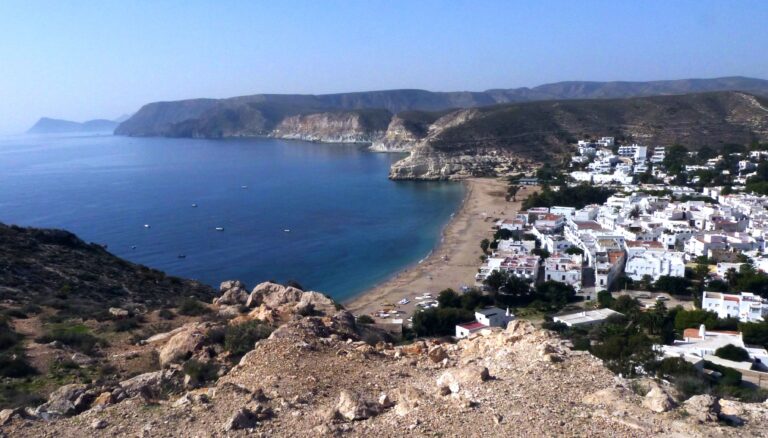
- Agua Amarga: One of the most charming villages on the Almería coast, with its seafaring essence and leisurely pace.
- Huércal-Overa: An inland town where Holy Week is one of the most important events in Almería.
- Albox: Home to one of the most impressive monasteries in eastern Andalusia, the Santuario del Saliente.
- San José: Gateway to legendary spots such as Los Genoveses, Mónsul and Media Luna beaches.

Garrucha: a destination to be enjoyed with all five senses
Garrucha is more than just a fishing village. It is the smell of salt, the sound of boats entering the harbour, the deep flavour of red prawns, the feel of the Mediterranean breeze at dusk and the sight of an elegant promenade that lights up at nightfall. An authentic, simple and welcoming town that has managed to preserve its essence while looking to the future.

Whether you want to relax on the beach, discover its history, savour its cuisine or explore its natural surroundings, Garrucha is a destination that never disappoints.
Photo Credits
Below are the photo credits in order of appearance. Royalty-free photos will not be listed below:
- Cover Image: dePoniente GDP Almería Occ., CC BY 2.0, via Wikimedia Commons
- Concepcion AMAT ORTA…, CC BY 3.0, via Wikimedia Commons
- Concepcion AMAT ORTA…, CC BY 3.0, via Wikimedia Commons
- LBM1948, CC BY-SA 4.0, via Wikimedia Commons
- MdeVicente, CC BY-SA 4.0, via Wikimedia Commons
- Caleteron, CC BY-SA 3.0, via Wikimedia Commons
- Emilio del Prado from Valladolid, Spain, España, CC BY-SA 2.0, via Wikimedia Commons
- Concepcion AMAT ORTA…, CC BY 3.0, via Wikimedia Commons
- Carlos Cuerda, CC BY-SA 4.0, via Wikimedia Commons
- Carlos Cuerda, CC BY-SA 4.0, via Wikimedia Commons
- myalmeria, via myalmeria.com
- Juanalberto27665, CC BY-SA 4.0, via Wikimedia Commons
- Luis Rogelio HM, CC BY-SA 2.0, via Wikimedia Commons
- Luis Rogelio HM, CC BY-SA 2.0, via Wikimedia Commons
- Luis Rogelio HM, CC BY-SA 2.0, via Wikimedia Commons
- Museo8bits, CC BY-SA 4.0, via Wikimedia Commons
- Unzurrunzaga, CC BY-SA 3.0, via Wikimedia Commons
- Ayuntamiento de Garrucha, via garrucha.es
- INDALOMANIA, CC BY-SA 3.0, via Wikimedia Commons
- Concepcion AMAT ORTA…, CC BY 3.0, via Wikimedia Commons
- Luis Rogelio HM, CC BY-SA 2.0, via Wikimedia Commons
- Luis Rogelio HM, CC BY-SA 2.0, via Wikimedia Commons
- Luis Rogelio HM, CC BY-SA 2.0, via Wikimedia Commons

.jpg)
.jpg)
.jpg)


.jpg)
.jpg)
.jpg)

.jpg)
.jpg)
.jpg)
.jpg)


.jpg)
.jpg)
.jpg)
.jpg)