What to see in Mojácar: a complete guide to discovering one of the most beautiful villages in Almería
Mojácar is one of those places that wins you over at first sight. Whether you’re coming from the coast or inland, its white silhouette silhouetted against the slopes of the Sierra de Cabrera gives you a glimpse of what you’ll find when you arrive: a historic centre that retains an unmistakable Moorish essence, a relaxed Mediterranean atmosphere and a cultural heritage that is as rich as it is surprising.

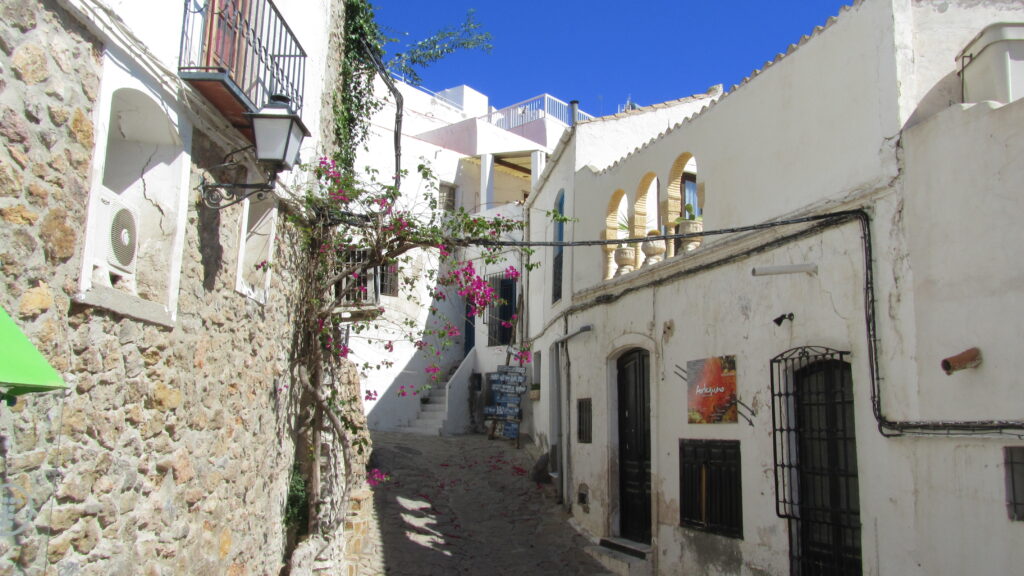
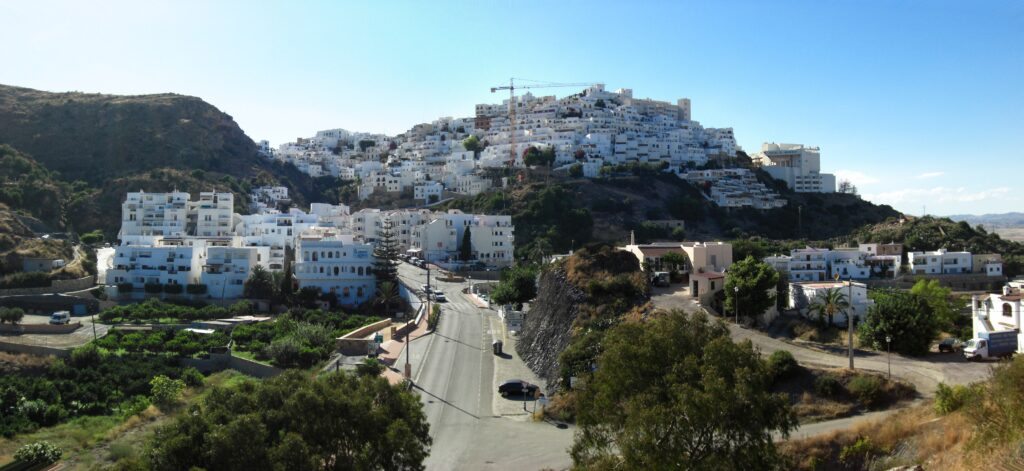
Although most travellers stay in Mojácar Playa, a visit to its historic centre is a must. It is here that you will discover its soul: narrow streets climbing up the hill, viewpoints opening onto endless landscapes and a thousand corners where blue flowers and handcrafted details contrast with the radiant white of the façades.
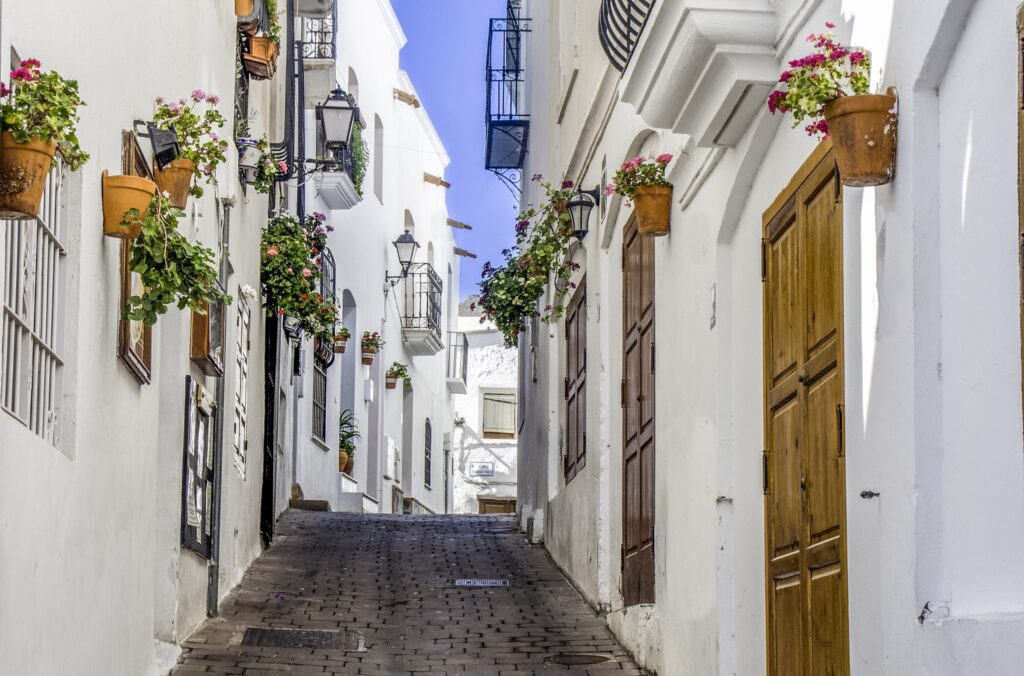
Mojácar is not just about beauty. It is also about history, myths, legends and traditions that are still very much alive. From the figure of the mojaquera to the indalos that decorate doors, mosaics and shops, everything in the village seems to have its own story to tell. Since 2013, its unique beauty has earned it a place of honour in the network of Los Pueblos Más Bonitos de España (The Most Beautiful Villages in Spain).

A stroll through the Moorish essence of Mojácar
Enjoying Mojácar is synonymous with wandering the streets. The usual thing to do is to go up to the old town for lunch or dinner, or to take advantage of the mild afternoon hours and explore its corners at a leisurely pace. Its popular architecture, with a clear Muslim heritage, is reminiscent in many ways of destinations in northern Morocco such as Chefchaouen or Asilah. This Mediterranean and Andalusian atmosphere is precisely what gives it such a special charm.
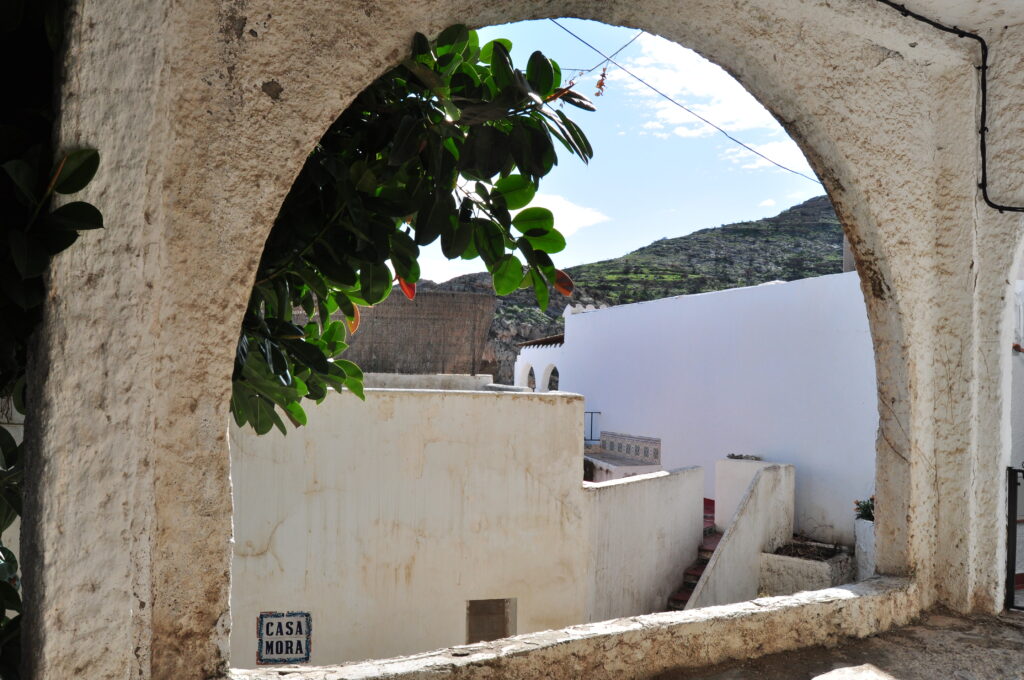
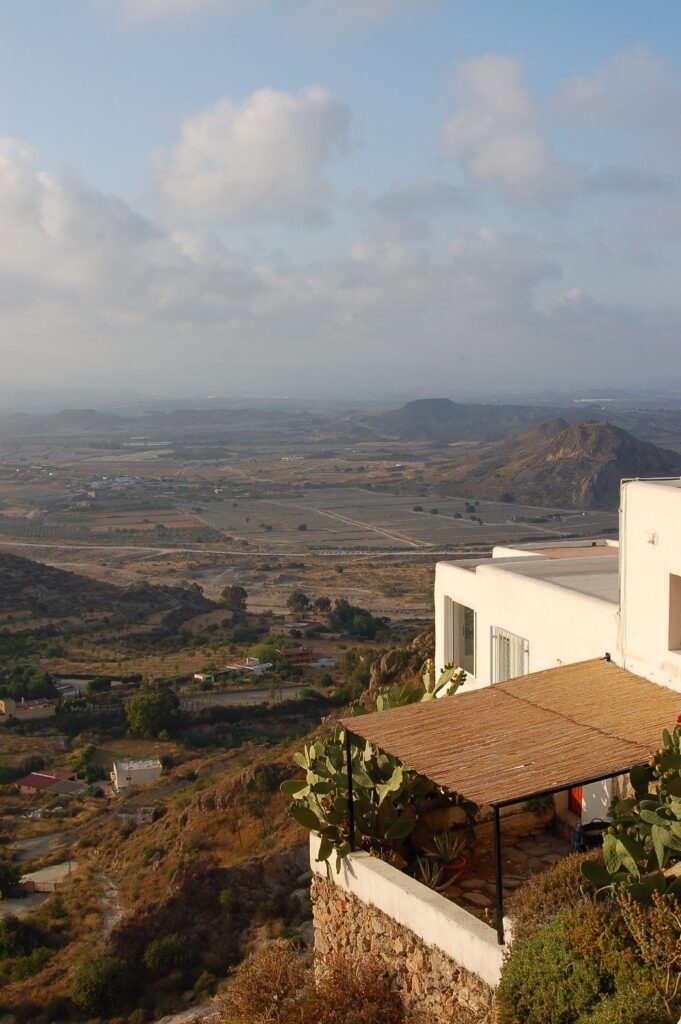
Getting lost in its streets is the best way to discover its character: whitewashed houses, colourful doors, shady passageways, flowers on balconies and small squares where time seems to pass more slowly. All this is accompanied by panoramic views that open up every few metres over the famous Valley of the Pyramids, a rolling landscape of hills whose silhouette is reminiscent of the iconic Egyptian monuments.
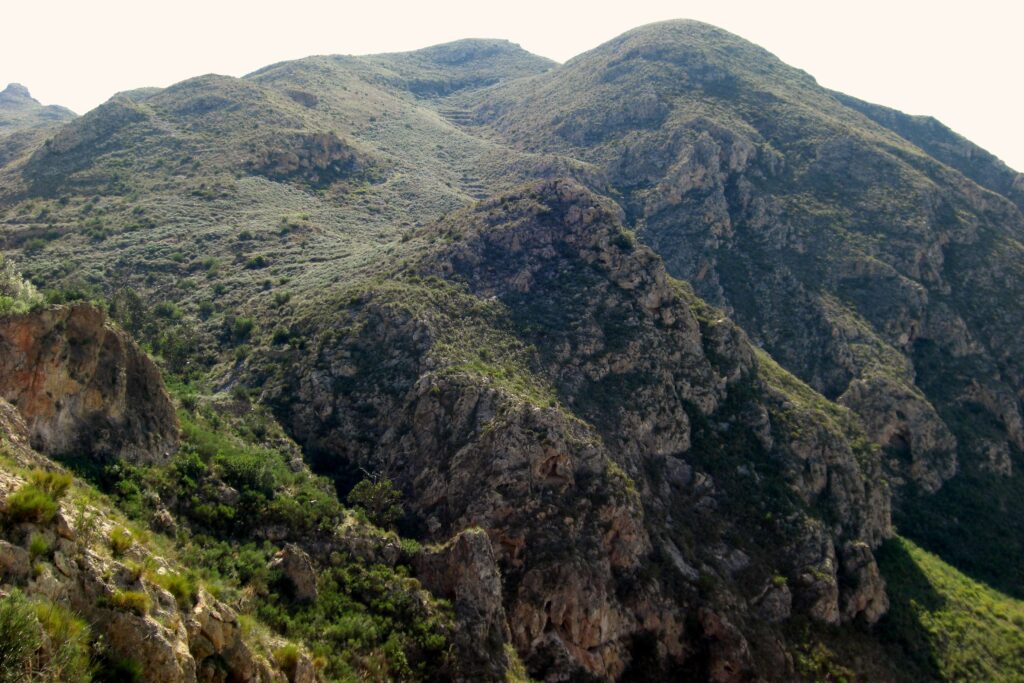
History of Mojácar: Garcilaso de la Vega, Moriscos and the Andalusian influence
The history of the municipality is marked by a very unique episode during the final stages of the Reconquista. In 1488, while the Muslim governors of the area surrendered without resistance, the governor of Mojácar refused to do so. The Catholic Monarchs then sent Garcilaso de la Vega to negotiate a peaceful surrender.
The agreement was reached without bloodshed: Mojácar became part of Christian territory with the promise that its customs would be maintained. However, the reality is that a few years later the Moriscos were expelled from these lands, and many of them settled in northern Morocco, leaving their mark on places such as Chefchaouen and the medina of Tetouan, now a World Heritage Site. That same Andalusian spirit can still be felt in the streets of Mojácar.
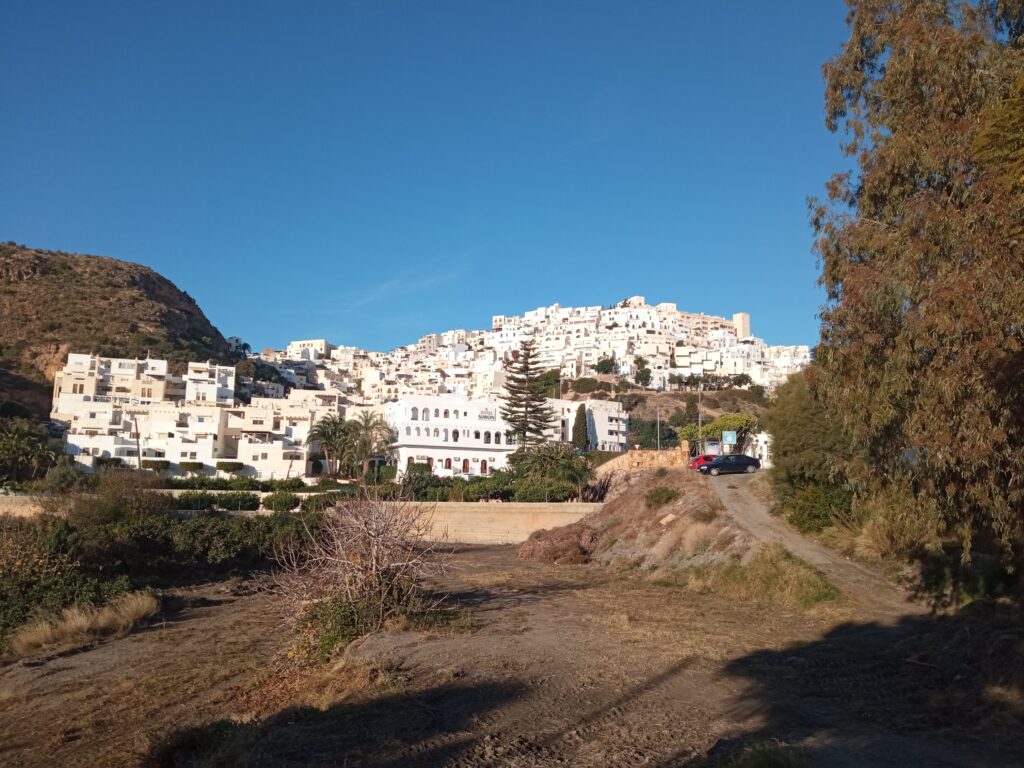
La Mojaquera: eternal symbol of the town
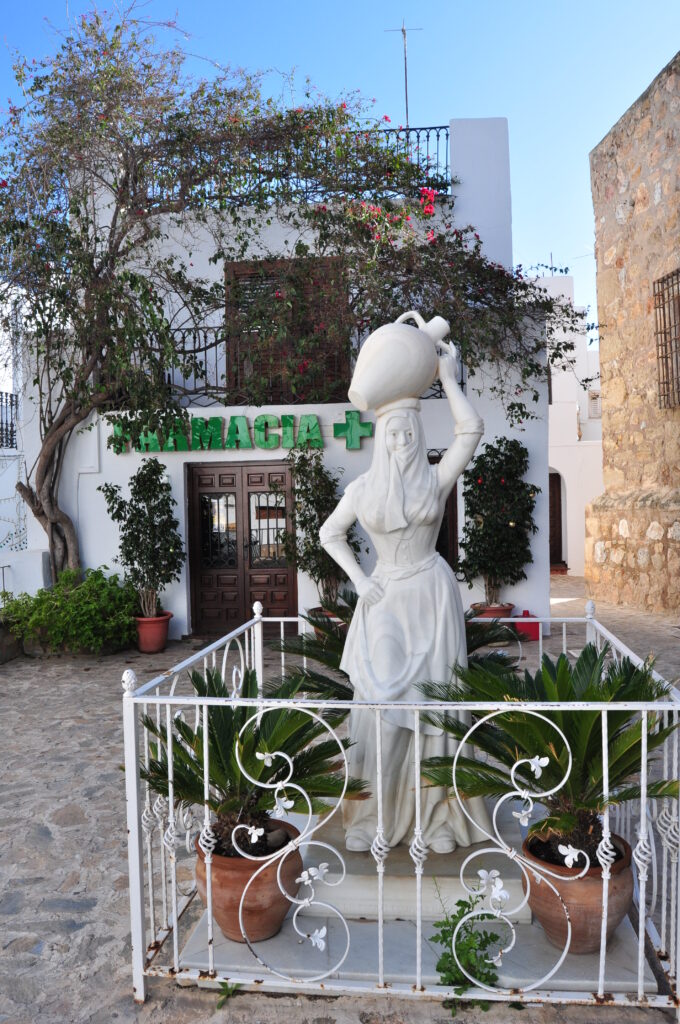
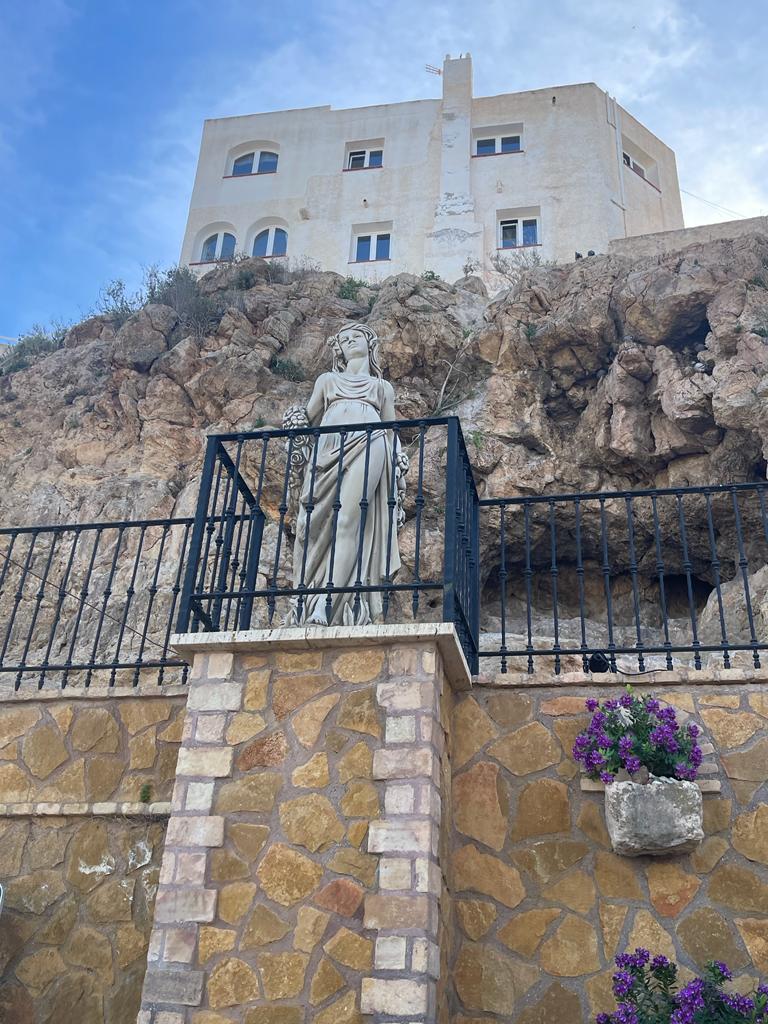
As soon as you enter Mojácar, you will see the image of the mojaquera, a woman dressed in a headscarf and carrying a water jug on her head. She represents the washerwomen who came daily to the Fuente de Mojácar, a place that was essential to local life until the mid-20th century.
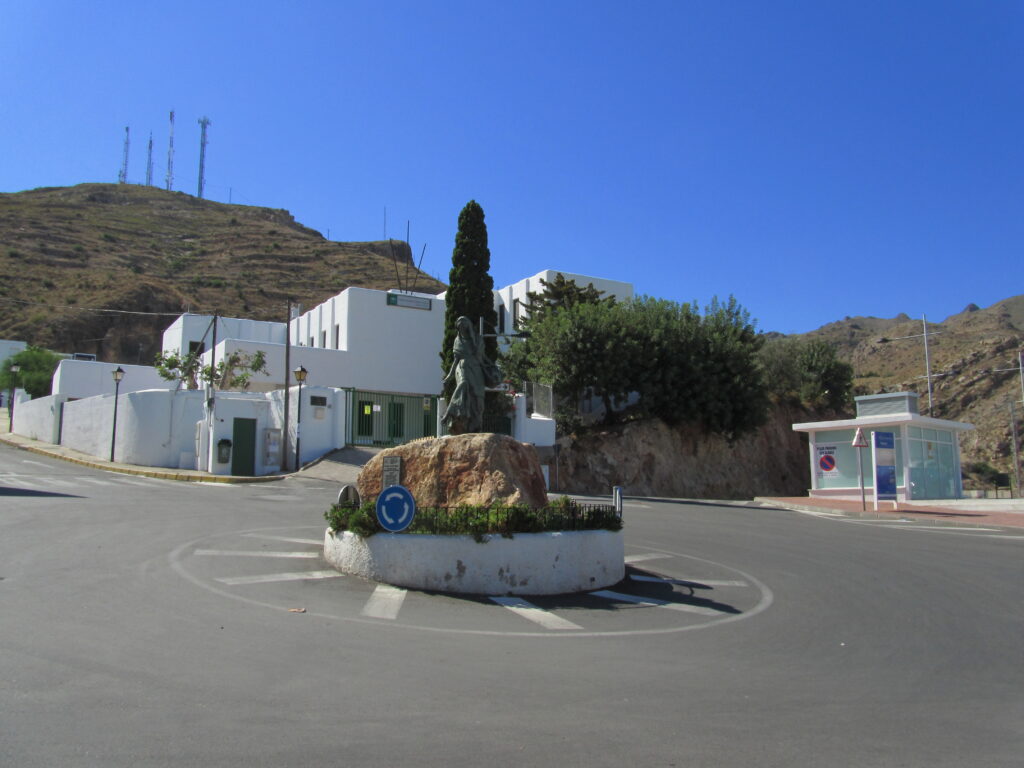
Today, the figure of the mojaquera is one of the great emblems of the municipality, present on posters, sculptures and handicrafts, and recalls a tradition that is part of its collective identity.
The Indalo: a prehistoric figure turned amulet
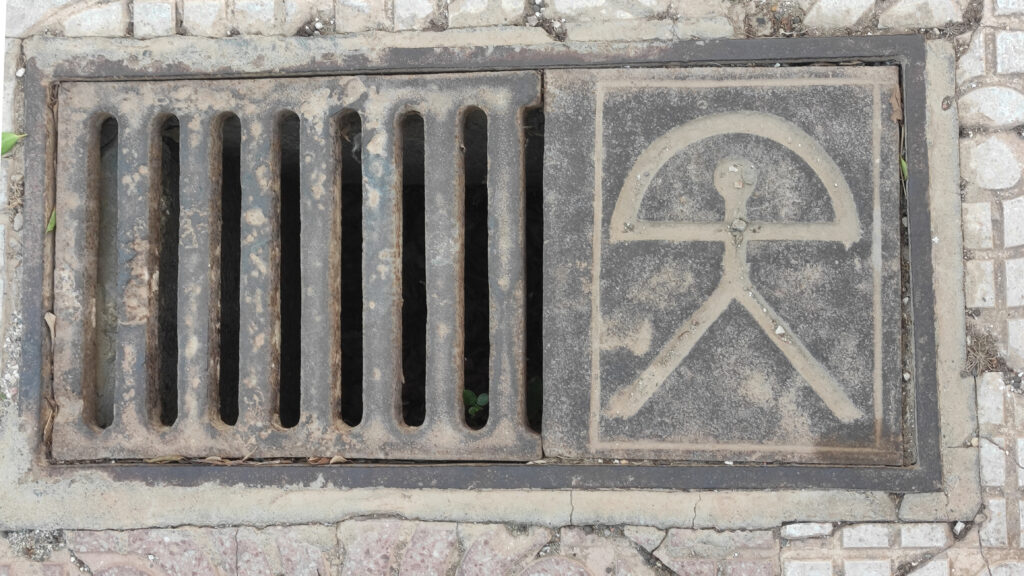
If there is one symbol associated with Mojácar and the entire province of Almería, it is the Indalo. Its origin can be found in the Neolithic cave paintings found in the Cueva de los Letreros, in Vélez Blanco. The figure appears to represent a man holding a bow on his outstretched arms, and since ancient times it has been interpreted as a good luck charm.
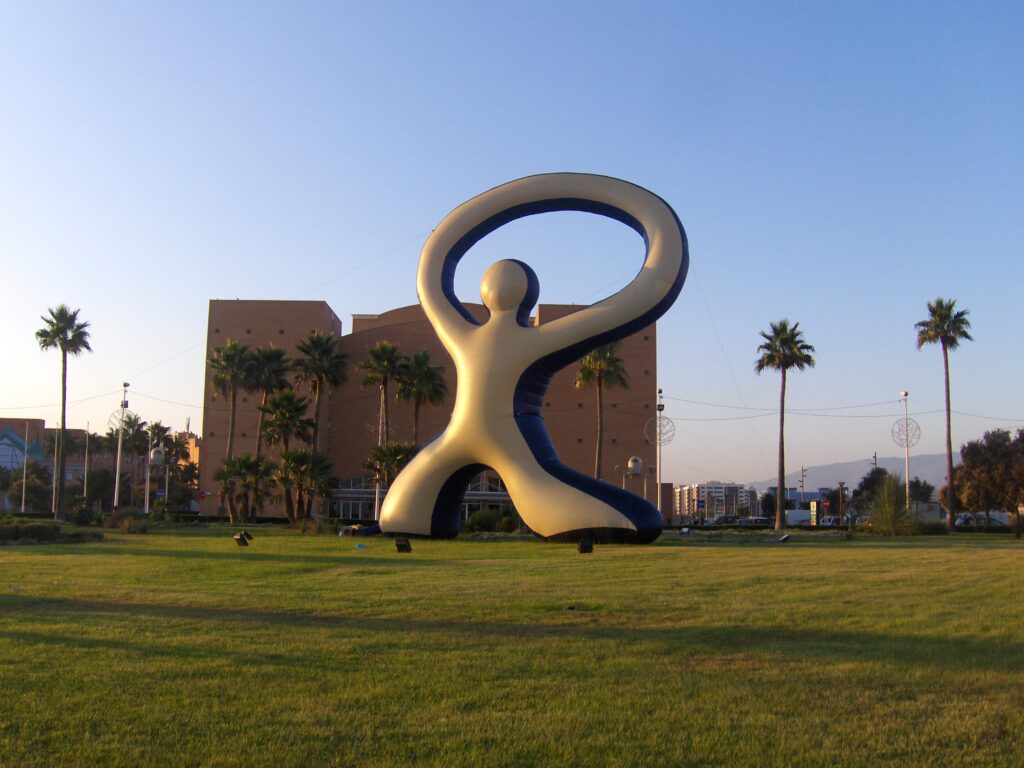
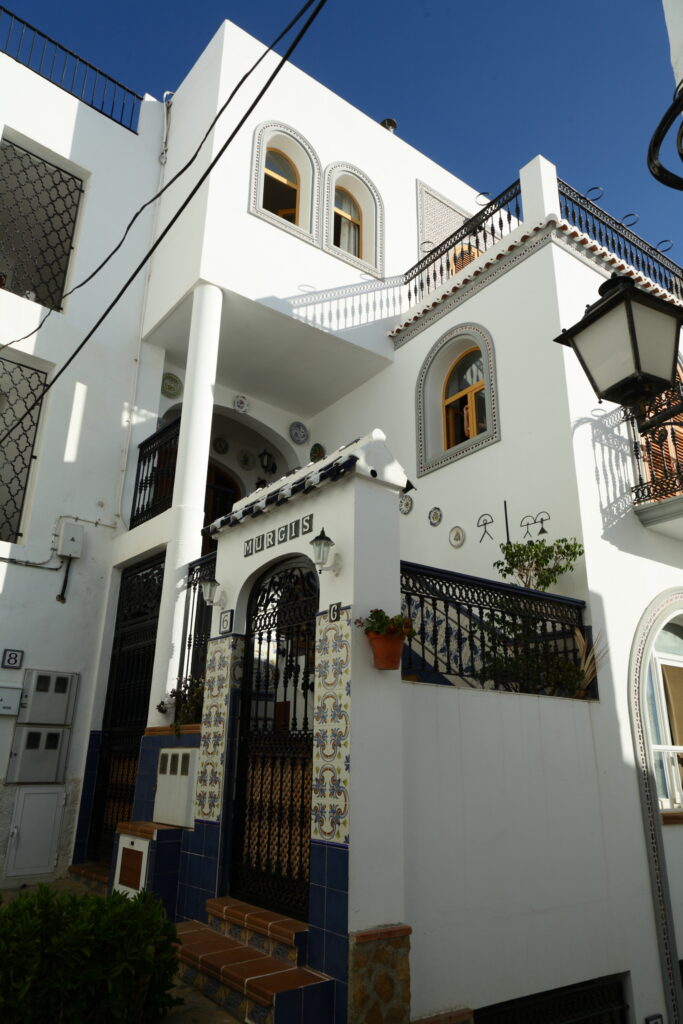
It is believed that in Mojácar it was also used to protect against witches and evil spells, due to the strong historical presence of popular beliefs related to magic. In the 20th century, the painter Jesús de Perceval promoted the Indalian movement, which turned the symbol into an artistic, cultural and tourist icon. That is why today you will see indalos on facades, mosaics, sculptures and practically all the souvenirs in the town.
The legend of Walt Disney and his supposed birth in Mojácar
One of the most peculiar stories about Mojácar claims that Walt Disney was born here. The theory arose after the mysterious visit in 1940 of three American men dressed in black, supposedly sent by Disney to search for the birth certificate of a certain José Guirao Zamora, born in Mojácar in 1901.
According to legend, Walt Disney and José Guirao were the same person: a child who emigrated with his mother to the United States. Although no documents have ever been found to confirm this, the story continues to fuel local folklore and forms part of the popular imagination.
Mojácar and tourism: the renaissance of the 1960s
In the 1960s, Mojácar became one of the pioneers of tourism in Almería thanks to its mayor, Jacinto Alarcón, who promoted reforms, renovations and even a curious programme to attract celebrities: some abandoned houses were given to famous people so that they could take up residence in the village.
During this period, figures such as the journalist Tico Medina and the reporter Tito del Amo arrived, fell in love with the place and ended up founding the legendary Tito’s beach bar, which is now a popular beach bar.
In addition, Mojácar has been the setting for film shoots since the 1950s, including the film Sierra Maldita (1953) and episodes of the series Curro Jiménez (1976), contributing to its growing fame.
What to see in Mojácar: the essentials
1. Fuente Mora
This is one of the most historically significant places in the town. It was here, in 1488, that the surrender of the city to the Catholic Monarchs was signed. The fountain, of Moorish origin, retains its traditional architecture and remains a key point for understanding Mojácar’s past. It is also the perfect starting point for exploring the historic centre.
2. Casa de la Canana Museum
This ethnographic museum, covering more than 200 square metres, is a gateway to the rural world of Andalusia in the first half of the 20th century. It belonged to ‘La Canana,’ a local saleswoman. The museum exhibits a complete collection of everyday objects, from kitchen utensils to furniture, offering an authentic glimpse into life in the past.
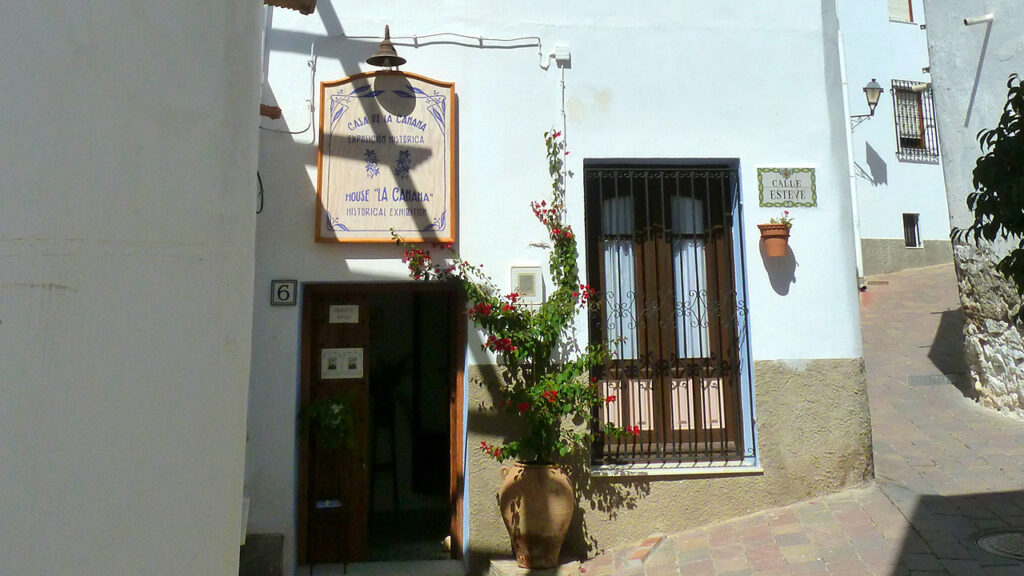
3. Plaza del Parterre
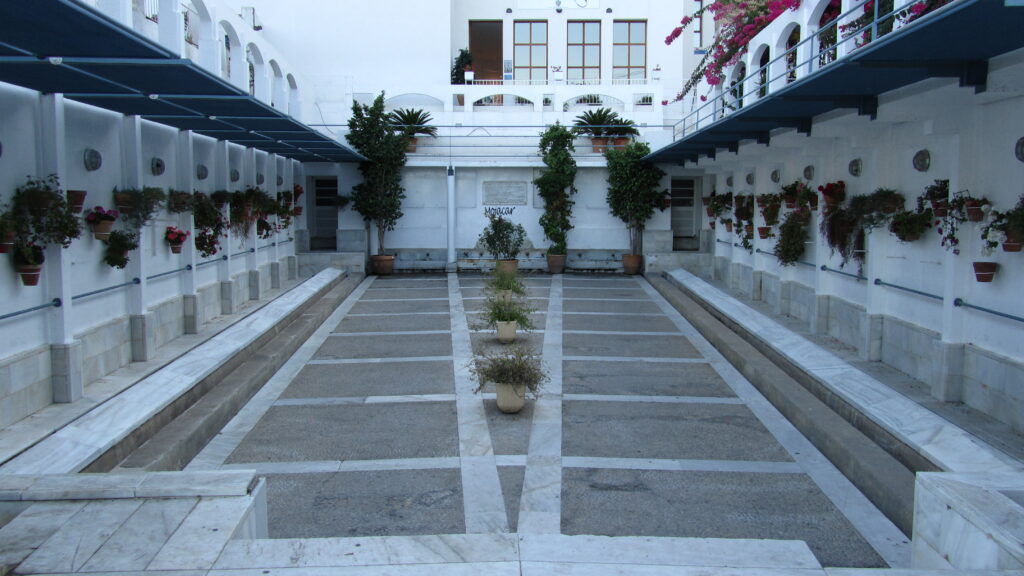
A space steeped in history, as archaeologists confirm that it was a Muslim necropolis. Today, it is a meeting place with a pleasant terrace and preserves a reproduction of part of the choir stalls from Toledo Cathedral, the work of Itziar Ortuzar.
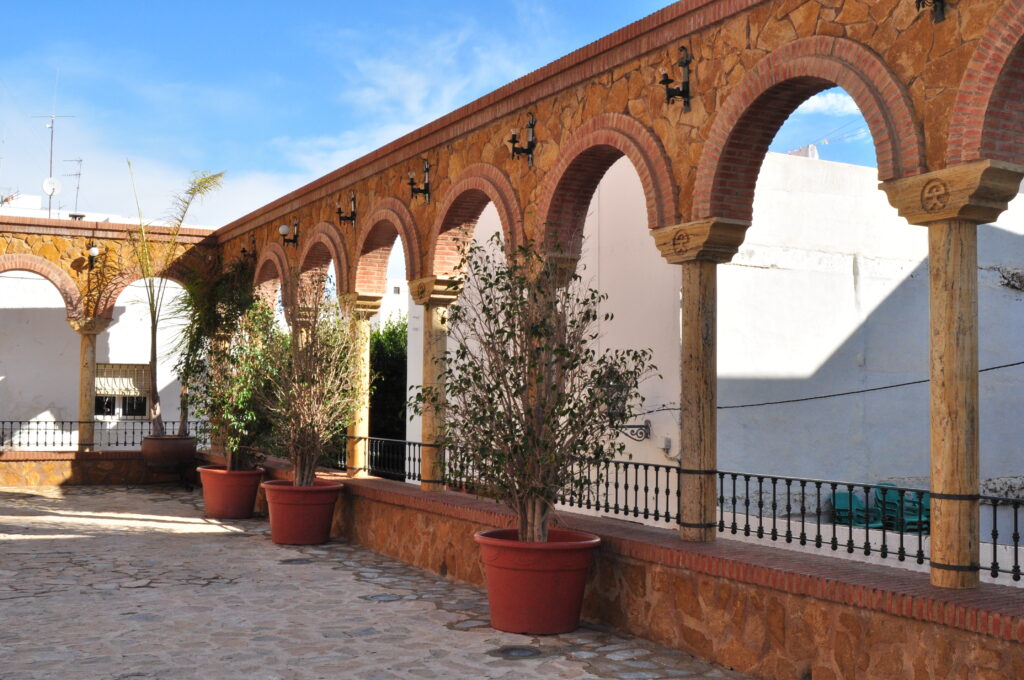
4. Jewish Quarter of Mojácar (El Arrabal)
This neighbourhood is one of the most picturesque in the town. A network of narrow streets, flowers on balconies and white façades form an authentic labyrinth. Walking through El Arrabal is to discover one of the most authentic and visually striking corners of Mojácar.

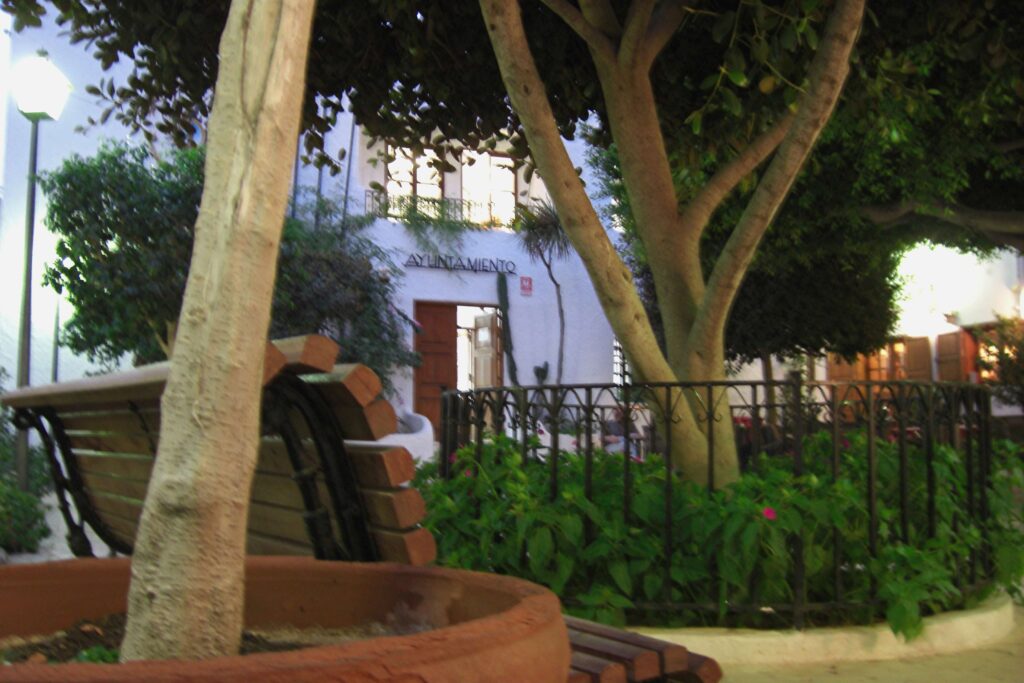
5. Town Hall Square
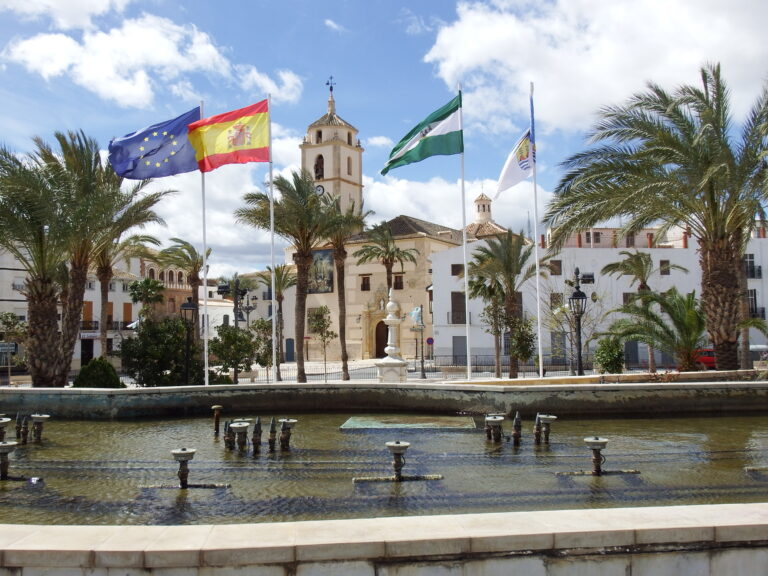
With its hundred-year-old ficus tree from America and Indalo mosaics, this is another essential stop. The atmosphere is peaceful, perfect for relaxing and enjoying the traditional surroundings.
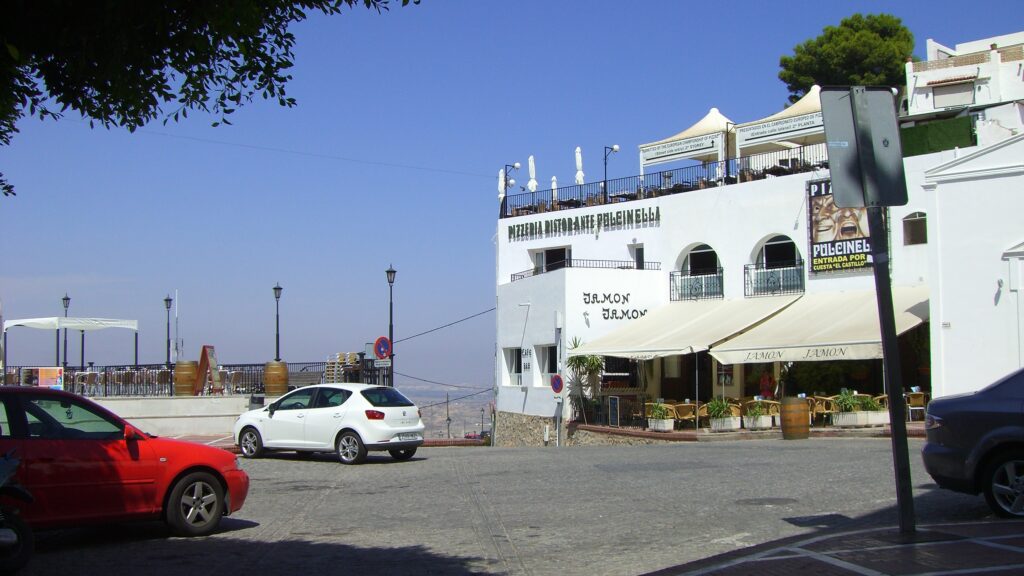
6. Plaza Nueva
This is the main meeting point, occupying part of the space of the old mosque. Its main attraction is the Mirador de la Plaza Nueva, which offers the best view of the region. From here you can see the landscape known as the Valley of the Pyramids, so called because of the eroded hills that resemble Egyptian monuments. Here you will also find the Chapel of Nuestra Señora de los Dolores (privately owned).
Cueva de Mariquita la Posá
Beneath Plaza Nueva lies this cave, shrouded in a medieval legend of love and sacrifice during the Black Death. The beautiful young María (Mariquita) agreed to marry the old sorcerer who lived in the cave in exchange for him sharing the cure he claimed to possess to save the village. Its name derives from the transformation of ‘desposada’ (betrothed) to “posada” (inn) and finally ‘posá’.
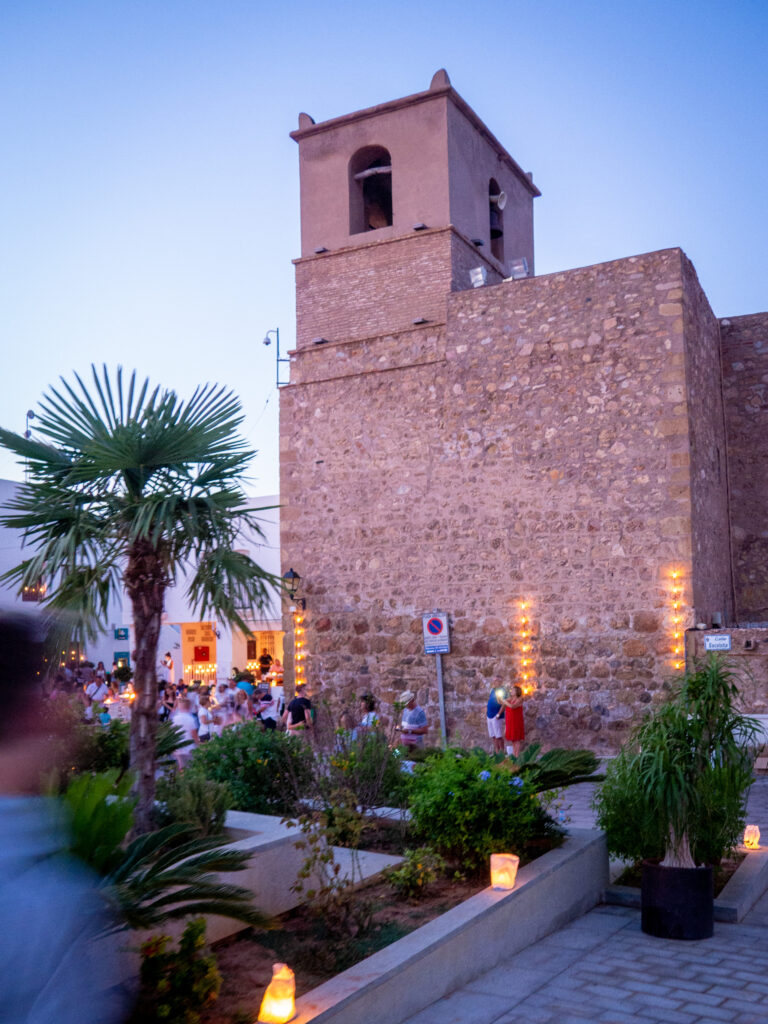
7. Church of Santa María (16th century)
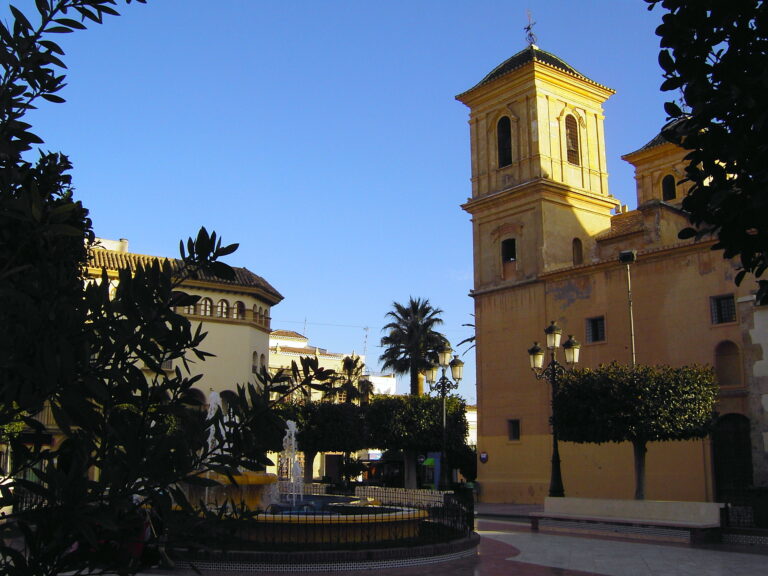
Built on the site of the main mosque, this church stands out for its sobriety and dual function. Its robust masonry façade, with almost no openings, gives it the appearance of a fortress, designed to also serve as a refuge against the frequent pirate attacks and invasions of the time. Inside, it houses the images of the patron saints: the Virgin of the Rosary and Saint Augustine. Recent excavations have revealed burials and ceramic remains from the Muslim rule.
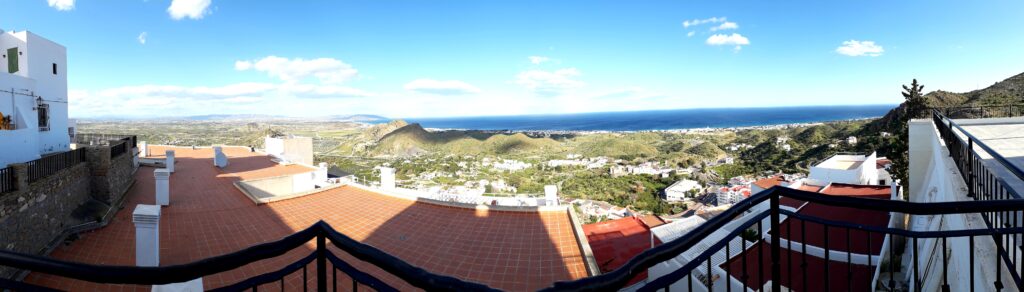
8. Mirador del Castillo
Probably the best viewpoint in Mojácar. From here, the views of the Mediterranean are spectacular. You will also find an old cistern and the Mirador del Castillo Art Centre, dedicated to the Moorish and Christian history of the area.
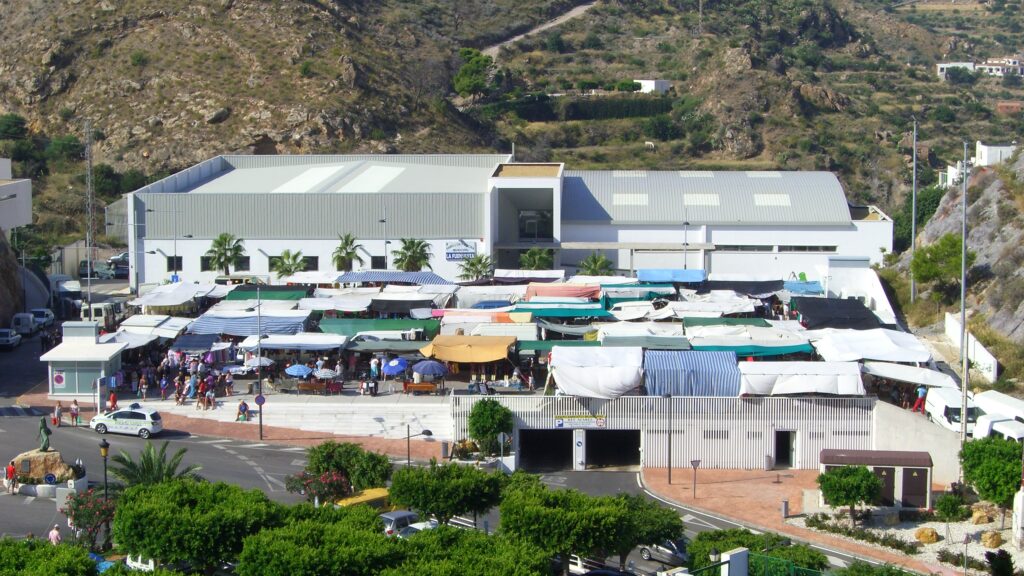
9. Craft Market
Ideal for discovering local products and handmade items. Ceramics, textiles, jewellery, art… The market is a vibrant space where you can feel the authentic creative spirit of Mojácar.
10. Puerta de la Villa:
This Arab gate was the entrance to the old medina and formed part of the defensive system. The coat of arms of Mojácar is displayed at the top and it is one of the most photographed spots.

Mojácar Beach: The Duality of Seafaring and Vibrancy
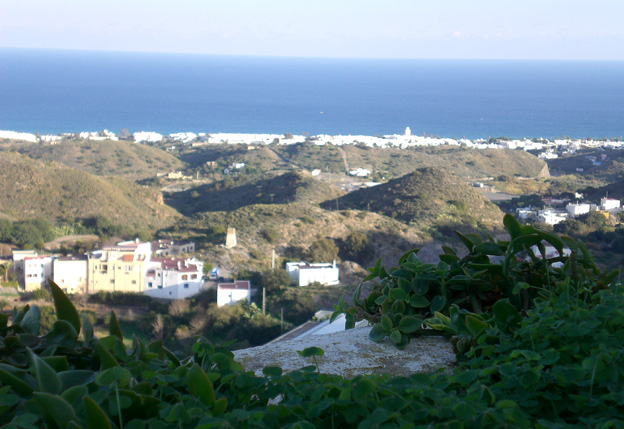
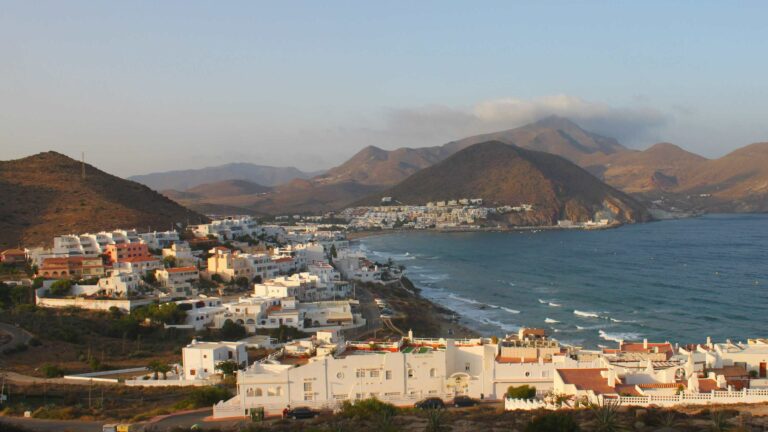
Just two kilometres from the town, Mojácar becomes a seafaring town, with 17 kilometres of coastline hugging the warm Mediterranean. Mojácar Beach has managed to avoid large skyscrapers in order to maintain its Mediterranean charm, establishing itself as a top tourist destination, especially popular with British tourists seeking a winter getaway. It is here, and not in the village, where most of the accommodation and nightlife is concentrated, often nicknamed the ‘Ibiza of the South’ for its lively nightlife.
A coastline of diverse beaches and Blue Flags: quality guaranteed
The Mojácar coastline stands out for the quality of its beaches, many of which have been awarded the prestigious Blue Flag, which guarantees compliance with strict criteria for water quality, environmental management, safety and services. Mojácar has one of the highest numbers of Blue Flag awards in the Levante Almeriense.
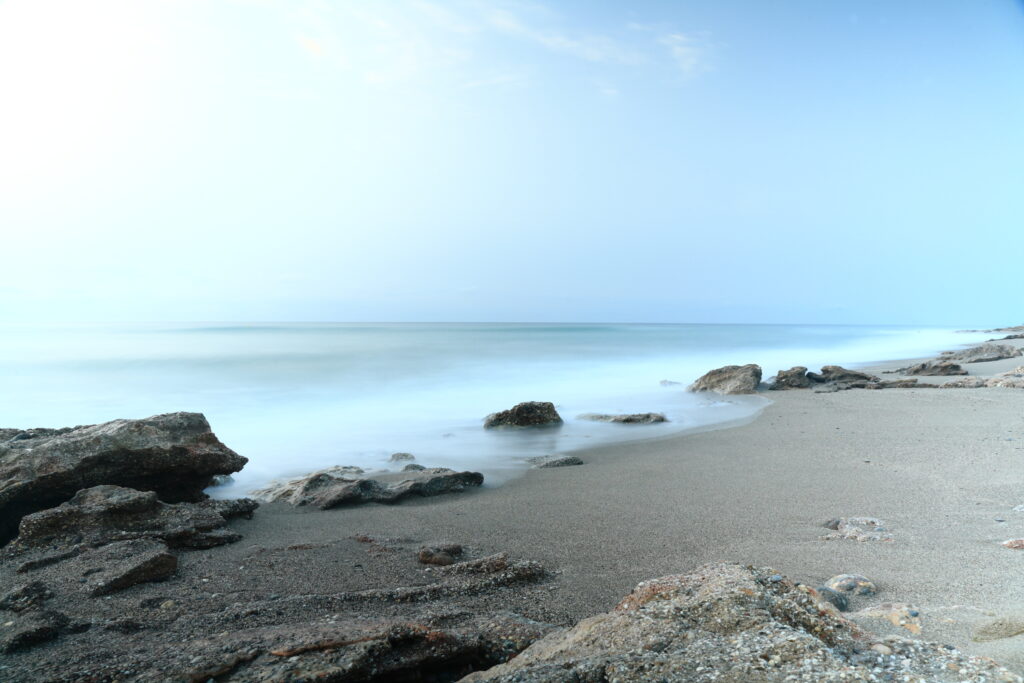
The Mojácar coastline is a succession of sandy beaches to suit all tastes, from unspoilt areas to fully equipped urban beaches:
| Beach | Type | Key Features |
| El Cantal | Urban/Popular | The most popular, known since the 1970s as the ‘hippie beach’. Busy and with all amenities. |
| Marina de la Torre | Semi-urban | Near Garrucha, almost 2 km of medium-grain sand and transparent waters. Ideal for water sports. Busy and with all amenities, including access for people with reduced mobility. |
| Macenas | Quiet | Away from the town centre, opposite a resort and golf course. Sandy areas and rocks in an almost unspoilt setting. |
| El Descargador | Semi-urban | About 900 metres long with dark sand. Blue Flag and disabled access. Its name comes from the old mineral loading bay that used to be there, a remnant of 19th-century mining activity. |
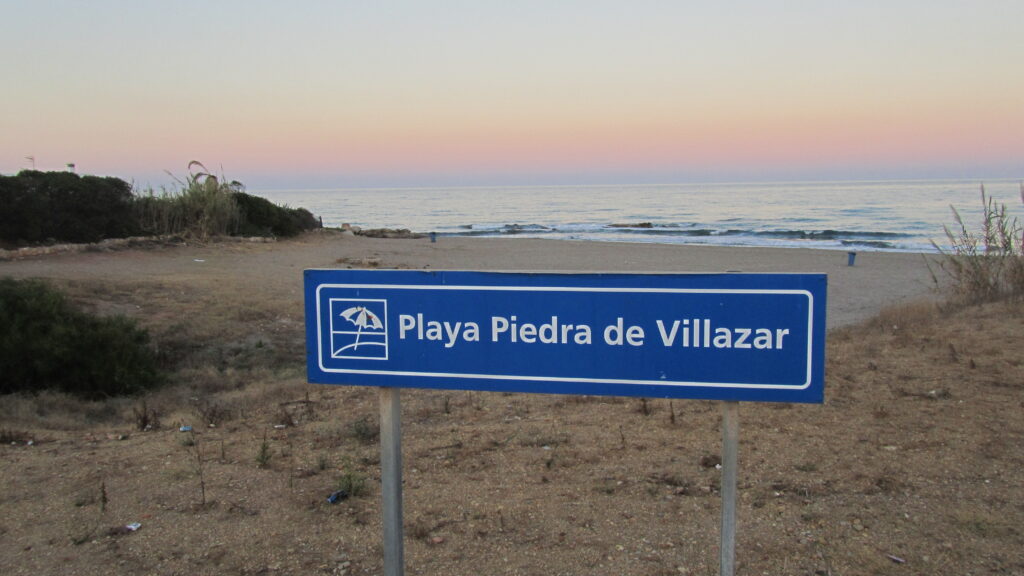
| Playa Piedra Villazar | Urban | Opposite the Parador de Turismo. It is a central beach with easy access, also recognised with a Blue Flag. |
| Venta del Bancal | Start of the promenade | The first beach coming from Carboneras and the start of the promenade. This stretch, considered a single bathing area by the Health Department, also flies the Blue Flag. |
| La Rumina | Natural | Next to the lagoons of the Aguas River (protected ornithological area). Grey sand and gravel. |
| Cala de Granatilla | Protected | Unspoilt landscape of sand and volcanic rocks. Special care must be taken with the environment. |
| Playa de los Muertos | Popular | One of the most beautiful beaches in Spain and a must-see. |
| Playa el Sombrerico | Natural | An unspoilt, naturist beach, ideal for those seeking tranquillity. |
Castles and Watchtowers
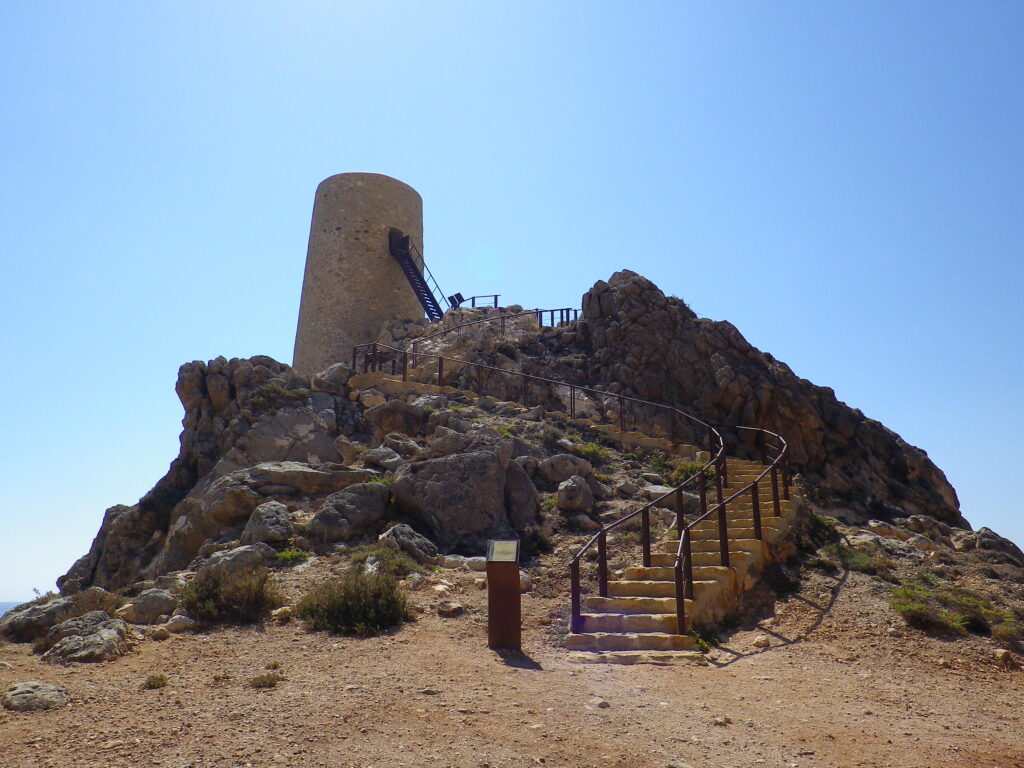
The coastline is dotted with vestiges of its defensive past against pirate attacks, which are now listed as Sites of Cultural Interest:
- Macenas Castle and Torre Atalaya del Peñón (or Torre del Pirulico): These 18th-century constructions were built for coastal surveillance. The Macenas Tower, on the beach of the same name, and the Watchtower, further south, are points of historical interest and visually striking.
Promenade and Gastronomy
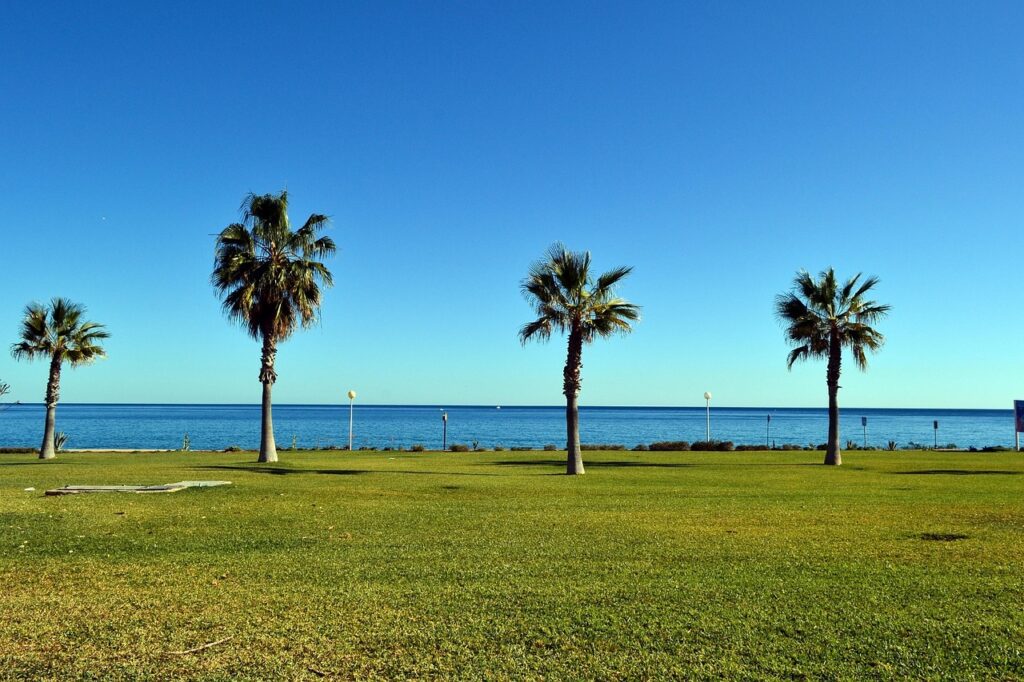
The Promenade is the epicentre of activity in the beach area, a route of just over three kilometres flanked by palm trees, shops, beach bars and a varied gastronomic offer. It is an ideal place for walking, running or enjoying the sea breeze.
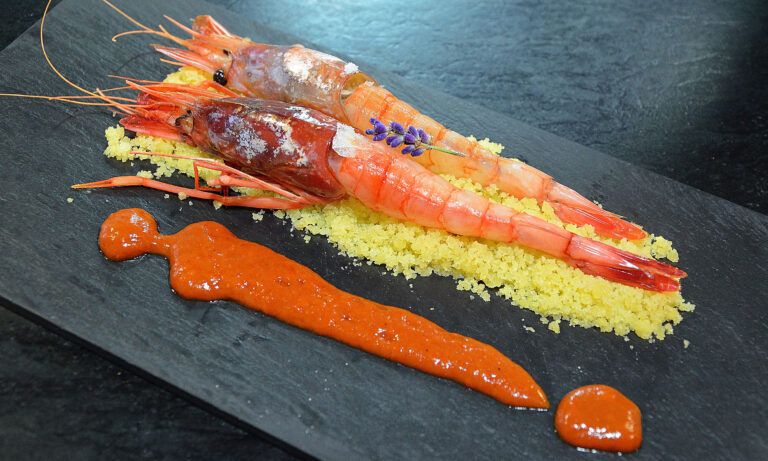
The gastronomy in Mojácar reflects its coastal location and cultural richness:
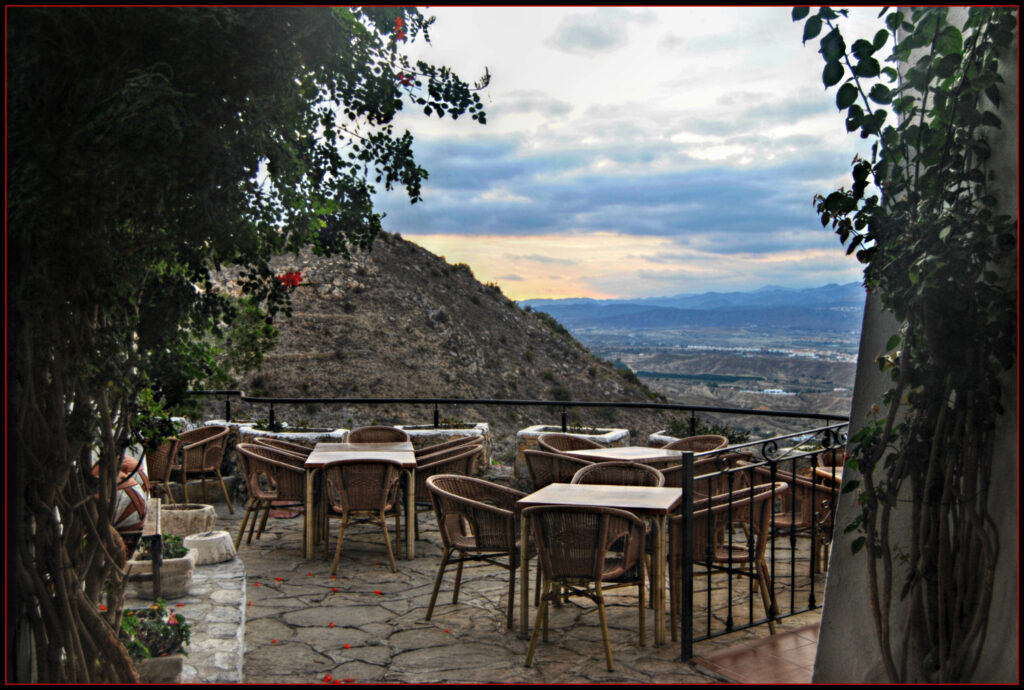
- Casa Egea: Traditional Mediterranean cuisine with views, a classic since 1992.
- Torre Bahía: Notable for its fresh Mediterranean fish and excellent grilled meats.
- Mohana Mojácar: One of the best places to enjoy grilled meat, with international and Mediterranean cuisine options.
- Calima: An appealing fusion of Andalusian and North African cuisine (pastela, tajine, samosas).
- Cabo Norte: A relaxed atmosphere and Mediterranean cuisine with an emphasis on seasonal produce.
- Marcelo Entre Tapas: A casual and varied selection of raciones and tapas (from patatas bravas to chilli con carne and wok-fried rice dishes).
Nightlife and Leisure: The ‘Ibiza of the South’
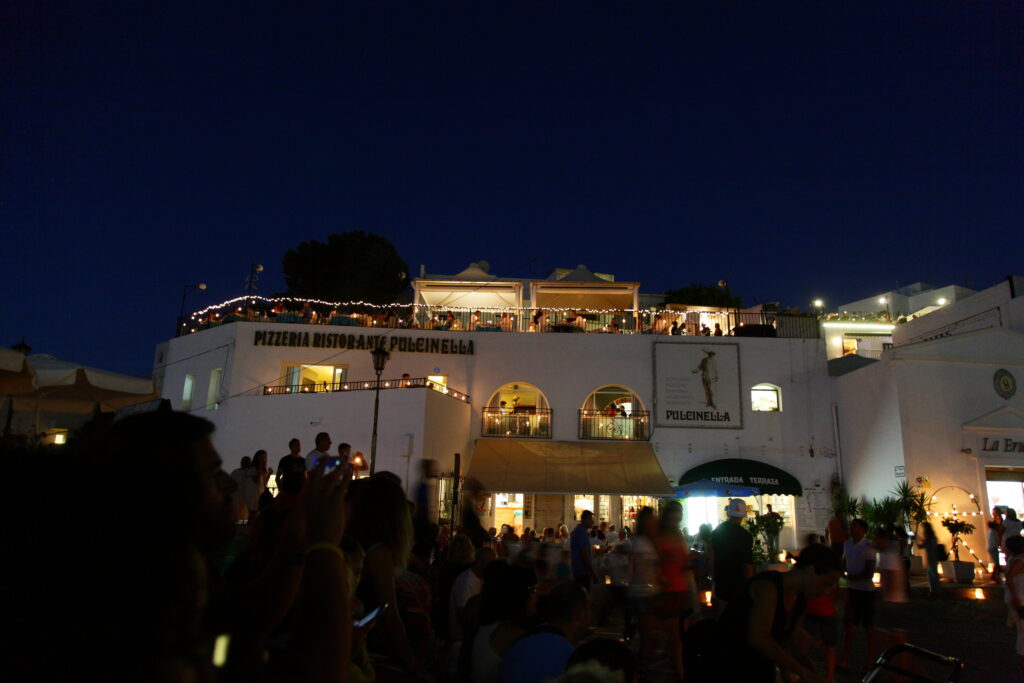
Mojácar’s nightlife is famous, concentrated in the beach area with chiringuitos chill-out and well-known beach clubs and discos:
- Mandala Beach Club: Located opposite Playa del Cantal, it stands out for its oriental décor and its leisure concept that combines a restaurant (Mediterranean-Asian fusion cuisine) and a club, keeping the party going until the early hours.
- Lua Beach Club Mojacar: Opposite Playa de Cueva del Lobo, a cosmopolitan space with sea views, perfect for dining, drinks and dancing.
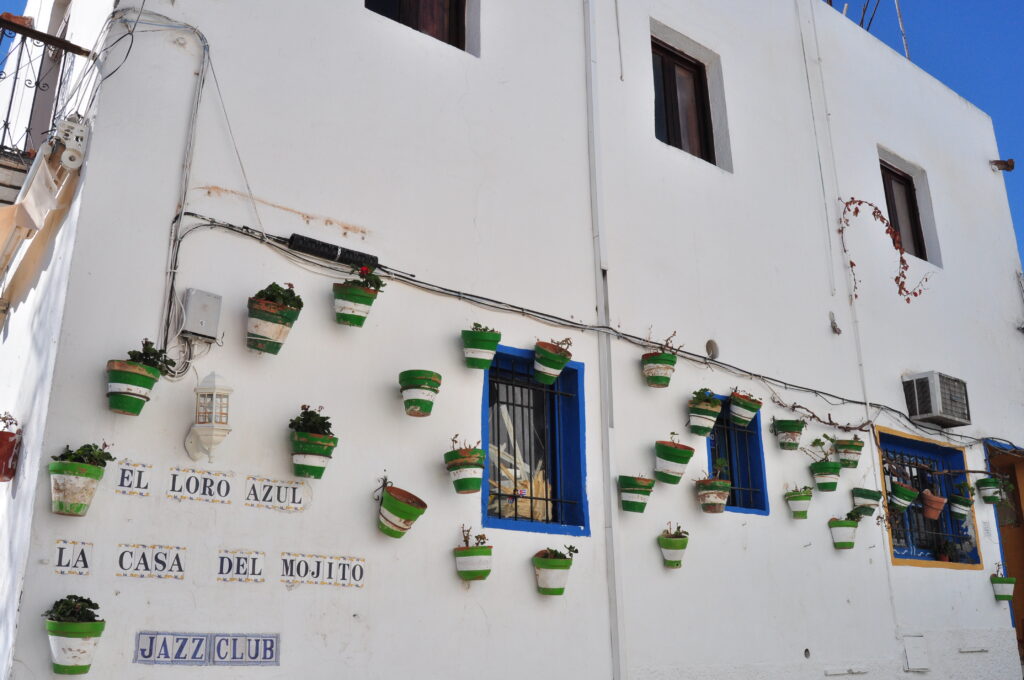
- Loro Azul: In Mojácar Pueblo, near Plaza Nueva, this is a more intimate option for dinner or cocktails with jazz music.
Festivities and Traditions: The Festive Calendar
Mojácar keeps its traditions alive through a diverse and participatory festive calendar:
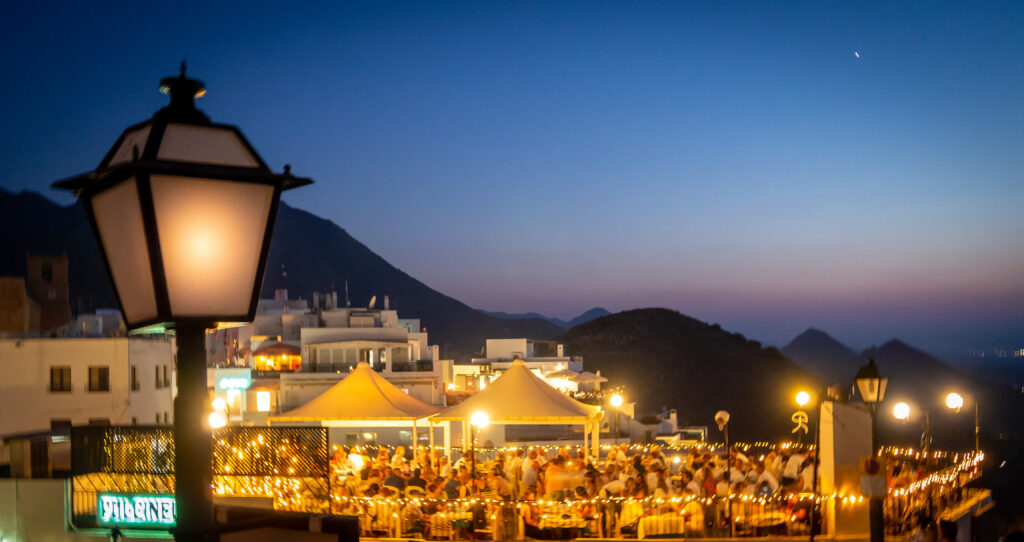
- Moors and Christians Festival: The most important event and the one that generates the most popular involvement, celebrated on the weekend closest to 12 June. It commemorates the peaceful surrender of 1488. The events include a proclamation recalling the agreements, a large landing and a colourful gala parade, with intense activity both in the town and on the beach.
- Holy Week: The procession of Jesus Nazareno on Maundy Thursday is particularly noteworthy, with its passage under the old City Gate being a moment of great emotion.
- Pilgrimage of San Isidro: This is celebrated on the Sunday closest to 15 May, with a picnic lunch and a Rociera mass in the hamlet of El Sopalmo.
- Patron Saint’s Day in honour of San Agustín: At the end of August. The most traditional event is the ribbon race on horseback, where unmarried women place their ribbons for the young men to collect as they gallop by.
- Day of Our Lady of the Rosary: Patron saint of the town.
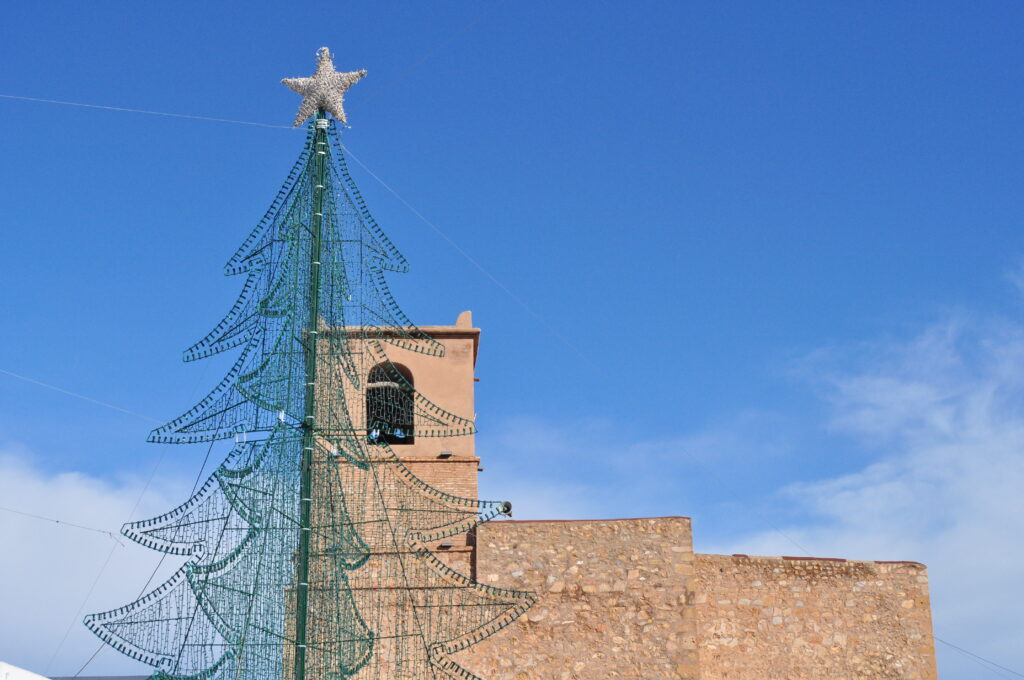
- Christmas: The traditional service of ‘nine lessons and carols’ is a highlight, a celebration held together with the large Anglican community that lives here.
Around Mojácar: Beyond the Coast
Mojácar is the perfect base for exploring the treasures of the province, characterised by its unique geography:
- Cabo de Gata-Níjar: A short distance away are some of the most spectacular unspoilt beaches in the world, such as the aforementioned Playa de los Muertos (25 km away) or the famous beaches of Mónsul and Los Genoveses in the Natural Park.
- La Isleta del Moro: A fishing village that fascinates with its ‘end of the world’ landscape.
- Níjar: Included in the list of the Most Beautiful Villages in Spain, ideal for exploring the province.
- Tabernas Desert: Covering 280 km², it is the only official desert in Europe, a spectacular landscape used as the setting for countless Western films (spaghetti westerns).
- Pulpí Geode: 35 km away, the opportunity to visit the largest geode in the world in an iron mine, a geological wonder.
Discovering Almería
Visit other places in Almería, add them to your trip, or make a note for future reference:
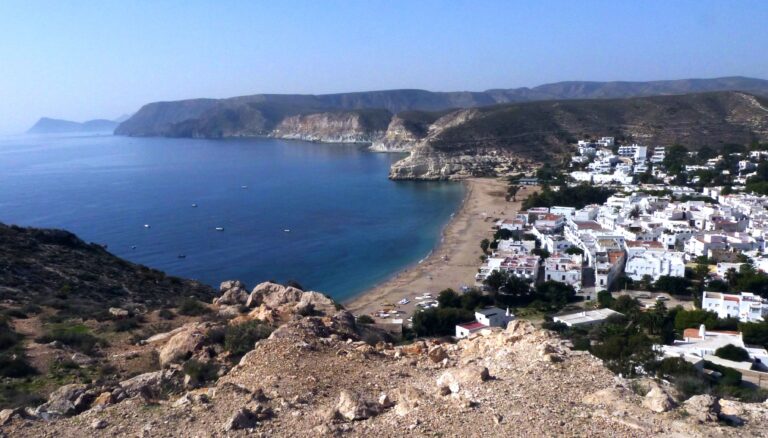
- Agua Amarga: One of the most charming villages on the Almería coast, with its seafaring essence and leisurely pace.
- Huércal-Overa: An inland town where Holy Week is one of the most important events in Almería.
- Garrucha: A place that combines the vibrant modernity of a tourist destination without losing its fishing soul.
- Albox: Home to one of the most impressive monasteries in eastern Andalusia, the Santuario del Saliente.
- San José: Gateway to legendary spots such as Los Genoveses, Mónsul and Media Luna beaches.
Travel Logistics and Accommodation
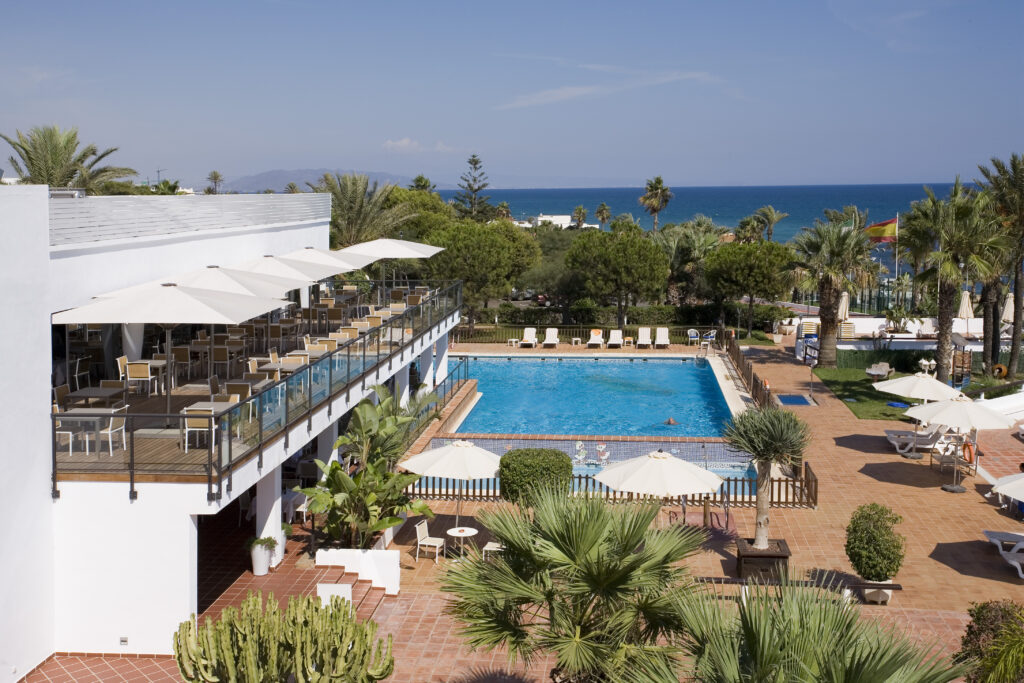
Accommodation: There is a wide range of options to suit all budgets. Visitors usually stay in Mojácar Playa, in apartments or hotel complexes with all-inclusive offers (such as the Hotel Best Mojácar or the Parador de Mojácar) or in more exclusive options such as the ALEGRIA Palacio Mojacar Adults only. For nature lovers, there are well-located campsites such as Camping el Cantal (opposite the beach) or Camping Cueva Negra / Centro Vacacional Macenas (between the mountains and the beach).
- How to get there: Mojácar is 95 kilometres from Almería Airport. You can hire a car to get there via the motorway (depending on where you are coming from) or take a bus (booking required). For those arriving by train in Almería, the bus station is next to the train station, making it easy to connect.
- Climate: The climate is one of the great advantages, with guaranteed sunshine both in winter (minimum temperature of 10 degrees) and summer (average temperature of 26 degrees). In the middle of July and August, the heat is stifling at midday, inviting you to take refuge on the beach, in a beach bar or under the air conditioning.
- Parking: In the town, there is free parking near Plaza del Rey Alabez, in the upper part.
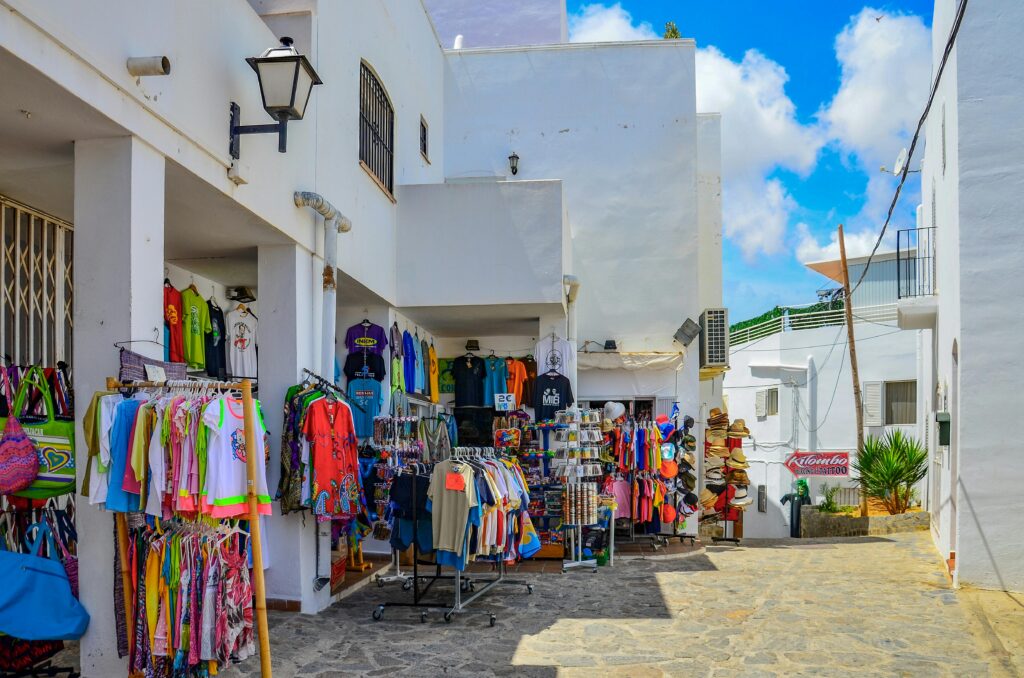
Mojácar, a destination to enjoy all year round
The historic centre offers culture, history and charming corners, while the beach provides relaxation, leisure, beach bars and a lively atmosphere. It is an ideal destination for families, couples or getaways with friends, and naturally combines tranquillity and fun.
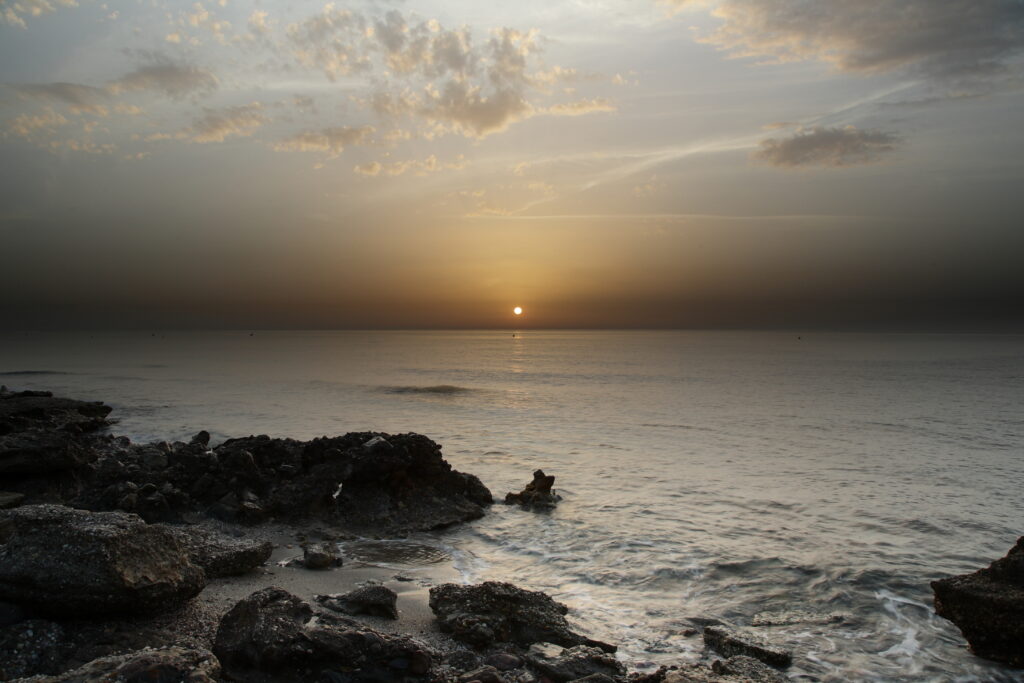
What’s more, its location is perfect for discovering other iconic places in Almería such as Cabo de Gata, Playa de los Muertos, the Tabernas Desert and the Sierra de Cabrera mountains.
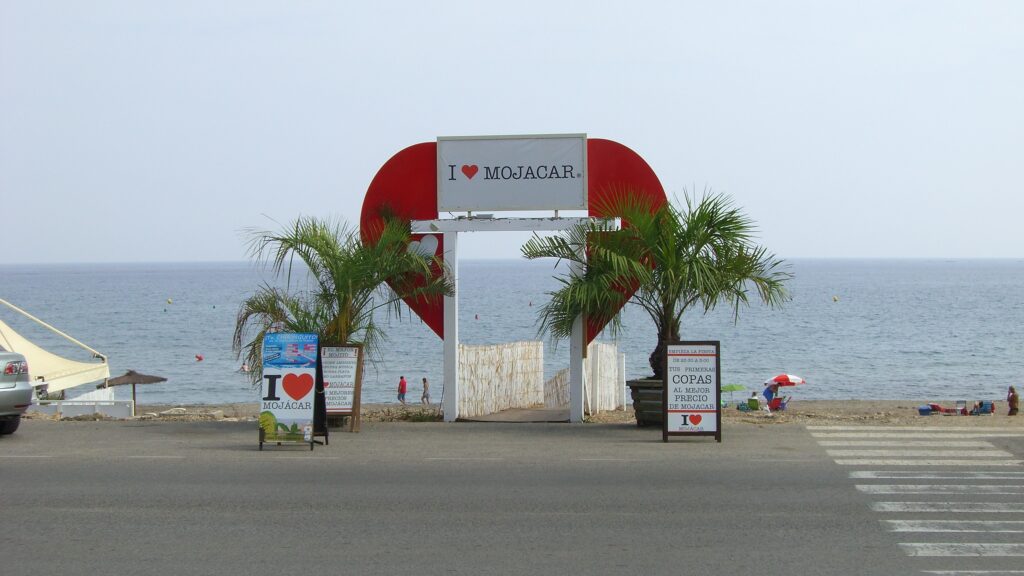
Mojácar is one of those towns that you don’t just visit, you remember. Its blend of light, history and Mediterranean atmosphere keeps many travellers coming back… and others staying forever.
Photo Credits
Below are the photo credits in order of appearance. Royalty-free photos will not be listed below:
- Cover Image: INDALOMANIA, CC BY-SA 3.0, via Wikimedia Commons
- Gilles Garrofé, CC BY 3.0, via Wikimedia Commons
- Luis Rogelio HM, CC BY-SA 2.0, via Wikimedia Commons
- INDALOMANIA, CC BY-SA 3.0, via Wikimedia Commons
- 80kmh, CC BY 4.0, via Wikimedia Commons
- INDALOMANIA, CC BY-SA 3.0, via Wikimedia Commons
- Luis Rogelio HM, CC BY-SA 2.0, via Wikimedia Commons
- Schumi4ever, CC BY-SA 4.0, via Wikimedia Commons
- INDALOMANIA, CC BY-SA 3.0, via Wikimedia Commons
- Javier Perez Montes, CC BY-SA 4.0, via Wikimedia Commons
- Emilio del Prado from Valladolid, Spain, España, CC BY-SA 2.0, via Wikimedia Commons
- INDALOMANIA, CC BY-SA 3.0, via Wikimedia Commons
- Mojácar, via mojacar.es
- Luis Rogelio HM, CC BY-SA 2.0, via Wikimedia Commons
- Fred PO, CC BY-SA 2.0, via Wikimedia Commons
- INDALOMANIA, CC BY-SA 3.0, via Wikimedia Commons
- INDALOMANIA, CC BY-SA 3.0, via Wikimedia Commons
- Mojácar, via mojacar.es
- Fred PO, CC BY-SA 2.0, via Wikimedia Commons
- Royerribaz, CC BY-SA 4.0, via Wikimedia Commons
- INDALOMANIA, CC BY-SA 3.0, via Wikimedia Commons
- INDALOMANIA, CC BY-SA 3.0, via Wikimedia Commons
- Javier Perez Montes, CC BY-SA 4.0, via Wikimedia Commons
- INDALOMANIA, CC BY-SA 3.0, via Wikimedia Commons
- ANESTRELLA, CC BY-SA 4.0, via Wikimedia Commons
- Loco Steve, CC BY-SA 2.0, via Wikimedia Commons
- Javier Perez Montes, CC BY-SA 4.0, via Wikimedia Commons
- Luis Rogelio HM, CC BY-SA 2.0, via Wikimedia Commons
- Fred PO, CC BY-SA 2.0, via Wikimedia Commons
- Luis Rogelio HM, CC BY-SA 2.0, via Wikimedia Commons
- Paradores, CC BY-SA 4.0, via Wikimedia Commons
- INDALOMANIA, CC BY-SA 3.0, via Wikimedia Commons
- Javier Perez Montes, CC BY-SA 4.0, via Wikimedia Commons
- INDALOMANIA, CC BY-SA 3.0, via Wikimedia Commons
.jpg)
.jpeg)
.jpg)


.jpg)


.jpg)

.jpg)
.jpg)


.jpg)


.jpg)
.jpg)
.jpg)

_-_panoramio.jpg)

