Tahíche, Lanzarote: The César Manrique Foundation, the Volcano and the Island’s Cultural Route
Located just a few minutes from Arrecife and in the heart of the island, Tahíche is one of those places that seem quiet at first glance, but which hide a cultural, natural and historical depth that surprises everyone who decides to spend time there. This town in the municipality of Teguise combines its marked volcanic origins with a very active local life, cultural associations, internationally renowned artistic spaces and an environment that allows visitors to better understand the essence of Lanzarote.
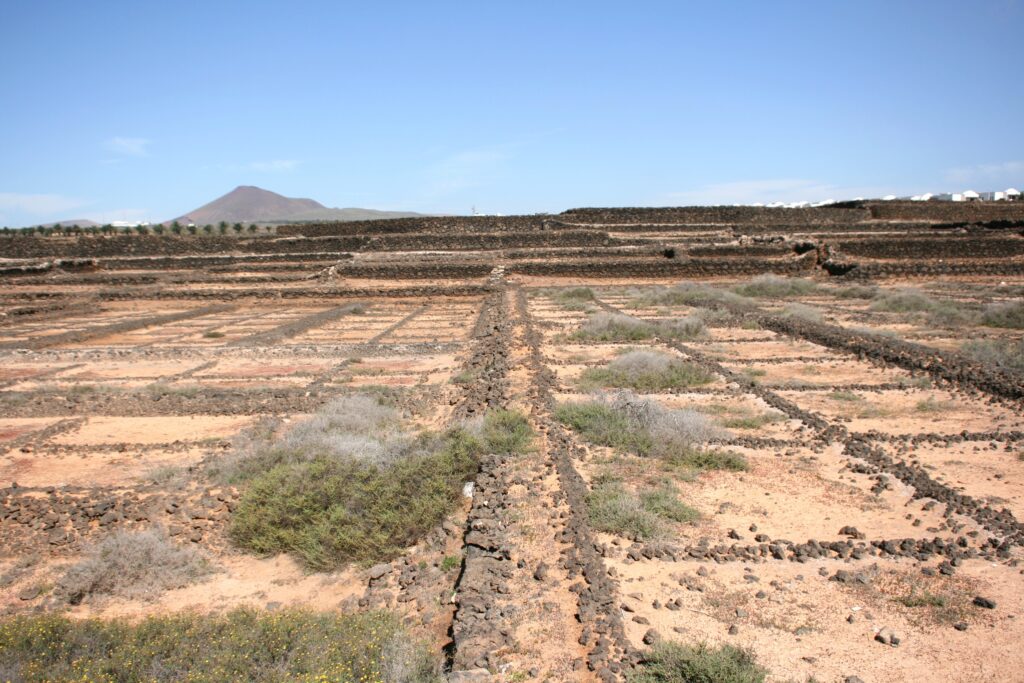
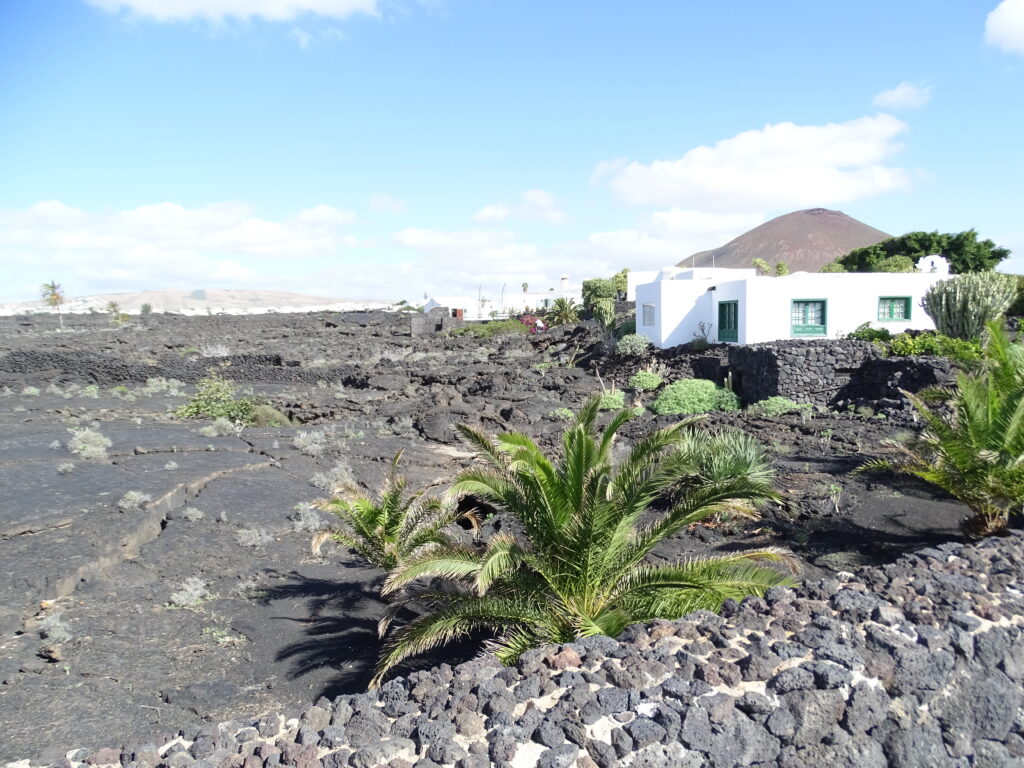
Halfway between rural and residential, Tahíche has become over the years one of the most interesting areas for those seeking to explore the island from a more authentic perspective. Here, the landscape speaks for itself: craters, lava flows, reddish, black and ochre tones that change with the light of day and the season. On the slopes of the Tahíche volcano, which dominates the village’s skyline, you can see overlapping layers of earth that tell the story of thousands of years of geological activity. Surrounding it, it is surprising that, despite the arid and volcanic nature of the area, there are still fields of crops perfectly delimited by walls of stone and ash.
Tahíche is also a gateway to the island’s recent history, a place forever marked by the figure of César Manrique, the artist who transformed Lanzarote into a model of integration between art, architecture and natural landscape. He lived and died here, leaving behind one of his most emblematic works: the foundation that bears his name. It is probably the most important cultural space in all of Lanzarote.
Below, we take you through everything you can see, do and feel in Tahíche so that you can make the most of your visit.

The Tahíche volcano: a silent giant
The volcanic structure of Tahíche is one of the most representative features of the local landscape. It is a cone of lapilli and basaltic slag, very well preserved and easily recognisable by the three craters aligned at its summit, each of different sizes.
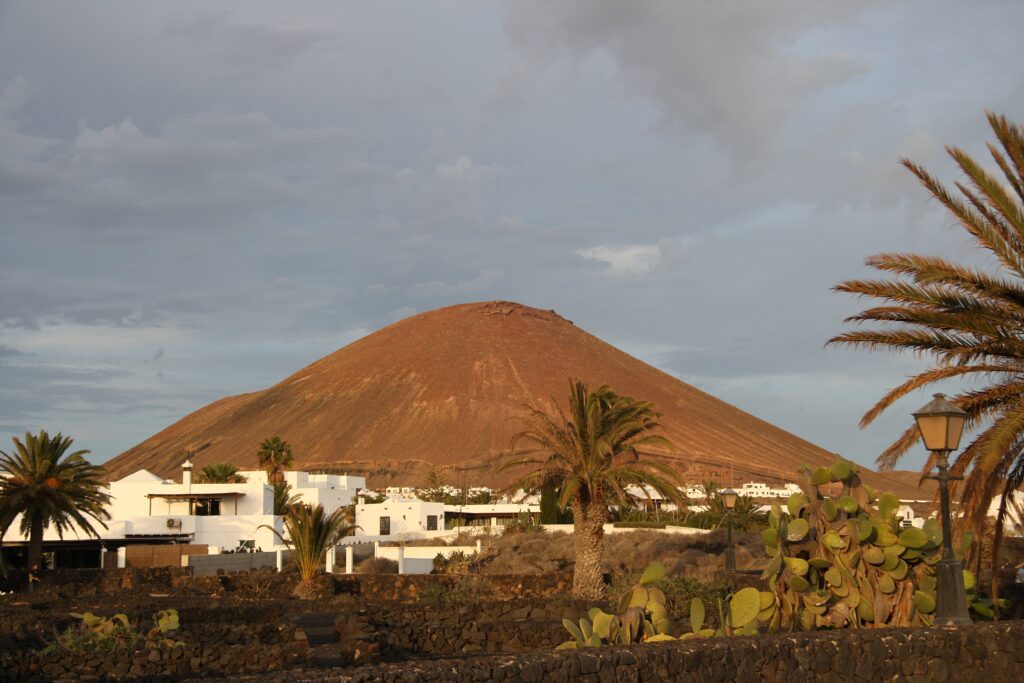
This volcano is part of the NE-SW eruptive alignment related to the Zonzamas Caldera, and although it did not participate in the great historical eruptions of the 18th century, its role in the formation of the territory is evident. According to K-Ar dating, it could be around 50,000 years old, which explains its state of erosion and the different shades it presents depending on the light and the season: intense reddish tones after recent rains, scattered greens in winter and volcanic blacks that are always present.
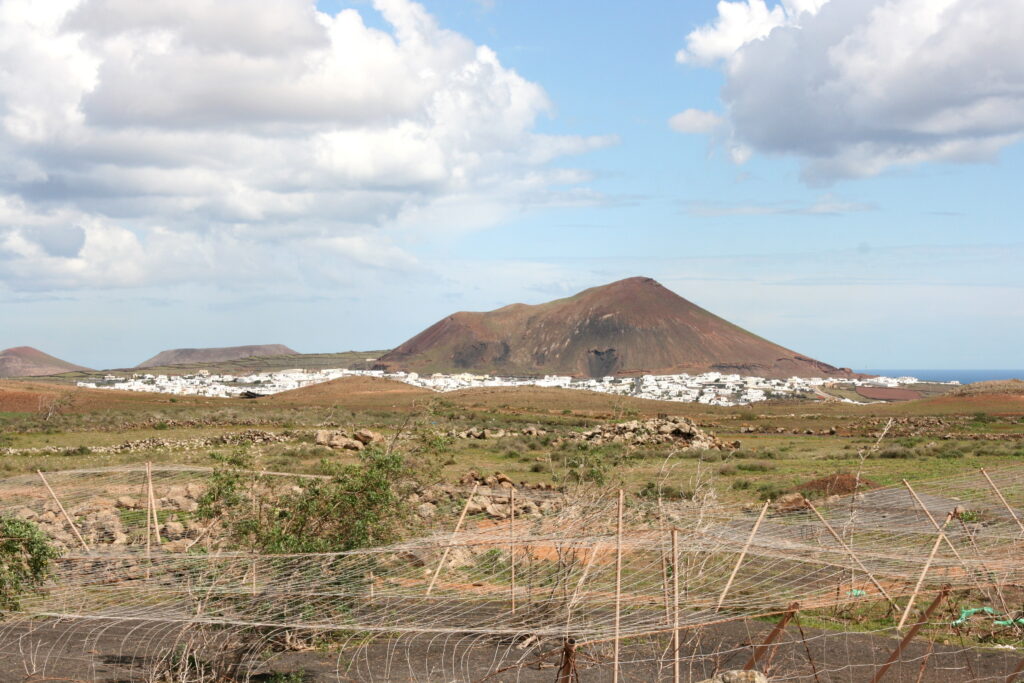
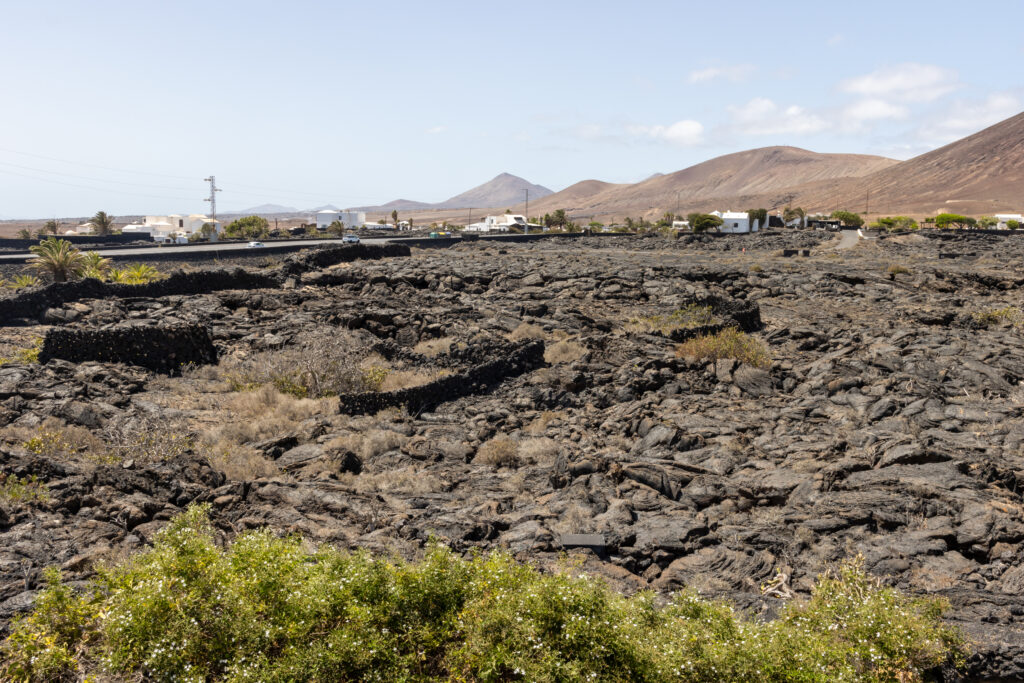
Extensive basalt flows emerged from this volcano, forming a badlands area of more than 17.6 km² that reached the coast, about 4-5 km from the centre of emission. If you look closely, you will see the typical morphology of this type of flow: large chaotic blocks on the surface, but a compact interior with columnar disjunction. Today, walking through this environment, especially at sunrise or sunset, is one of the most special experiences for lovers of volcanic landscapes.
What to see in Tahíche
Although it is not a large or touristy town in the traditional sense, Tahíche is home to some of the most interesting cultural and artistic sites on the entire island. Here we tell you about the essentials.
1. César Manrique Foundation
If geology is the body of Tahíche, the work of César Manrique is its undisputed soul. The presence of Lanzarote’s most universal artist is so omnipresent in this town that it is impossible to separate it from its identity. In fact, Tahíche is the epicentre of his legacy and, tragically, the place where his life came to an end.
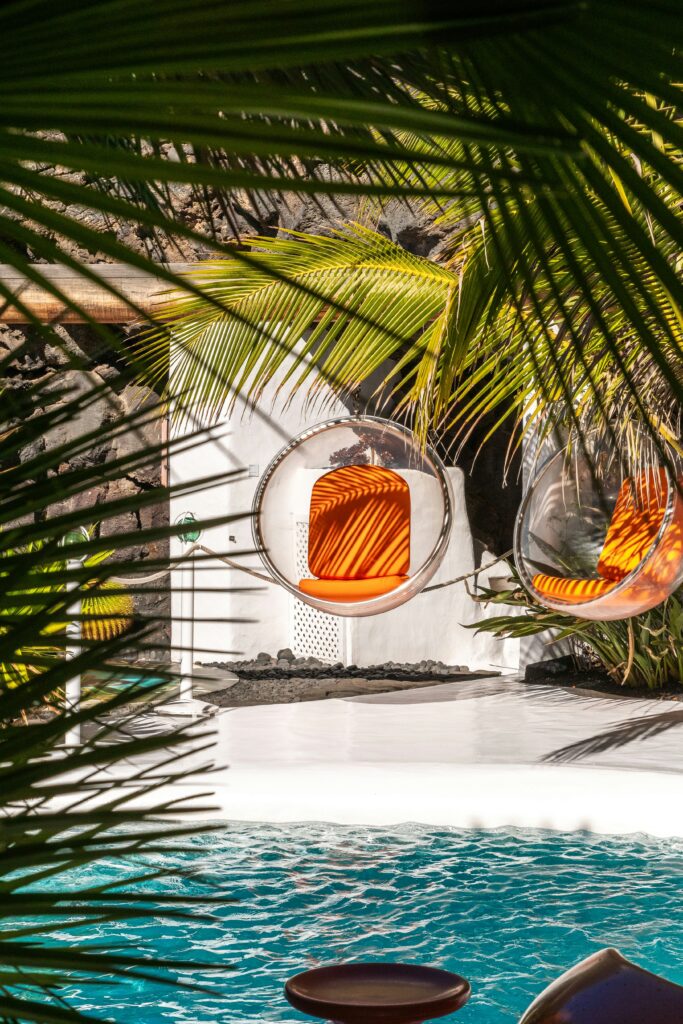
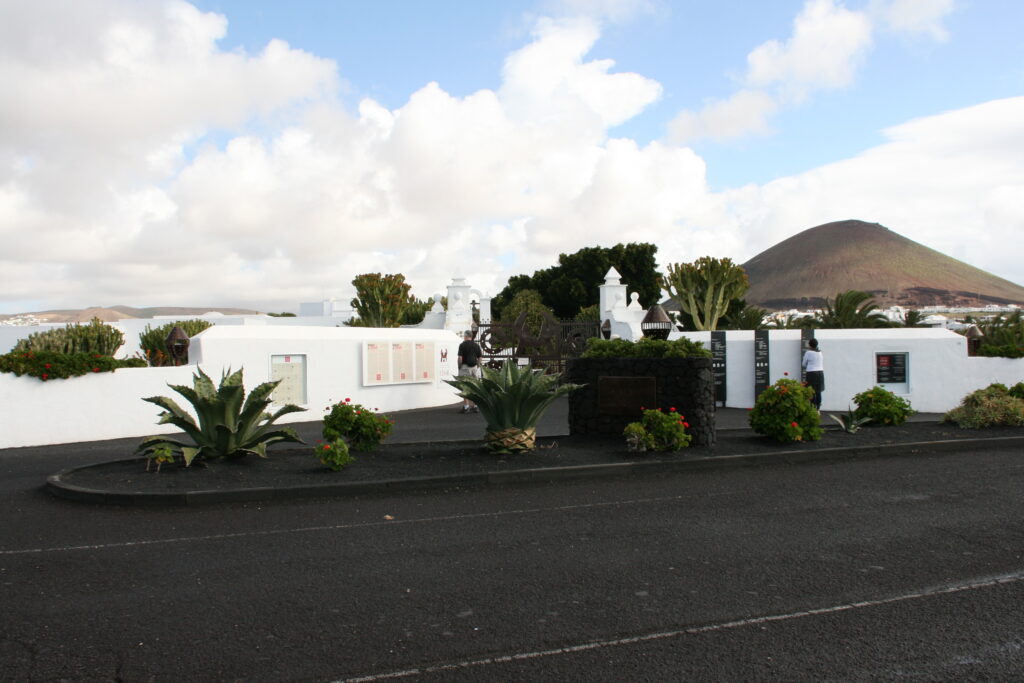
It is undoubtedly the most emblematic place in Tahíche and one of the most visited cultural spaces in Lanzarote. The César Manrique Foundation occupies what was once the artist’s home, built directly on the lava flows that descended during the eruptions of 1730–1736.
- The Upper Floor: It follows the canon of traditional Canarian architecture, characterised by its simplicity and white walls, but enriches it with touches of modernity: large windows that invite the landscape to enter the rooms and spacious areas. This area houses exhibition rooms, where the artist’s works, contemporary art pieces and part of his private collection are on display.
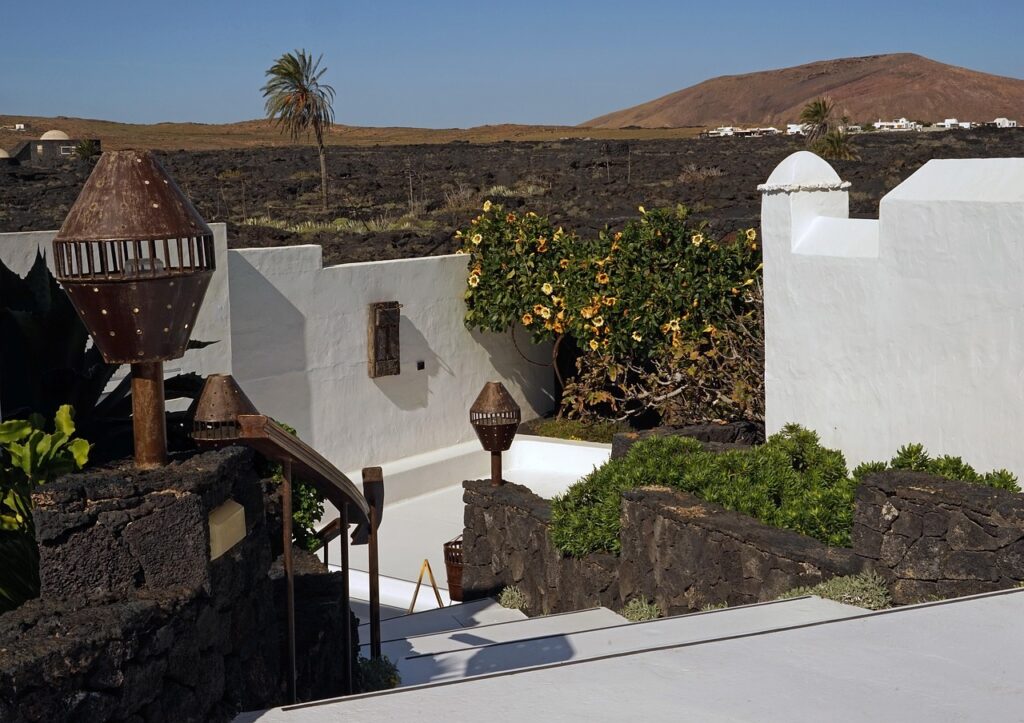
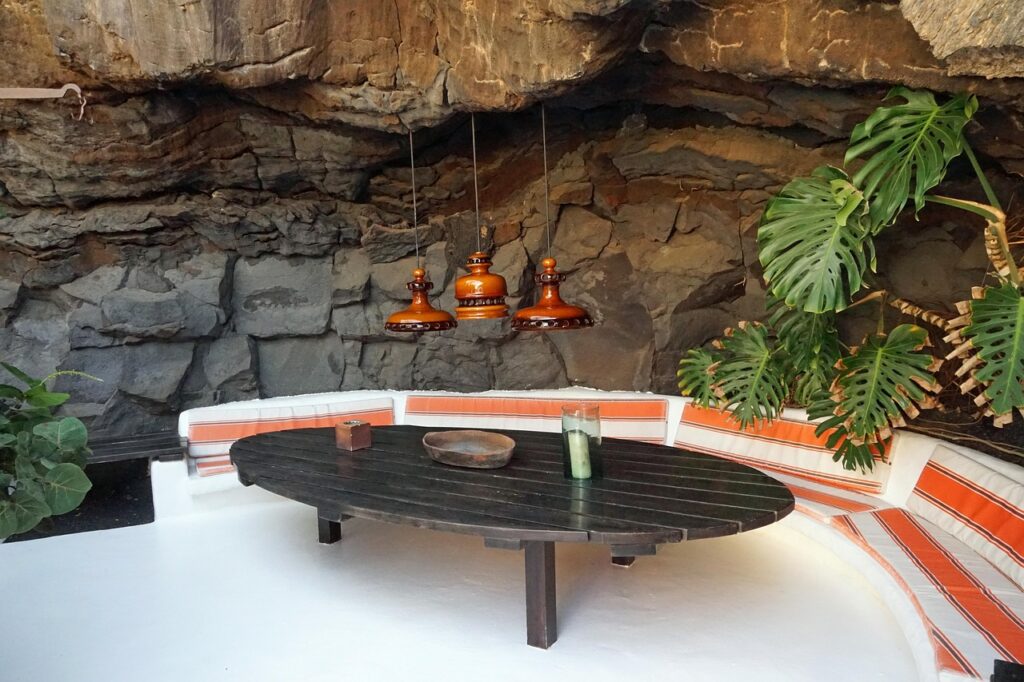
- The Lower Floor (El “Jameo”): This is where the genius lies. Manrique took advantage of five natural volcanic bubbles, or “jameos”, formed during the cooling of the lava, to convert them into habitable rooms. These caves, interconnected by organic tunnels painted white, offer a unique sensory experience. The space, with its contrasts of light, texture and colour, is an ode to the possibility of beauty emerging from geological catastrophe. The César Manrique Foundation not only exhibits his work; it preserves and disseminates his vision, promoting art, culture and environmental protection.
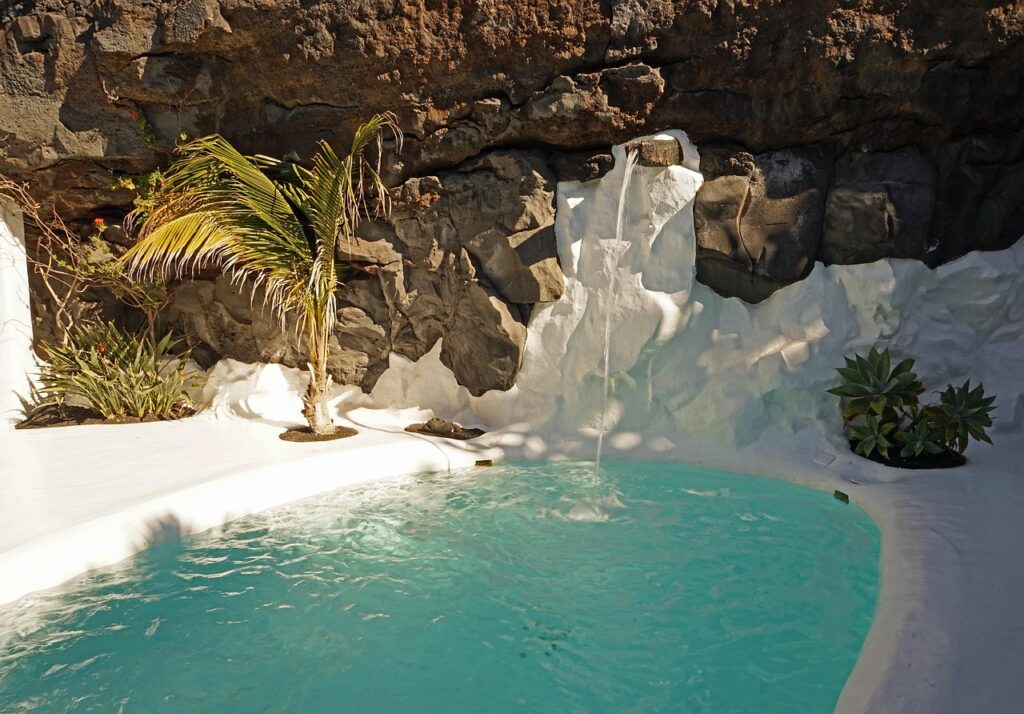
Inside, you will find works by Manrique himself, pieces from his private collection and temporary exhibitions dedicated to his artistic thinking, his relationship with nature and his ecological vision, which is now more relevant than ever.
2. The Malpaís Trail
For lovers of nature and geology, the Malpaís de Tahíche is an area that must be explored. Walking the trails through these landscapes offers an almost Martian view. The fields of solidified lava and ancient rock formations create a spectacular contrast with the unmistakably blue sky.
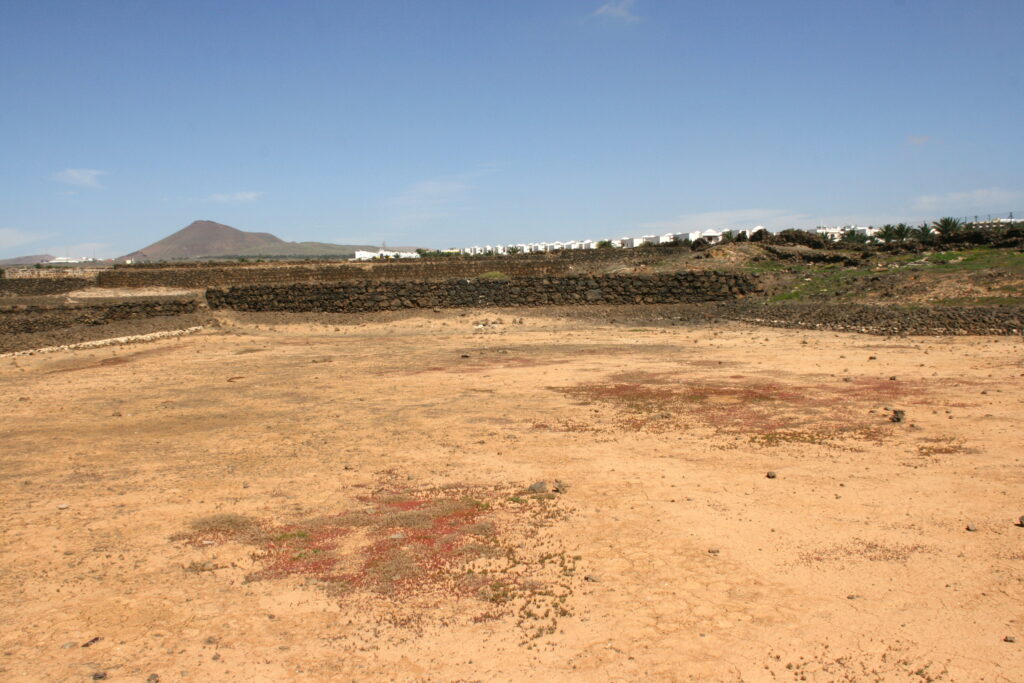
The ideal time for this exploration is at sunset, when the golden light hits the nuances of the basalt, transforming the black rock into a palette of ochres and reds, and making every photograph a work of natural art. The silence and immensity of the volcanic landscape are deeply contemplative.
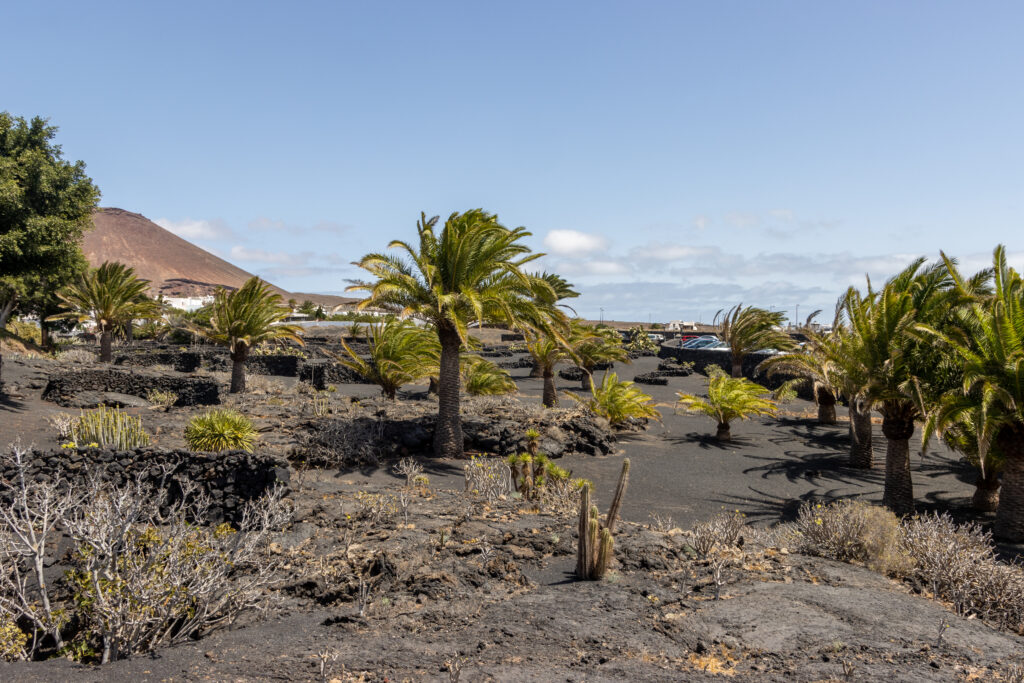
It is an ideal place for:
- Short hiking trails.
- Exploring curious volcanic formations.
- Photographing spectacular sunsets.
- Observing geological details that are difficult to find elsewhere.
If you like geology, this is one of the most interesting places in Lanzarote outside of Timanfaya.
3. Kinetic Sculpture ‘Fobos’
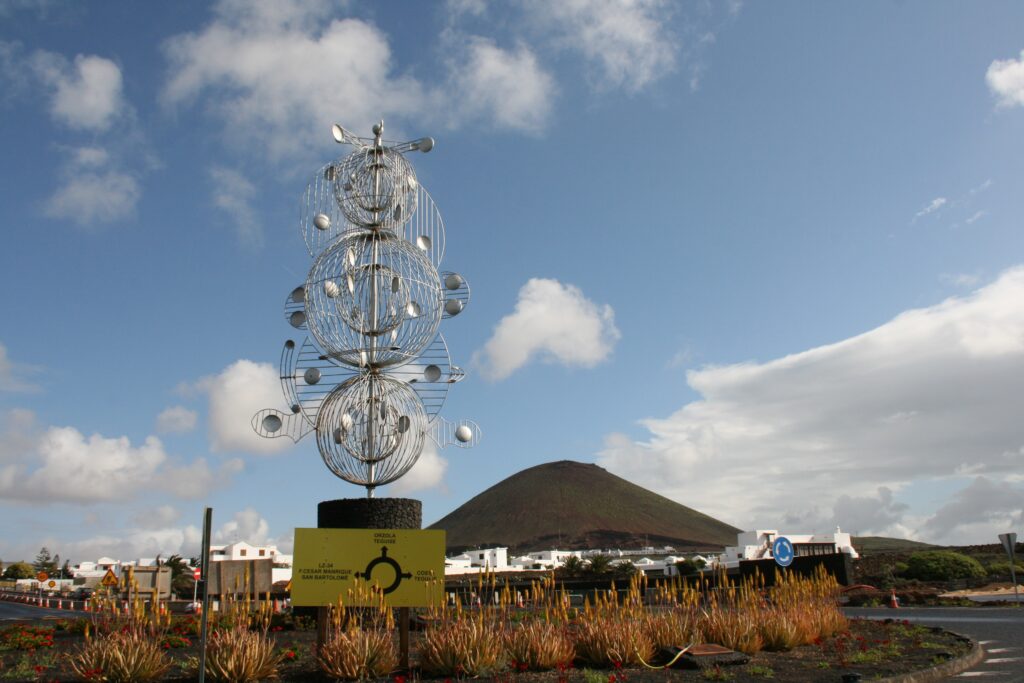
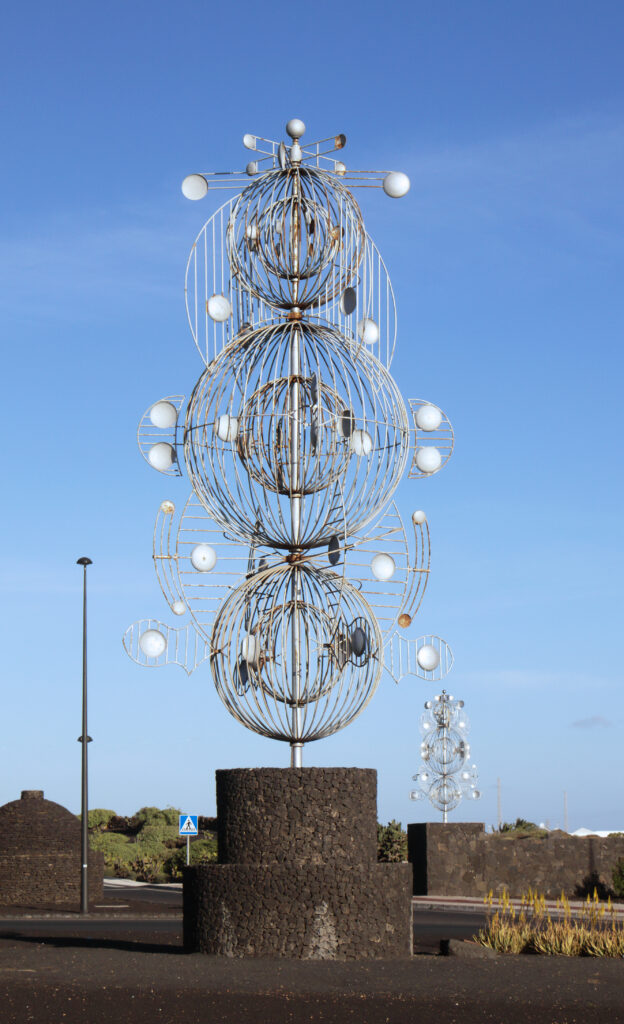
Manrique’s legacy extends beyond the walls of the Foundation, colonising the public space. As you walk through the village, you will inevitably come across artistic expressions that blend into the landscape. A notable example is the kinetic sculpture ‘Fobos’, strategically located in the main roundabout. This piece, which dances with the wind, is a moving tribute to the symbiotic relationship between art and the forces of nature, a fundamental pillar of the artist’s thinking. Driving or walking through Tahíche is, therefore, a way of touring an open-air museum.
Tahíche, Nazaret and Lagomar: an essential trio
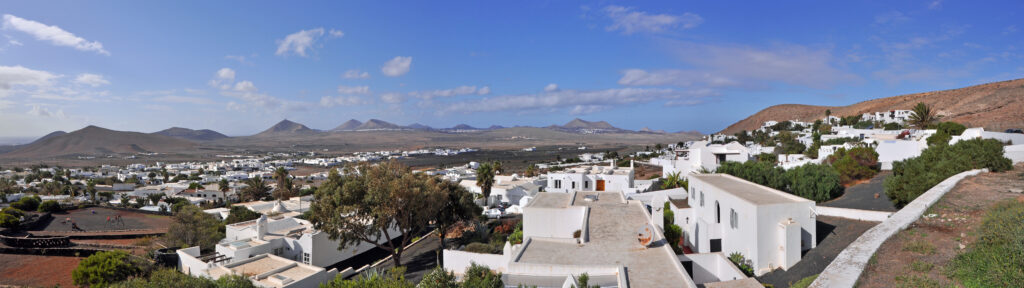
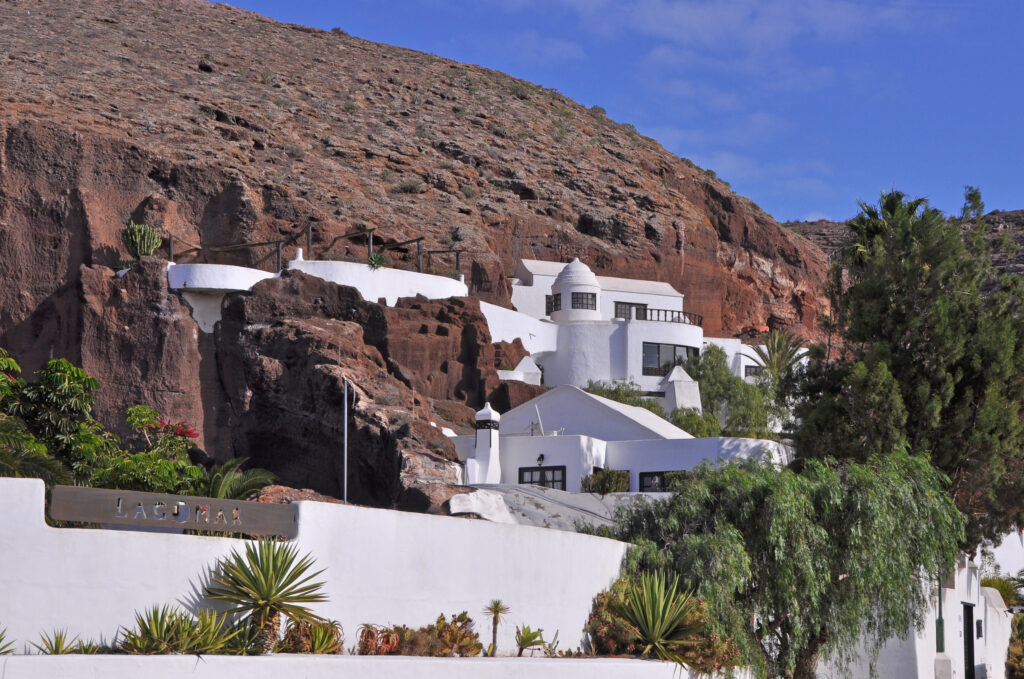
Very close to Tahíche is Nazaret, a small traditional village that is home to one of the most surprising places in Lanzarote: Lagomar. This space, built using an old quarry and several natural caves, is now a museum, restaurant and bar, and one of the most unique places on the island.
The property not only includes several caves converted into dwellings, but also has the fascinating history of having been owned by the world-famous actor Omar Sharif. Legend has it that the property came into the actor’s possession, who lost it in a game of bridge a few hours after buying it. Beyond the anecdote, a visit to Lagomar is an experience that combines organic architecture, design, art and an almost cinematic atmosphere.
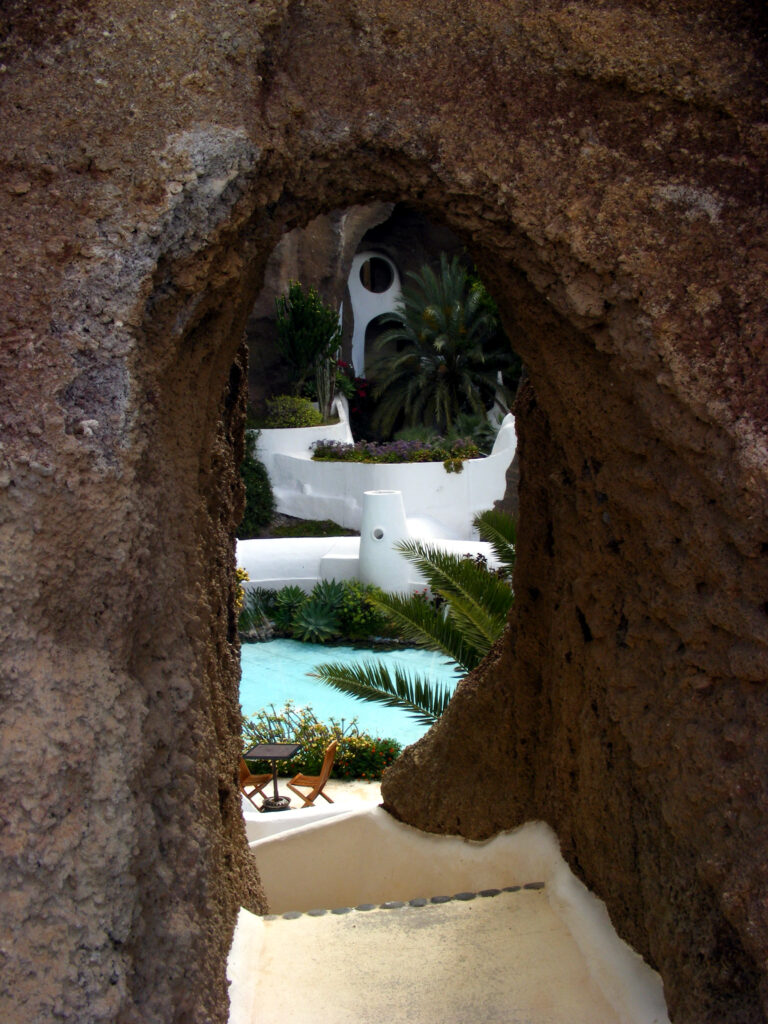
Lagomar is a place that combines the spectacular nature of an adapted cave landscape with the functionality of leisure. It is a highly recommended destination both for a quiet dinner, immersed in a magical atmosphere, and for enjoying the first drinks of the evening. It is distinguished by its serene, peaceful atmosphere and a selection of good music, designed for intimate enjoyment rather than wild partying until the early hours of the morning.
Tahíche Festivals
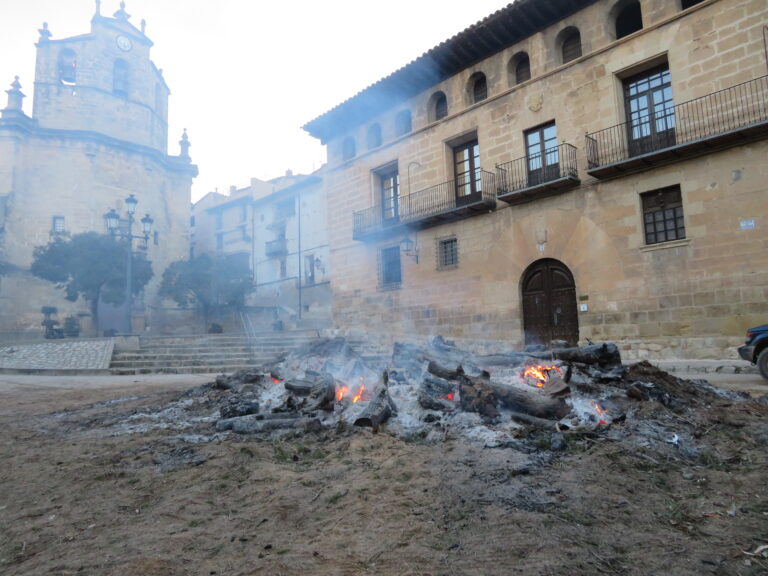
Social life in Tahíche is concentrated and celebrated in its annual festivities. The patron saint festivals of Santiago Apóstol and Santa Ana, at the end of July, are of great importance and bring the whole community together.
These celebrations are a display of the island’s rich culture and traditions, with a programme that includes:
- Religious events: Masses, processions and the emotional pilgrimage and offerings to the saints.
- Social life: Concerts, open-air dances, sporting activities and children’s events that reinforce the sense of community.
These festivals provide an intimate window for visitors, allowing them to experience everyday life in Lanzarote from an authentic and participatory perspective.
Where is Tahíche?
Tahíche is located in the north-central part of Lanzarote, within the municipality of Teguise. Its strategic position, very close to the capital, has turned it over time into a kind of ‘commuter town’ from which many residents travel daily to Arrecife. Even so, the village retains its own identity and a peaceful atmosphere that contrasts with the hustle and bustle of the capital.
From here, you are just a few minutes’ drive from other key locations in Lanzarote:
- Arrecife: 5 minutes.
- Costa Teguise: 7 minutes.
- Nazaret: 5 minutes.
- Teguise (Villa): 10 minutes.
If you come by hire car from the airport, you will reach Tahíche in about 10-12 minutes on a comfortable and well-signposted road. It is precisely this ease of movement that is one of the main reasons why more and more travellers are choosing this area as a base during their stay.
What to see in Lanzarote
If you want to make the most of your visit to the island, here are some places we have added to our map:
- Playa Blanca: The ideal base camp for exploring the island. The perfect balance between tranquility, idyllic beaches, modern areas, and natural surroundings.
- El Golfo: with the Charco Verde, it is one of the most striking postcard images of the Canary Islands.
- Risco Beach: one of the wildest, most beautiful, and memorable beaches in Lanzarote.
- Las Grietas: A perfect blend of geology, volcanic landscape, and photogenic appeal that attracts more and more travelers.
- Los Charcones: a string of unspoilt natural pools stretching along the south-western coast of the island.
- Punta Mujeres: a small fishing village where the ocean ebbs and flows at will, forming dozens of natural pools.
- Caleta del Mojón Blanco: a small natural treasure where turquoise waters and ocean calm prevail.
- Los Hervideros: one of the most fascinating and mesmerising landscapes on the island.
Tahíche today: a village combining science, culture and everyday life
Although its quiet appearance may be deceiving, Tahíche is one of the most socially and culturally active centres in the municipality of Teguise. It is also home to the only university in Lanzarote, a fact that brings youthful energy and constant activity to the area.
The lava flow that crosses the village, originating from the eruptions of 1730–1736, is one of its most characteristic features. Its presence can be felt in the urban planning, in the landscape and in some cuts in the terrain where the volcanic strata can be clearly seen, a veritable open book of geology.
Conclusion: Tahíche, a perfect blend of art and volcanoes
Tahíche is much more than just a halfway point between Arrecife and Costa Teguise. It is a place where the volcanic landscape becomes a stage for art, where architecture blends with lava and where local life continues to be marked by traditions that keep its identity intact.
If you are planning a route around Lanzarote and want to get to know the island beyond its beaches and viewpoints, spend a few hours – or even a whole day – discovering everything Tahíche has to offer. Few places combine history, art, nature and Canarian culture as well as this corner of the island, which continues to beat to the tranquil rhythm of the wind and lava.
Photo Credits
Below are the photo credits in order of appearance. Royalty-free photos will not be listed below:
- Frank Vincentz, CC BY-SA 3.0, via Wikimedia Commons
- Frank Vincentz, CC BY-SA 3.0, via Wikimedia Commons
- Frank Vincentz, CC BY-SA 3.0, via Wikimedia Commons
- GerritR, CC BY-SA 4.0, via Wikimedia Commons
- Frank Vincentz, CC BY-SA 3.0, via Wikimedia Commons
- -jkb-, CC BY-SA 3.0, via Wikimedia Commons
- Frank Vincentz, CC BY-SA 3.0, via Wikimedia Commons
- Photograph by Mike Peel (www.mikepeel.net)., CC BY-SA 4.0, via Wikimedia Commons
- Photograph by Mike Peel (www.mikepeel.net)., CC BY-SA 4.0, via Wikimedia Commons
- H. Zell, CC BY-SA 3.0, via Wikimedia Commons
- Marc Ryckaert (MJJR), CC BY 3.0, via Wikimedia Commons
- maczopikczu, CC BY 3.0, via Wikimedia Commons
- Marc Ryckaert (MJJR), CC BY 3.0, via Wikimedia Commons
- Frank Vincentz, CC BY-SA 3.0, via Wikimedia Commons


_01_ies.jpg)


.jpg)

