Las Grietas de Lanzarote: a volcanic treasure hidden between Montaña Blanca and La Geria
Located between Tías and San Bartolomé, at the foot of Montaña Blanca, Las Grietas de Lanzarote has become one of the most striking natural spots on the island. A perfect blend of geology, volcanic landscape, and photogenic appeal that attracts more and more travelers. Its winding profile, narrow passageways, and the almost lunar silence of the surroundings make a visit here a surprisingly immersive experience.
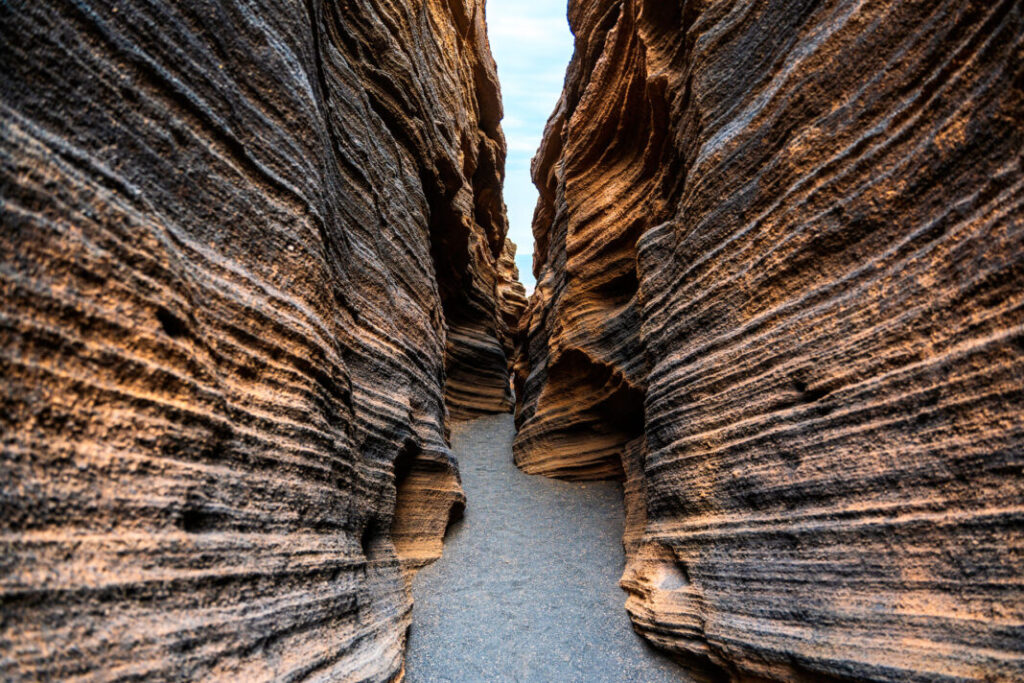
Although its popularity has grown recently thanks to social media such as Instagram and TikTok, these formations tell a much deeper story: that of Lanzarote’s volcanic origins and the natural forces that have sculpted this unique corner of the island over centuries.
In this guide, we tell you what Las Grietas are, how they were formed, what to see, how to get there, tips, safety, the best time to visit, and what nearby places you can visit to complete the experience.

What are Las Grietas de Lanzarote
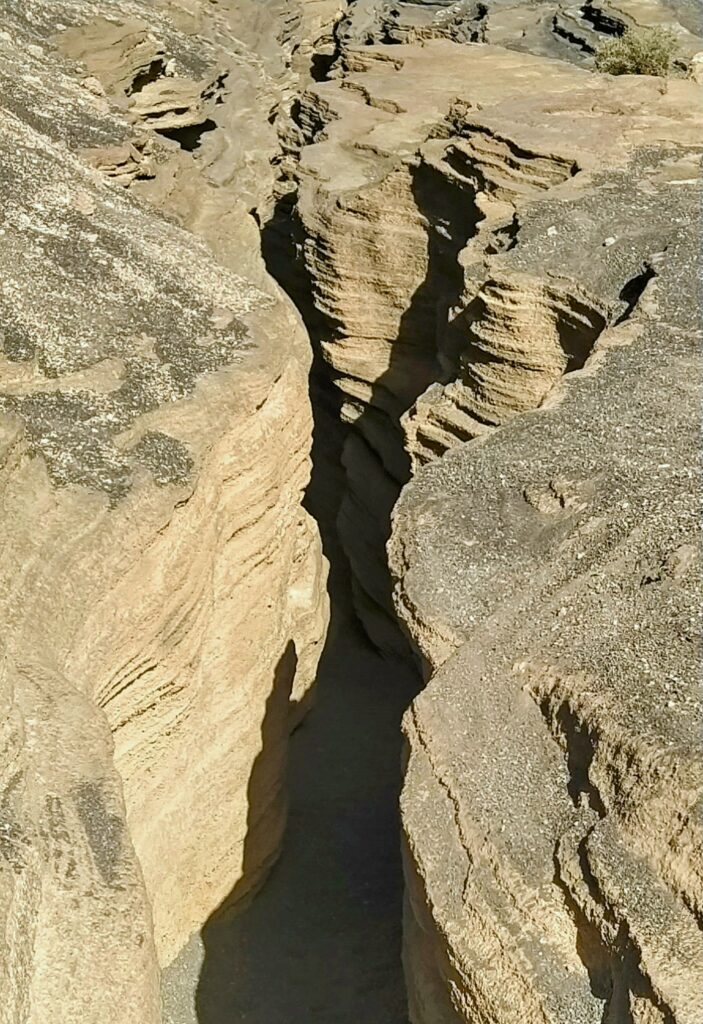
Las Grietas are three narrow, elongated passages formed on the southeast slope of Montaña Blanca. These are natural fractures generated by two main processes:
- The cooling of lava, which creates internal tensions and causes fissures to appear.
- The action of water, which over the years has eroded the volcanic rock, widening the openings and creating a small natural passageway.
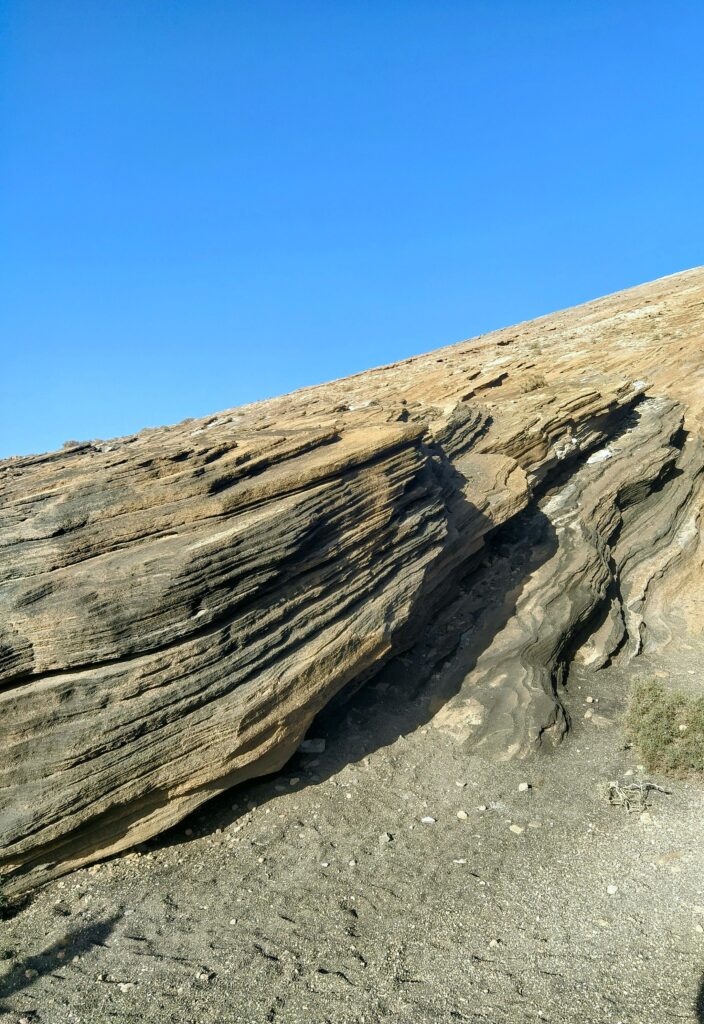
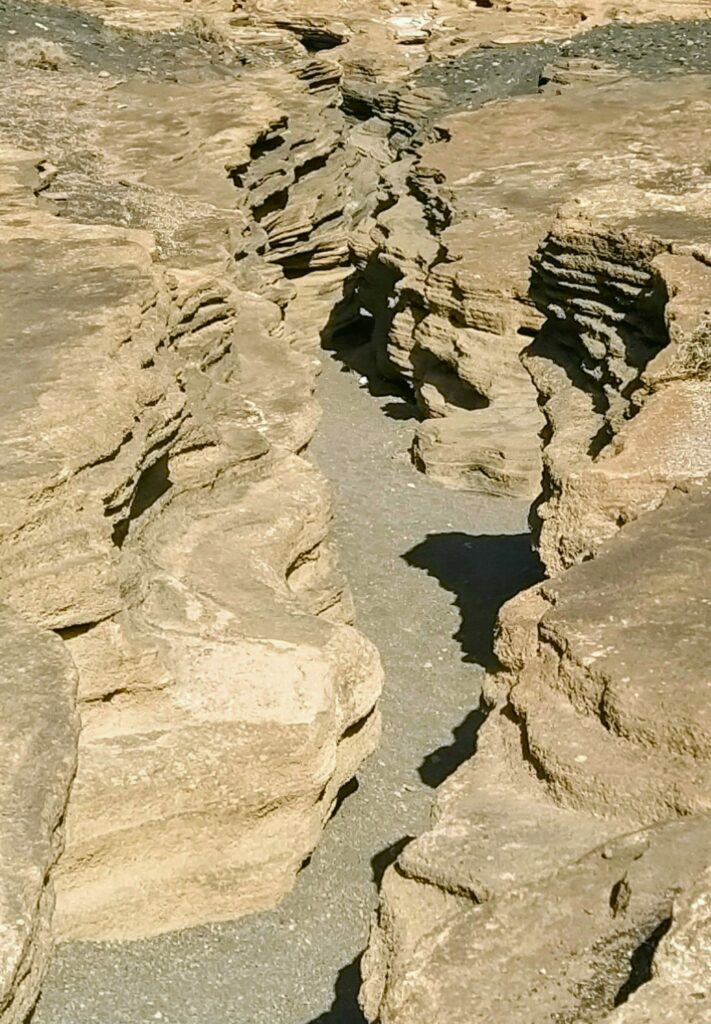
These crevices, which are around 20 meters long, develop as open tunnels between irregular walls of solidified lava. The texture of the terrain, known locally as rofe—a coarse, rough volcanic sand—adds an even more distinctive touch to the environment.
Montaña Blanca is also one of the highest volcanic cones in Lanzarote, at almost 600 meters above sea level, and serves as a natural setting for understanding the relationship between the island’s geology and traditional life.
History and geological formation
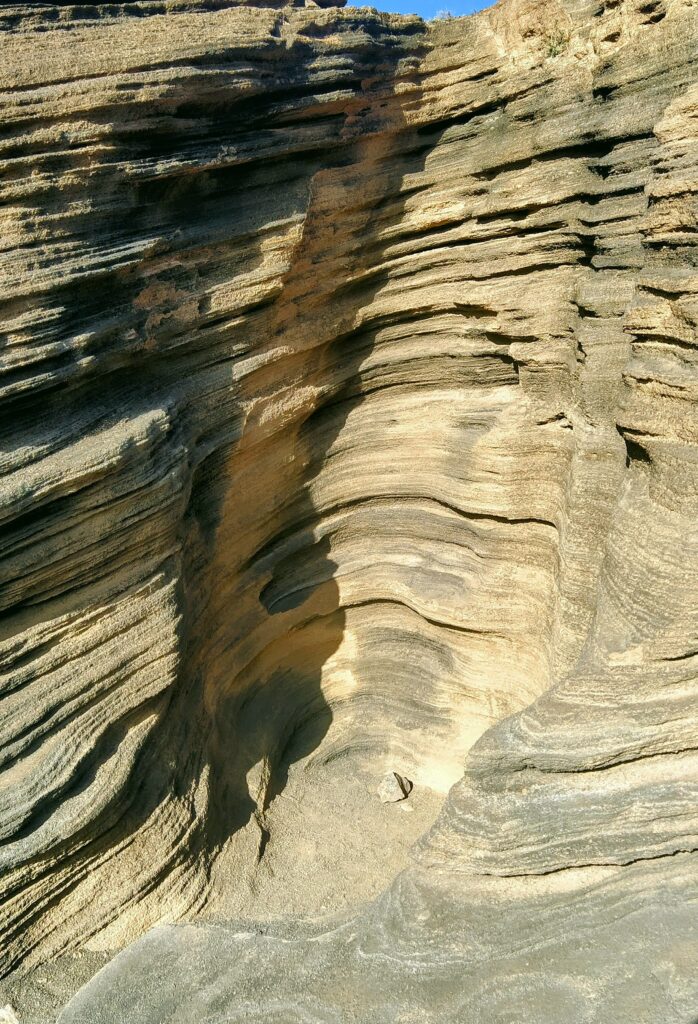
The origin of Las Grietas is a direct reflection of Lanzarote’s volcanic past. When a lava flow moves downhill, the surface cools before the interior. This causes the outer layer to harden while the magma continues to flow inside. Over time, this temperature difference generates tensions and fractures, opening cavities that are later shaped by water and wind.
In addition to its geological interest, the Montaña Blanca area preserves archaeological remains of the Majos, the first inhabitants of Lanzarote. Small channels have been found carved into the volcanic tuff, whose exact function is still unknown, as well as ancient cisterns that collected rainwater. This relationship between geology and the traditional use of water has had a profound impact on the cultural identity of the island.
The three main fissures: what to see on your tour
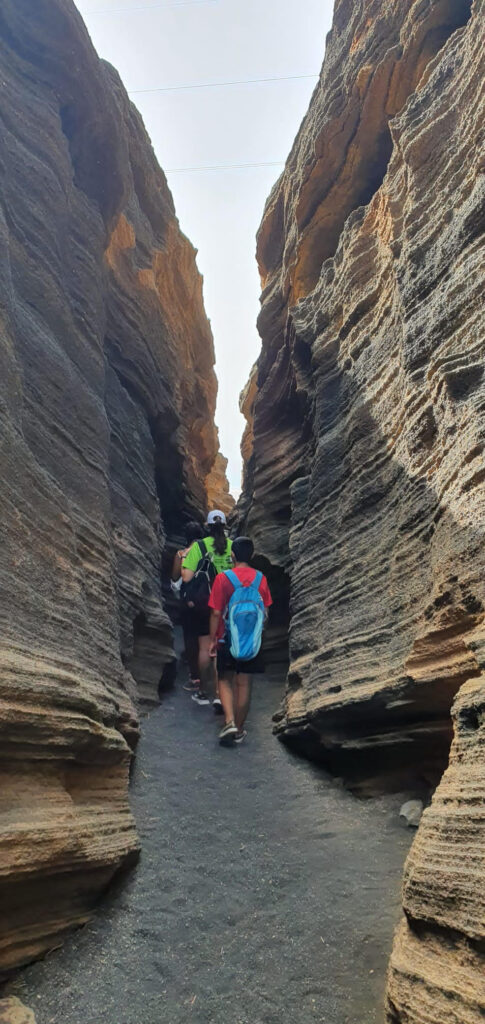
Although there are several fissures in the area, the best known are three consecutive fissures, separated by a few meters. Each one offers a different experience and, together, they make an ideal visit for those who enjoy nature and photography.
1. Crack 1: the most accessible
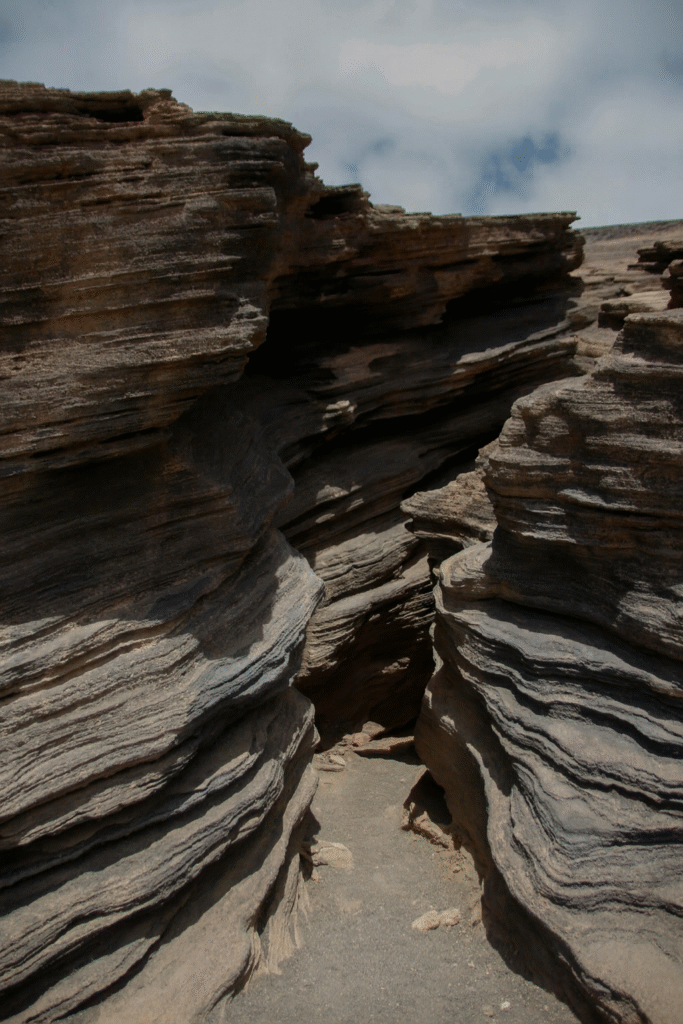
A few minutes from the main trail is the first crack. It is narrow but almost flat, with no significant slope. The route ends in a small natural “room” where you can observe the lava strata up close, but you have to retrace your steps to get out.
2. Crack 2: the most complete and photogenic
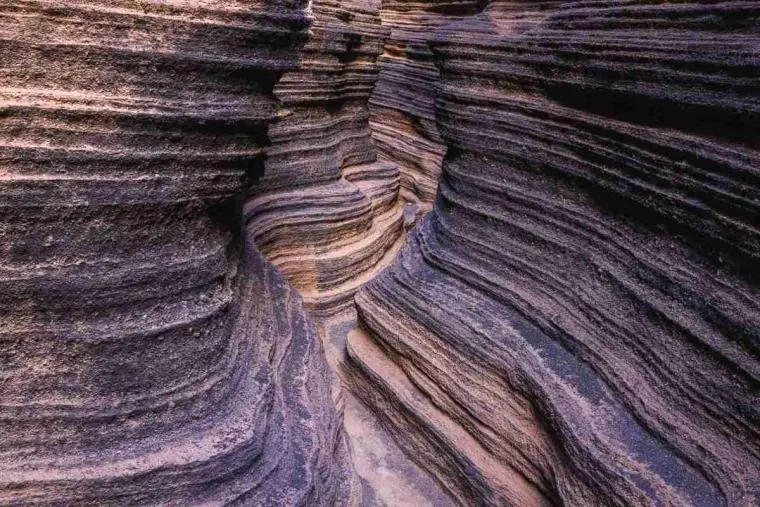
This is the most popular spot for taking photos. It requires climbing a section with some slope and volcanic gravel ground, so it is best to proceed slowly. Unlike the first one, this fissure has an exit on the other side, allowing you to walk through it from end to end. The light coming in from above creates very striking effects, especially in the early morning or at sunset.
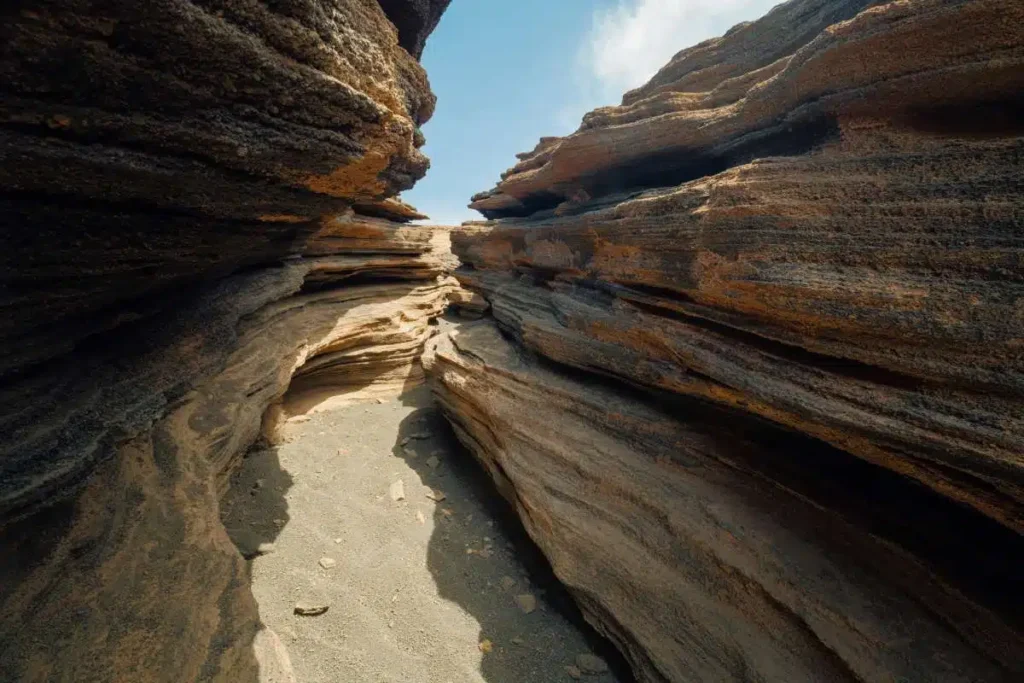
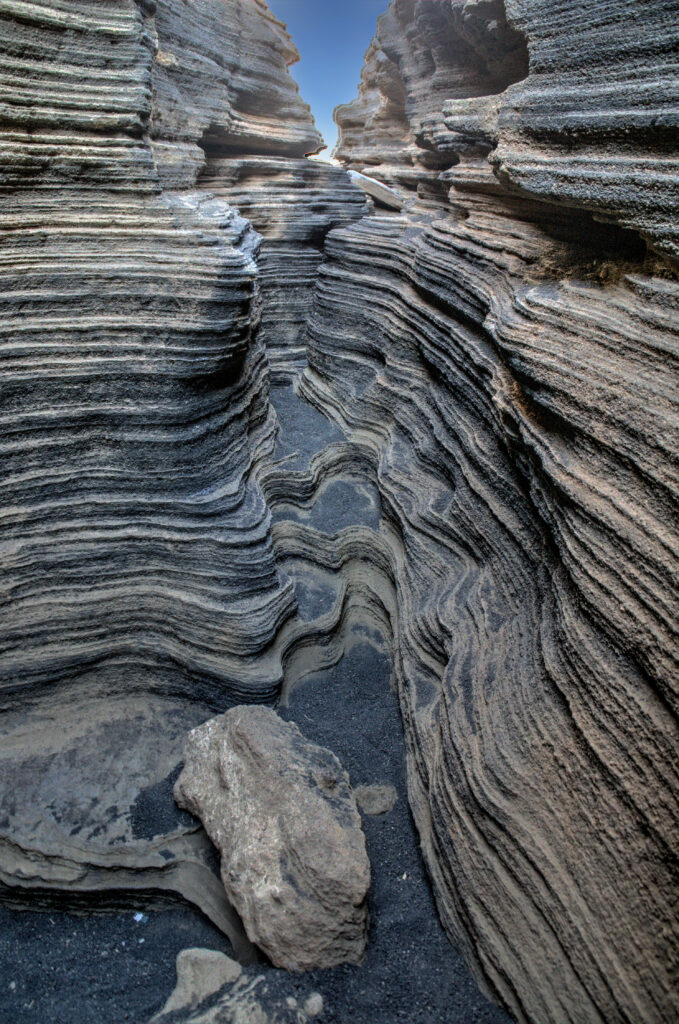
3. Small fissures and views from above
After leaving the second crevice, you reach a wider path where several smaller fissures are located. Although you cannot explore them in depth, they perfectly reveal the laminated structure of the rofe (volcanic gravel).
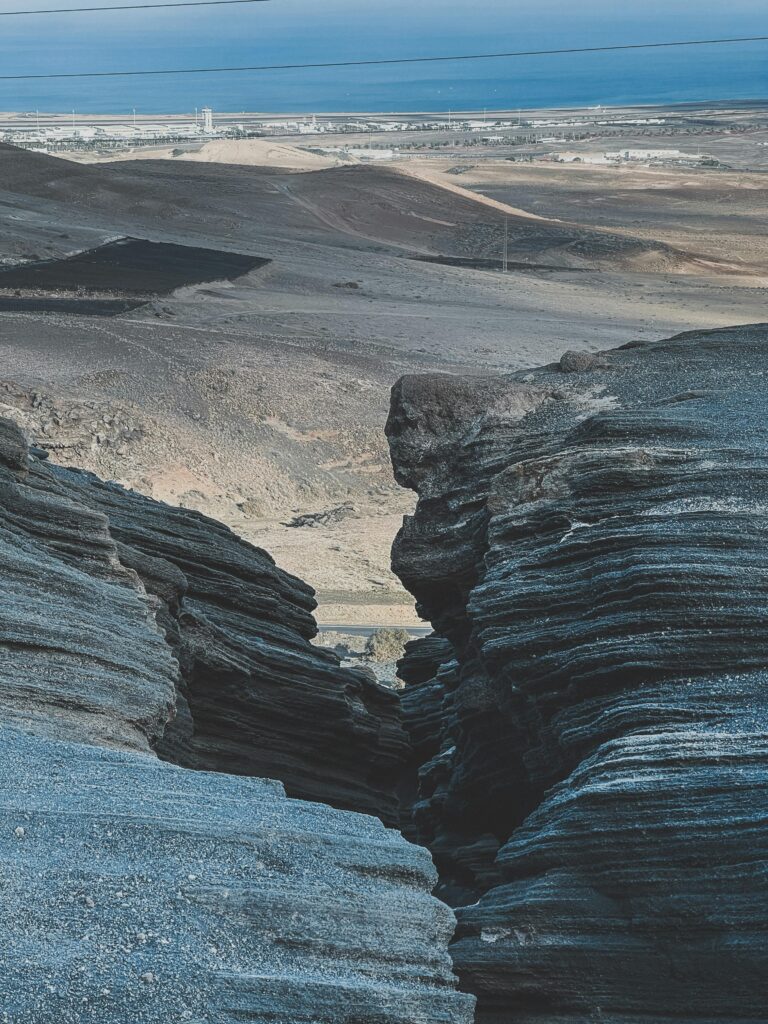
Panoramic views
To complement the experience, travelers can climb up the side to the top of the lava tongue, behind Montaña Blanca. From this elevated position, you can enjoy incredible panoramic views of much of the island, with the sea horizon framing Puerto del Carmen and Arrecife.
The Play of Light and Shadow: A Photographer’s Paradise
Las Grietas is a favorite destination for photographers due to the dramatic contrast of light and shadow. The best times to capture the essence of the place are:
- Sunrise/Early Morning: The soft light enhances the texture of the rock and the golden and ochre tones, avoiding extreme contrast. It is also the best time to visit the place when there are few people (around 9:45-10:00 a.m. the flow of people begins to be noticeable).
- Sunset/Late Afternoon: The low light bathes the walls in warm, even pinkish tones, creating a spectacular color palette.
The estimated walking time is between 30 minutes and an hour, depending on the time spent taking photographs and exploring the smaller crevices.
Route difficulty and technical data
- Total distance: 1 km
- Duration: between 45 minutes and 1 hour
- Cumulative elevation gain: 53 m
- Difficulty: easy
- Recommended access: via the signposted trail from the LZ-35
- Suitable for children: yes, but caution is advised in the gravel area
You don’t need to be in good physical shape or have mountain experience, but you should wear suitable footwear.
Is it advisable to go with children?
Yes. The Cracks are perfectly suitable for children, provided that certain guidelines are followed:
- Do not approach the upper edge of the fissures.
- Always keep them in sight within the lava corridor.
- Avoid running on the volcanic gravel, which can be slippery.
- Bring water and sunscreen: there is no shade except inside the fissures.
Tips for a safe and responsible visit
To preserve the environment and ensure your safety, keep the following in mind:
- Closed athletic shoes: the ground is volcanic gravel and easily gets into open shoes.
- Avoid peak hours: early morning or late afternoon are ideal.
- Bring water, sunscreen, and a hat: there are no facilities or shade.
- Do not leave trash or take any rock: this is a delicate ecosystem.
- Do not climb on unstable areas: some walls are eroded.
- Park only in the official parking lot: this is a highly monitored area.
Best time of year to visit Las Grietas
Visits are possible throughout the year, but spring and fall are the best seasons:
- Milder temperatures
- Fewer visitors
- Better light for photography
- Moderate wind
In summer, the heat can be intense, especially during the middle of the day. In winter, although the weather is usually stable, there can be sudden changes in wind or occasional rain.
What makes these fissures so special?
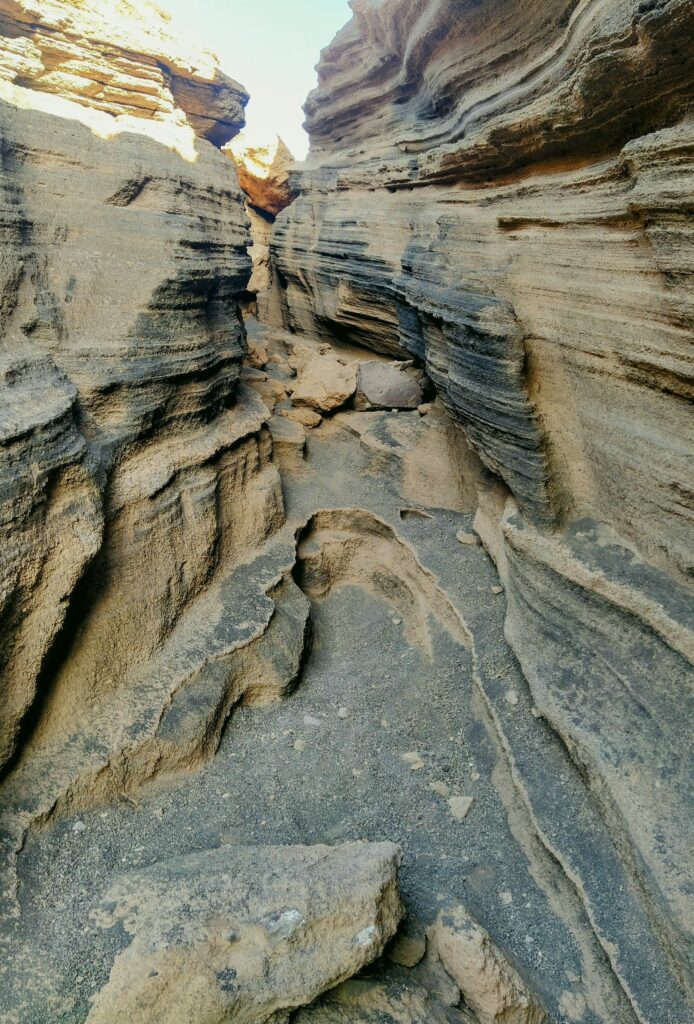
In addition to their beauty, Las Grietas are a clear example of how a volcanic landscape works. Their walls show:
- Horizontal layers of lava accumulated during successive eruptions.
- Rough textures formed by the flow of solidified lava.
- Color variations between browns, reds, and ochres due to oxidation.
- Visible erosion that sculpts the interior of the corridors.
Their structure is reminiscent of formations in other parts of the world, such as:
- The lava tunnels of Hawaii
- The volcanic canyons of Iceland
- The Tolantongo Caves in Mexico
- Even, in a way, the Grand Canyon (due to its erosive process)
Impact of tourism and protective measures
The increase in popularity of Las Grietas has jeopardized the conservation of the environment and road safety. The unspoiled beauty of this place depends on the individual responsibility of each visitor.
- Respect for the environment: Access is free, but this privilege comes with the obligation not to leave any waste behind, not to take any rofe or plants, and not to alter the geological formations.
- Road safety: It is crucial to use the underground tunnel and respect the parking signs so as not to obstruct traffic on the LZ-35, thus avoiding accidents and the possible implementation of future restrictions.
- Traffic Control: If you find the parking lot full, it is better to try visiting at another time or at off-peak hours (very early or very late), rather than parking illegally.
If traffic continues to grow unchecked, future restrictions cannot be ruled out. That is why it is essential to visit responsibly.
How to get to Las Grietas
Access is via the LZ-35 road, which connects Tías with San Bartolomé. There used to be a car park at the foot of the hillside, but it has been closed for road safety reasons. Today, you have to park in a small car park next to the road.
To cross to the other side, there is a pedestrian tunnel under the road, which is essential to avoid accidents. After crossing it, just follow a slightly uphill path until you find the crevices on your right.
Important tip: avoid parking outside the car park. Tourist pressure has led to conflicts and there is a risk that the area will be restricted if the rules are not respected.
What to see near Las Grietas
A visit to Las Grietas de Montaña Blanca is the gateway to understanding the volcanic DNA of Lanzarote. The immediate surroundings and the south of the island are full of geological wonders:
- La Geria (10 min away): This wine-growing area is a unique testimony to human adaptation to the volcanic landscape. Here, volcanic Malvasía vines are grown in cones dug into the rofe (volcanic ash), individually protected by circular dry stone walls. This method not only retains the scarce ambient humidity but also insulates the vines from the wind, creating an agricultural landscape that is both a work of art and a lesson in ingenuity.
- Puerto del Carmen (7 km away): Wide beaches, promenade, gastronomy, and leisure. Ideal for spending the afternoon after the route.
- San Bartolomé (4 km away): A municipality of great archaeological interest, with traditional houses and proximity to the airport.
- Arrecife (15 min away): Castles, seafood cuisine, urban beaches, and craft markets.
- Timanfaya National Park: The peak of the island’s volcanic activity, a huge protected area, a Biosphere Reserve, where volcanic cones and seas of lava dominate the horizon.
- Los Hervideros: Rock formations where lava flows cooled to create caves and blowholes where Atlantic waves crash violently, giving the impression that the water is “boiling.”
What to see in Lanzarote
If you want to make the most of your visit to the island, here are some places we have added to our map:
- Playa Blanca: The ideal base camp for exploring the island. The perfect balance between tranquility, idyllic beaches, modern areas, and natural surroundings.
- El Golfo: with the Charco Verde, it is one of the most striking postcard images of the Canary Islands.
- Risco Beach: one of the wildest, most beautiful, and memorable beaches in Lanzarote.
- Los Charcones: a string of unspoilt natural pools stretching along the south-western coast of the island.
- Punta Mujeres: a small fishing village where the ocean ebbs and flows at will, forming dozens of natural pools.
- Caleta del Mojón Blanco: a small natural treasure where turquoise waters and ocean calm prevail.
- Tahíche: Together with the César Manrique Foundation, this is probably the most important cultural space in the whole of Lanzarote.
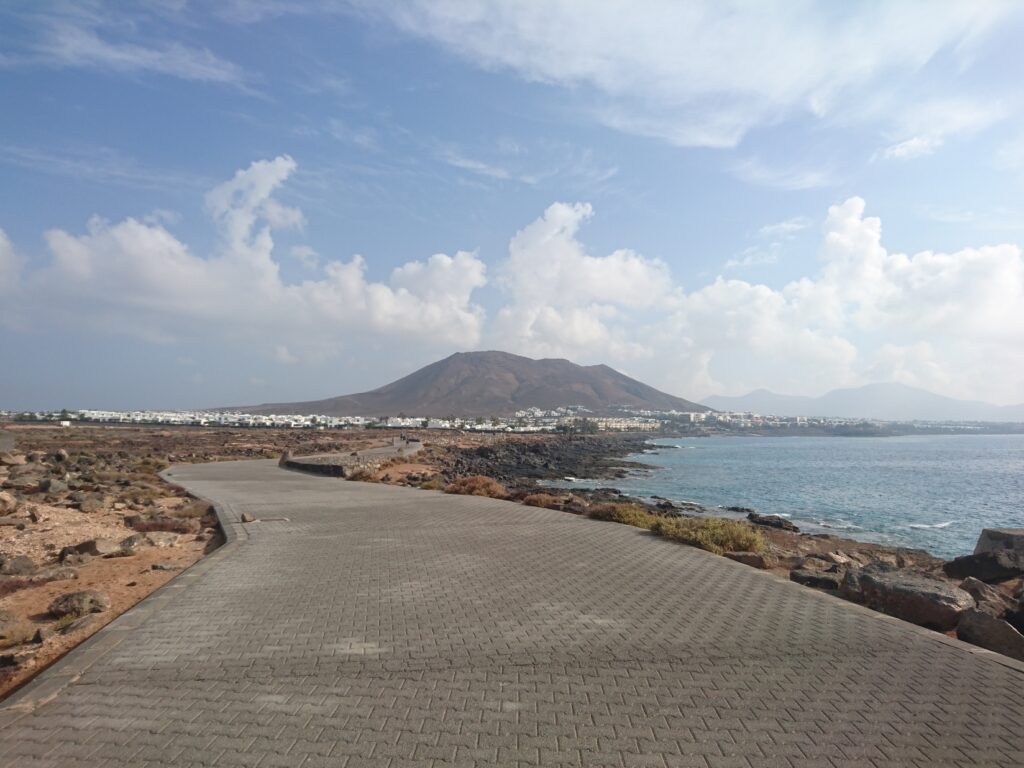
Strategic Accommodation
The central location of Las Grietas, between Tías and San Bartolomé, is perfect for exploring the island:
- Tías (Proximity and Views): An authentic village, located at altitude, offering beautiful views and a good variety of local accommodation (apartments, vacation homes).
- Puerto del Carmen (Coastal Atmosphere): Just 15 minutes away, it offers a livelier atmosphere, hotels with ocean views, beaches, and a wide range of restaurants.
- San Bartolomé/Güime (Local Immersion): Ideal for a quieter experience, with fincas (country houses) and small family hotels, far from mass tourism.
Conclusion: why Las Grietas should be on your itinerary
Las Grietas combines accessibility, natural beauty, geological history, and photography in one place. It does not require great physical effort, the visit is free, and the landscape is completely different from any other area of the island. It is a place that demonstrates how time and the elements shape the volcanic territory of Lanzarote, creating almost unreal scenarios.
If you are looking for a different landscape, quiet and full of fascinating formations, this is one of the most recommended places on the island.
Photo Credits
Below are the photo credits in order of appearance. Royalty-free photos will not be listed below:
- Viva Lanzarote, via viva-lanzarote.com
- Alberto-g-rovi, CC BY 4.0, via Wikimedia Commons
- Alberto-g-rovi, CC BY 4.0, via Wikimedia Commons
- Annua Hotels 2025, via annuahotels.com
- Lanzarote.com, via lanzarote.com
- Ángel M. Felicísimo from Mérida, España, CC BY 2.0, via Wikimedia Commons
- IgnacioRomeroPerera, CC BY-SA 4.0, via Wikimedia Commons
- Alberto-g-rovi, CC BY 4.0, via Wikimedia Commons
- Alberto-g-rovi, CC BY 4.0, via Wikimedia Commons
- Alberto-g-rovi, CC BY 4.0, via Wikimedia Commons
- BrotherDarksoul, CC BY-SA 3.0, via Wikimedia Commons
.jpg)
.jpg)
.jpg)
.jpg)
.jpg)
.jpg)
.jpg)
