What to see and do in Playa Blanca (Lanzarote): the most comprehensive guide to the south of the island
Playa Blanca, located at the southernmost point of Lanzarote, is one of those destinations that surprises visitors with its perfect balance of tranquillity, idyllic beaches, modern areas and a natural volcanic environment that defines the whole experience. Despite its evolution in recent decades, from a humble fishing village to one of the island’s main tourist centres, it has managed to maintain its own identity: orderly, well-kept, pleasant and with a relaxed atmosphere that appeals to both experienced travellers and families seeking comfort.
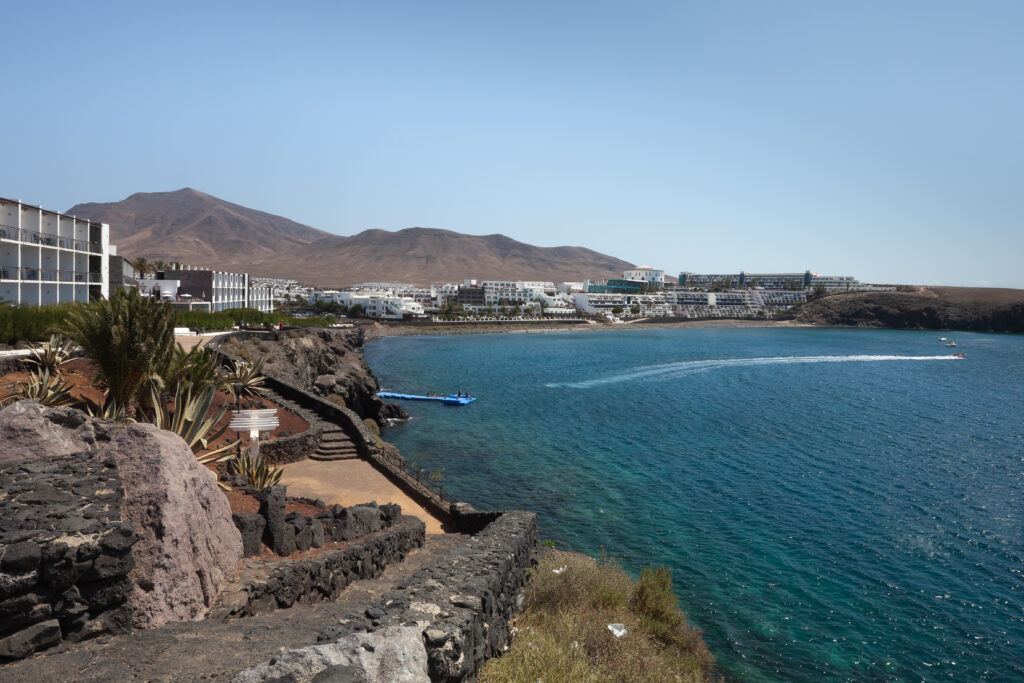
The presence of the Montaña Roja volcano dominates the southern landscape, the promenade connects most of the coastline and Marina Rubicón adds a touch of class with quality restaurants and a marina that could fit into any corner of the Mediterranean. Added to all this is a decisive argument: Playa Blanca is the gateway to the Papagayo Beaches, one of the most iconic places in Lanzarote and the Canary Islands. Here, the authenticity of seafaring tradition coexists with hotel excellence, all under the watchful eye of neighbouring Fuerteventura, visible across the Bocaina Strait.
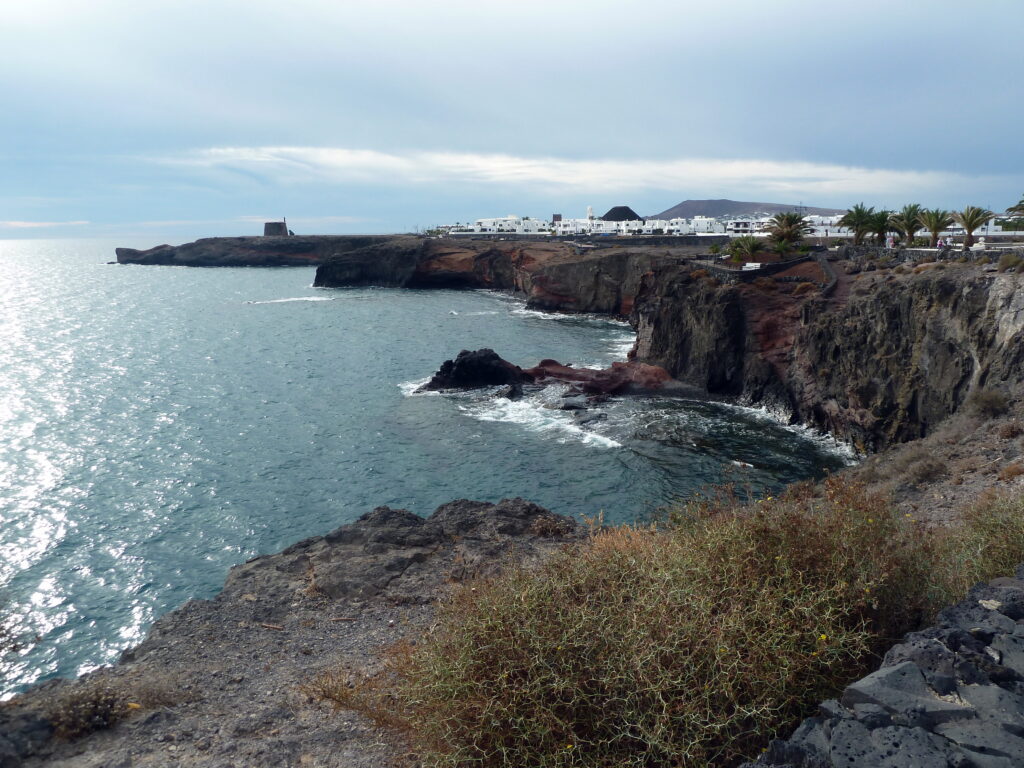
Choosing Playa Blanca is a statement of intent: to seek total disconnection without sacrificing comfort, natural beauty without overcrowding, and a strategic base from which to immerse yourself in the volcanic essence of Lanzarote, an island declared a Biosphere Reserve by UNESCO.
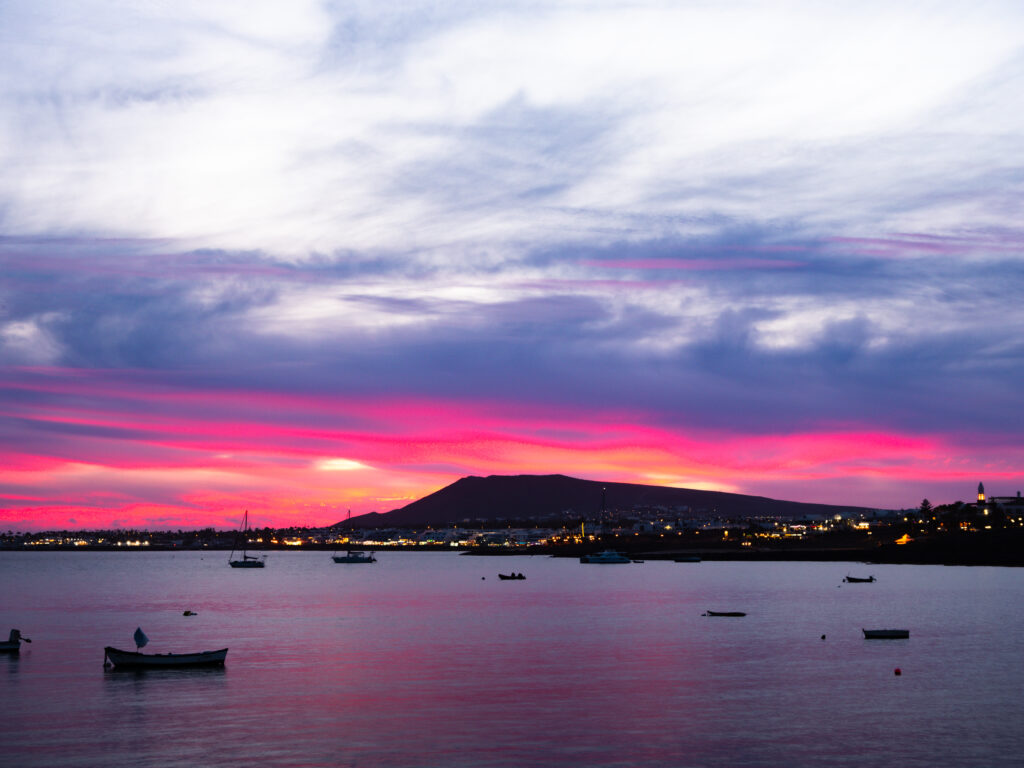
If you are staying in the south of the island, this guide explains what to see, what to do and how to make the most of your time in Playa Blanca, with in-depth details, practical advice and an overview so that you can find your way around and plan your trip without missing anything.

A Microclimate of Eternal Summer: The Unbeatable Advantage of Playa Blanca
The first great asset that seduces travellers is, without a doubt, its climate. Located in the southernmost part of the island, Playa Blanca enjoys an exceptional microclimate that shields it from the cold.
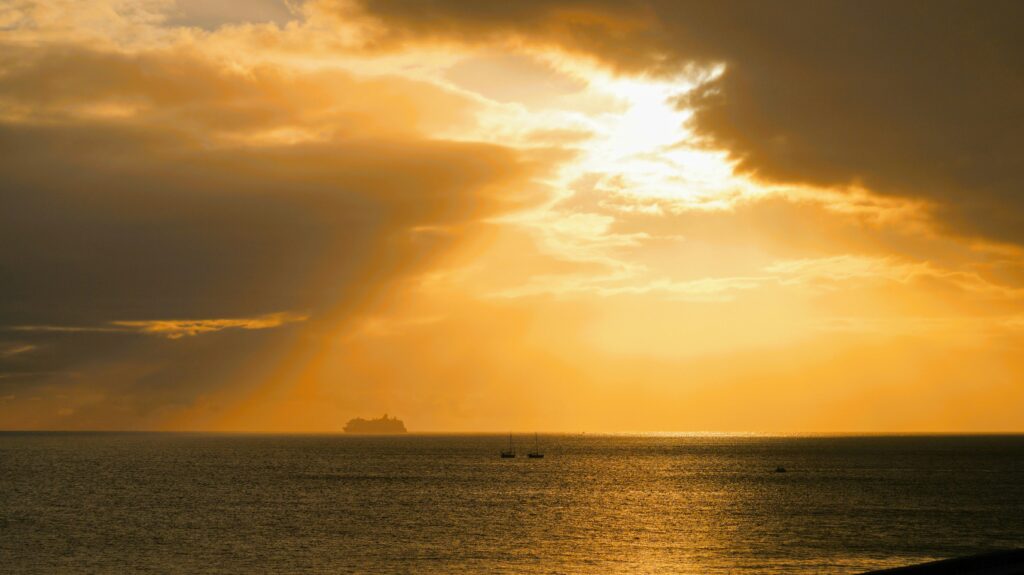
While winter sets in on the European continent, the south of Lanzarote experiences an eternal summer, with temperatures often hovering around 25ºC. This climatic advantage is no small matter: it transforms the autumn and winter months into the ideal season for those seeking to revitalise their body and mind, far from the daily grind and under a healthy sun. The light here has a special quality, filtered by the proximity of Fuerteventura and the Atlantic, which invites you to extend your morning walks and linger over lunch on the terraces.
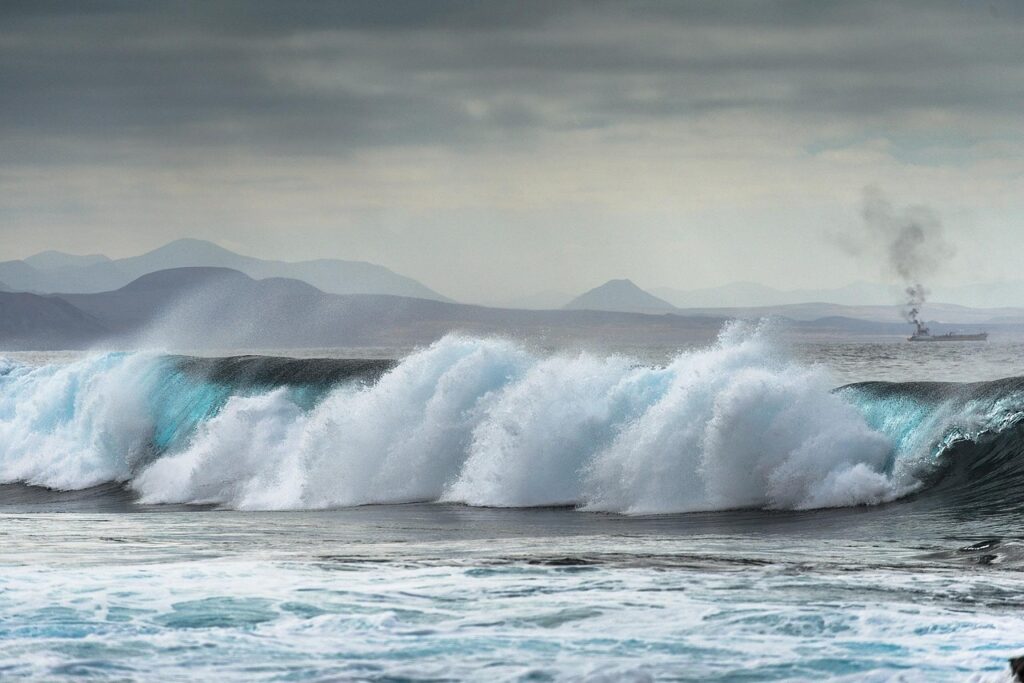
The tourist infrastructure in the area has capitalised on this natural gift, offering a wide range of outdoor activities that can be enjoyed throughout the year.
The best beaches in Playa Blanca (and surroundings)
Playa Blanca owes its fame to a series of sandy beaches that satisfy all preferences, from family leisure to unspoilt isolation.
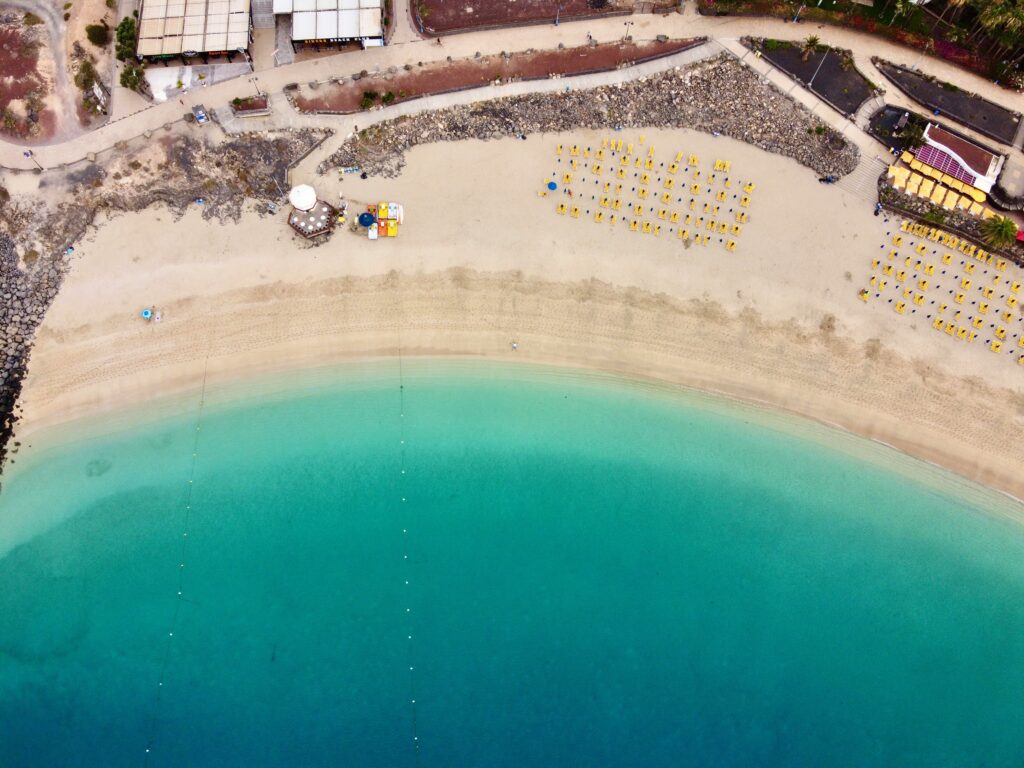
Las Calas de Papagayo: The Immaculate Treasure
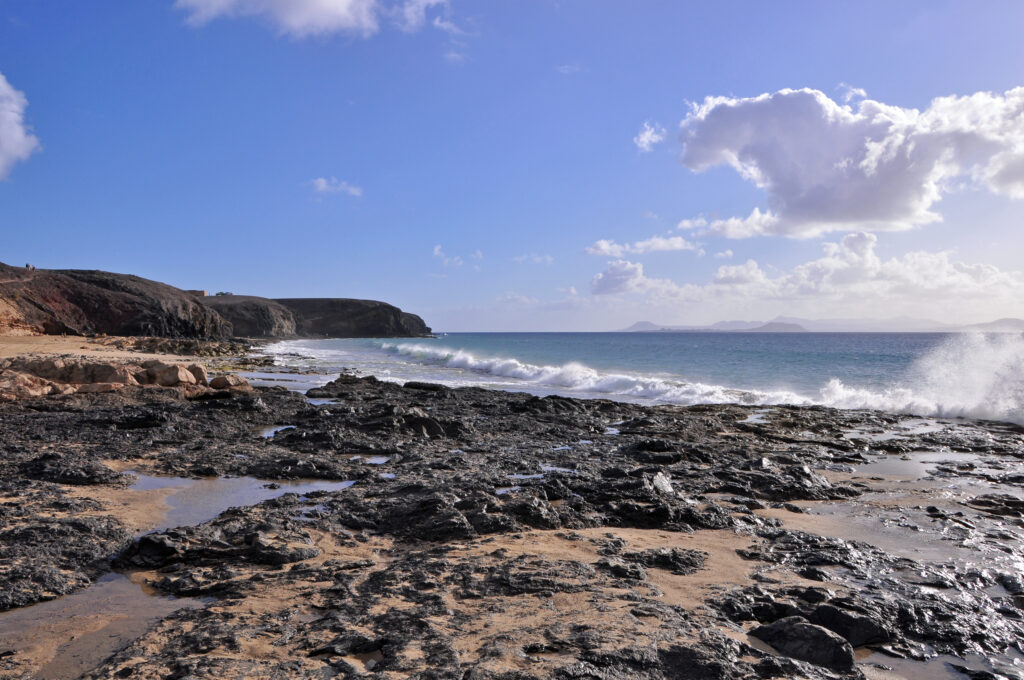
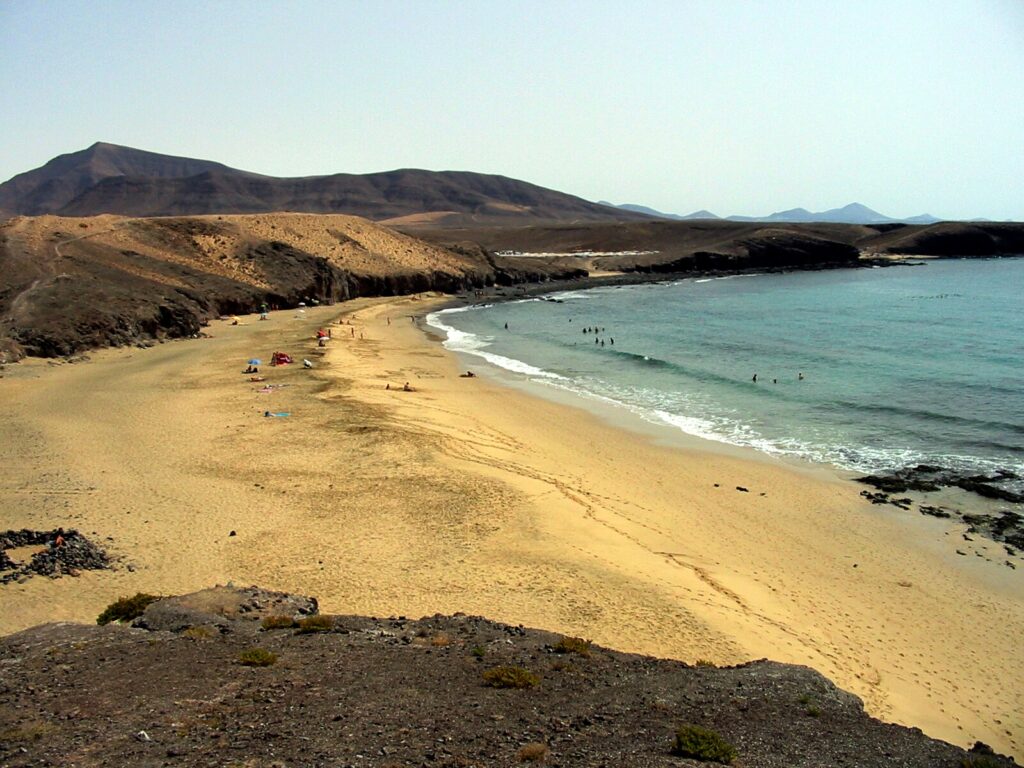
No report on Playa Blanca would be complete without highlighting the Papagayo Beaches, considered by many to be the best in the Canary Islands. This group of coves is located within the Los Ajaches Natural Monument, the oldest geological formation in Lanzarote (around 14 million years old).
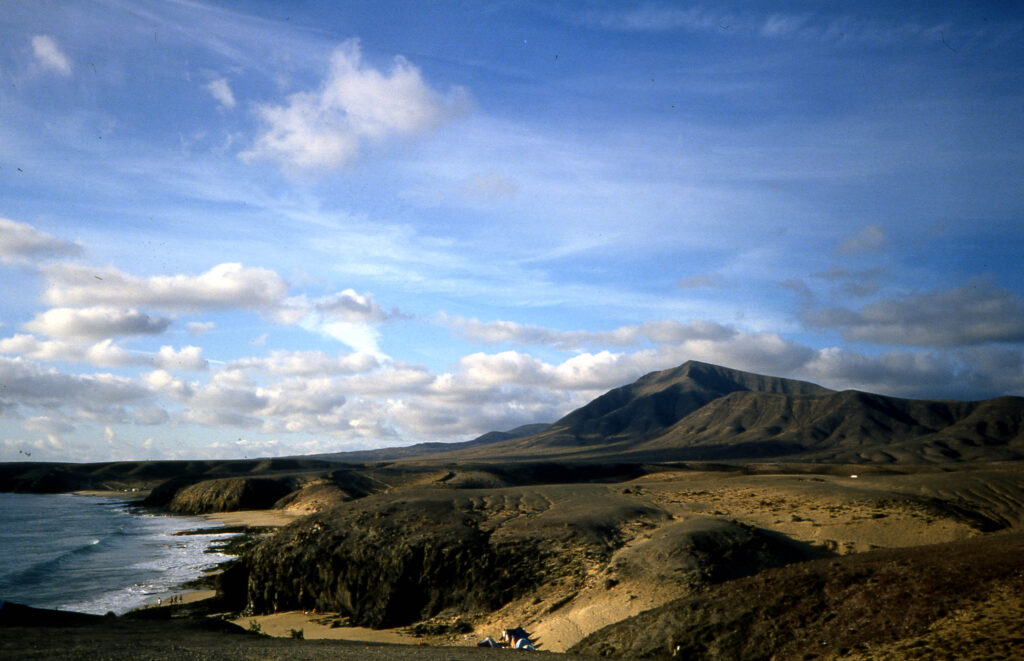
Accessing this paradise requires crossing a dirt track (with a small entrance fee per vehicle of €3, an environmental protection fee) that leads to a landscape of red and black earth, a stark contrast to the pristine white of its sands and the emerald colour of its waters. It is an enclave that remains virtually untouched, far from urbanisation, where nature takes centre stage.
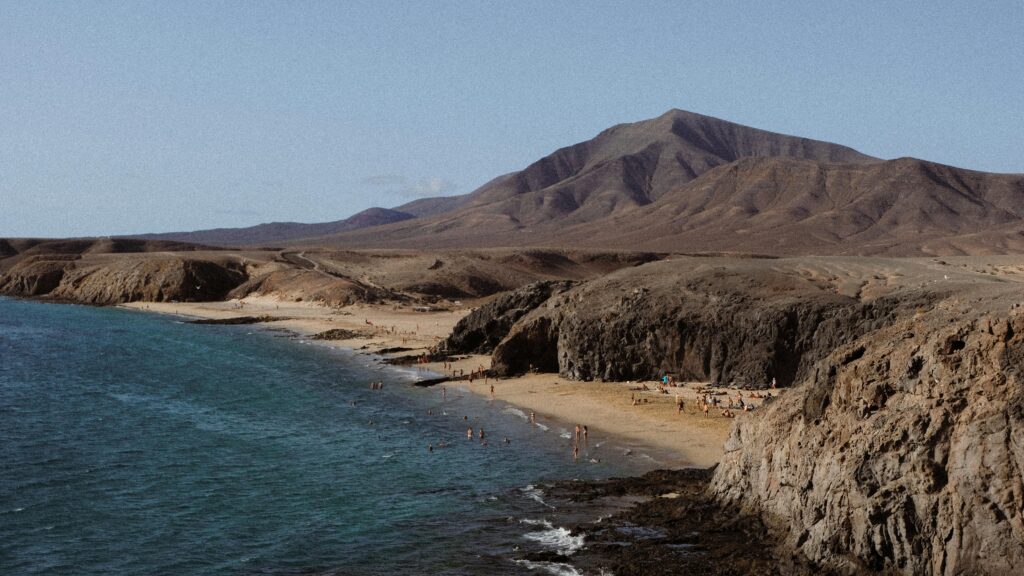
- Papagayo Beach (La Estrella): With its iconic crescent shape, it is sheltered by cliffs, ensuring minimal waves and a perfect environment for snorkelling. It is a small but sublime cove, with a beach bar at the top of the cliff offering spectacular views.
- Playa Mujeres: The longest of the group (almost 400 metres), ideal for a more relaxed atmosphere, with fine white sand and space for everyone.
- Caleta del Congrio: Slightly further away, it is popular for its peaceful atmosphere and frequented by nudists.
- Playa de la Cera and Playa del Pozo: Smaller but equally attractive coves that complete this dream setting.
Why are they so special?
For the landscape: golden cliffs, completely transparent sea with turquoise tones and a feeling of total isolation despite being so close to the town centre.
How to get there
- By car (paid access, dirt road)
- By boat from Marina Rubicón or Playa Blanca
- On foot or by bike (only for the fittest, due to the distance and sun)
If you are looking for unspoilt beaches in Lanzarote, this is the place for you.
Urban beaches: comfort and accessibility
The beaches within the town centre stand out for their accessibility, services and safety, making them ideal for families and water sports.
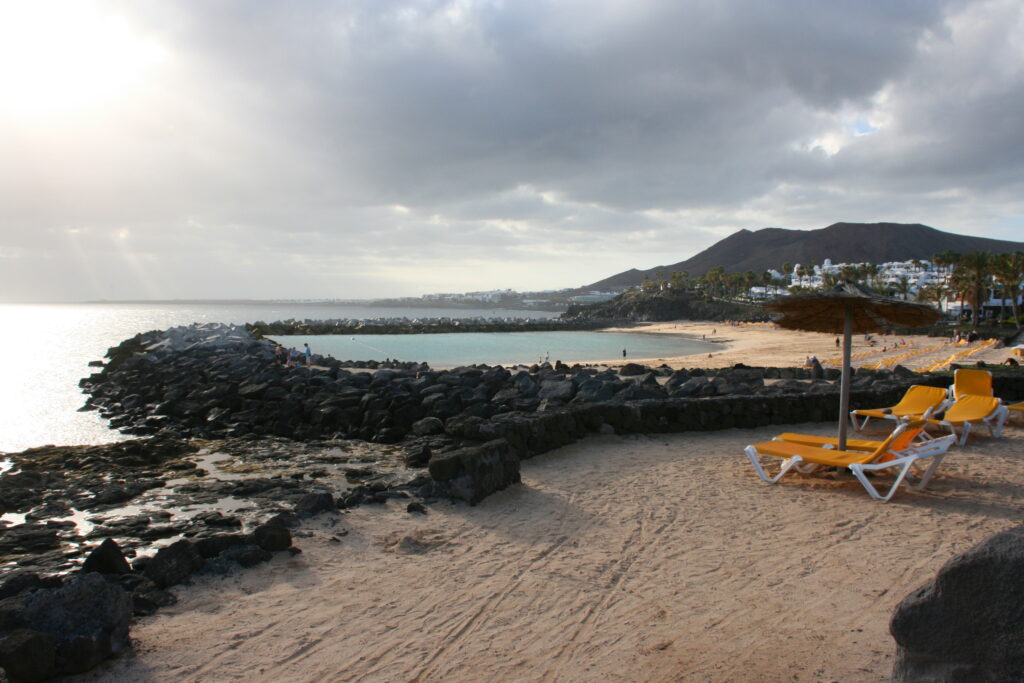
Playa Flamingo
Located to the west, this is a 200-metre-long bay, artificially protected by breakwaters, which makes it a natural pool with crystal-clear, shallow waters. It is a favourite for snorkelling and children’s swimming.
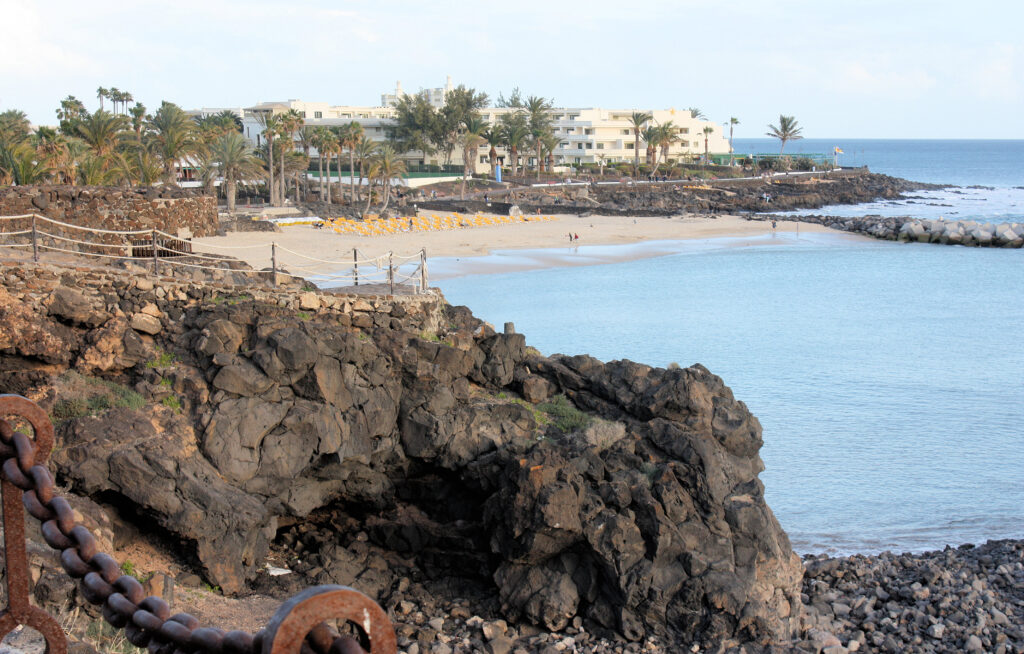
Smaller and more secluded than Dorada, Flamingo is protected by a breakwater that keeps the water extremely calm. Its semi-circular shape and light-coloured sand create one of the most welcoming scenes in Playa Blanca.
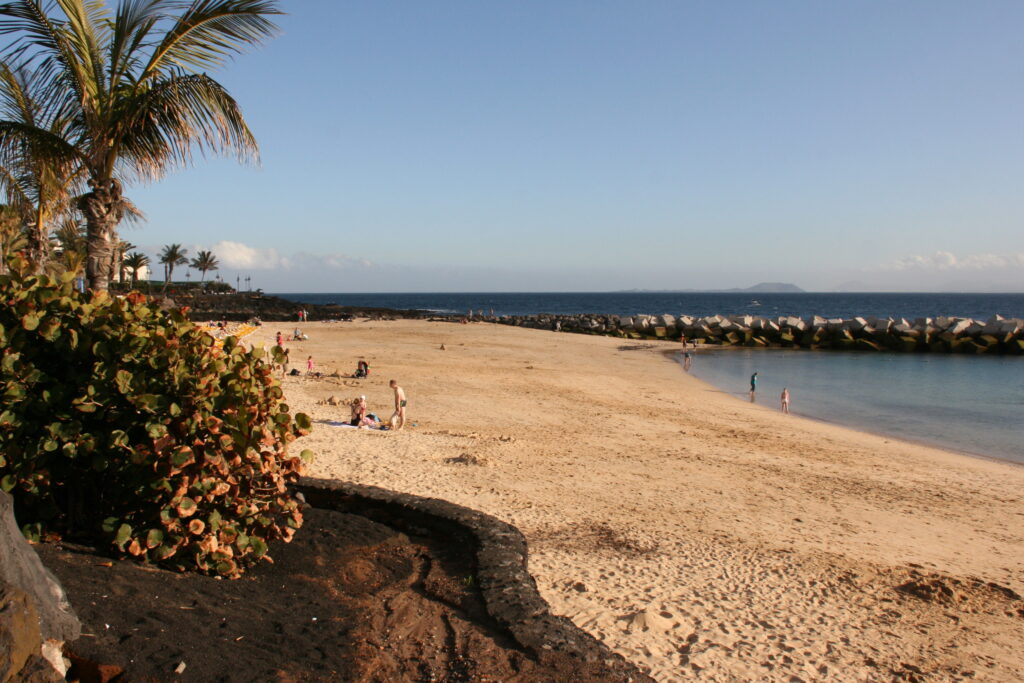
It is a perfect place for:
- Families with young children
- Older people
- Travellers looking for pool-like waters
- Days when the sea is rougher
There are bars and restaurants nearby, as well as landscaped areas that provide a pleasant environment.
Playa Dorada
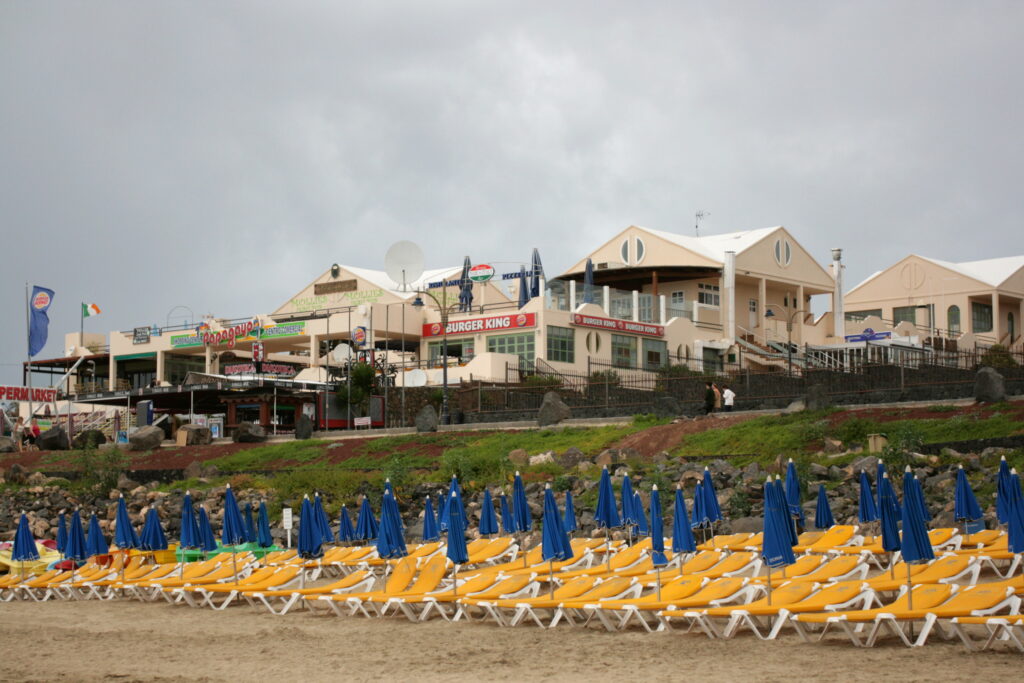
The largest and most central, a semi-urban bay with 300 metres of golden sand. With every amenity imaginable (sun loungers, parasols, water sports, restaurants), it is the quintessential comfortable and vibrant tourist beach. Playa Dorada stands out for two things: its beauty and its comfort. It is one of the best urban beaches in Lanzarote, with turquoise waters, light-coloured sand and an environment protected from the waves by breakwaters. This makes it an ideal choice for families, but also for those looking to swim without currents and relax without complications.
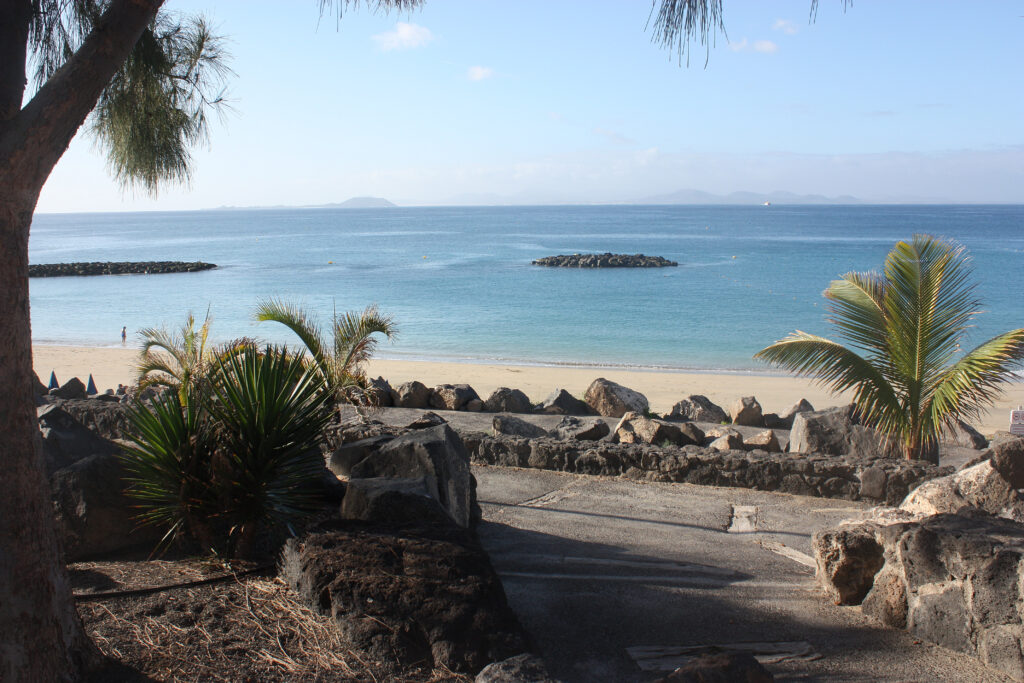
In the afternoon, the light is especially beautiful, with golden tones that justify its name. It has:
- Sun loungers and parasols
- Catering services
- Wide promenade
- Natural shade areas
- Safe and well-maintained environment
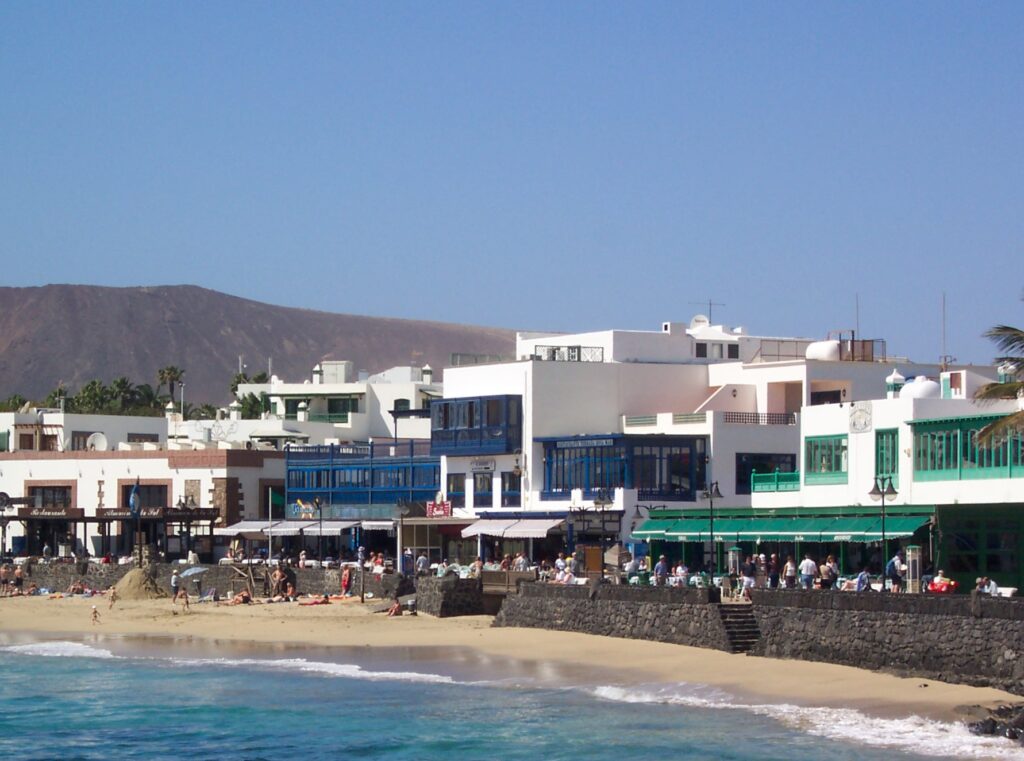
Playa Blanca
The beach that gives the town its name. Small and central, it is the perfect place for a quick dip just a few steps from the shopping and dining area.
Playa Blanca: a modern destination in a volcanic setting
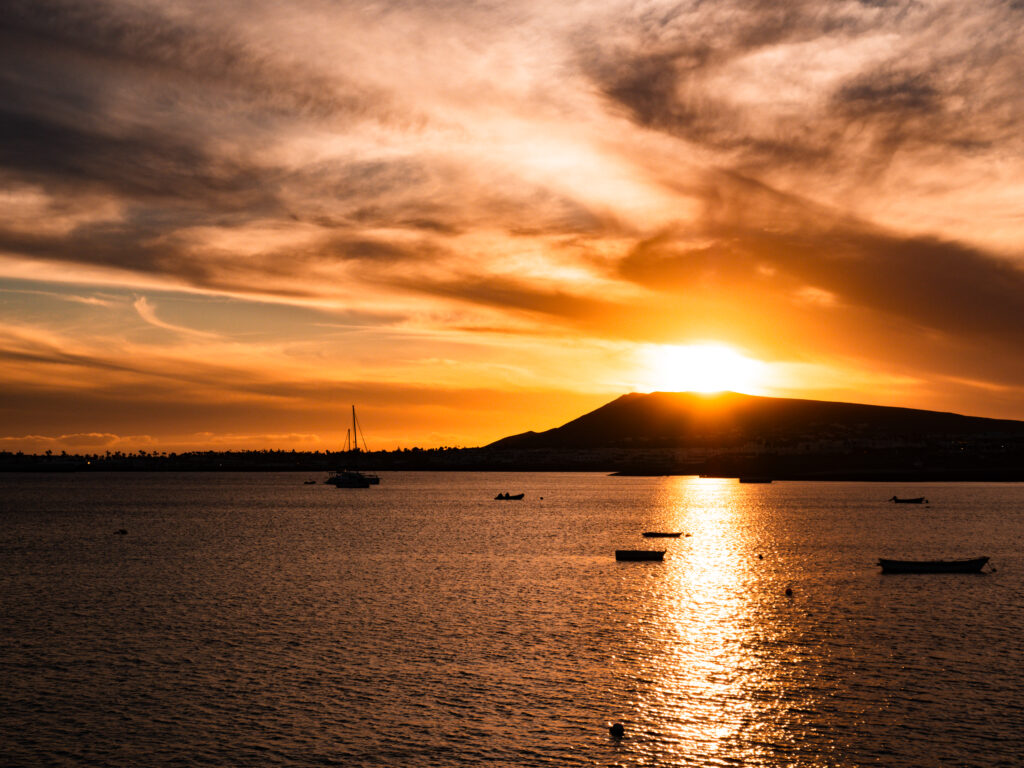
Playa Blanca has a different atmosphere to other tourist spots in Lanzarote. While Puerto del Carmen has a livelier atmosphere and Costa Teguise offers a more classic feel, Playa Blanca stands out for its serenity and well-maintained urban planning. Everything is designed for strolling: immaculate gardens, wide avenues, benches facing the sea, viewpoints and a promenade that blends naturally into the volcanic surroundings.
An evolution marked by sustainable tourism
Despite its rapid growth, Playa Blanca has been a model of urban planning. Its buildings are generally low-rise, night-time lighting is moderate to protect the starry sky, and its coastline has preserved valuable natural areas such as Los Ajaches.
Main areas of Playa Blanca
Town centre
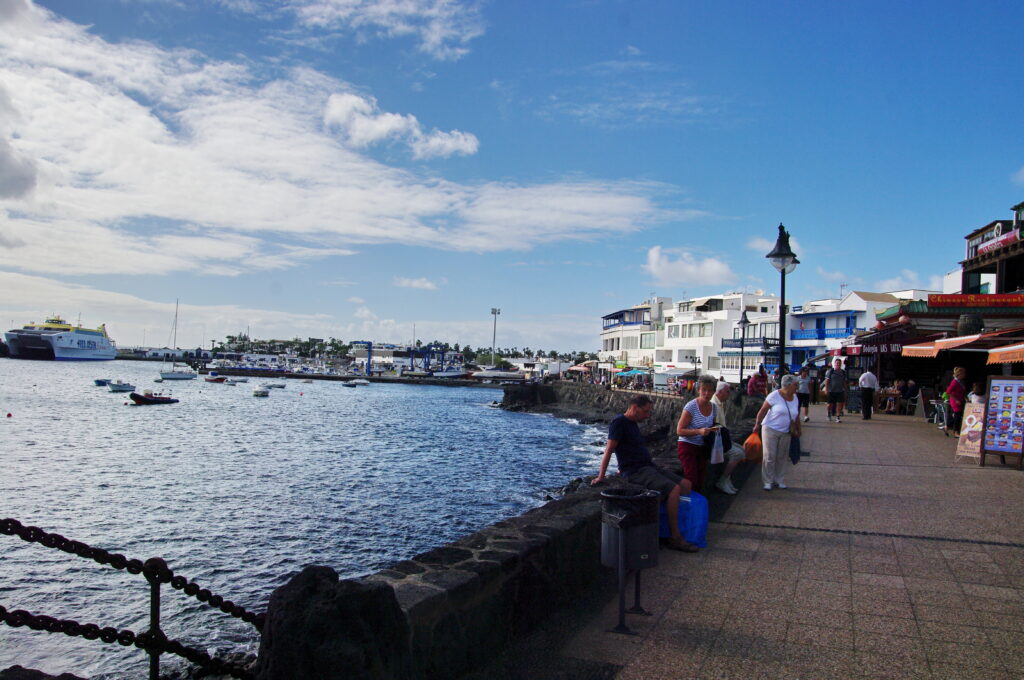
The oldest and liveliest area. This is where the shops, bars, supermarkets, banks and the two main urban beaches, Flamingo and Dorada, are concentrated. The promenade offers continuous views of Fuerteventura and connects the centre with Marina Rubicón, Playa Flamingo, Playa Dorada and several hotel areas. Its strong points:
- Kilometres of walking
- Seafront terraces
- Views of Fuerteventura and Lobos
- Rest areas
- Ideal for running, walking or cycling
It is one of the town’s great attractions.
Ports, Promenades and Luxury Boutique
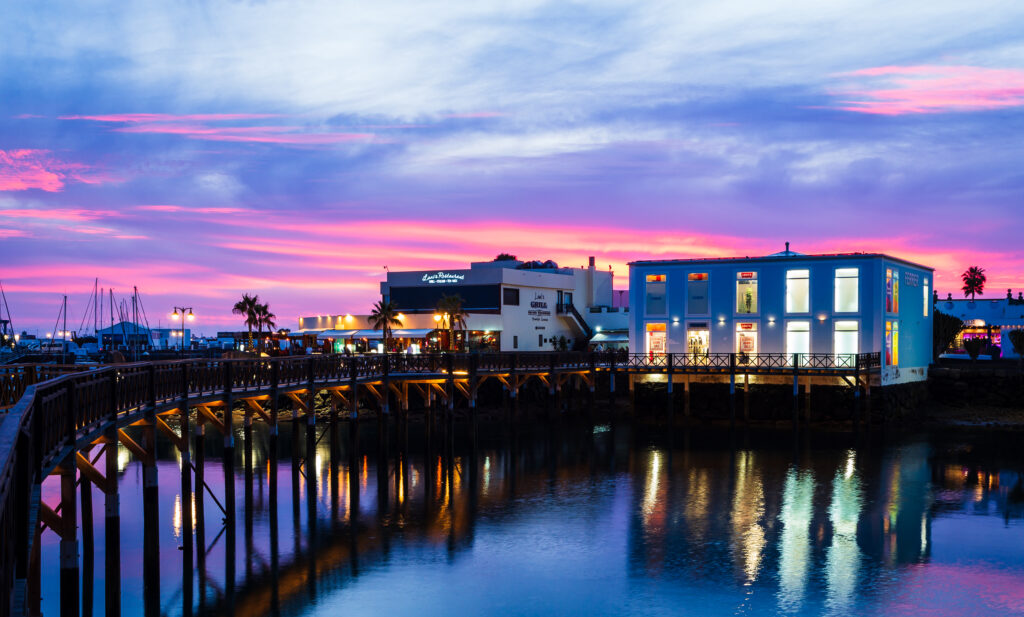
The social pulse and sophistication of Playa Blanca is concentrated on its long promenade and, in particular, its marina.
Marina Rubicón: Where Exclusivity Docks
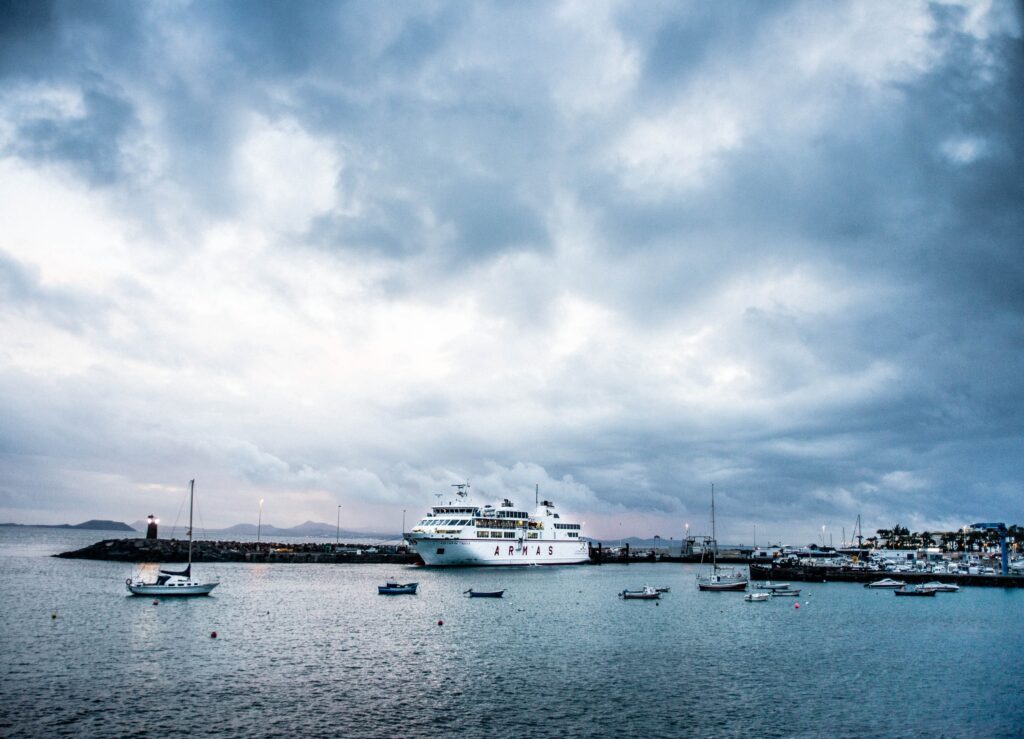
Marina Rubicón is the cosmopolitan heart of the area, a marina designed with architecture that mimics an island village, taking great care to blend in with the landscape. This enclave is synonymous with style and good taste.
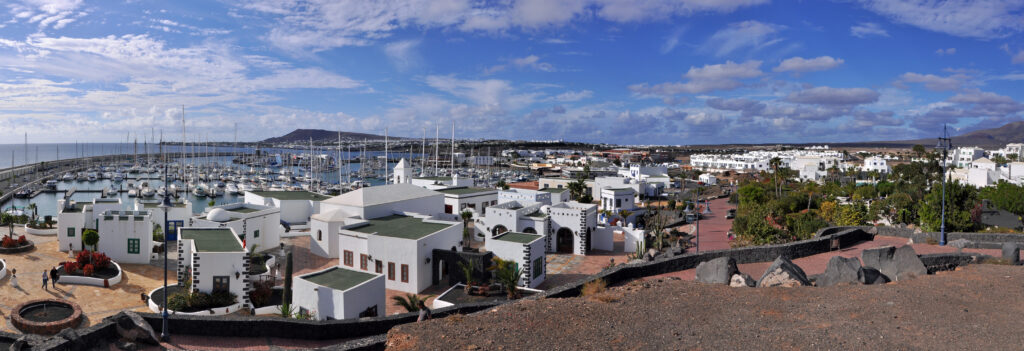
Beyond the luxury yachts moored there, Marina Rubicón offers:
- Exclusive Shopping: A selection of boutiques and shops where you can find high-end fashion, art and crafts.
- Signature Cuisine: First-class restaurants, many with stunning sea views and specialising in local and international cuisine. This is where you will find Casa Brígida, a benchmark for fresh fish and seafood on the island.
- The Weekly Market: On Wednesday and Saturday mornings, the marina comes alive with a lively market offering crafts, organic products and jewellery.
The Promenade: Seven Kilometres of Perspective
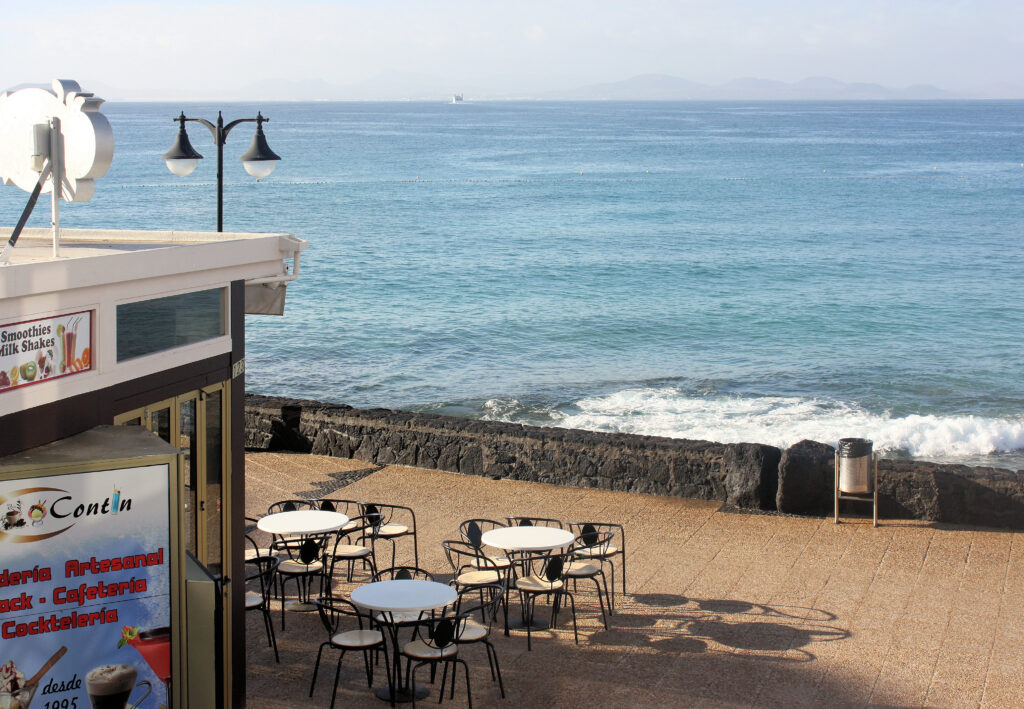
The Playa Blanca promenade stretches for about 7 kilometres, connecting the Pechiguera Lighthouse in the west with the Castillo de las Coloradas in the east. It is an unbeatable pedestrian route for:
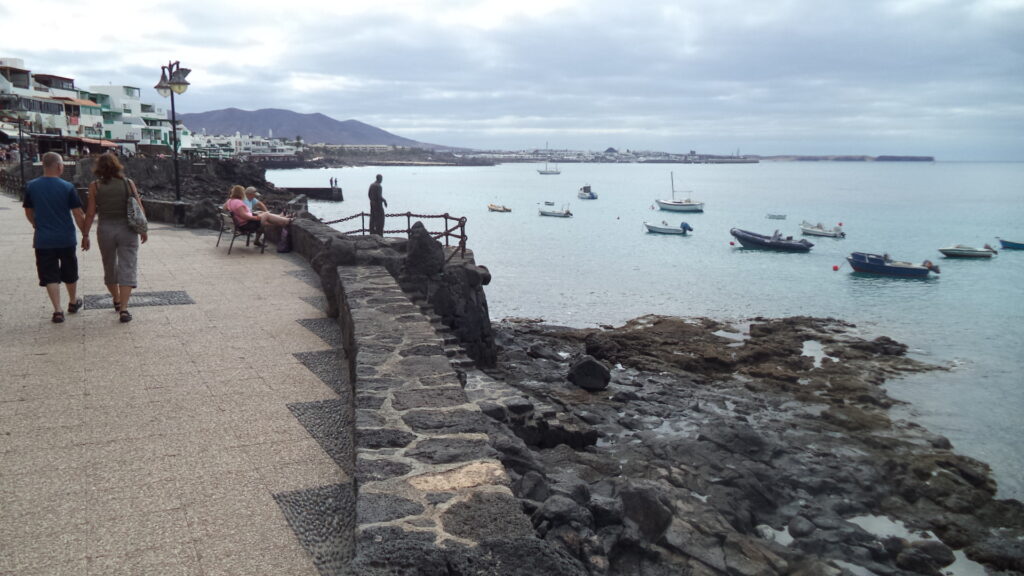
- Panoramic views: It offers constant postcard views of Fuerteventura and Isla de Lobos, especially beautiful at sunrise and sunset.
- Connectivity: It naturally links urban beaches, hotels and leisure centres. It is easy to walk or even travel by electric scooter, which is worth considering for those staying in more remote areas.
Heritage and Defensive History
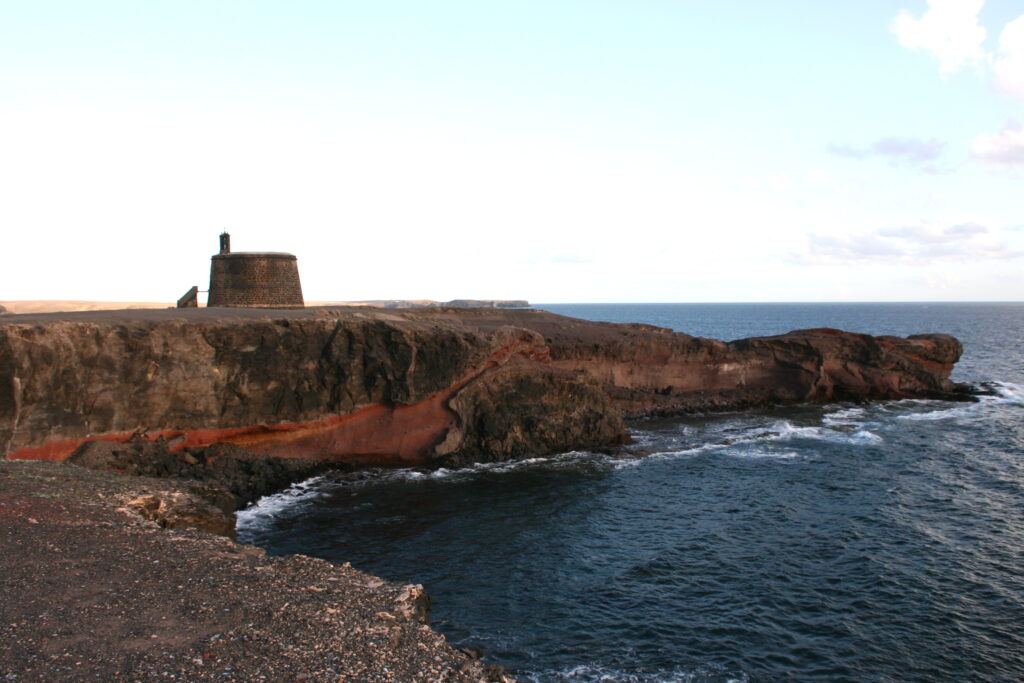
The area’s past as a strategic point against incursions is embodied in the Torre de las Coloradas or Torre del Águila.
- Las Coloradas Castle: Built between 1741 and 1744 (and rebuilt in 1769 after an Algerian attack), this small fortress was vital for the defence of the south coast and the control of traffic in the Strait of La Bocaina. Although it is not accessible inside, its walls offer a unique perspective of the coast and the sea. It is a Site of Cultural Interest and a must-see for lovers of military architecture.
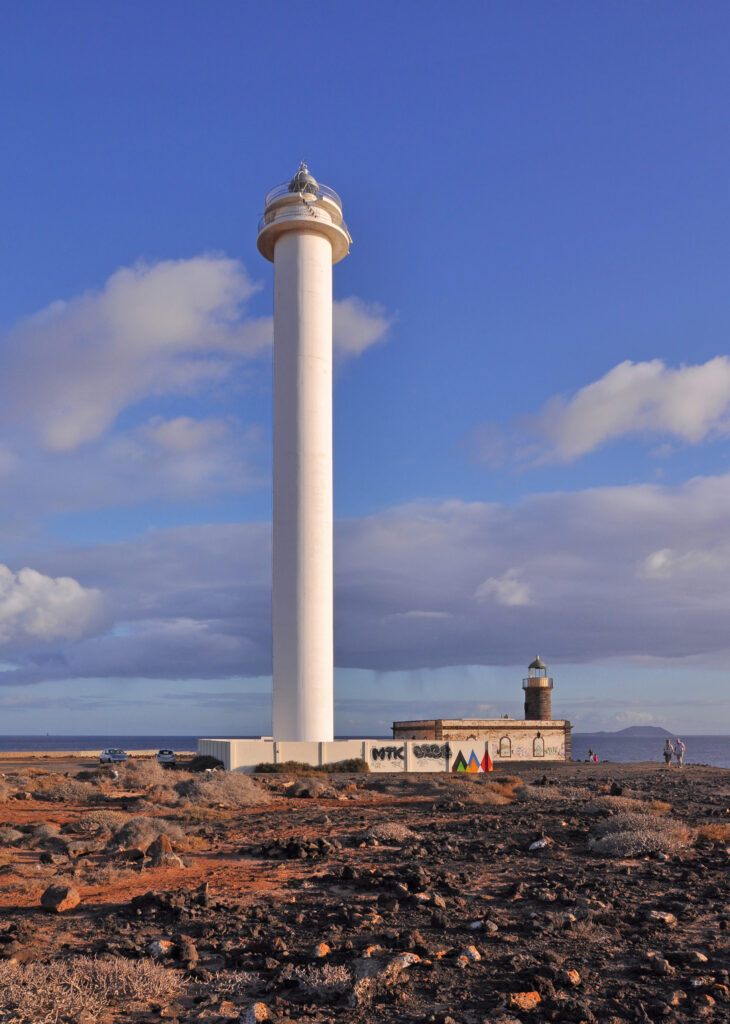
- Pechiguera Lighthouse: At the south-western tip. Built in the 19th century and later replaced by a more modern one, it marks the south-western tip of the island. Beyond its historical value (part of the 1856 Lighting Plan), it is a quiet spot, perfect for walking or running. It is the favourite viewpoint for watching the sunset over the Atlantic, painting the sky with warm tones, a perfect ritual for a romantic getaway. The lighthouse is the most photogenic spot at the southern tip of Lanzarote.
Underwater Exploration: The Atlantic Museum
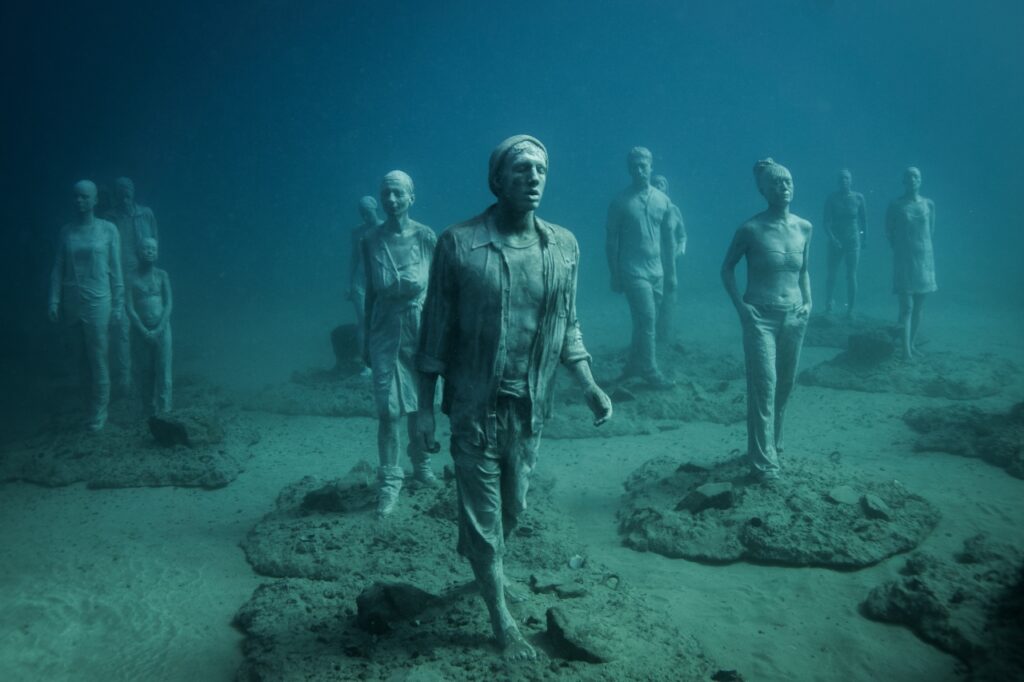
For those seeking unique experiences, Playa Blanca is home to the only underwater sculpture museum in Europe: the Atlantic Museum.
The work of renowned artist Jason deCaires Taylor (creator of other underwater museums around the world), this gallery is located 15 metres below the surface and features more than 300 life-size figures. Its purpose is not only artistic, but also ecological: to create an artificial reef that encourages marine life. To visit it, diving or advanced snorkelling is essential (introductory diving courses are offered by local centres). The experience of swimming among schools of barracudas, angel fish and rays while observing the ‘Garden of Statues’ is simply surreal.
Volcanic Hiking: The Conquest of Montaña Roja
A short distance from the tourist area stands Montaña Roja (194 metres), an extinct volcano that dominates the western landscape. It is an emblem of the geological identity of the area.
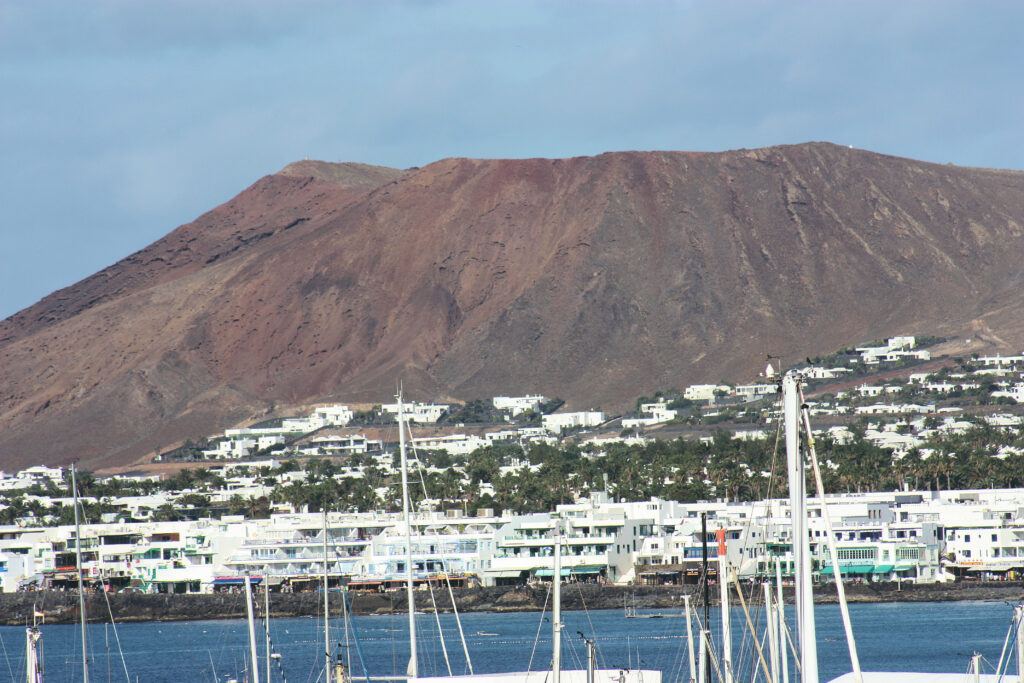
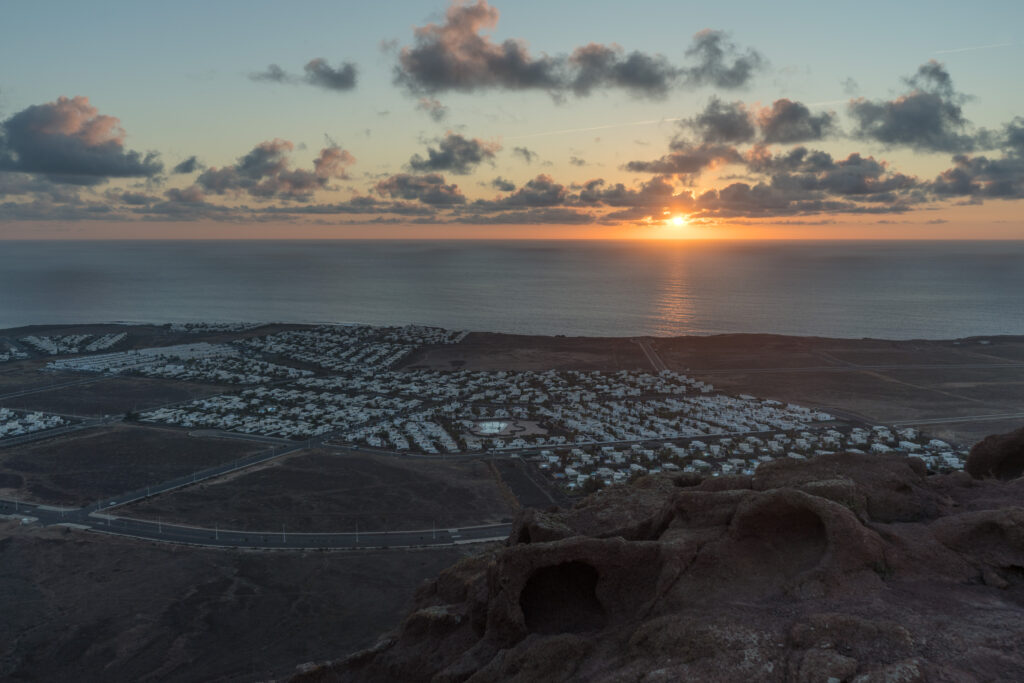
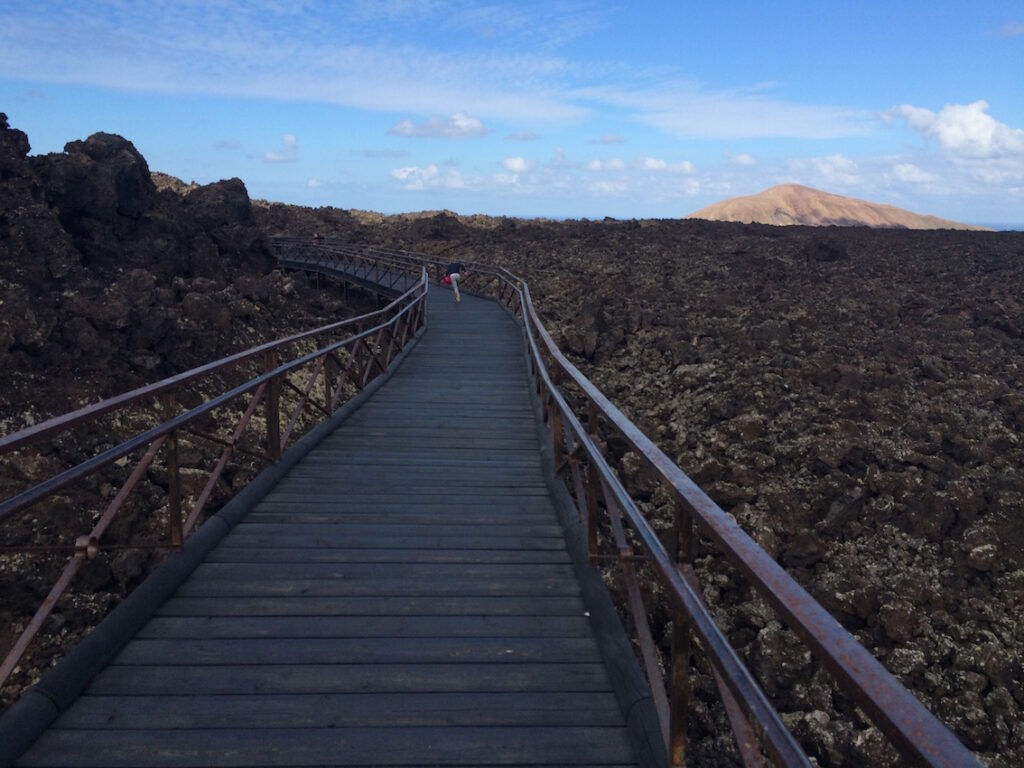
Climbing to the crater is one of the most accessible and rewarding hiking routes in the area. Walking around the crater takes about 45-60 minutes, and the trail, about 4 kilometres round trip, is a direct immersion into the geology of Lanzarote. Once at the top, the reward is threefold: a privileged view of the enormous crater, 350 metres in diameter, a panoramic view of the whole of Playa Blanca and the coast of Los Ajaches, and, on clear days, the sharp silhouettes of Isla de Lobos and Fuerteventura.
At sunrise and sunset, the landscape becomes magical.
Things to do in Playa Blanca: plans and experiences
Playa Blanca’s location makes it the ideal logistical point for visiting Lanzarote’s great landscape icons, all within a reasonable driving distance. Here are some of the best activities:
1. The Impact of Timanfaya and its Surroundings
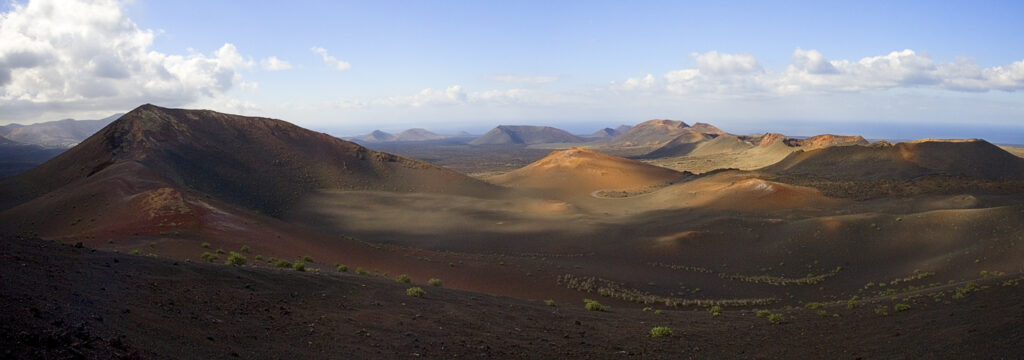
Just a 30-minute drive away, Timanfaya National Park awaits with its Montañas del Fuego (Fire Mountains). The result of 18th-century eruptions, this lunar landscape is a must-see.
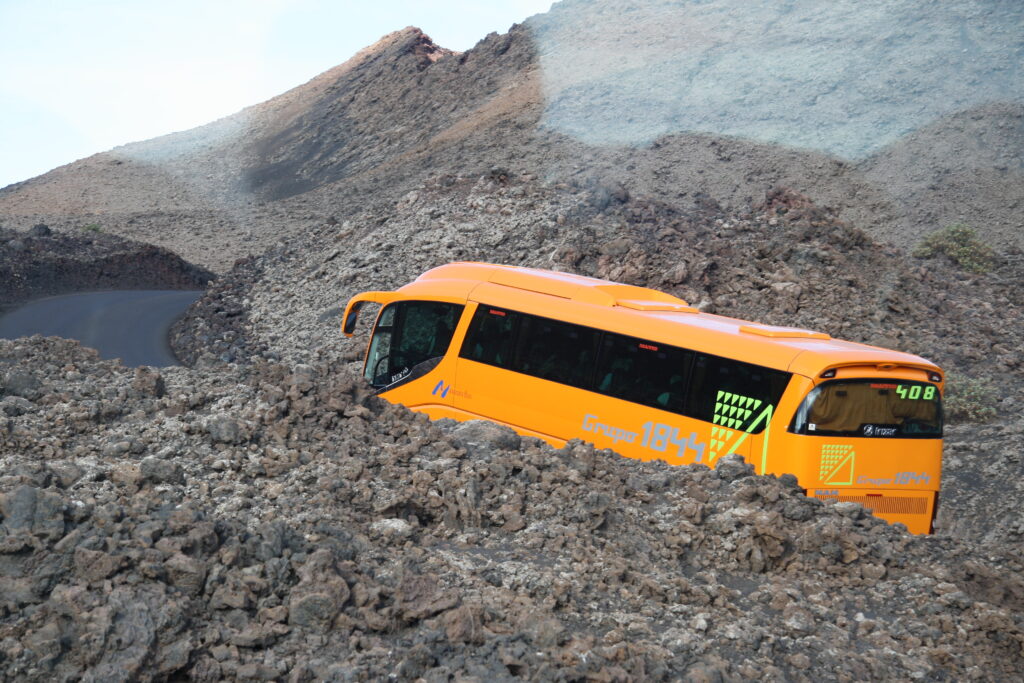
- Volcano Route: A bus tour that winds its way through craters and solidified lava flows, revealing the island’s telluric force.
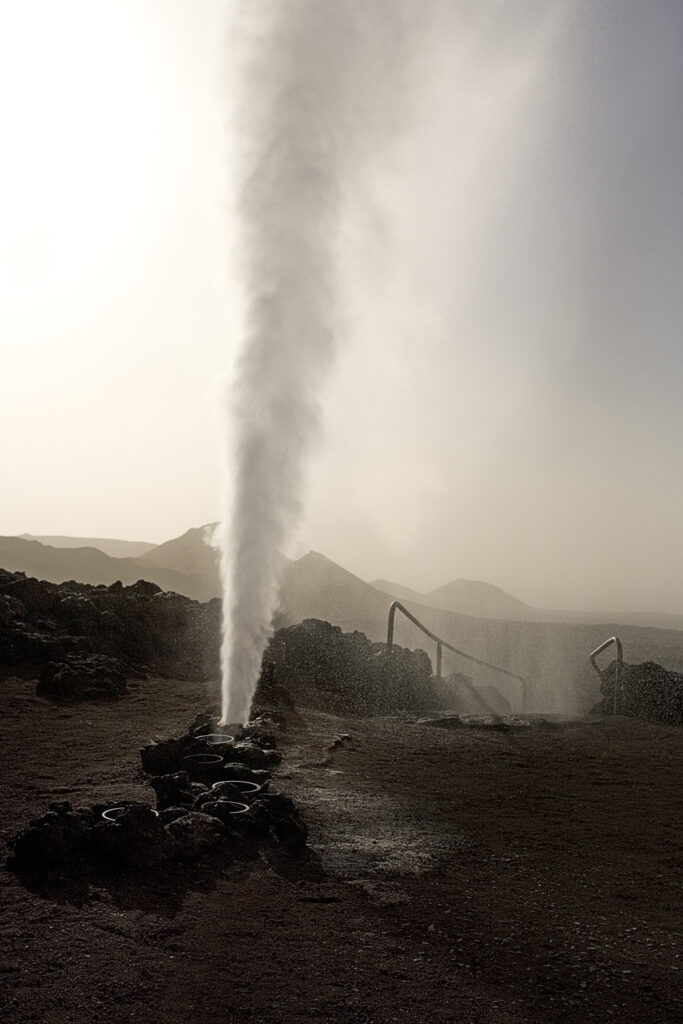
- Geothermal Phenomena: In the area around the El Diablo restaurant, demonstrations (water gushing out on contact with underground heat) illustrate the latent vitality of the subsoil.
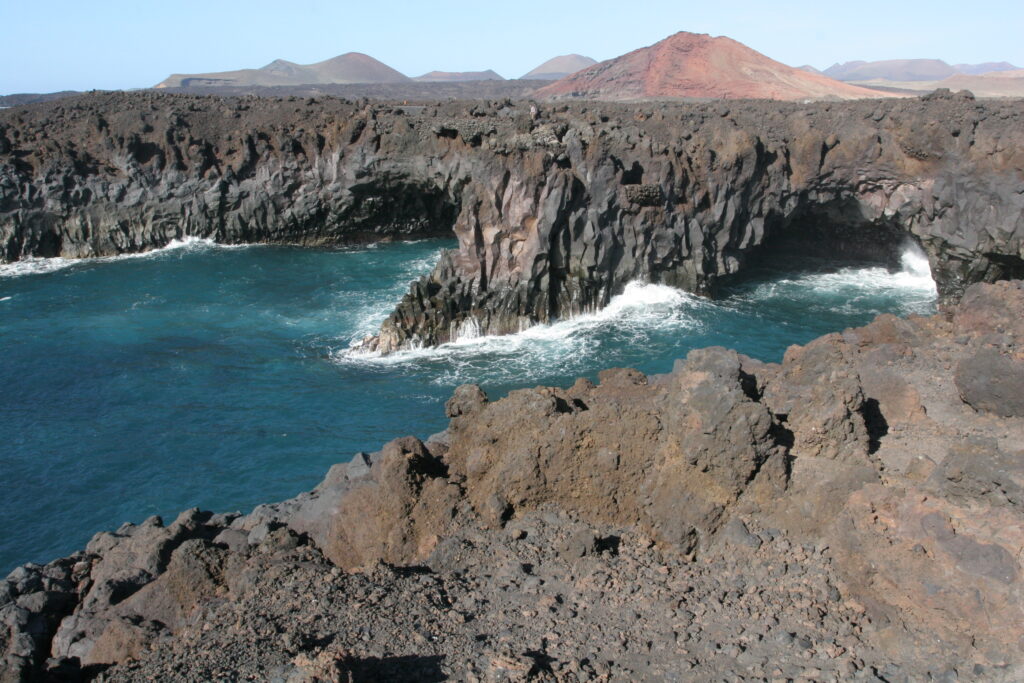
On the way or as an extension of the visit, there are other geological landmarks:
- Los Hervideros: Cliffs where lava met the sea, creating caves and blowholes where the water crashes furiously. A spectacular sound and visual display of nature.
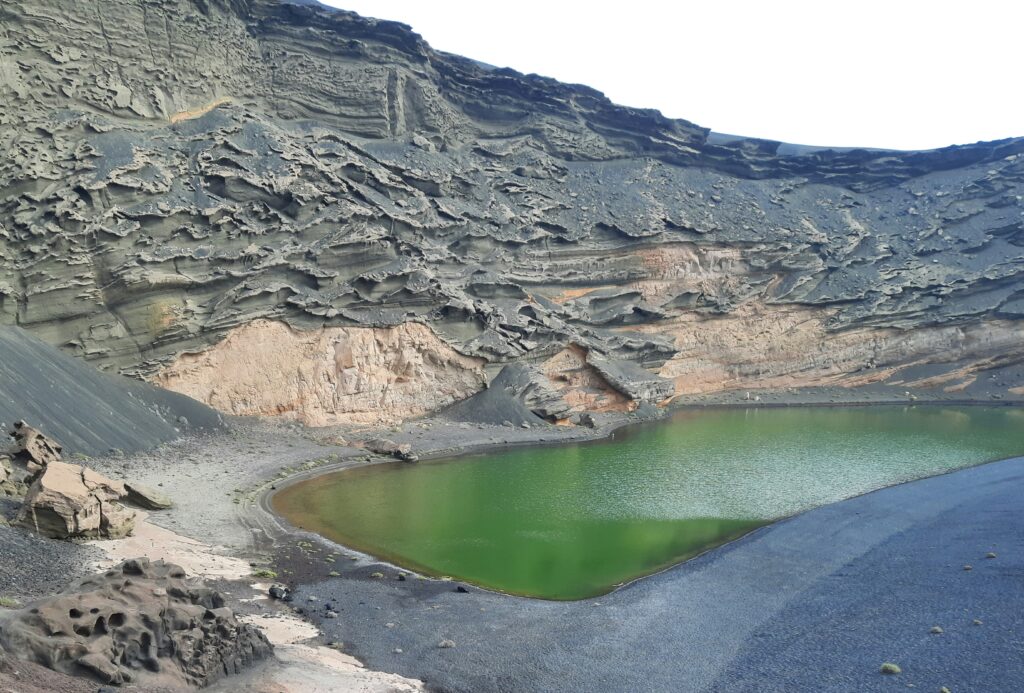
- El Golfo (Charco Verde): A coastal lagoon of intense green colour, contrasting with the black sand and reddish rocks of the volcanic crater. The colouring is the result of microalgae and sulphur, creating one of the most ‘Martian’ postcards of the island.
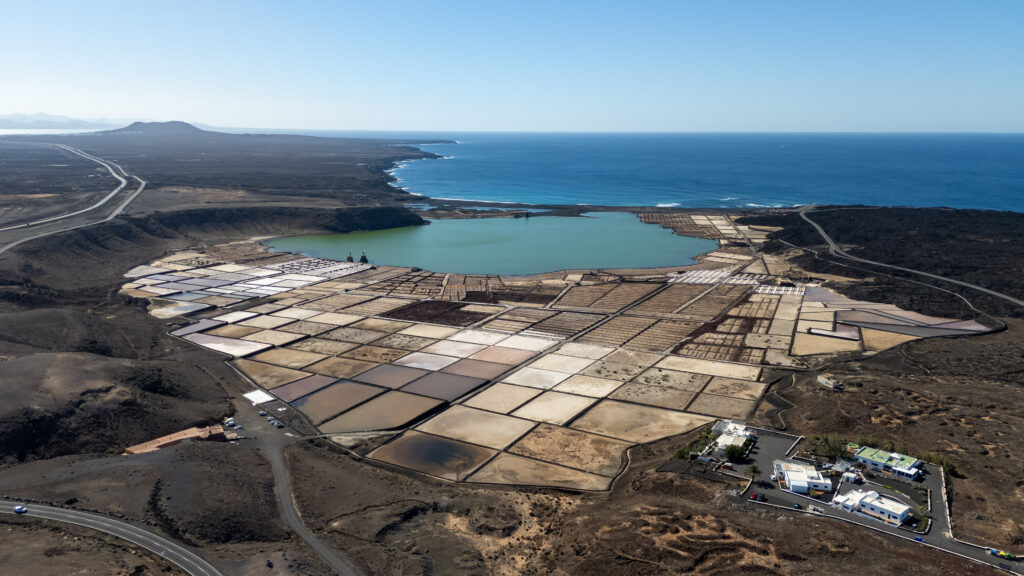
- Las Salinas de Janubio: The largest active salt flats in the Canary Islands. A mosaic of colours (white, ochre, pink) where the craft of salt production is set against a volcanic landscape.
La Geria: The Unique Vineyard Landscape
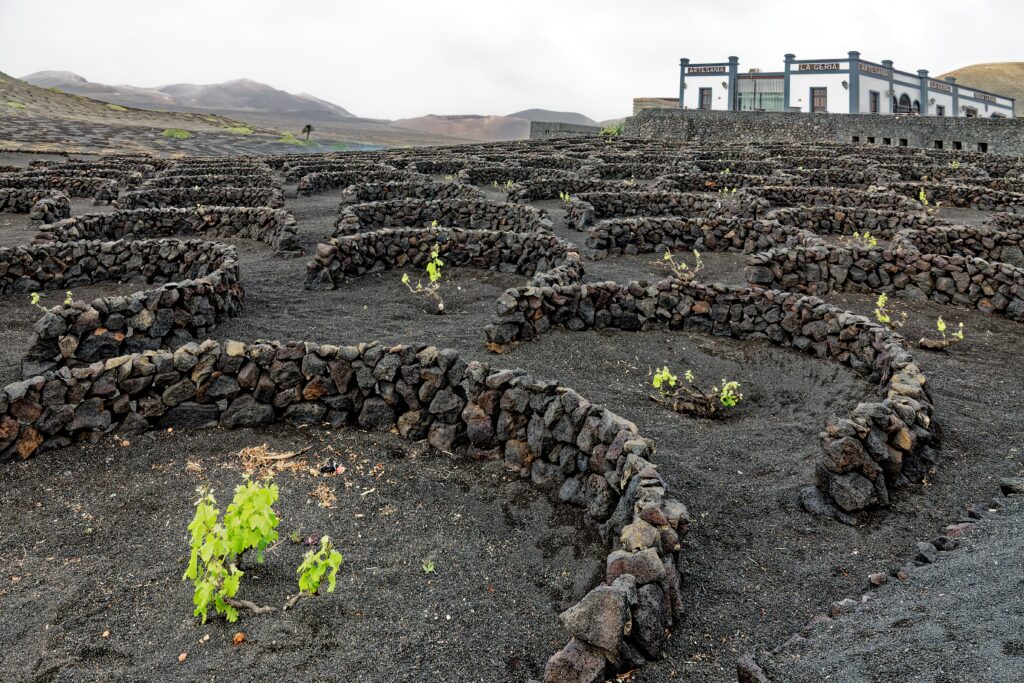
A short distance from Los Volcanes Park is La Geria, a wine-growing area unique in the world. To protect the vines (mainly Malvasía Volcánica) from the trade winds and take advantage of the humidity, each vine is planted in a conical hole dug into the volcanic ash (lapilli), protected by a semicircular stone wall. The result is a landscape of black circles and vineyards, a masterpiece of agronomy that César Manrique always defended.
2. Fuerteventura and Isla de Lobos
The port location of Playa Blanca makes it very easy to explore other nearby islands, opening up a range of possibilities for your holiday itinerary.
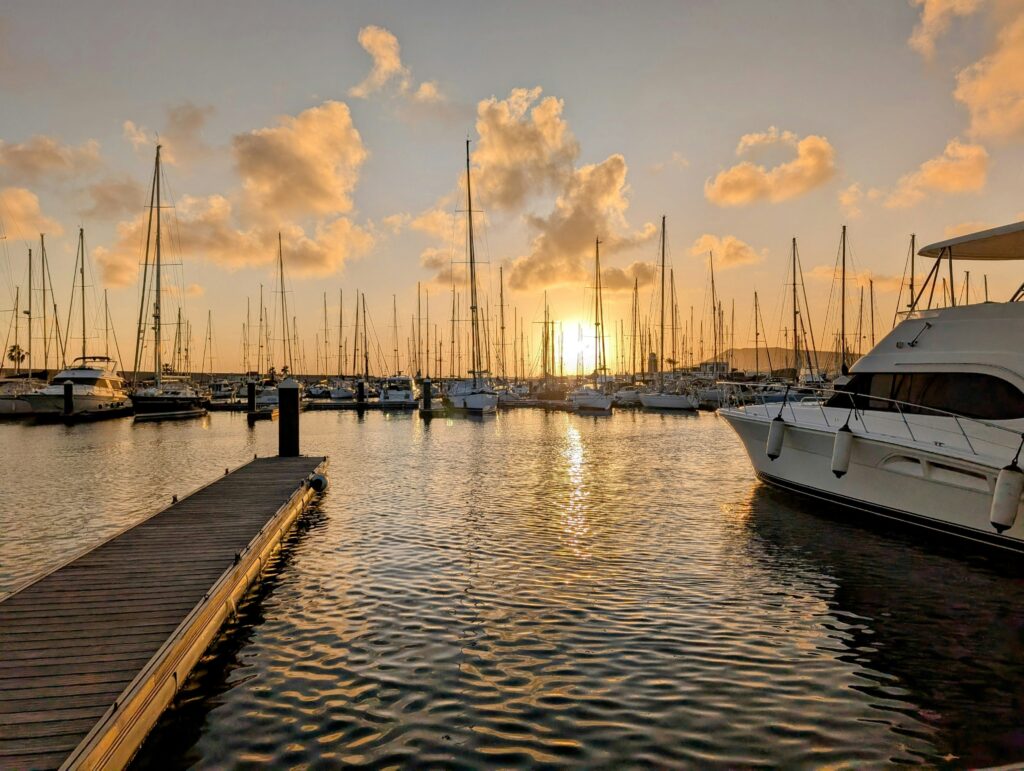
The Port of Playa Blanca is the most efficient connection hub between Lanzarote and Fuerteventura via the Corralejo pier.
- Express Ferry: Several companies (Fred Olsen Express, Líneas Marítimas Romero, Naviera Armas) offer fast and frequent crossings (up to 24 daily) that take only 25-35 minutes. This allows for a perfect same-day round trip, ideal for visiting the famous Corralejo Dunes and Montaña Roja in Fuerteventura.
Once there, you can:
- Visit the historic centre of Corralejo
- Enjoy its urban beaches
- Go to the Dunes of Corralejo, a white sand desert by the sea
- Take a buggy tour
- Practise water sports
- Frequency: Every 30-45 minutes with two different shipping companies
- Comfortable cruise and beautiful views on the crossing
It is very easy to go and return on the same day. It is a perfect plan for spending the day: exploring the village, going to the Corralejo Dunes or simply enjoying the beaches of northern Fuerteventura.
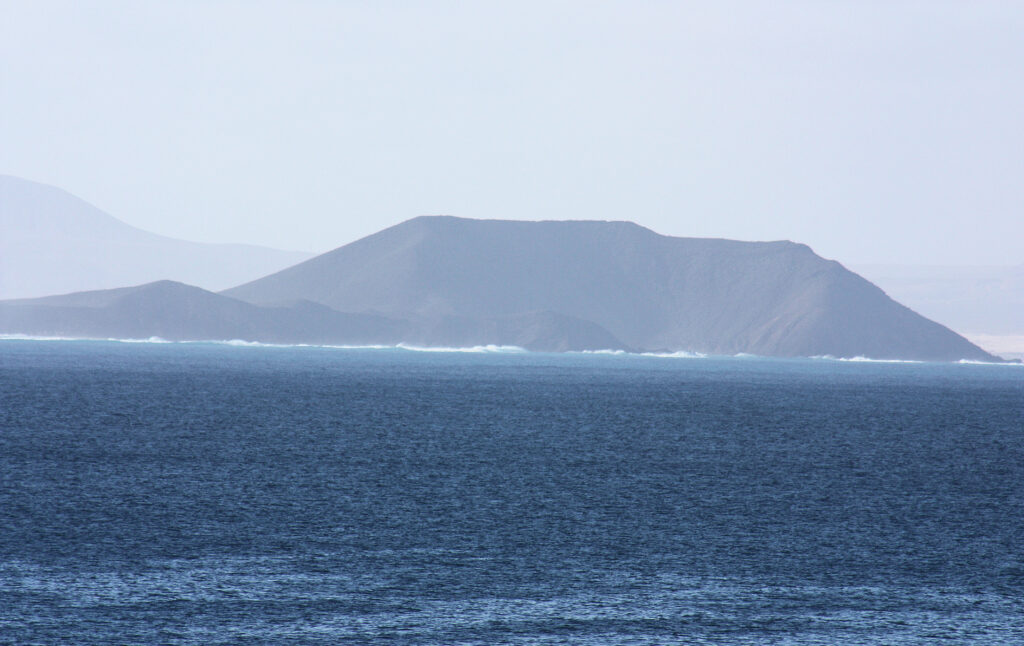
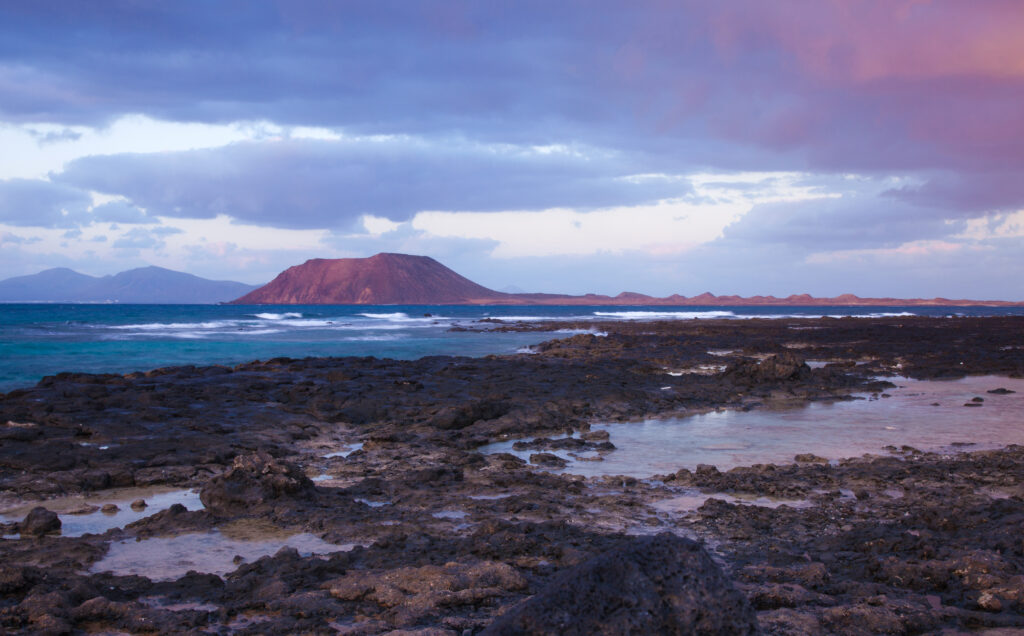
- Isla de Lobos: It is also possible to take excursions to this small uninhabited islet, a Natural Park of great ecological value that offers a day of unspoilt beaches and absolute tranquillity.
La Graciosa
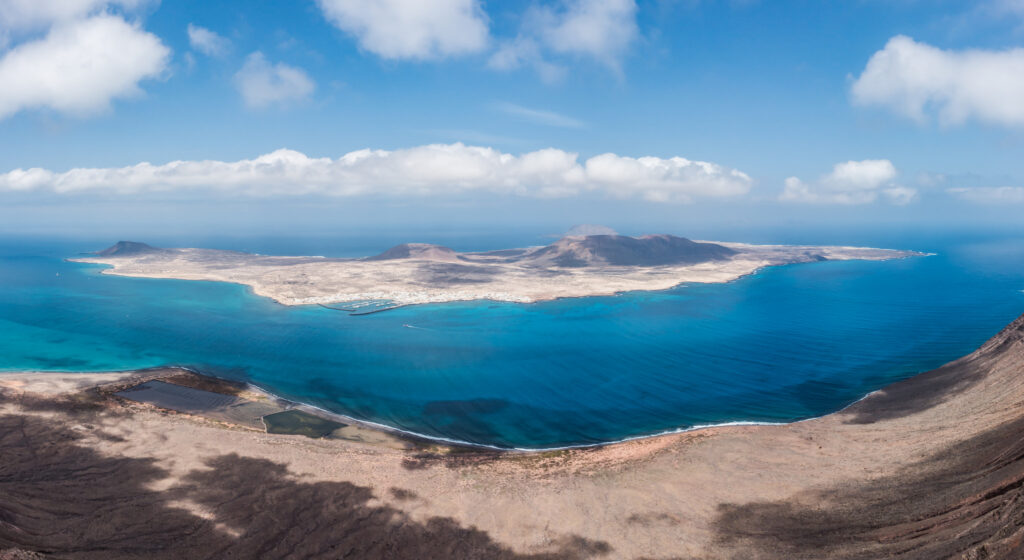
Although it requires a drive north to catch the ferry, the proximity to La Graciosa, the eighth Canary Island, is a must. This island is a haven of tranquillity, with no paved roads and pristine beaches that offer a completely different island experience.
The Gourmet Experience and Classy Accommodation
Playa Blanca offers a level of accommodation and a gastronomic scene that reflect its positioning as a luxury destination.
1. Gastronomy: The Taste of the Atlantic
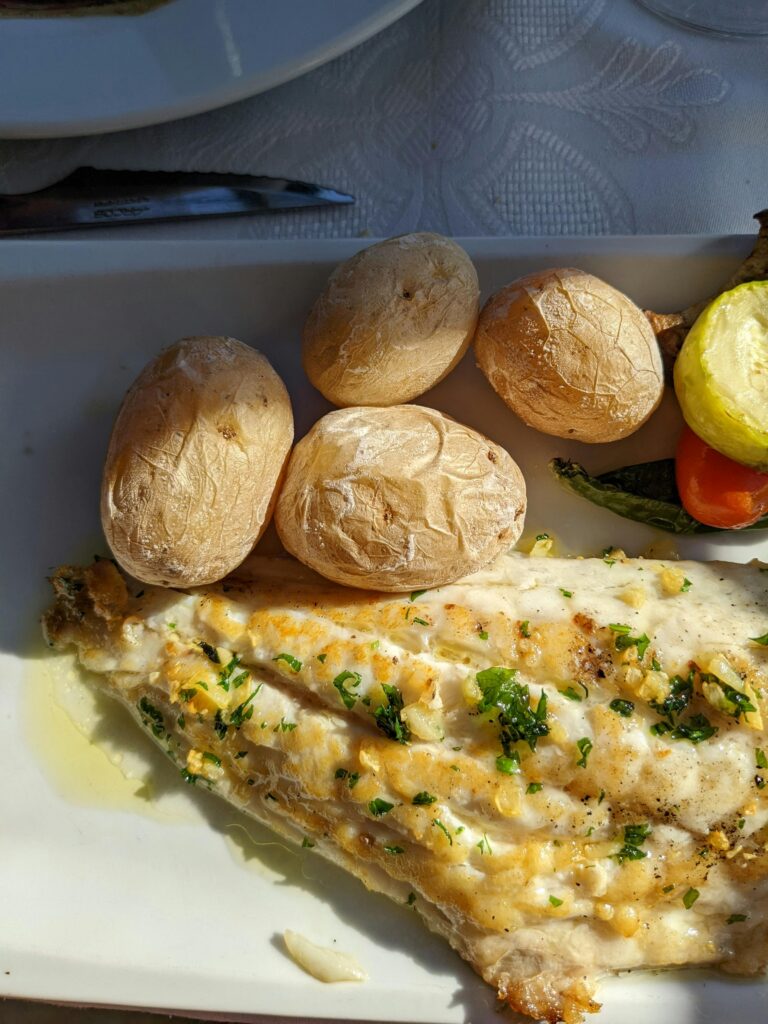
The local cuisine is based on the freshness of seafood, rooted in Canarian tradition but with touches of contemporary fusion.
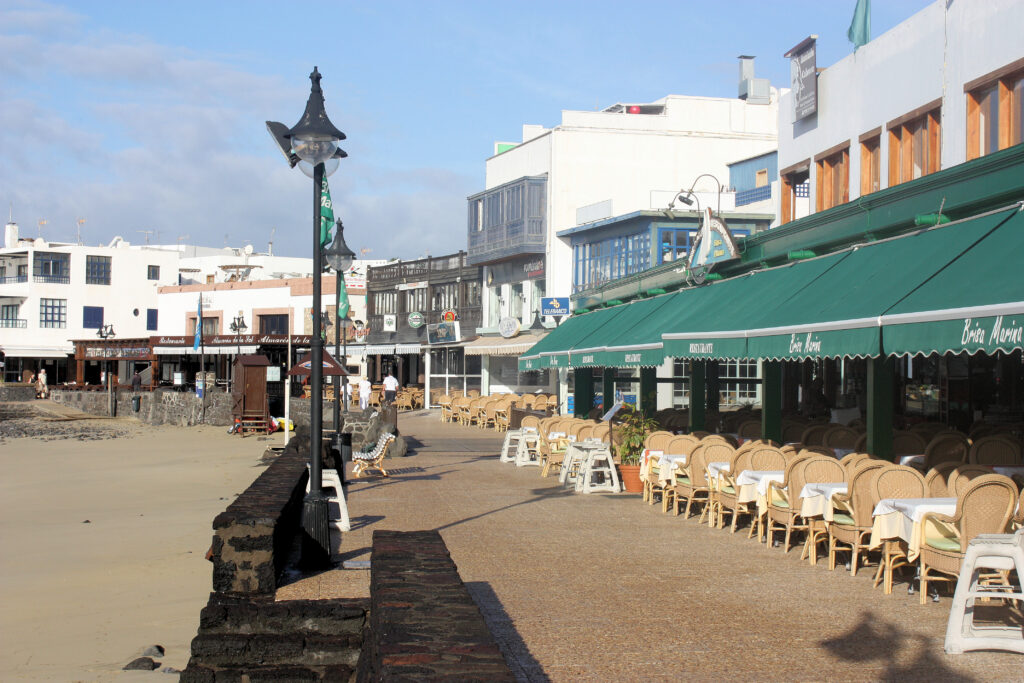
- Local Essentials: You must try the fish broth (with grouper or sama), the ubiquitous gofio (toasted flour), the sancocho (salted fish stew) and, of course, the papas arrugás with their two versions of mojo picón (red and green).
- Level Recommendations:
- Casa Brígida (Marina Rubicón): Specialising in fresh fish and seafood, with a spectacular terrace.
- El Olivo: Mediterranean and Canarian cuisine, ideal for rice dishes (the black rice with lobster is remarkable) and confit meats.
- El Chiringuito de El Papagayo: Eat fresh fish at the top of the Papagayo cliff, with unbeatable views.
- Citurna Casual Food: A modern fusion cuisine alternative in the centre.
2. Premium Accommodation: A Wellness Retreat
The hotel sector is characterised by high-end complexes, many inspired by the style of César Manrique and focused on the wellness experience.
- Independent Accommodation: For more flexible budgets, there are plenty of luxury villas and apartments with private pools in areas such as Montaña Roja, offering independence and exceptional views.
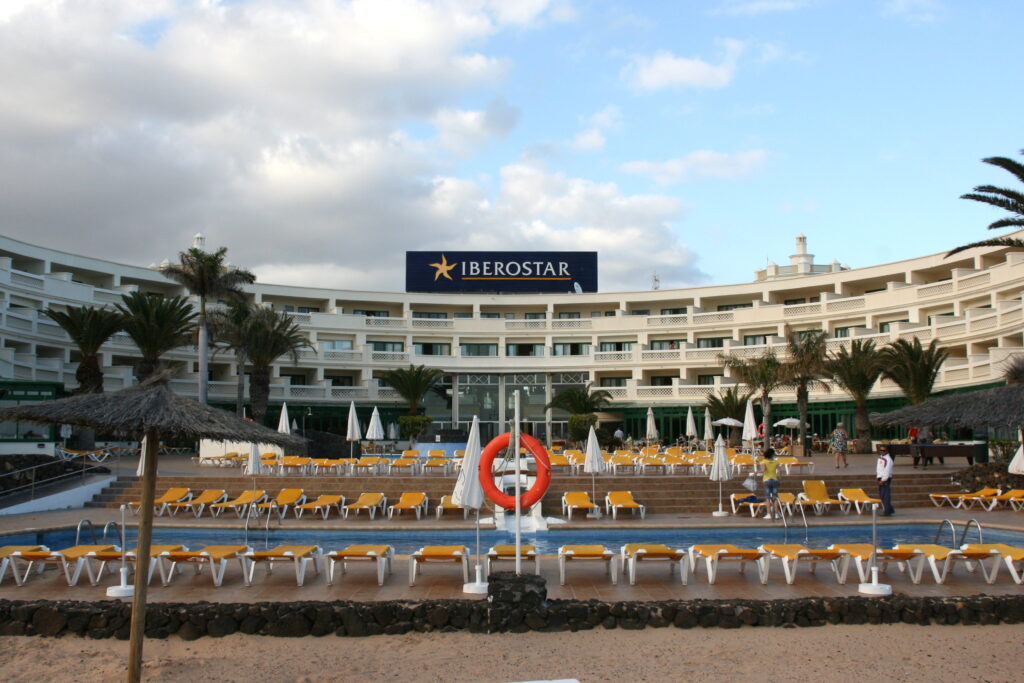
- Iberostar Selection Lanzarote Park: Famous for its location opposite Playa Flamingo and its multiple swimming pools, ideal for families.
- H10 Rubicón Palace: A large resort with a spa and a wide range of dining options, close to Playa La Mulata.
- Barceló Lanzarote Royal Level: Within the Barceló Active Resort, it offers an exclusive ‘adults only’ service with private pools and restaurants, a haven of privacy and high standards.
How to get to and around Playa Blanca
Playa Blanca is located about 30–35 minutes from Lanzarote Airport. The usual options are:
- Car hire: the most recommended way to get around the island freely.
- Public bus (lines 161 and 261): connects the airport with Playa Blanca with intermediate stops.
- Taxi: fast but somewhat expensive for long journeys, usually taking just over half an hour.
- Bicycle: ideal for getting around the centre and the seafront promenade.
What to see in Lanzarote
If you want to make the most of your visit to the island, here are some places we have added to our map:
- Risco Beach: one of the wildest, most beautiful, and memorable beaches in Lanzarote.
- Las Grietas: A perfect blend of geology, volcanic landscape, and photogenic appeal that attracts more and more travelers.
- Los Charcones: a string of unspoilt natural pools stretching along the south-western coast of the island.
- Punta Mujeres: a small fishing village where the ocean ebbs and flows at will, forming dozens of natural pools.
- Caleta del Mojón Blanco: a small natural treasure where turquoise waters and ocean calm prevail.
- Tahíche: Together with the César Manrique Foundation, this is probably the most important cultural space in the whole of Lanzarote.
Practical tips for your visit
- The wind can be surprising, even in the middle of summer. Bring something light to cover up with.
- Bring sunscreen, even in winter, because the wind can be deceiving.
- To visit Papagayo, arrive early or at sunset (and avoid the hottest hours of the day).
- The promenade is long, so wear comfortable walking shoes.
- If you are going to Fuerteventura, avoid the windiest times (usually in the early afternoon).
- Walking in Montaña Roja is more pleasant in the early morning or late afternoon.
- Book your car in advance during high season.
Playa Blanca, the epitome of natural luxury in Lanzarote
Playa Blanca is one of the most complete and attractive destinations in Lanzarote. Its mix of high-quality urban beaches, modern areas such as Marina Rubicón, a well-maintained atmosphere, accessibility, nearby routes and the possibility of reaching Papagayo or Fuerteventura make it an ideal place for both a quiet holiday and as a base for exploring the island. If you are looking for a strategic, beautiful, comfortable location with high-quality services, Playa Blanca in Lanzarote is a safe bet.
Photo Credits
Below are the photo credits in order of appearance. Royalty-free photos will not be listed below:
- Cover Image: Gareth O’Brien, CC BY 2.0, via Wikimedia Commons
- Luis Miguel Bugallo Sánchez(Lmbuga), CC BY-SA 3.0, via Wikimedia Commons
- giggel, CC BY 3.0, via Wikimedia Commons
- Pedro caba, CC BY-SA 3.0, via Wikimedia Commons
- Marc Ryckaert, CC BY-SA 4.0, via Wikimedia Commons
- biallasg, CC BY-SA 3.0, via Wikimedia Commons
- Dguendel, CC BY 4.0, via Wikimedia Commons
- Frank Vincentz, CC BY-SA 3.0, via Wikimedia Commons
- Frank Vincentz, CC BY-SA 3.0, via Wikimedia Commons
- Dguendel, CC BY 4.0, via Wikimedia Commons
- Frank Vincentz, CC BY-SA 3.0, via Wikimedia Commons
- Gareth O’Brien, CC BY 2.0, via Wikimedia Commons
- Balou46, CC BY-SA 3.0, via Wikimedia Commons
- Marc Ryckaert (MJJR), CC BY 3.0, via Wikimedia Commons
- Gareth O’Brien, CC BY 2.0, via Wikimedia Commons
- CarlosVdeHabsburgo, CC BY-SA 4.0, via Wikimedia Commons
- Dguendel, CC BY 4.0, via Wikimedia Commons
- Frank Vincentz, CC BY-SA 3.0, via Wikimedia Commons
- Marc Ryckaert (MJJR), CC BY 3.0, via Wikimedia Commons
- Turismo de Canarias, via turismodeislascanarias.com
- Dguendel, CC BY 4.0, via Wikimedia Commons
- Alexey Komarov, CC BY-SA 4.0, via Wikimedia Commons
- Gernot Keller, London (www.gernot-keller.com), CC BY-SA 2.5, via Wikimedia Commons
- GerritR, CC BY-SA 4.0, via Wikimedia Commons
- Gernot Keller, London (www.gernot-keller.com), CC BY-SA 2.5, via Wikimedia Commons
- Marc-Lautenbacher, CC BY-SA 4.0, via Wikimedia Commons
- Bybbisch94, Christian Gebhardt, CC BY-SA 4.0, via Wikimedia Commons
- MiljenkoSuljic, CC BY-SA 4.0, via Wikimedia Commons
- Holger Uwe Schmitt, CC BY-SA 4.0, via Wikimedia Commons
- Dguendel, CC BY 4.0, via Wikimedia Commons
- Tamara Kulikova, CC BY-SA 4.0, via Wikimedia Commons
- Edmundo Sáez, CC BY-SA 3.0, via Wikimedia Commons
- Dguendel, CC BY 3.0, via Wikimedia Commons
- Frank Vincentz, CC BY-SA 3.0, via Wikimedia Commons
- KatleenaK, CC BY-SA 4.0, via Wikimedia Commons
- Jorge Franganillo, CC BY 2.0, via Wikimedia Commons


.JPG)


.jpg)


.jpeg)


.jpg)