What to see in Logroño: history, wine and tradition in the capital of the Ebro
Logroño, capital of La Rioja, is a city where history, culture, gastronomy and wine intertwine in an almost perfect balance. On the banks of the Ebro River, its historic centre, its arcaded streets and its lively squares invite you to discover it at your leisure, glass in hand, enjoying the unique atmosphere of La Rioja.
Over the centuries, the city has been a stopping point for pilgrims, the scene of battles, the birthplace of great politicians and home to one of the world’s most renowned wine cultures. Today, Logroño is not only the administrative heart of La Rioja, but also an ideal destination for those seeking authenticity, good food and quality of life.

In this guide, we tell you what to see in Logroño, its most important monuments, historical curiosities, essential wine tourism experiences and everything you need to enjoy this city with soul to the fullest.

Crossroads of Wines and Legends: The Location of Logroño
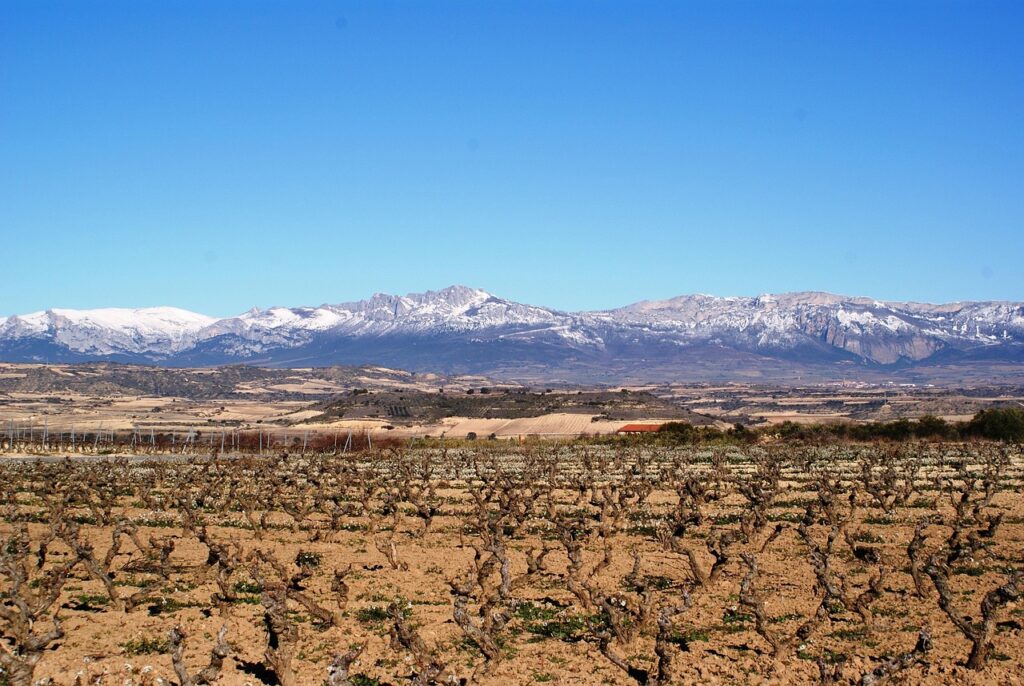
Located in the north of Rioja Media, the geography of Logroño is as fundamental to its identity as its history. Much of its urban centre sits on the right bank of the Ebro, in a considerably flat valley area. However, its skyline is not without relief, dotted with elevations such as the Cerro de Cantabria or the Pico Candorras (584 metres), which dominates the nearby La Grajera Reservoir, a green lung just a few kilometres from the city.
The city’s location, on the historic border of the ancient kingdoms of Castile, Navarre and Aragon, made it a crucial crossing point and area of dispute during the Middle Ages, a legacy of its position at a crossroads that lives on thanks to the Camino de Santiago. Its current municipal boundaries reflect this strategic position, connecting La Rioja with Álava (Basque Country) and Navarre.
Titles that Define a City
Logroño has been recognised with titles that go beyond its status as the regional capital, consolidating its national and international profile:
- First Spanish Gastronomic Capital (2012): Official recognition of a first-rate culinary and wine culture.
- Best city in Spain for tapas (The Times).
- ‘Barcelona, but without mass tourism’ (Daily Mirror).
- Spain’s Leading Shopping City (1997): A testament to its commercial dynamism.
- European City of Sport (2014): Underlining its commitment to an active lifestyle.
But if there is one thing that defines Logroño, it is three unshakeable pillars: wine, gastronomy and the Way of St James. The open and hospitable character of the people of Logroño (more than 150,000 inhabitants) completes the picture of a city that can be enjoyed on foot, at a leisurely pace. Its continental climate, mild but with contrasts (warm summers and cold winters), invites visitors at any time of year, as long as they are prepared for the weather.
The Way that Made the City: Jacobean History
The essence of Logroño is inseparable from the Way of St James. Since the route’s heyday in the 11th century, the town, already mentioned in the Codex Calixtinus, became a hub for pilgrims, artists and merchants, boosting its growth since its first written mention in 926 as ‘Locrunio’.
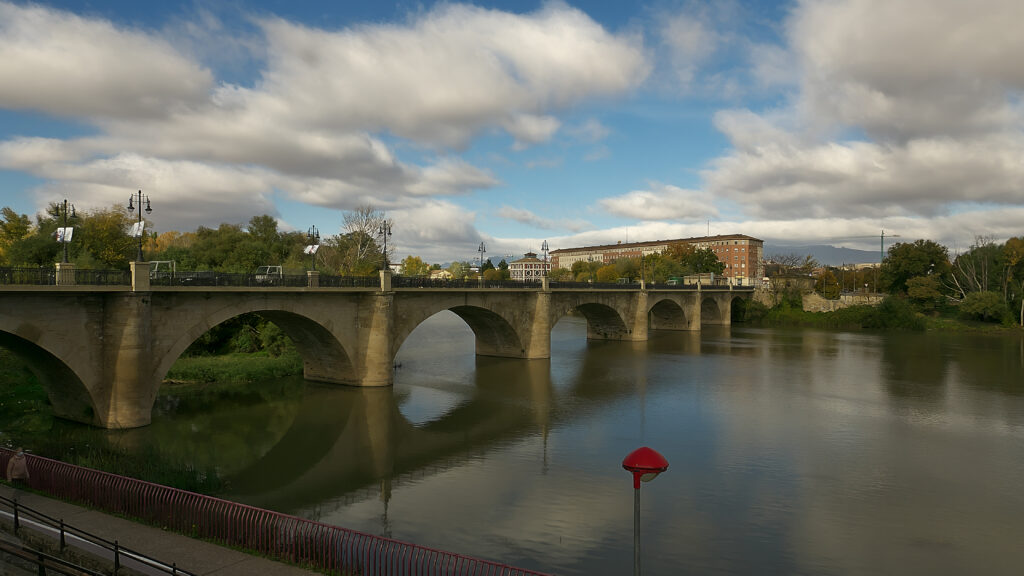
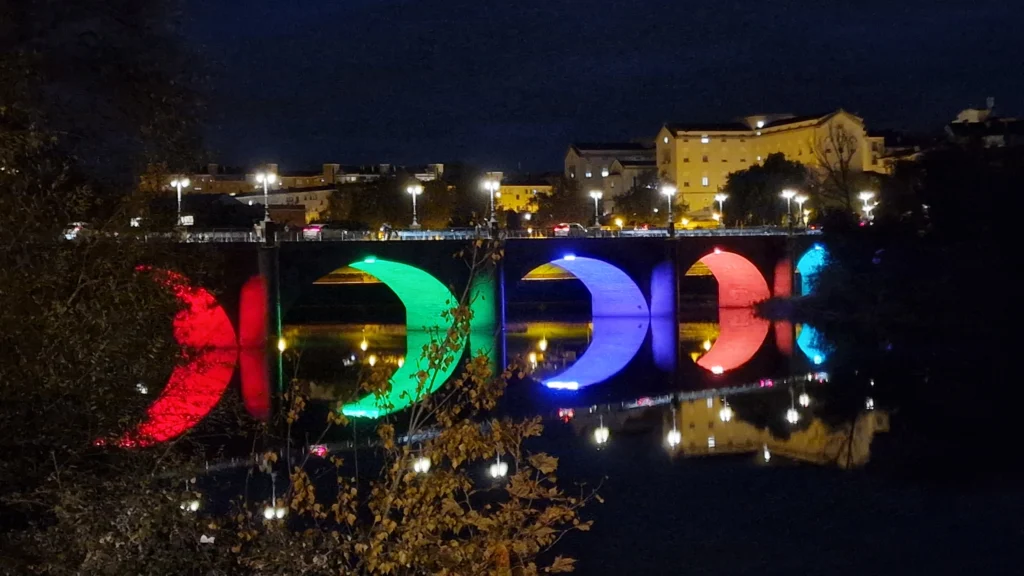
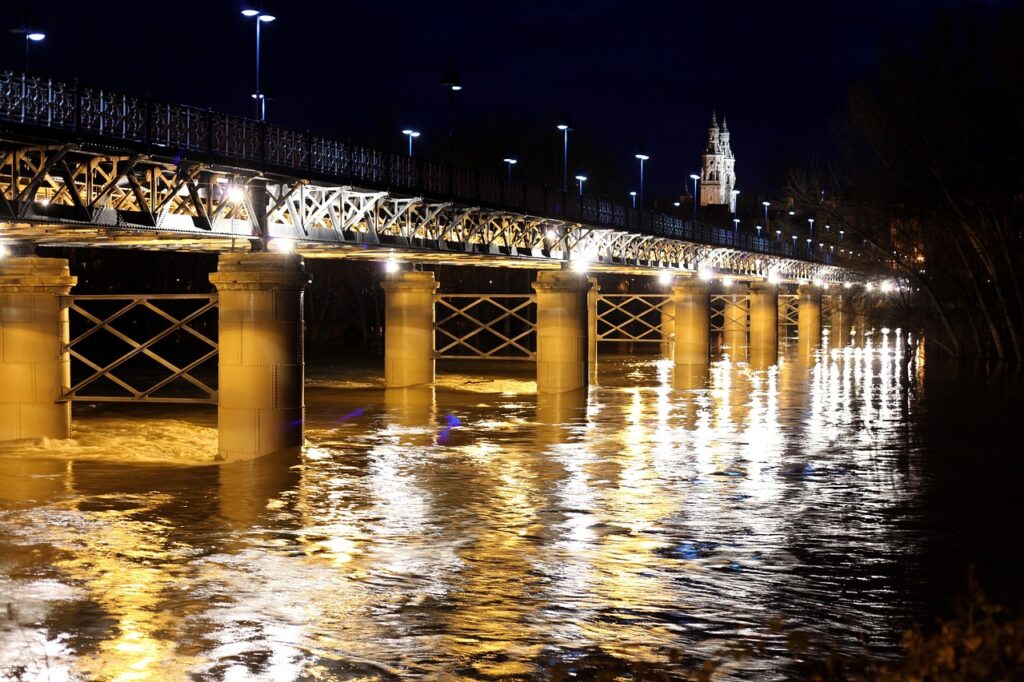
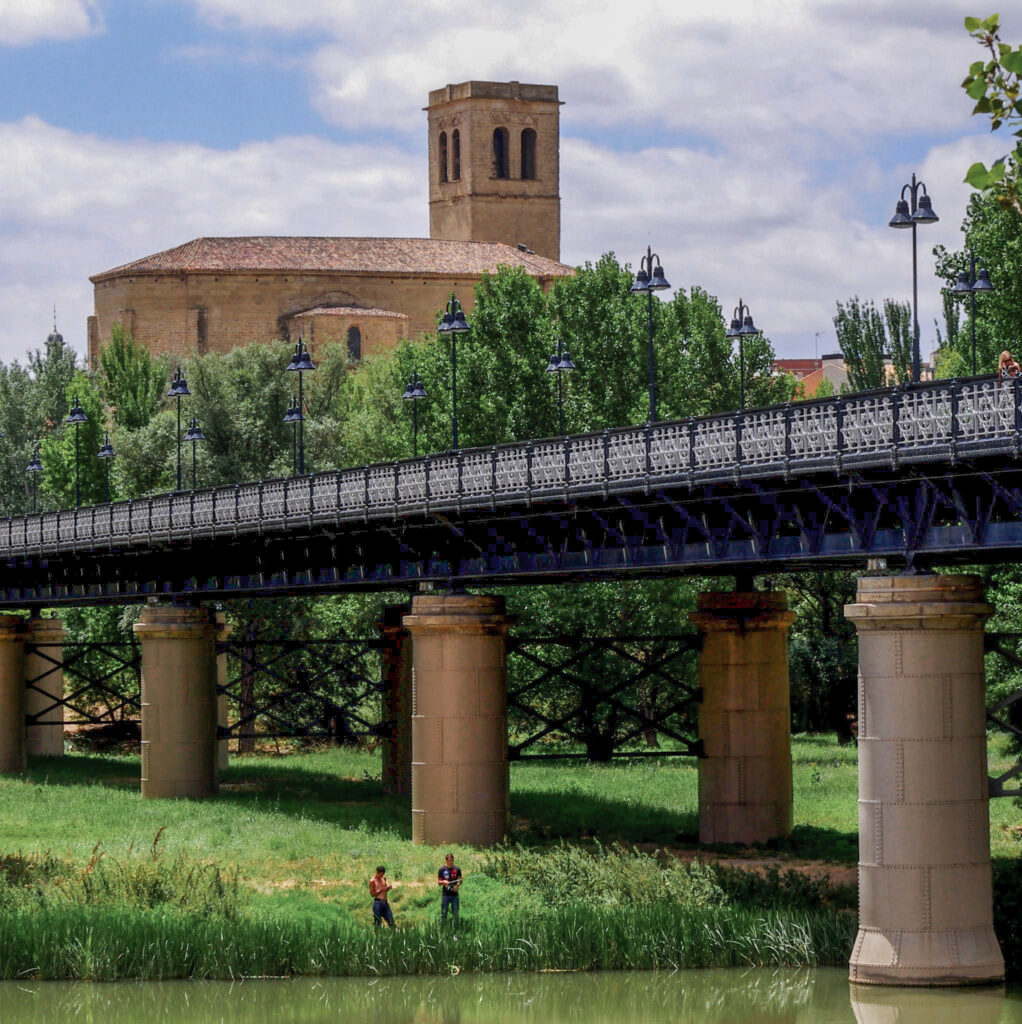
The French Way enters triumphantly via the Puente de Piedra (or San Juan de Ortega Bridge), an emblem of the city dating from 1884 and proudly featured on the municipal coat of arms. Nearby, the Iron Bridge (330 m, 1882), promoted by Práxedes Mateo Sagasta, completes the duo of historic crossings over the Ebro.
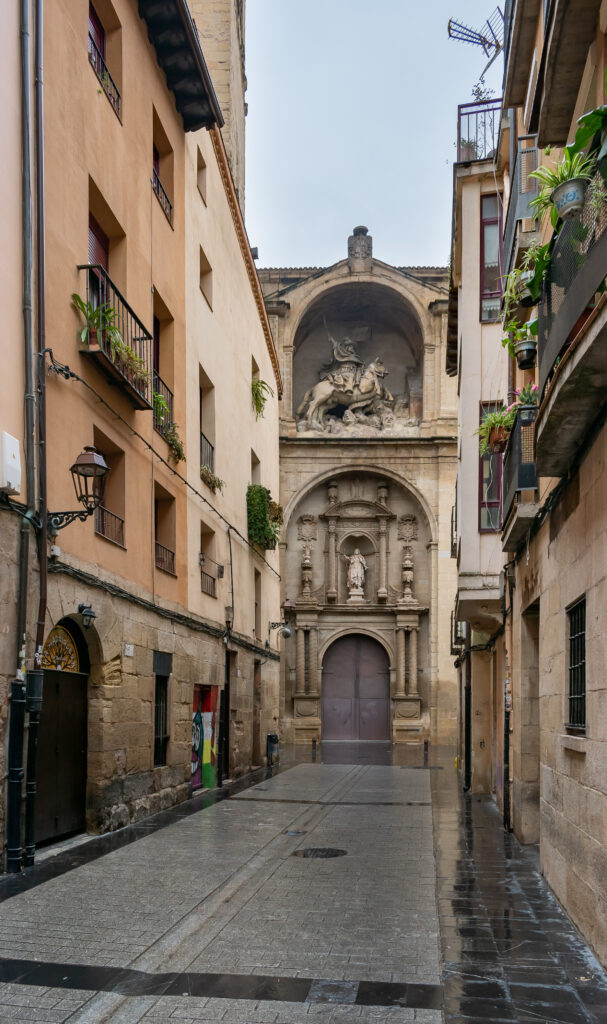
The Jacobean route runs through the Rúa Vieja, the oldest street. Here you will find the remains of the Camino: the Pilgrims’ Fountain and the Pilgrims’ Hostel. The culmination of the urban route is the Church of Santiago El Real (16th century). Its triumphal arch-shaped façade features an imposing sculpture of Santiago Matamoros, while inside, the Virgen de la Esperanza, patron saint of the city, is venerated.
Historical curiosity: The End of the Witch Hunt: Although the city was the scene of a tragic Auto de Fe in 1610 (the trial of the alleged witches of Zugarramurdi), the brutality of the process prompted the priest Alonso de Salazar to issue a report that, surprisingly, put an end to the burning of ‘witches’ in Spain.
What to see in Logroño: the essentials of the historic quarter
The heart of Logroño is its Old Quarter, a network of pedestrian streets that concentrates history, social life and commerce, inviting you to take a leisurely stroll.
The Main Streets of the Centre
- Calle Portales: An iconic street that guides you through history, under its characteristic portals that house cafés, traditional shops and unique businesses. It connects key monuments such as the Co-Cathedral and the Museum of La Rioja, serving as the border between the historic area of the Camino and the tapas bars of Calle Laurel.
- Rúa Vieja: The oldest street in the city, a cobbled stretch that is the main route of the Camino de Santiago as it passes through Logroño. Here, the Jacobean architecture comes to life, with the Pilgrims’ Hostel and the Pilgrims’ Fountain. But its best-kept secret lies underground: it is home to some of the oldest and most important calados (underground wine cellars), such as San Gregorio, with its impressive 30-metre barrel vault dating from the 17th century.
- Paseo de las Cien Tiendas: Leaving the Old Town but still in the centre, this is the traditional shopping area par excellence, with several pedestrian streets full of shops, cafés and restaurants.
- Gran Vía: The modern expansion of the city, contrasting with the Old Town, where more contemporary monuments such as the Monumento al Labrador and the Monumento a los Fueros are located.
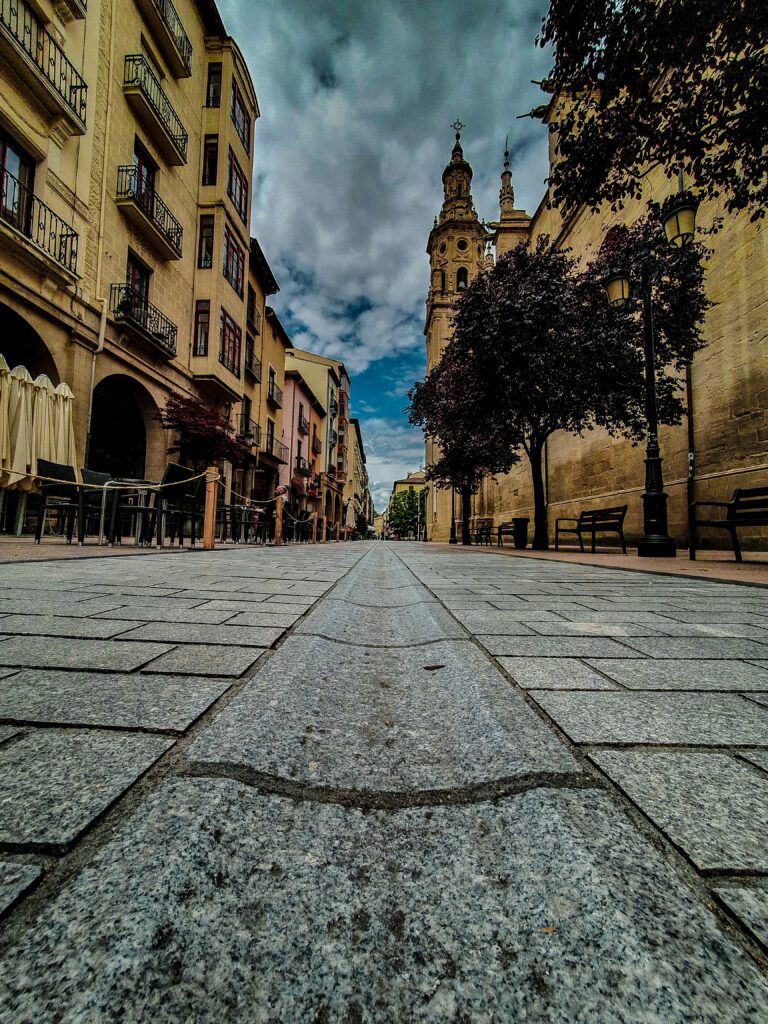
1. The Co-Cathedral of Santa María de la Redonda
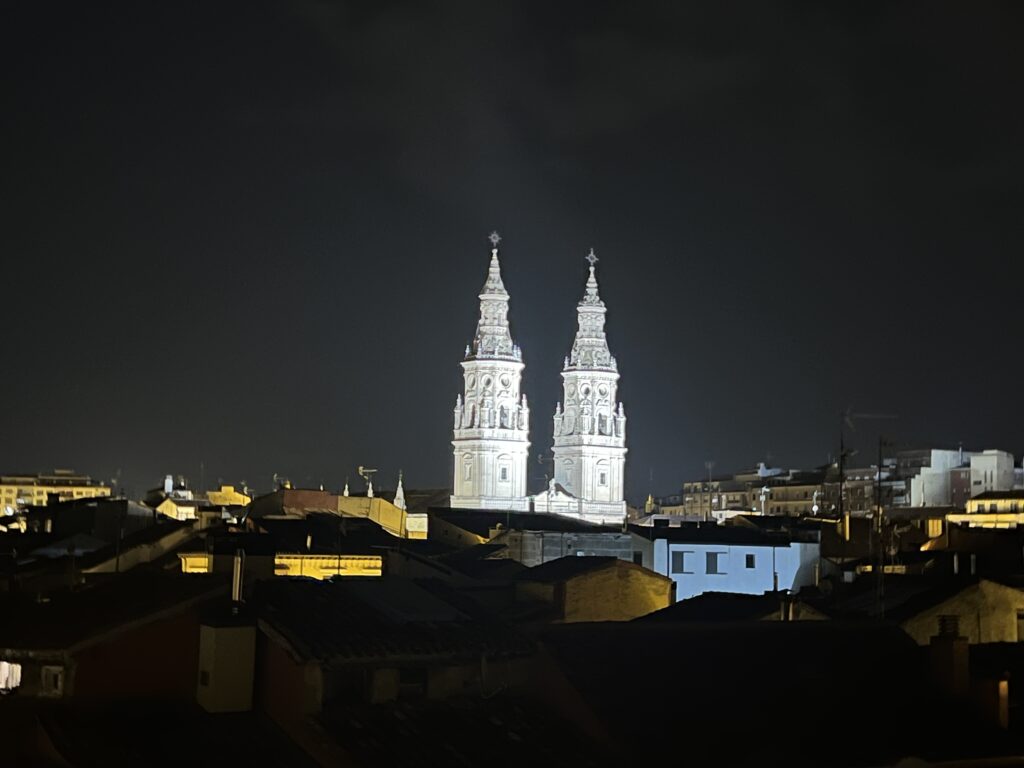
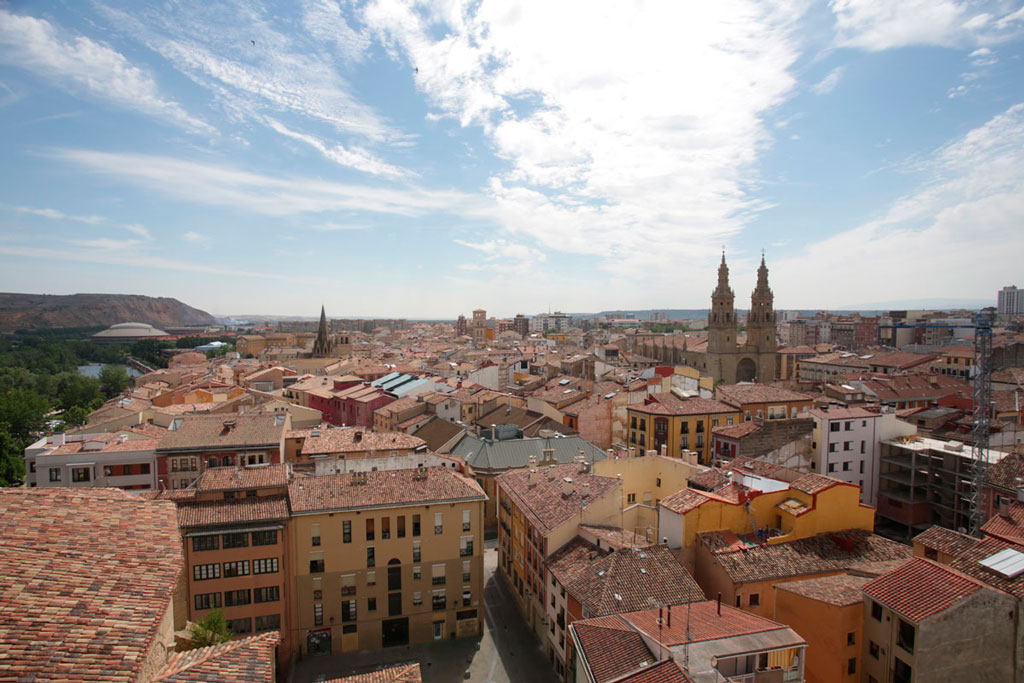
In the heart of the city, opposite the lively Calle Portales, stands the Co-Cathedral of Santa María de la Redonda, one of the most emblematic churches in La Rioja. Its construction began in the 15th century and was completed three centuries later, resulting in a magnificent Baroque complex with its iconic twin towers dominating the city skyline.
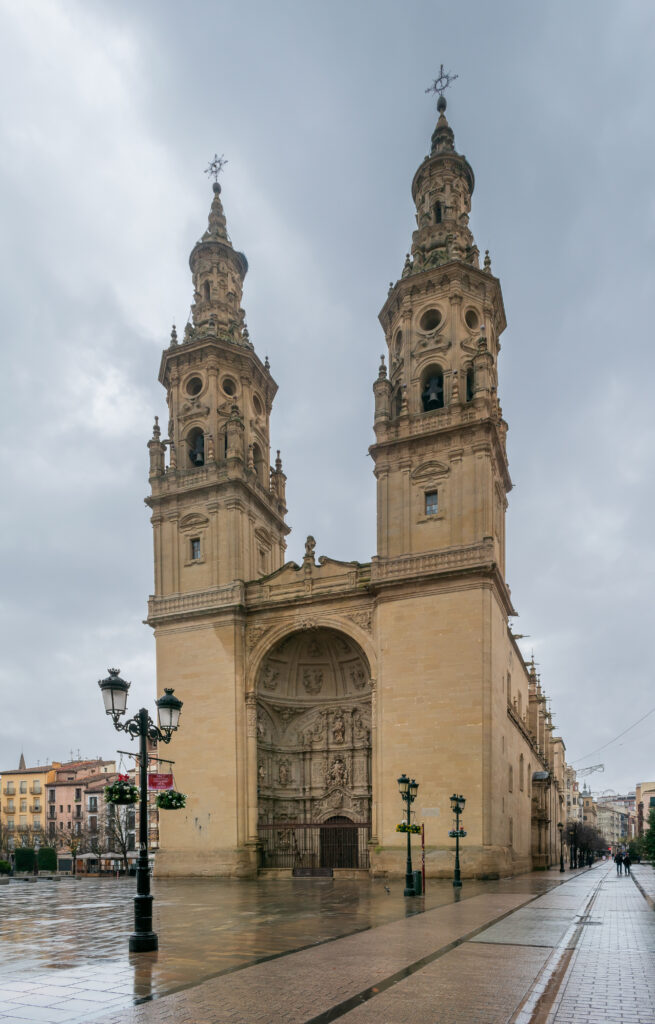
Inside, the main altarpiece, a jewel of La Rioja Baroque, and a small painting of a crucified Christ attributed to Michelangelo, located behind the altar, are particularly noteworthy. Although more modern than other churches in the city, its grandeur and elegance make it a must-see. It is said that vine elements were used in its foundations to consolidate the ground next to the river. It is free for tourists to visit.
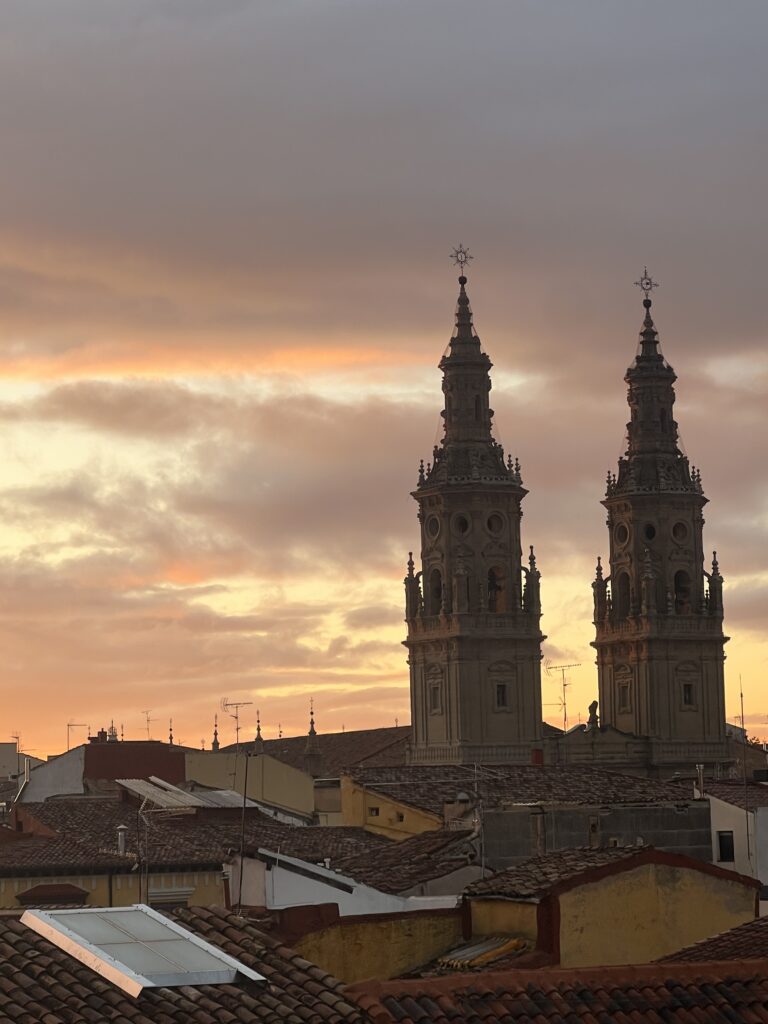
2. Church of San Bartolomé
The Church of San Bartolomé is the oldest in Logroño. Built in the 12th century, it combines Romanesque and Gothic elements. Its façade, with intricate carvings depicting biblical scenes, is one of the most beautiful in the region. Its bell tower was part of the old medieval wall, and today you can climb it to enjoy a panoramic view of the entire city. It is also one of the most photographed stops on the Camino de Santiago as it passes through Logroño.
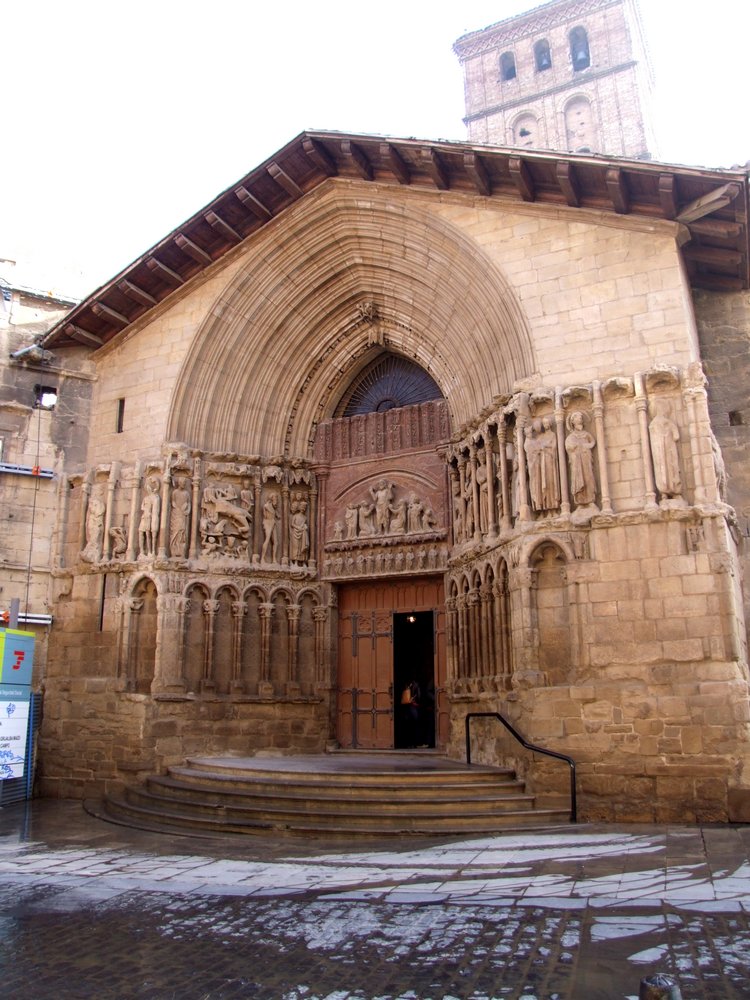
3. Church of Santa María de Palacio
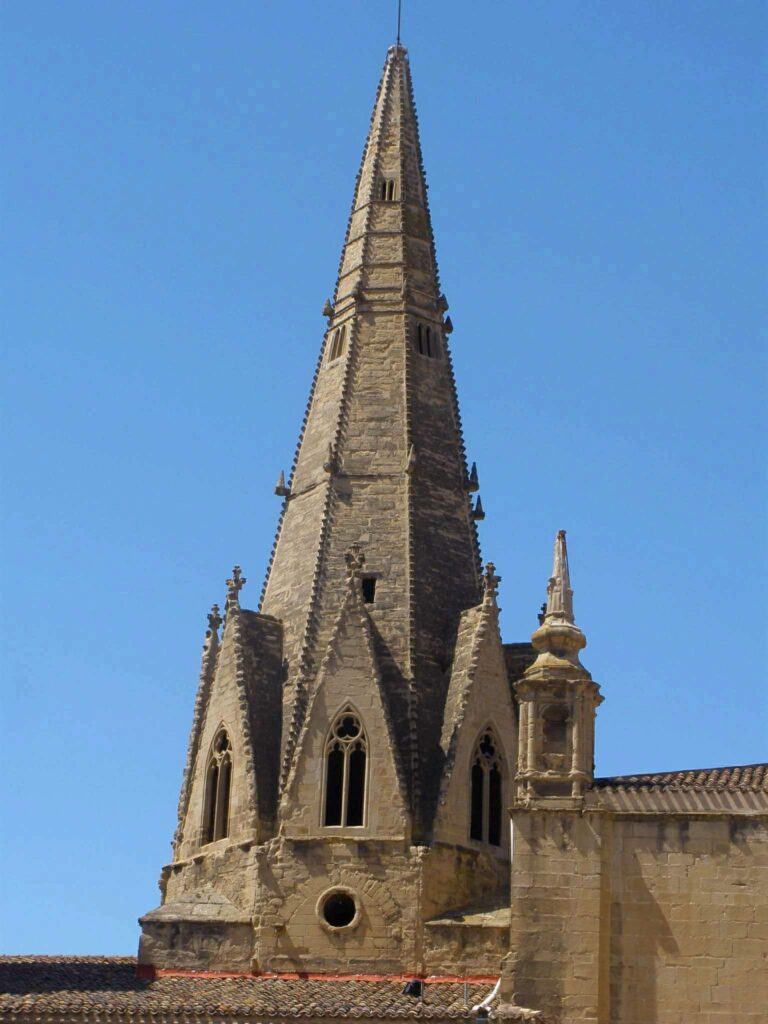
Located in the heart of the old town, the Church of Santa María de Palacio owes its name to an old palace donated by Alfonso VII. Founded in the 11th century and renovated in the 16th century, it preserves an altarpiece by Arnao de Bruselas and an interior structure with three naves and abbatial chapels.
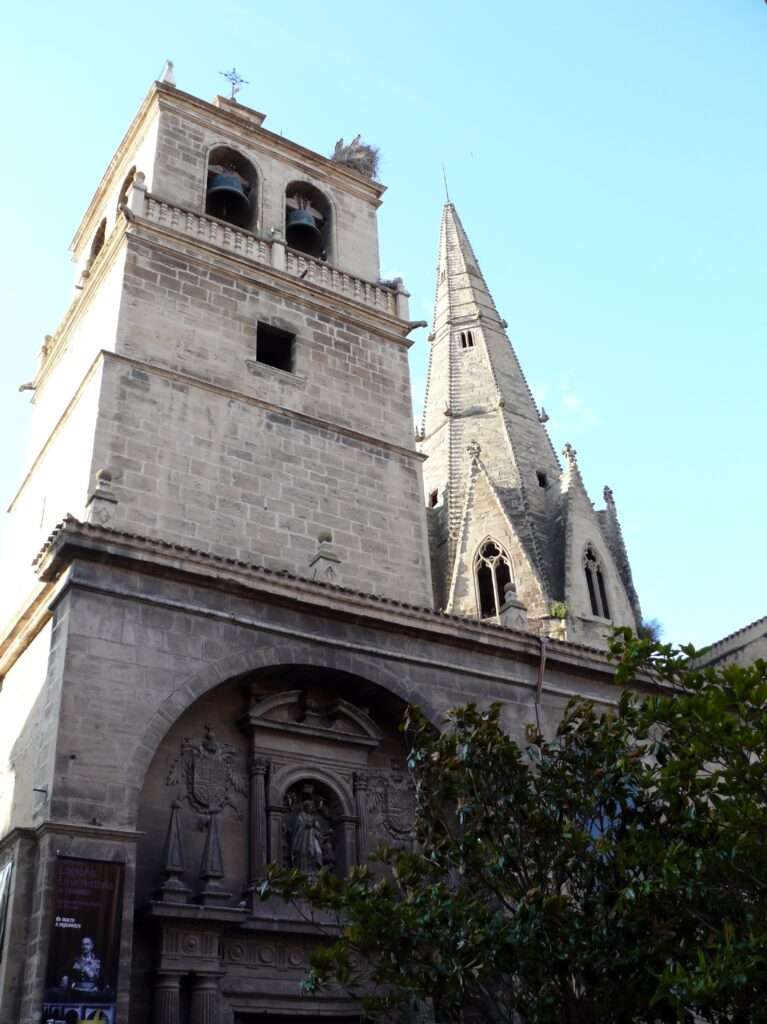
However, its most characteristic feature is the pyramidal Gothic tower, an unmistakable symbol of the Logroño skyline. Very close to the church is the Rioja Cultural Centre, a modern space dedicated to wine and the region’s wine-making heritage.
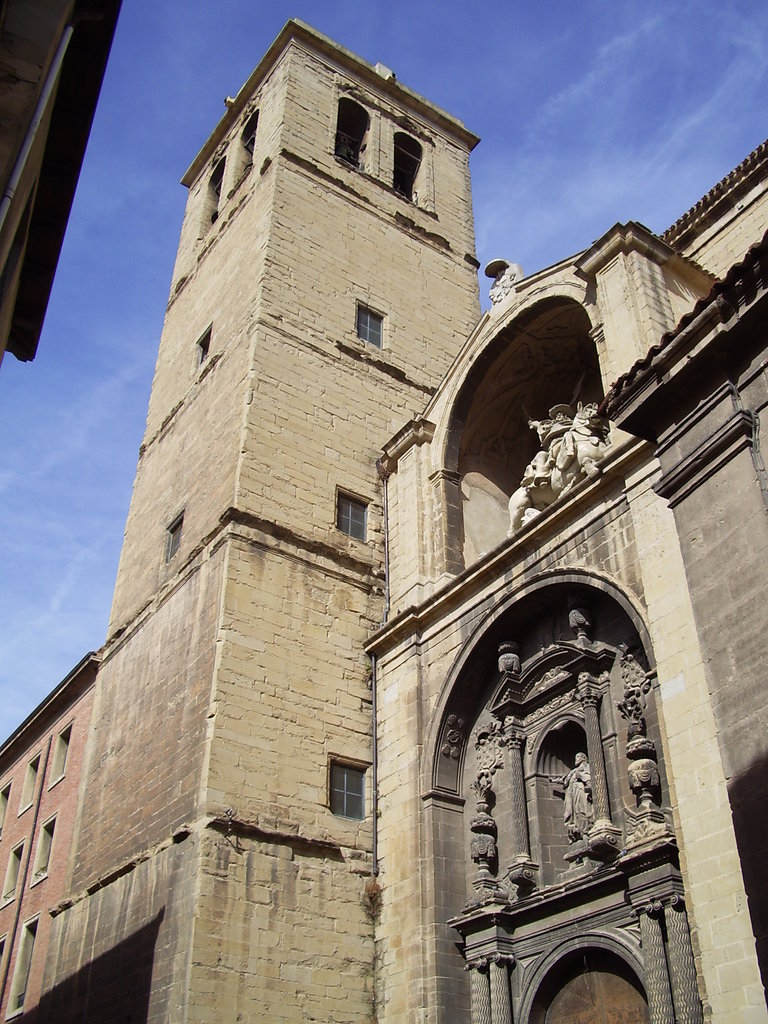
4. Church of Santiago el Real and Plaza de Santiago
Another essential stop on the tour is the Church of Santiago el Real, founded in 1513. It was the seat of the old Municipal Council and housed important documents of the city. Its 17th-century Baroque façade, in the shape of a triumphal arch, features two figures of the apostle Saint James: one as a pilgrim and the other as a warrior.
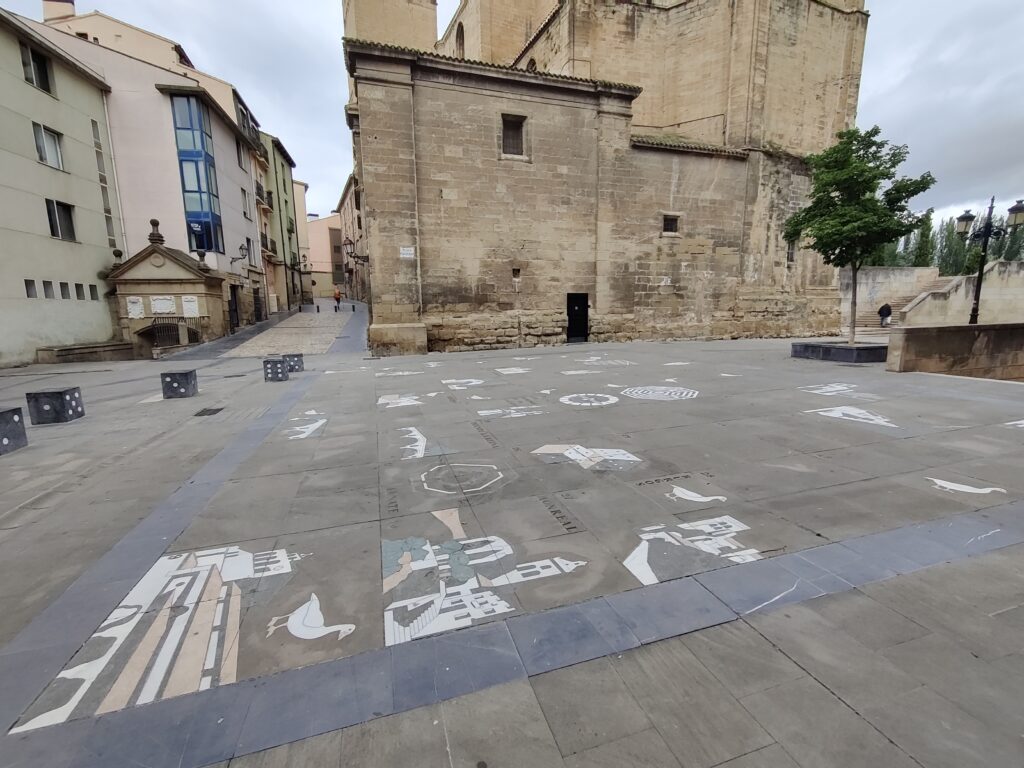
Next to it is the Plaza Santiago, also known as the Plaza de la Oca, because of the enormous game board drawn on the ground, in which each square represents a stage of the Camino de Santiago. Hidden beneath the surrounding houses are the calados, underground cellars dug out in the 16th century. The most famous is the Calado de San Gregorio, one of Logroño’s hidden gems.
5. Stone Bridge and Iron Bridge
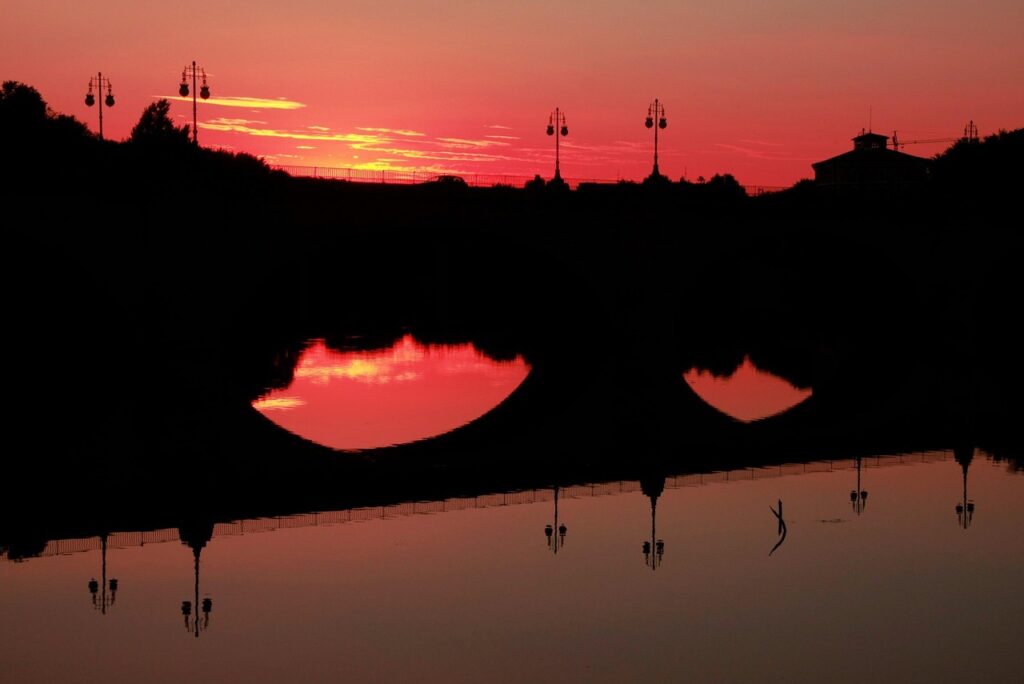
The Stone Bridge is Logroño’s most iconic bridge and a symbol of the city. Pilgrims on the Way of St James cross it when entering from Navarre.
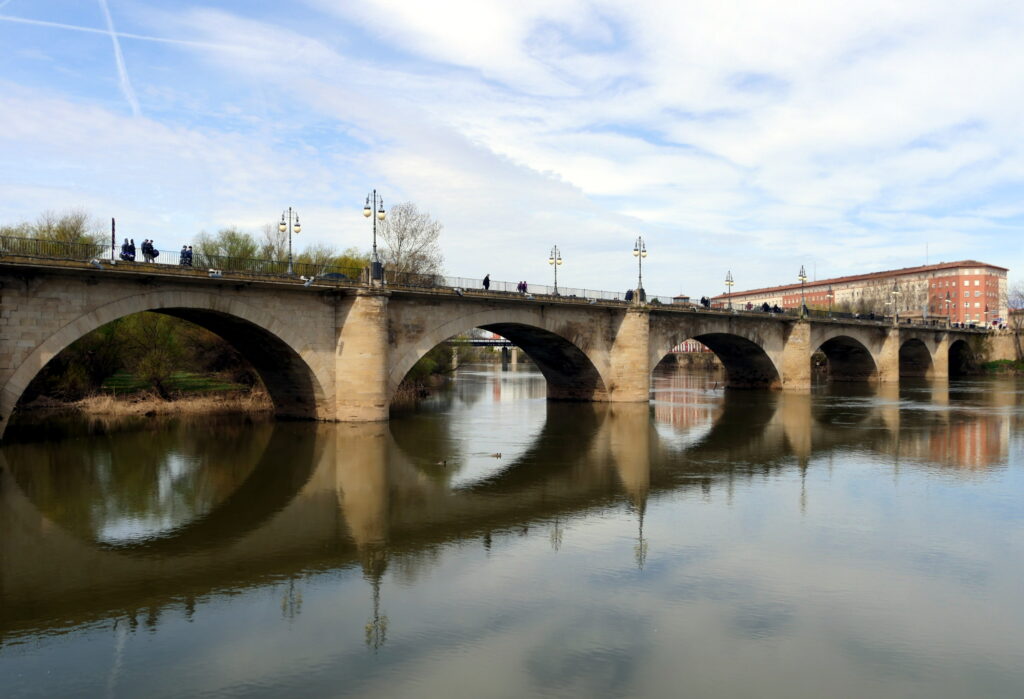
A few metres downstream is the Puente de Hierro, also known as the Puente de Sagasta, the oldest iron bridge and the longest (330 metres) over the Ebro in the capital, built in 1882. It was the most advanced of its time and the main entrance to the city for decades. Both bridges offer spectacular views of the Ebro River, especially at sunset.
6. The Revellín Tower and the City Walls
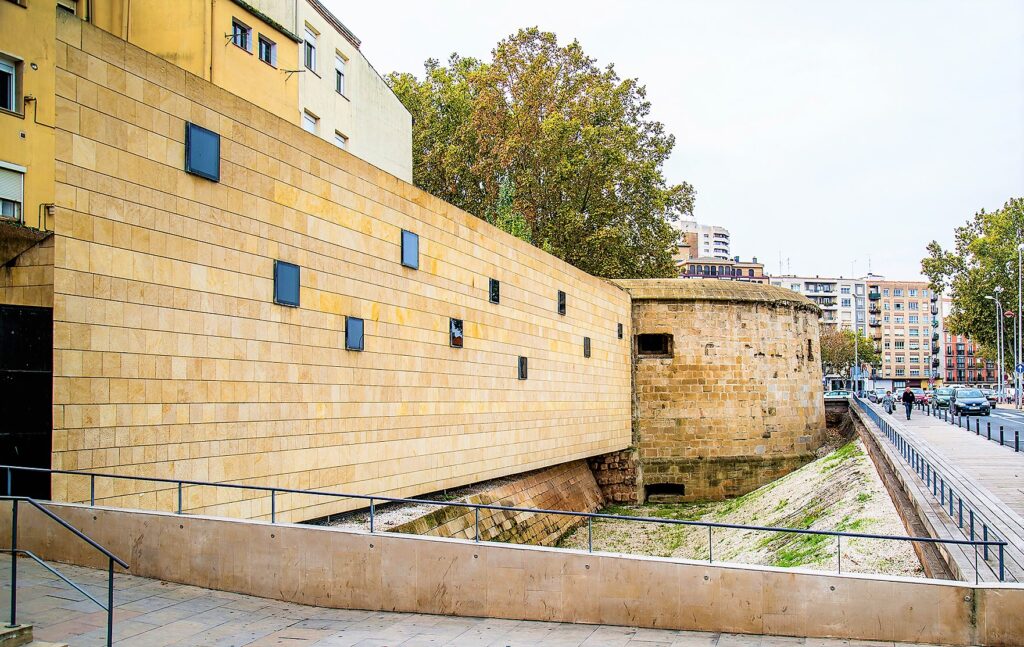
The Revellín Tower is the only visible remnant of the ancient fortress that defended Logroño in the 16th century. This section of the city walls and its stone tower were part of the defences that resisted the Franco-Navarrese siege in 1521. Today it houses a free interpretation centre that explains the history of that heroic episode and the urban evolution of the city.
7. Bretón de los Herreros Theatre
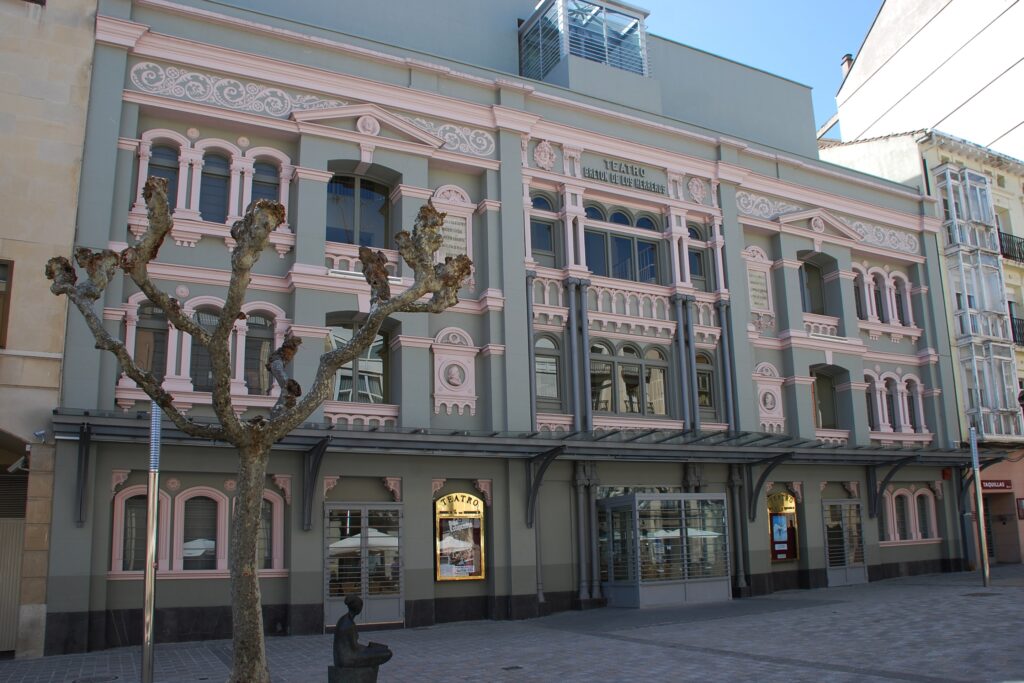
The Bretón Theatre, inaugurated in 1880, is a jewel of Logroño’s cultural architecture and has been a Site of Cultural Interest since 1983. In 1979, it suffered a devastating fire, but was rebuilt and reopened in 1990 by Queen Sofía. It is currently municipally owned and hosts a varied programme of theatre, music and cinema.
Box office opening hours (2025): Monday to Saturday, 11:00–14:00 and 2 hours before the performance. Sundays and public holidays, 12:00–14:00.
Tickets: between €8 and €25, with discounts and original version film screenings for €4–6.
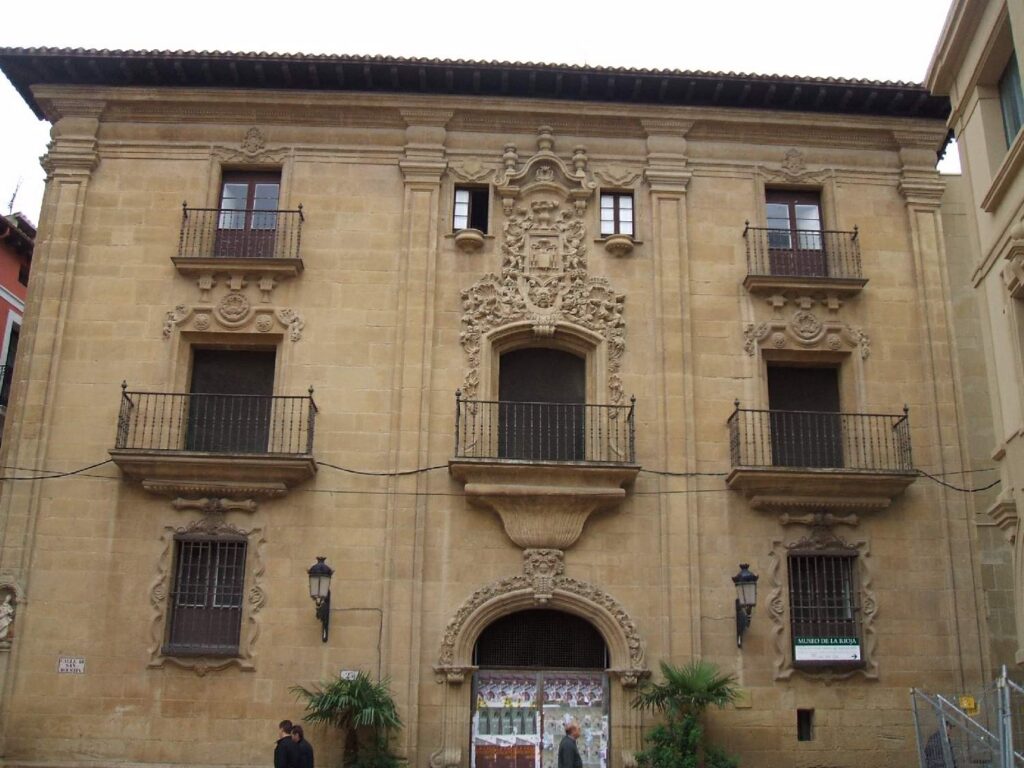
8. Museum of La Rioja
Located in the Palacio de Espartero, an 18th-century building, the Museum of La Rioja offers a journey through the region’s history from prehistory to the present day. Its rooms display Celtiberian artefacts, Gothic sculptures, Renaissance altarpieces and contemporary art from La Rioja.
Free admission. Opening hours (2025): Tuesday to Saturday, 10:00–20:30; Sundays and public holidays, 10:00–14:00.
9. Paseo del Espolón
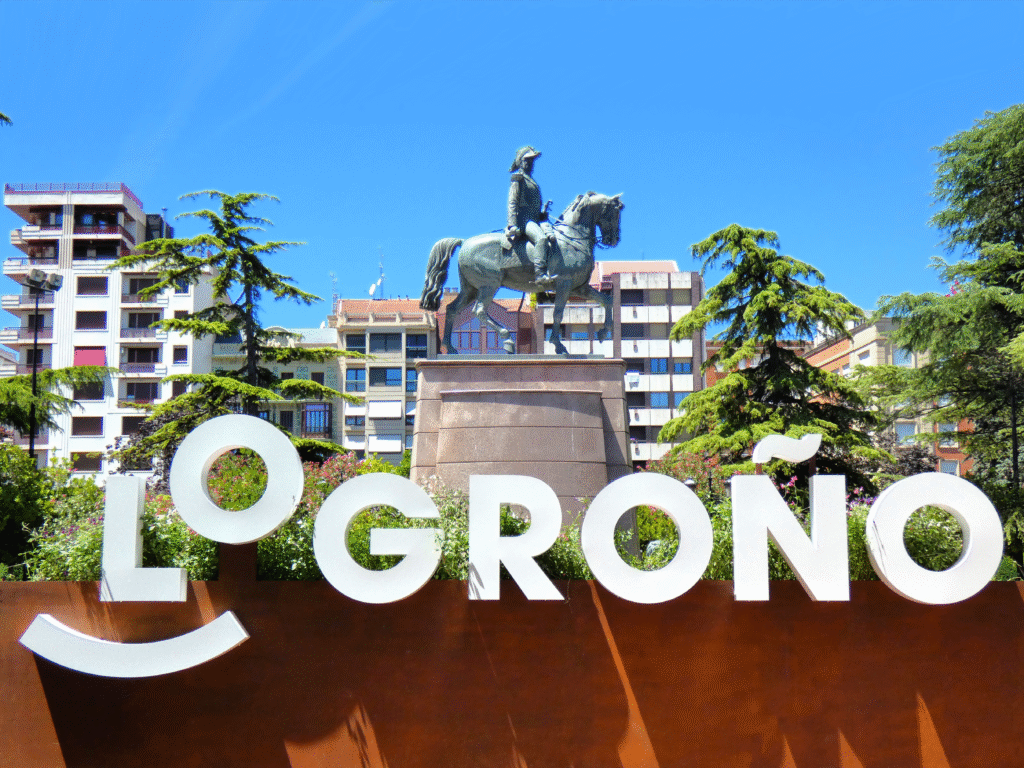
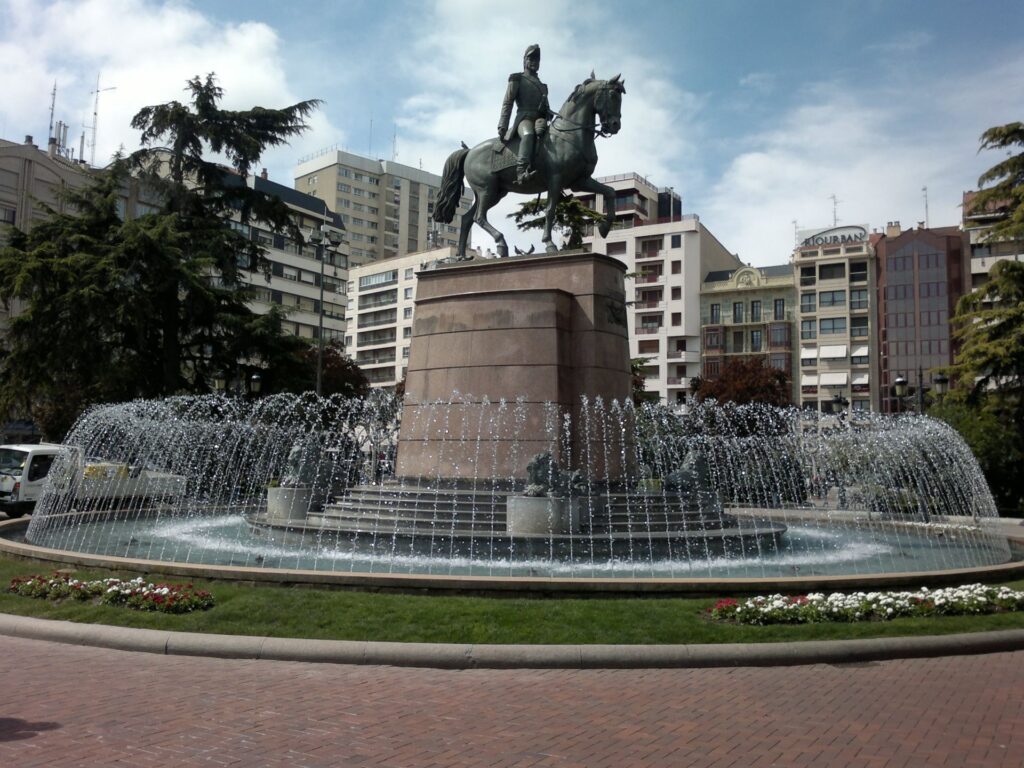
The Paseo del Espolón, officially known as Paseo del Príncipe de Vergara, is the large green lung in the centre of Logroño. Its 19th-century gardens, fountains and sculptures make it a favourite place for strolling or relaxing in the sun. It is also the city’s social and civic centre. An elegant promenade surrounded by historic and financial buildings, presided over by the equestrian monument to General Espartero (who lived here in retirement). It is the setting for the Offering of the First Must, a central event of the Harvest Festival.
Urban Nature and Ancient Heritage
Logroño takes advantage of its river environment, providing the city with extensive ‘green lungs’ along the Ebro.
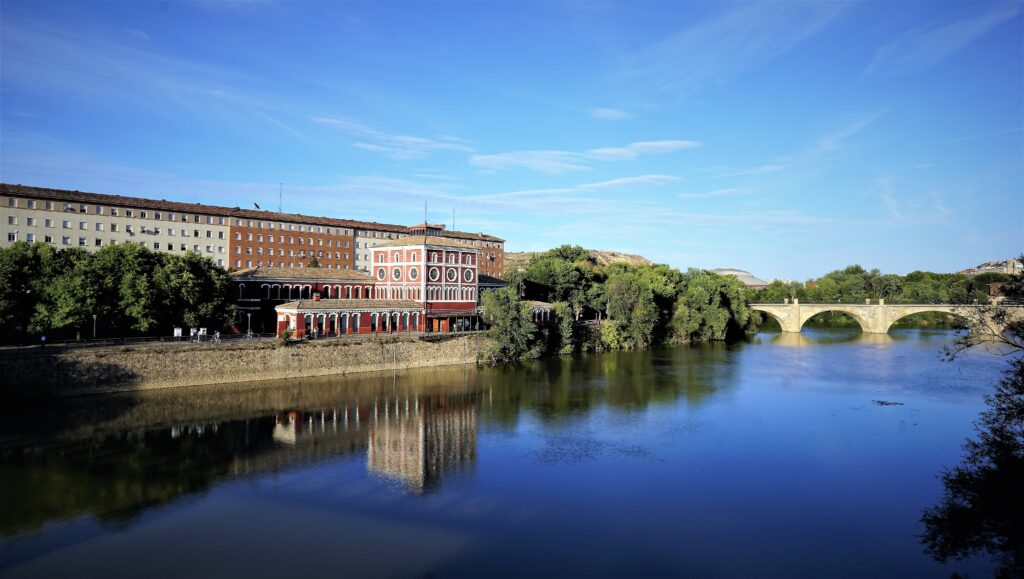
- Ebro Park: An extensive promenade that runs along the river, offering views of the old city and connecting the Paseo de la Florida with wooded areas of poplars and willows.
- Ribera Park: Recently built, it takes advantage of a bend in the Ebro River, housing the bullring and the Riojaforum (conference centre), making it an ideal area for sports.
- La Grajera Reservoir: Just 5.7 km away by road or greenway, this is a recreational area with 32 hectares of water surface, ideal for hiking and bird watching.
Traces of Antiquity
The surroundings of Logroño bear traces of history even before the Roman era:
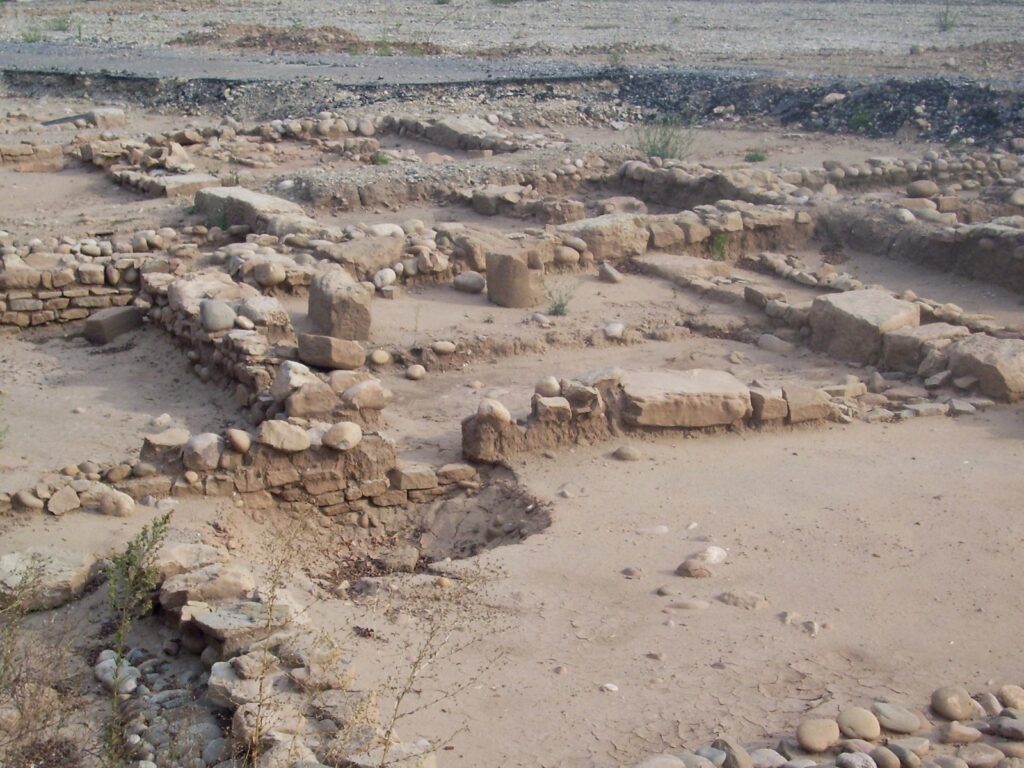
- Monte de Cantabria archaeological sites: An important protohistoric site with remains from extensive periods (from the Iron Age II, 4th century BC, to the Middle Ages), narrating 1500 years of occupation.
- Roman remains of Varea (Vareia): An ancient Roman settlement from the 1st century BC that was a strategic commercial centre with a river port on the Ebro. Its remains are visible and can be visited under the current neighbourhood of Varea.
- Roman Bridge of Mantible: Ruins of the 2nd-century bridge over the Ebro, a testament to Roman engineering that linked Logroño (El Cortijo) with the town of Assa in Álava.
Wine and Wine Tourism: The Gateway to Wine Culture
To talk about Logroño is to talk about the Rioja Designation of Origin. The city is the perfect starting point for immersing yourself in wine culture.
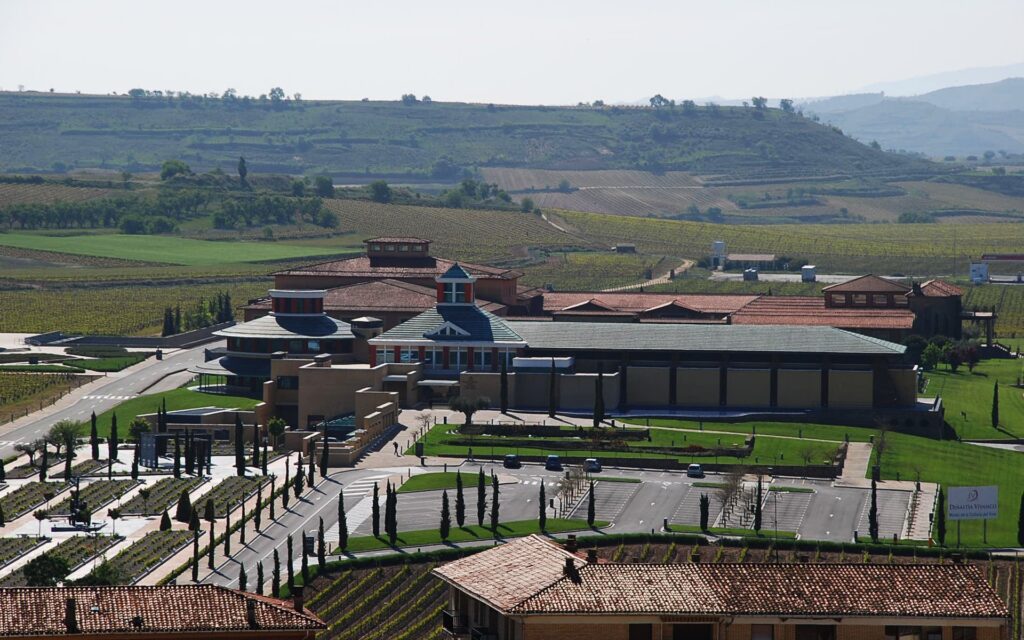
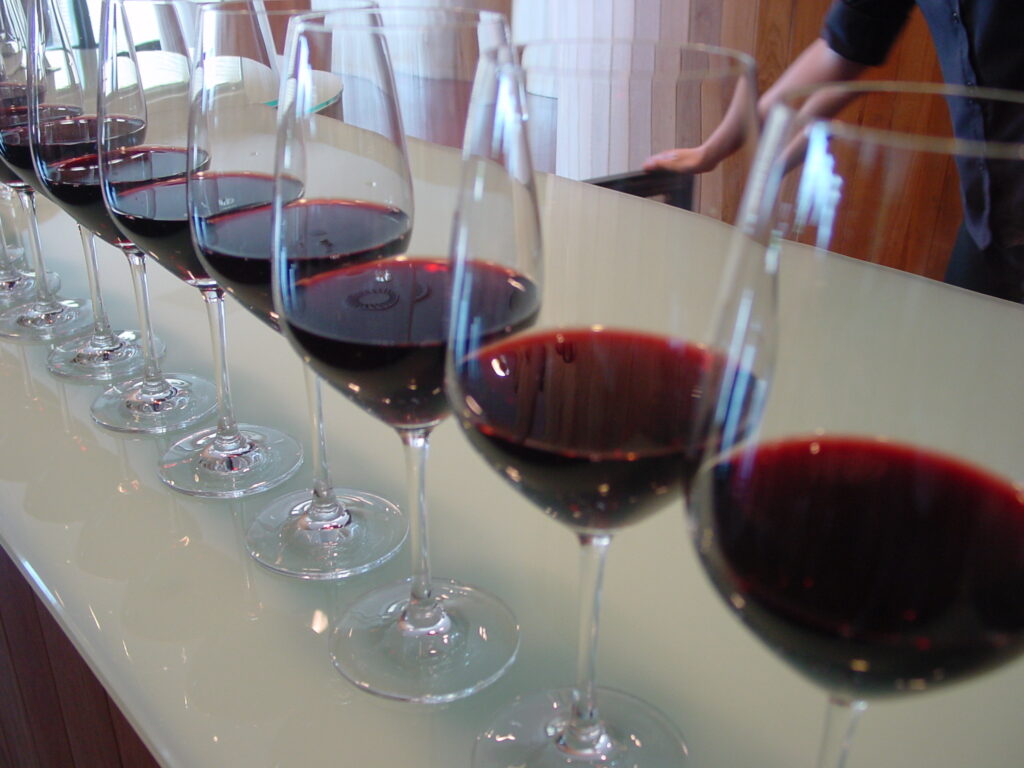
- Wine Tourism Nearby: Prestigious wineries are just a few minutes away. Bodegas Vivanco (in Briones) offers an impressive Museum of Wine Culture and tastings, while Bodegas Viña Ijalba allows you to discover Rioja’s organic vineyards with walks through its ‘natural museum’ of native varieties.
- Rioja Culture Centre (CCR): Located on the Camino de Santiago, next to the Calado de San Gregorio and the Espacio Lagares, it forms the urban ‘golden triangle of wine tourism’. Its mission is to promote Rioja wine culture worldwide.
- Espacio Lagares ‘El Camino del Vino’ (The Wine Route): Located on Rúa Vieja, it restores old wine presses from the 16th-19th centuries where the locals used to make wine. Today it houses a Tourist Information Point and part of the permanent exhibition ‘El Camino del Vino’ (The Wine Route).
Recommended wineries
- Bodegas Franco Españolas (Logroño): just a few minutes from the centre, offering guided tours and tastings next to the River Ebro.
- Bodegas Vivanco (Briones): combining a winery, museum and garden with more than 220 varieties of vines. Its ‘Vivanco Experience’ (€29) includes a tour, museum and tasting of two wines.
- Bodegas Viña Ijalba: pioneers in organic viticulture, with tours of native vineyards and outdoor tastings.
You can also sign up for full-day excursions around La Rioja that include three wineries, traditional meals and visits to villages such as Briones, Nájera and Laguardia.
What to eat in Logroño: The Art of Tapas
Logroño is a paradise for foodies, and its tapas culture has been recognised by publications such as The Times. The city has elevated the act of ‘ir de chiquiteo’ (going out for tapas and wine) to an art form.
The Iconic Tapas Streets
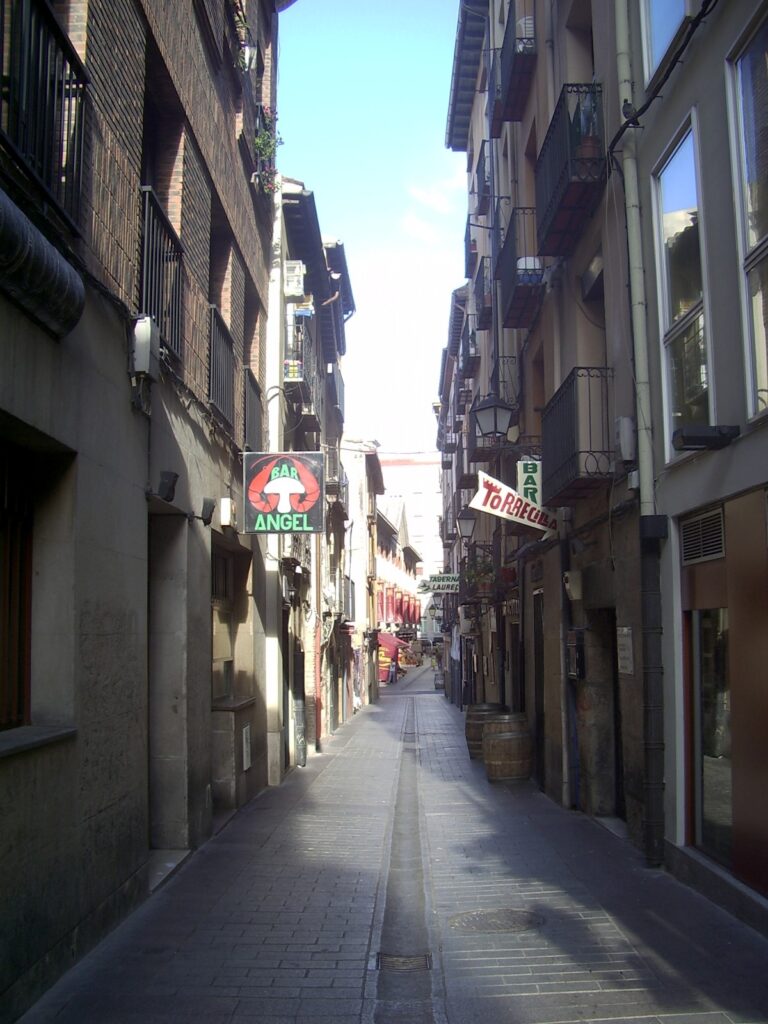
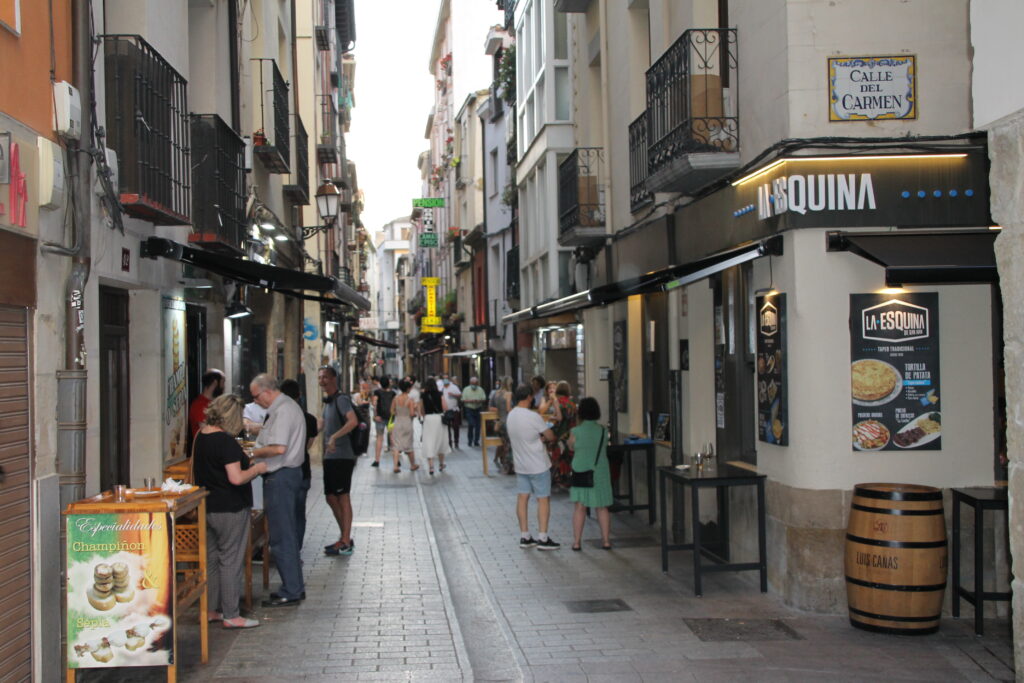
- Calle Laurel: If you can only visit one street, make it this one. Calle Laurel is the most famous and busiest artery, a carousel of flavours and aromas where each small establishment specialises in one or a few distinctive tapas. The magic here lies in following your intuition and letting yourself be surprised, combining Rioja wines with innovative pinchos.
- Calle San Juan: Located between Laurel and Portales, Calle San Juan is Logroño’s ‘ace in the hole’. Without the massive fame of its neighbour, it offers a more cosy and local atmosphere, with high-quality tapas and less crowds, ideal for a more peaceful immersion.
The Elephant Trail
Calle Laurel (and neighbouring streets such as San Agustín and Travesía del Laurel) is affectionately nicknamed ‘the elephant trail’ because of the custom of staggering out after enjoying oneself. In just 200 metres, more than 80 establishments offer a unique speciality, creating a nationally renowned tapas route:
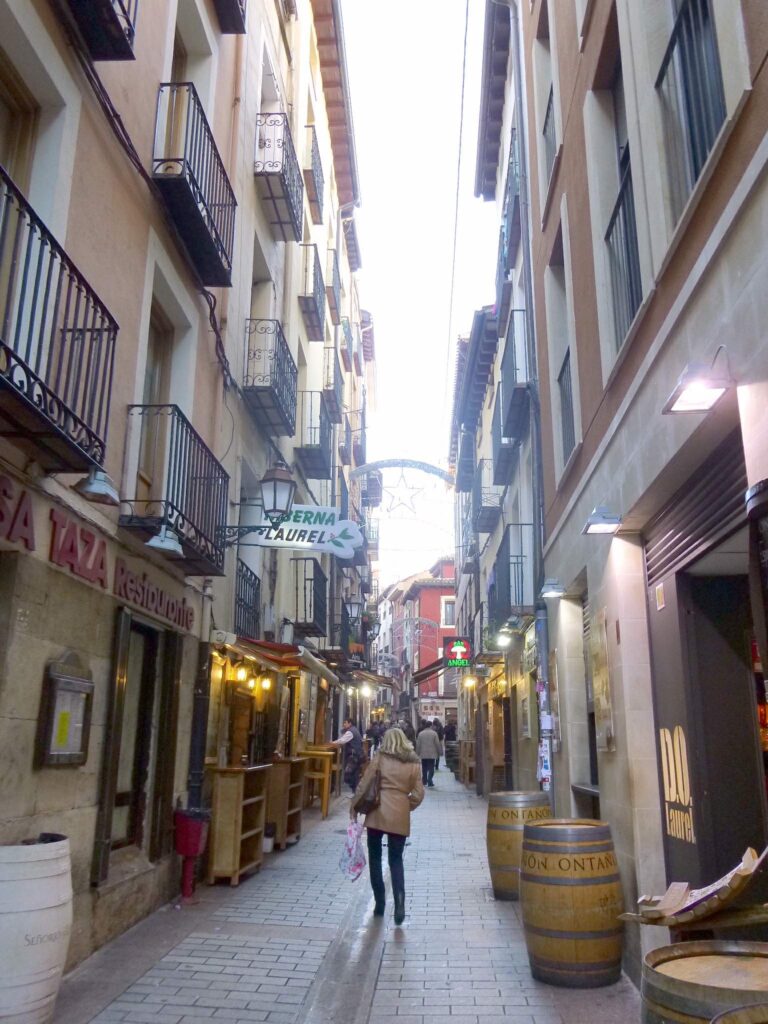
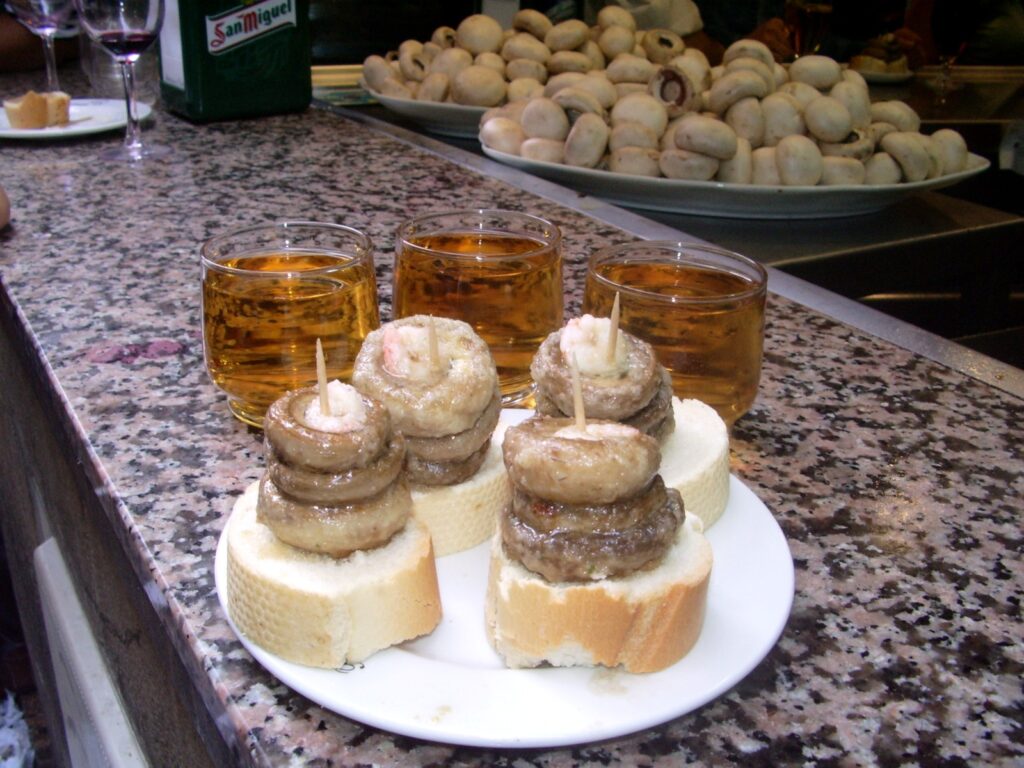
- El Soriano or Bar Ángel: The grilled mushroom and prawn skewer is a must. (Approximately $1.80-2.50\text{ €}$ per tapas).
- Bar Sebas: Famous for its potato omelette (with a spicy option).
- Blanco y Negro: The tasty ‘matrimonio’ (anchovies and peppers).
- Other classics: Pincho Moruno (Bar Páganos), Patatas Bravas (Bar Jubera), or sausages and pork cheek (La Tavina).
The average price for a small glass of wine and a pincho is around €3-5, especially during the peak hours of chiquiteo (late afternoon to evening from Thursday to Sunday).
Emblematic dishes and stews
Beyond pinchos, Logroño’s cuisine, rooted in the traditions of La Rioja, is synonymous with comforting stews:
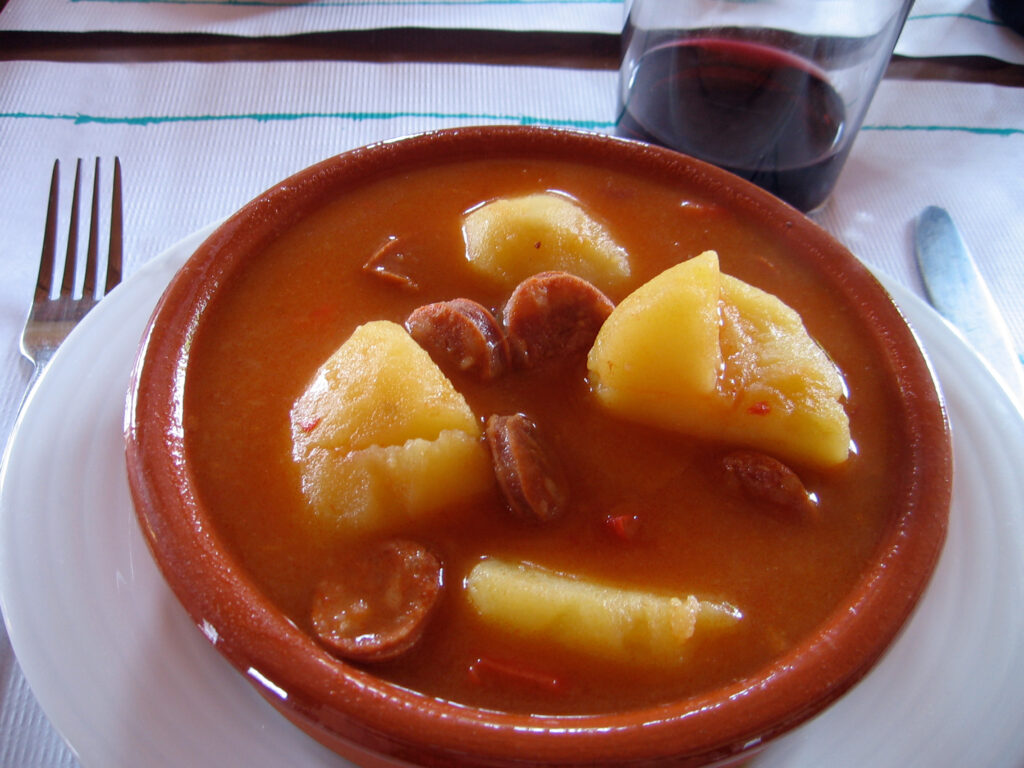
- Riojan-style potatoes: The local quintessence, a thick stew with potatoes, chorizo and peppers.
- Lamb chops cooked over vine shoots: Lamb chops roasted over vine pruning embers, which give them a unique smoky flavour.
- Riojan-style cod: Cod with peppers, tomato and garlic, a delicious blend of sea and garden.
- Winter stews: Caparrones riojanos (red beans with chorizo and ribs) and pochas con codornices (white beans with quail) are culinary gems, mild, nutritious and a reflection of local cuisine.
The sweet finale comes with desserts such as peras al vino (pears in wine) or fardelejos de Arnedo (pastries). And of course, everything is washed down with the famous wines of Rioja, protected by their own Designation of Origin, which is a global benchmark.
Logroño at a Glance: Visitor’s Guide
See Logroño in a Day
If you only have 24 hours, you can follow this essential route, which includes many free attractions:
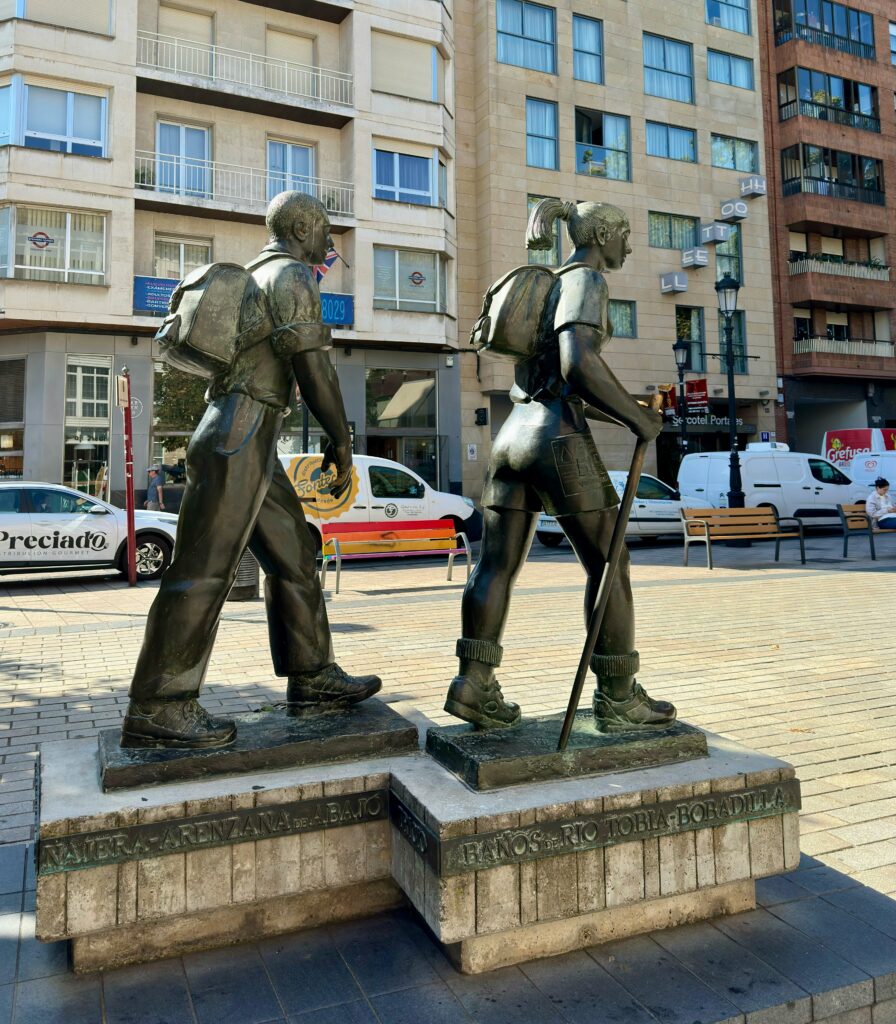
- Start with a free tour to get an overview.
- Visit the Co-Cathedral of Santa María de la Redonda (free admission).
- Immerse yourself in history on Calle Ruavieja and in the calados.
- Explore Plaza Santiago and the curious Juego de la Oca.
- Stroll along Calle Portales and the elegant Paseo del Espolón.
- Enjoy a stroll along the Puente de Piedra bridge and the Paseo de la Florida promenade for the best panoramic views of the city and its towers.
- Finish with a free cultural immersion at the Museo de La Rioja (Espartero Palace).
- End the day with the unmissable tapeo (tapas) on Calle Laurel or Calle San Juan.
Frequently asked questions about Logroño
What can I see in Logroño for free?
The Co-Cathedral, the Museum of La Rioja, the Paseo del Espolón, Calle Portales and the Muralla del Revellín are all free to visit.
What can couples do?
Walks along the Ebro, wine tastings in wineries, dinners on Calle Laurel or romantic getaways to nearby villages such as Laguardia or Briones.
Which nearby villages are worth visiting?
Laguardia, Elciego, Haro, Nájera and Santo Domingo de la Calzada are perfect for day trips.
When is the best time to visit Logroño?
Spring and autumn, especially during the Fiestas de San Mateo in September, when the grape harvest is celebrated, the week of 21 September.
Is Logroño safe? It is recognised as one of the safest cities in Spain, ideal for walking around without any worries.
What to do in La Rioja
Historical excursions
La Rioja is dotted with gems.
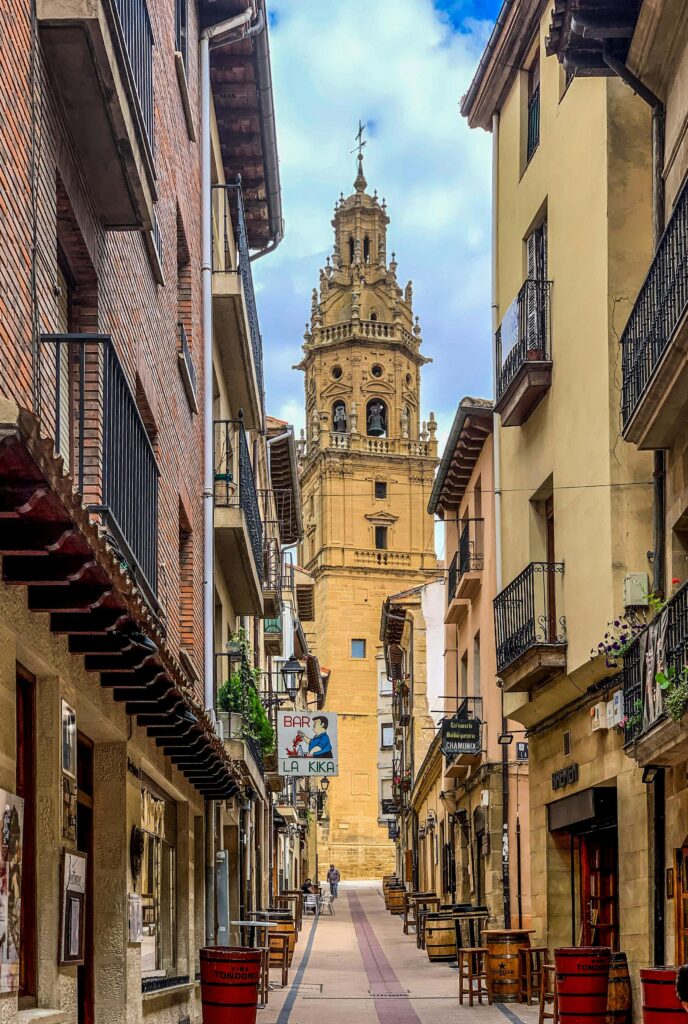
- The Way of St James: Nájera (Monastery of Santa María la Real), Santo Domingo de la Calzada (Cathedral and pilgrims’ hospital) and the detour to San Millán de la Cogolla (Monasteries of Suso and Yuso, World Heritage Sites).
- Rioja Alavesa: Villages such as Laguardia and Elciego.
- Rioja Alta: The town of Haro (wine capital).
- Nature: The Sierra de Cebollera Natural Park (to the south) offers glacial relief, forests and wildlife.
Nearby Cities
Logroño has excellent transport links (one hour’s drive from Pamplona and Bilbao), allowing for excursions to:
- Bilbao (Guggenheim, Artxanda Funicular).
- Vitoria-Gasteiz (Gothic cathedral).
- Burgos (imposing Gothic cathedral, castle).
- Pamplona (16th-century fortifications, San Fermín).
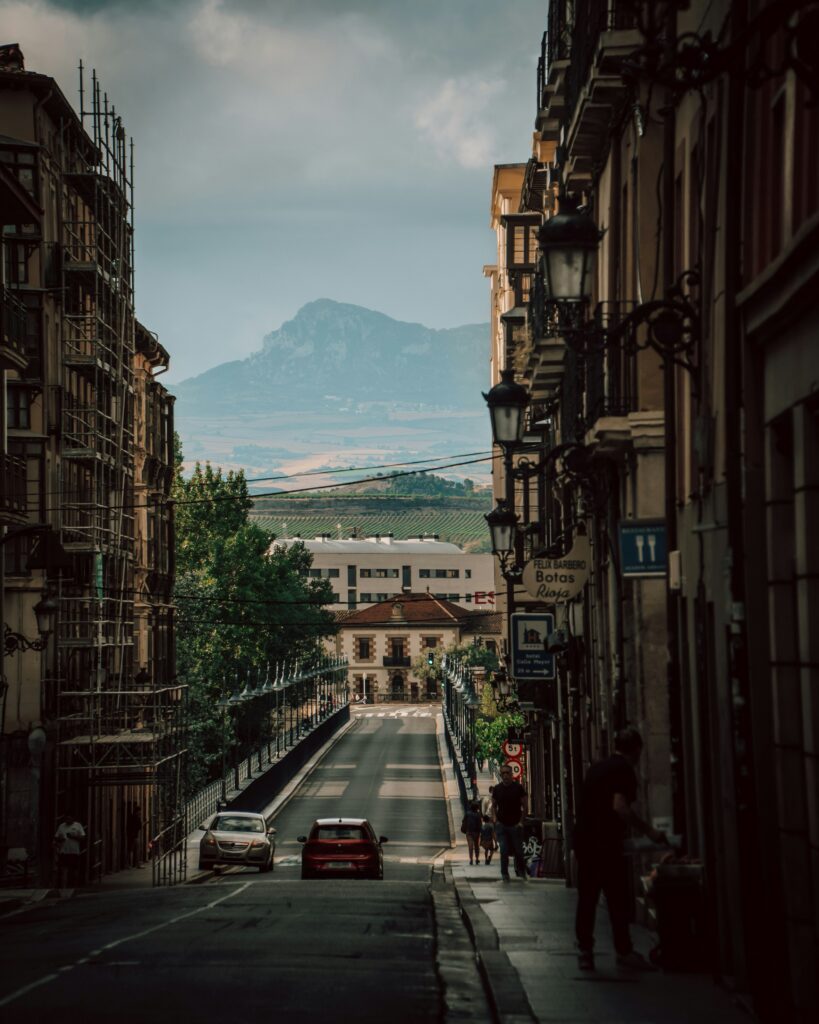
What to see in the surrounding area
If you have more time, be sure to visit other nearby gems in La Rioja:
- Casalarreina, with its Monastery of La Piedad.
- Cuzcurrita de Río Tirón, with another castle and charming wineries.
- Villoslada de Cameros: a village nestled in the Sierra Cebollera mountains.
- Alberite: a municipality steeped in history, 7 kilometres from Logroño.
- Sajazarra: recognised as one of Spain’s most beautiful villages.
- El Rasillo de Cameros: rural tourism in a privileged setting next to the González Lacasa Reservoir.
Logroño today: a city to enjoy
Logroño is much more than the capital of La Rioja: it is a city where history, wine culture and hospitality come together in a single toast. From its medieval churches to its streets full of pinchos, every corner invites you to enjoy it at a leisurely pace, with the certainty that, in this city on the Ebro, every step tastes of wine and every memory tastes of tradition.
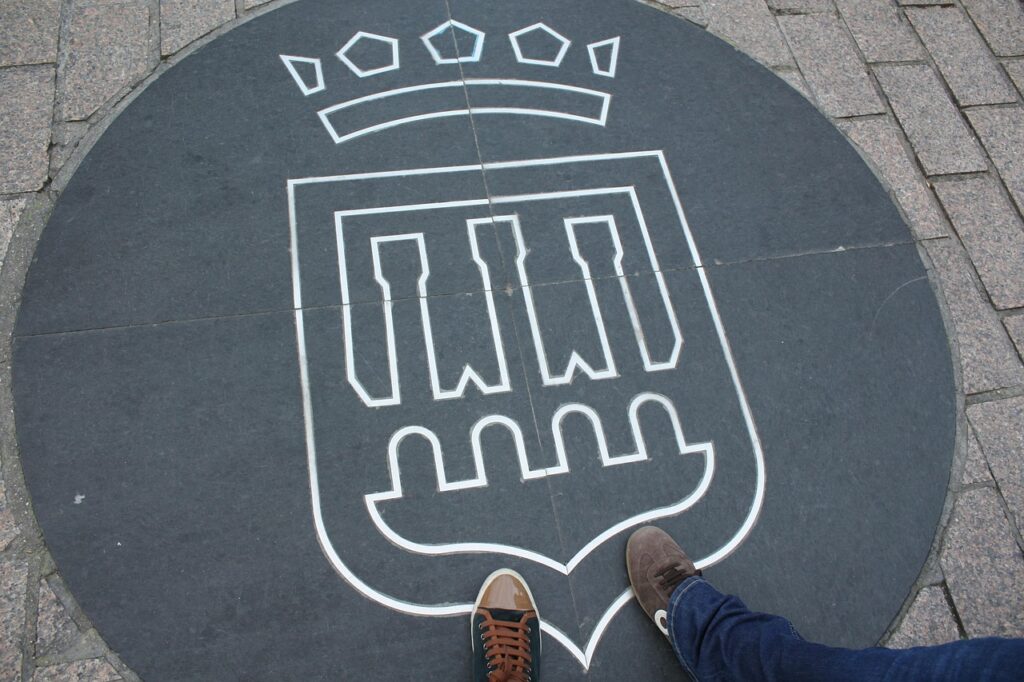
Photo Credits
Below are the photo credits in order of appearance. Royalty-free photos will not be listed below:
- Cover Image: Artistosteles, CC BY 4.0, via Wikimedia Commons
- Luis Fermín TURIEL PEREDO, CC BY-SA 4.0, via Wikimedia Commons
- Jynus, CC BY-SA 4.0, via Wikimedia Commons
- Nostepinne, CC BY 2.0, via Wikimedia Commons
- Jl FilpoC, CC BY-SA 4.0, via Wikimedia Commons
- Krzysztof Golik, CC BY-SA 4.0, via Wikimedia Commons
- Despotismo Ilustrado y Barroco, CC BY-SA 4.0, via Wikimedia Commons
- Krzysztof Golik, CC BY-SA 4.0, via Wikimedia Commons
- Nostepinne, CC BY 2.0, via Wikimedia Commons
- Javi Guerra Hernando, CC BY-SA 4.0, via Wikimedia Commons
- Miguel Yustes from Logroño, España, CC BY 2.0, via Wikimedia Commons
- Zarateman, CC BY-SA 3.0 ES, via Wikimedia Commons
- jynus, CC BY-SA 3.0, via Wikimedia Commons
- El Pantera, CC BY-SA 4.0, via Wikimedia Commons
- Jynus, CC BY-SA 4.0, via Wikimedia Commons
- Tim Tregenza, CC BY-SA 3.0, via Wikimedia Commons
- Despotismo Ilustrado y Barroco, CC BY-SA 4.0, via Wikimedia Commons
- Juanje 2712, CC BY-SA 4.0, via Wikimedia Commons
- Wolabarrieta, CC BY-SA 4.0, via Wikimedia Commons
- Coralma*, CC BY-SA 4.0, via Wikimedia Commons
- jynus, CC BY-SA 3.0, via Wikimedia Commons
- Juanje 2712, CC BY-SA 4.0, via Wikimedia Commons
- Lourdes Cardenal, CC BY-SA 3.0, via Wikimedia Commons
- jynus, CC BY-SA 3.0, via Wikimedia Commons
- Artistosteles, CC BY-SA 4.0, via Wikimedia Commons
- Zarateman, CC BY-SA 3.0, via Wikimedia Commons
- jynus, CC BY-SA 3.0, via Wikimedia Commons
- Lorena Suárez, CC BY-SA 2.0, via Wikimedia Commons
- mo640, CC BY-SA 2.0, via Wikimedia Commons
.png)


.jpg)

.jpg)


.jpg)


_1.jpg)


