Esporles, Mallorca: rural charm in the heart of the Serra de Tramuntana
In the heart of the Sierra de Tramuntana, in western Majorca, lies Esporles, a village that has managed to retain its authenticity despite being just a few minutes from Palma. Surrounded by holm oak forests, stone houses and winding mountain roads, Esporles is one of those places where time seems to pass at a different pace. Here, the sound of water flowing through the stream, the sunny terraces of the Passeig del Rei and the aroma of freshly baked bread from its traditional ovens create a genuinely Mallorcan atmosphere.

Although it is not one of the most visited destinations by tourists, Esporles wins over those who discover it. Its tranquillity, natural surroundings and proximity to the capital have made it a refuge for international residents and those seeking to enjoy a more leisurely Mallorca, without sacrificing comfort or the beauty of the landscape.

A privileged setting in the Tramuntana
Esporles is located in a valley on the southern slope of the Serra de Tramuntana, declared a World Heritage Site by UNESCO. The municipality, covering some 36 km², borders Valldemossa, Banyalbufar, Puigpunyent and Palma, and is only 12 kilometres from the capital and just over 8 kilometres from Port des Canonge, its natural outlet to the sea. This privileged location makes the village an ideal gateway to mountain trails and, at the same time, a convenient connection point to urban life.

The landscape surrounding Esporles is typically Mallorcan: mountains covered with holm oaks, fertile valleys and agricultural terraces that speak of centuries of work. The hiking trails in the area, including the famous GR-221 or Ruta de Pedra en Sec, allow you to explore ancient cobbled paths that link small villages and traditional farms. Nature is the absolute protagonist here: in spring the almond trees blossom, in summer the cool mountain air mitigates the heat, and in autumn the rains revive the stream that crosses the village.

History: from the talayots to the rural present
The history of Esporles dates back to prehistoric times. Remains of human presence dating back to around 7000 BC have been found in the Cave of Canet, considered some of the oldest in Mallorca. Later, during the Talayotic period, settlements such as the talayot of Es Caragol and the village of Es Corral Fals were built, vestiges that still bear witness to the area’s ancestral past.

During Islamic rule, Esporles was transformed thanks to its wealth of water and springs. The Arabs built advanced hydraulic systems, such as the canals and water mills of Font d’en Baster, which promoted agricultural development and shaped the landscape of the valley. In fact, it had more than thirty water mills, making the village one of the places with the highest concentration of this type of engineering on the island.

With the Christian reconquest in the 13th century, Esporles consolidated its position as a prosperous agricultural centre. The production of oil, wine and local produce was its main source of wealth for centuries. The name of the village, in fact, comes from the Mozarabic term sportulis, which means ‘basket’, in reference to the traditional craft of basket weaving using palm leaves.

Throughout its history, the people of Esporles have shown a strong independent character. In the Revolt of the Forans (1450) and the Germanías (1520), its inhabitants actively participated against the Mallorcan nobility, episodes that cost the lives of a large part of the population. Also in 1936, at the beginning of the Civil War, the town rose up against the military coup.
A town with a Mallorcan soul
The main centre of Esporles is organised around the Torrent d’Esporlés, which runs through the town from side to side and divides its old town — the Vila Vella — from the more modern areas.

Its cobbled streets, flanked by stone houses with green shutters, reflect the traditional architecture of the Tramuntana.

Along Carrer Joan Riutort, the main street, there are cafés, restaurants, bakeries and local shops where the daily pace remains leisurely and friendly.

One of the most picturesque corners is the Passeig del Rei, a pleasant tree-lined avenue where the weekly market is held every Saturday morning, an essential event for locals and visitors alike. Amongst stalls selling fruit, cheese, cold meats and handmade sweets, you can breathe in the authentic atmosphere of Mallorcan life. Traditional bakeries such as Ca Sa Camena and Ca’n Oliveret fill the air with the aroma of bread, ensaimadas and meringues fresh from the oven.

In the centre, the Parish Church of Sant Pere stands out, a majestic Gothic temple that dominates the urban landscape. Nearby, small stone bridges cross the stream, creating scenes that look like something out of a rural postcard. Strolling through this historic centre and visiting this great Gothic church is the highlight of the urban experience of Esporles.


La Granja de Esporles: living history of Mallorca
Close to the centre, and its best-known attraction, is La Granja de Esporles. This impressive historic mansion and ethnographic museum is not only a landmark but also a gateway to the past. With origins dating back to Roman times, when it was valued for its thermal springs, it was later an Islamic country house and a possession of Cistercian monks before passing into private hands in the 10th century.

The 100,000 square metre estate is surrounded by manicured gardens with natural fountains and waterfalls. Its imposing 2,000 square metre mansion has more than 60 rooms decorated with traditional Mallorcan-style furniture and Baroque elements, preserving a high ethnological value. A tour of its kitchens, bedrooms, ironing rooms and dining rooms is an immersive journey that culminates in the opportunity to sample typical Mallorcan products (fritters, cheeses, sausages) in its shop.

La Granja, with its demonstrations of Mallorcan music and dance in high season, and its availability for weddings and events, strives to keep the island’s traditions alive. Another place of interest nearby is Son Más, an estate with gardens, a church and a fountain, ideal for starting hiking routes.

Nature and routes through the Tramuntana
For nature enthusiasts, Esporles is an unbeatable starting point and an ideal destination for practising different sports:

- Hiking: The municipality is a privileged gateway to the Serra de Tramuntana. From the town centre, you can connect to the famous Ruta de la Pedra en Sec (GR 221). The most popular walk is the historic Ruta del Correo, which links Esporles with Banyalbufar, offering some of the best views of the landscape, natural springs, and views of the forest and the sea. The old path passes through Mola de Son Ferrandell (a walk of about 13 kilometres from the centre). Other routes include the climb to the Ermita de Maristel·la through a beautiful oak forest.
- Cycling: Its rugged terrain and well-maintained roads make it a popular destination for cycling routes, with challenging stretches such as those leading to Banyalbufar or Alarò. The steep climbs and descents are a regular training ground, attracting numerous cyclists.
- Other sports: The area also offers excellent opportunities for climbing and canyoning. For golf lovers, the nearby Golf Son Termen course offers 18 holes in a beautiful landscape that is open all year round. On the other hand, those who prefer the sea have Port des Canonge nearby, a small fishing port with a pebble cove ideal for swimming or enjoying the sunset.
In summer, the nearest beaches, such as the cove of Port des Canonge or the small Cala Banyalbufar, offer a respite by the sea after walks in the mountains.

Local Festivals, Events and Traditions
Despite its size, Esporles maintains an active and highly participatory festive calendar, being a dynamic municipality with a multitude of cultural and leisure activities that celebrate its rich heritage.
- Fira Dolça (Sweet Fair): The biggest annual event. It is held on the first Sunday in October and is an ode to the island’s artisan pastries and sweets. A one-day festival that includes demonstrations and stalls with a variety of delicacies.
- Sant Pere: Patron saint’s day celebrations held on 29 June.
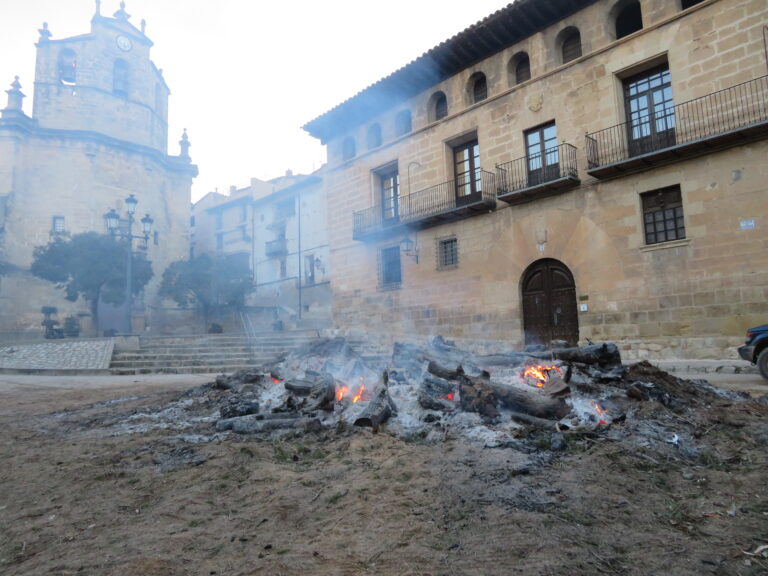
- Nit De Foc (Sant Joan): On the night of 23 June, the beginning of summer is marked with bonfires, fireworks, street parties and the traditional Correfoc (devil dances).
- Other Festivals: These include Sant Antoni (January), Carnival (March), Holy Week and the Festival of the Hermitage of Maristel·la (last Sunday in August).

Gastronomy and the Saturday Ritual
The rhythm of the week culminates on Saturday mornings with the Weekly Market on the Passeig del Rei. This ritual is not just shopping, but a social event that combines a café, market and shop. The local community supports local trade and agricultural products, with stalls selling local cheese and meat, a wide selection of fruit and vegetables, olives, nuts and plants. The ritual often concludes at the restaurant Es Brollador or with a coffee at Es Passeig.
Notable shops include the traditional bakeries Ca Sa Camena and Ca’n Oliveret (the latter famous for its bread, ensaimadas and meringues). Also worth visiting are S’Arbocar, a health food and quality oil shop with a blacksmith’s lathe as a counter, and Artimanya7, an upholstery workshop that also offers gifts and household items.

The gastronomic offering is top-notch, attracting customers from all over the island:
- Mesón La Villa: Since 1985, it has been the local mecca, famous for its wood-fired roasts (asados) of suckling pig and lamb cooked in the style of Castile and León.
- Restaurant Quay (at Loftotel Canet): Fabulous for families, with a covered terrace and garden, it is known for its use of fresh, organic ingredients, offering options for vegans and vegetarians (something unusual outside Palma). Children can also enjoy its water park.
- Can Toni (Port des Canonge): The restaurant recommended by Esporles residents for fresh seafood, such as sea bass and grilled squid, accompanied by Malvasía de Banyalbufar wine.
- Bodega Es Verger: A must-visit for those interested in organic wine and local agricultural products.

Although Esporles does not boast a vibrant nightlife, it does offer places for a relaxed drink, such as Es Brollador (with live music on Saturdays) or the Quay restaurant to enjoy the fresh air. Those looking for a more intense scene can make the short trip to Santa Catalina in Palma.
Local life and international community
Although small, Esporles has around 5,000 inhabitants and a very active local life. Its proximity to Palma and Parc Bit, the technology park where companies such as Microsoft have a presence, has attracted professionals from different countries who are looking for a balance between work and quality of life.

Among the new residents, families from Germany, Sweden, the Netherlands and France predominate, attracted by the tranquillity and beauty of the surroundings. Despite its growing internationalisation, the village retains its local essence and integration into the community is easy for those who are interested in learning the language and participating in everyday life.

Mallorquin, a dialect of Catalan, is co-official alongside Spanish, and although some shops do not speak English, the hospitality of the esporlerins makes it easy to get along. Agriculture remains one of the economic pillars of the municipality: olives, oil, wine and citrus fruits are among its local products.
Getting there and getting around
Esporles is well connected to Palma by road: the journey by car takes about 20 minutes, while the airport is about 25 minutes away. The TIB bus number 200 connects the village with the capital and the neighbouring municipalities of Banyalbufar and Estellencs.
Parking is not usually a problem, as there are free spaces on the street and several public car parks without blue zones.
What to see in Mallorca
During your visit to the island, here are a number of places that we have included on our map in case you want to add them to your itinerary:
-Paradise beaches and coves
- Cala Mesquida: a beach experience in a still wild setting, far from the hustle and bustle of more urbanised areas.
- Cala Romántica: this is a hidden cove with pine-covered cliffs and crystal-clear blue waters that invite you to lose yourself.
- Cala Blava: a peaceful, family-friendly atmosphere makes this the perfect retreat for those seeking to escape the island’s more crowded beaches.
- Portal Vells: coastal area with crystal clear waters, three picturesque coves and a historic cave.
- Camp de Mar: chosen by travellers seeking dream beaches, quality cuisine and peaceful surroundings.
-Charming Places
- Cala Figuera: charming fishing port, known for its natural beauty and peaceful atmosphere.
- Sa Pobla: a place with cultural heritage and a unique natural environment such as the Parc Natural de s’Albufera.
- S’Illot: a place that combines a unique archaeological past, quiet beaches and a relaxed atmosphere.
- Porto Petro: surrounded by crystal-clear coves and framed by the Mondragó Natural Park.
- Santa Margarita: a town that retains its authentic spirit, largely untouched by mass tourism.
- Estellencs: an idyllic coastal village nestled in Mallorca’s Sierra de Tramuntana mountains.
- Santa María del Camí: A village that combines history, wine-making tradition, craftsmanship and local atmosphere.
-Tourist Attractions
- Artà: here you will find a complete destination, ancient history, charming cobbled streets, unspoilt natural landscapes, wild coves and a unique cultural heritage.
- Sant Elm: once a humble fishing port, it has been transformed over the years into a peaceful tourist destination.
- Sa Ponsa: a cosmopolitan and vibrant place, full of hotels, restaurants, yacht clubs and golf courses.
- Can Picafort: one of the island’s major tourist resorts, just a few decades ago it was a humble fishing village.
- Magaluf: Mallorca’s premier resort, with turquoise waters and fine sandy beaches, modern facilities, shows, theme parks and nightlife.
- Llucmajor: the perfect balance between history, nature, and quality of life, making it an ideal place to visit or live.

A haven of authenticity in Mallorca
Esporles represents another side of Mallorca: that of tranquillity, rural life and contact with nature. Here, sunrises between mountains and the sound of rushing water replace the hustle and bustle of tourist areas. It is a place to live slowly, to walk, breathe fresh air and enjoy a glass of local wine as the sun sets behind the peaks of the Tramuntana mountains.

Those who come to Esporles discover that its beauty lies not only in its landscapes, but also in the harmony between history, tradition and contemporary life. That is why, year after year, this small stone village remains one of Mallorca’s best-kept secrets.
Photo Credits
Below are the photo credits in order of appearance. Royalty-free photos will not be listed below:
- Cover Image: Rosa-Maria Rinkl, CC BY-SA 4.0, via Wikimedia Commons
- Andreu Morell Pol, CC BY-SA 4.0, via Wikimedia Commons
- Joan Gené, CC BY-SA 4.0, via Wikimedia Commons
- Malopez 21, CC BY-SA 4.0, via Wikimedia Commons
- Malopez 21, CC BY-SA 4.0, via Wikimedia Commons
- Rosa-Maria Rinkl, CC BY-SA 4.0, via Wikimedia Commons
- Malopez 21, CC BY-SA 4.0, via Wikimedia Commons
- Malopez 21, CC BY-SA 4.0, via Wikimedia Commons
- Rosa-Maria Rinkl, CC BY-SA 4.0, via Wikimedia Commons
- Malopez 21, CC BY-SA 4.0, via Wikimedia Commons
- Malopez 21, CC BY-SA 4.0, via Wikimedia Commons
- Philipcolev, CC BY-SA 3.0 ES, via Wikimedia Commons
- Rafael Ortega Díaz, CC BY-SA 4.0, via Wikimedia Commons
- Philipcolev, CC BY-SA 3.0 ES, via Wikimedia Commons
- Vicenç Salvador Torres Guerola, CC BY-SA 4.0, via Wikimedia Commons
- Esporleri, CC BY-SA 4.0, via Wikimedia Commons
- Rosa-Maria Rinkl, CC BY-SA 4.0, via Wikimedia Commons


.jpg)

.jpg)
.jpg)

