Santa María del Camí, Mallorca: wine, history and local life between the plains and the Tramuntana mountains
In the heart of Mallorca, where vineyards merge with the horizon of the Sierra de Tramuntana mountains, lies Santa María del Camí, a charming municipality that preserves the island’s most authentic soul. Known simply as Santa María, this village combines history, wine-making tradition, craftsmanship and a local atmosphere that has managed to adapt to modern times without losing its rural essence.

Santa María del Camí is part of the Es Raiguer region, a fertile strip of land that connects the mountains with the plains and has been, since ancient times, a land of passage, work and life. This municipality acts as a majestic geographical threshold, connecting the imposing Serra de Tramuntana —a World Heritage Site— with the vast and fertile plains of the Pla de Mallorca. Just 20 minutes from Palma, this destination offers a perfect balance between the leisurely pace of the Mallorcan countryside and proximity to the capital.

Echoes of the Past: A Stop on the Road of Millennia
The name Santa María del Camí, which in Catalan means ‘Saint Mary of the Way,’ is a direct testimony to its undeniable historical importance. Long before the reconquest, during the Saracen occupation, the town was known as ‘Mauia,’ which aptly translates as ‘stop on the way.’ This designation is no coincidence; the area has been a hub of communication and rest since ancient times. The Romans already used it on their route to the north, and its roots go back to the pre-Talayotic era, between 3000 and 1400 BC.

The Silent Remains
The land of Santa María jealously guards the secrets of its first settlers. Although some have been lost, such as the remains of the Basilica of Cas Frares and its early Christian mosaic of Adam and Eve — destroyed after its discovery in 1833 — other remains allow us to reconstruct its timeline. Es Claper des Doblers, a talayot in a state of deterioration, and Sa Cova des Moro, a burial cave dating from 1700-1600 BC where copper daggers and pottery were found, are tangible evidence of a millennial occupation.

These archaeological sites, together with the tombs of Sa Tanca des Cabàs Vell, anchor the municipality in a historical depth that few places on the island can match, infusing the atmosphere with a sense of permanence and unbreakable tradition.
The Intoxicating Identity: Capital of Mallorcan Wine
If there is one element that defines the landscape, economy and festive spirit of Santa María, it is wine. The municipality lies at the heart of the Binissalem wine region, a recognised Designation of Origin, and its vineyards stretch across the fertile plains surrounding the town centre. This tradition is not a recent fad; wine production dates back centuries, with a particular boom in the 18th century, when Santa María became popular even as an exporter of brandy.

Signature Wineries and Wine Experiences
The extensive estates and vineyards, often adorned with almond trees that offer a spectacle of white blossoms in January and February, are the backdrop to some of Mallorca’s most prestigious wineries. This is not just a place of production; it is a destination for quality wine tourism, with wineries opening their doors for guided tours, tastings and sensory experiences that celebrate the island’s native grapes.
- Macià Batle: Perhaps the most renowned winery, celebrated for its quality and for being the most awarded in Mallorca. Its traditional vines, which enjoy around 300 days of sunshine a year, are reflected in the complexity and flavour of its wines. Every year, the winery hosts high-profile events, such as the performance of the Balearic Islands Symphony Orchestra, a must-see event on the cultural calendar.
- Celler Jaume de Puntiró: A gem with roots dating back to the 17th century, specialising in high-quality organic wine. Its commitment to traditional methods, from cultivation to ageing, results in a product with an unrivalled flavour.
- Ramanyà: Beyond its excellent wine, this winery offers a journey through time with its impressive ethnographic collection of over 3,000 pieces illustrating Mallorca’s millennial wine-making history and traditional tools.

Festa del Vi Novell: The Ritual of Young Wine
The culmination of this wine culture is celebrated at the end of November with the Festa del Vi Novell (Young Wine Festival). The village is decked out for the occasion, with pine branches hanging from the doorways of houses and wineries, a festive announcement of the arrival of the new wine. The event is a delicious combination of wine tastings and local tapas, tangible proof that in Santa María, gastronomy and wine are two sides of the same cultural coin.

The Artisan Heartbeat: From ‘Tela de Llengües’ to the Sunday Market
Santa María del Camí stands out as a hub for artisans and a refuge for artists and potters, a legacy of its past as a producer of textiles and leather goods. This heritage is most evident in its most iconic and distinctive artisan product: tela de llengües (roba de llengües or “tongue cloth”).
Tèxtils Bujosa: The Art of Ikat
The company Bujosa Textil is one of only three workshops left in Mallorca dedicated to the design and artisanal manufacture of these vibrant fabrics. Woven using the ancient technique known as ikat, where the threads are dyed before being woven to create their characteristic ‘tongue’ design, these fabrics are much more than a souvenir.

They are a fundamental element in Mallorcan décor, used in curtains, upholstery and decorative items in homes and hospitality establishments throughout the island. Visiting the Bujosa workshop allows collectors and curious visitors to witness this meticulous manufacturing process up close and purchase unique pieces.

The Sunday Market: The Vibrant Heart of the Village
If you want to feel the authentic social and commercial pulse of Santa María, you must visit its Sunday market. This event, which temporarily breaks the tranquillity of the village and fills it with life and colour, is one of the most traditional and popular in Mallorca, mainly concentrated in the large Plaça Nova.

More than just a place to shop, it is a social experience. Locals arrive early to beat the crowds and hunt for bargains. The range of goods on offer is vast, organised into sections ranging from:
- Fresh and organic produce: Seasonal fruit and vegetables, with a prominent and highly valued section of organic products.
- Crafts and textiles: A perfect opportunity to purchase pieces of llengües fabric, individual ceramics by local artists and other unique items.
- Gourmet products: Specialised stalls, such as La Manchega, offer a premium selection of high-quality cheeses and cured meats.
- Rural life: Surprisingly, the market also includes stalls selling plants and even poultry and live animals, a reminder of the municipality’s deep rural roots.

Strolling among the stalls with a coca mallorquina (Mallorcan flatbread) or some bunyols de vent (fried potato fritters with honey) in hand, before sitting down at one of the nearby terraces to enjoy the bustling atmosphere with a coffee, is the essential Sunday ritual in Santa María.
A special section of the market is dedicated to organic products from the island, with fruit and vegetables grown without pesticides. And for those looking for antiques or curiosities, there is also a second-hand area where there are always surprises to be found.

A Stroll through the Historic Centre: Baroque and Renaissance
Despite being a dynamic commercial centre, Santa María retains a fascinating historical architecture that invites a leisurely stroll, especially on weekdays, when it regains its usual tranquillity.
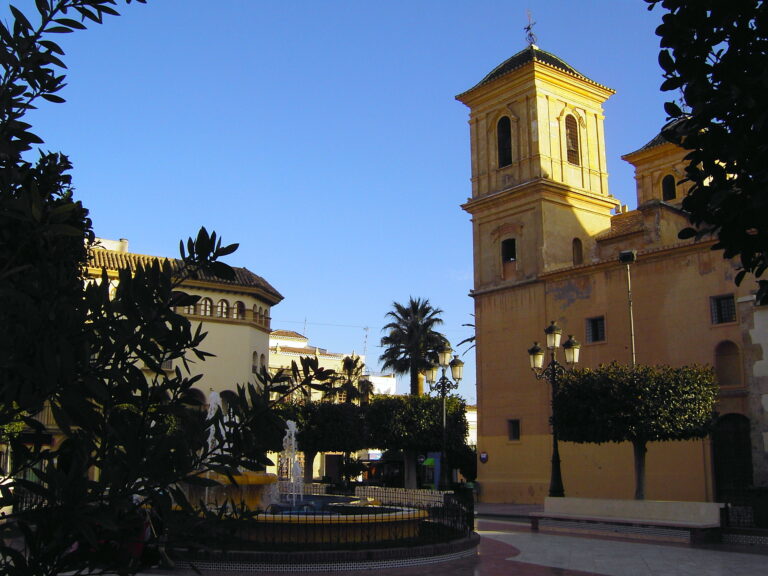
The most visible element of the town’s skyline is the church bell tower, visible from a distance and decorated with striking blue tiles. In the heart of the town centre are several key buildings:
- The Parish Church: An imposing 17th-century building in a clear Mallorcan Baroque style. Its construction took 60 years, and its bell tower is a visual landmark.

- Convent of the Minims: Founded in 1682, it is a true haven of peace. Its cloister is considered one of the most beautiful on the island, an ideal place for reflection and enjoyment of the present moment, with its romantic interior courtyard. The complex also houses a museum on the early history and traditional costumes of Mallorca.

- Casa de la Vila (Town Hall): Dating from the 15th century with a Renaissance-style façade. This building, which in the past served as an old prison, houses pieces of great value, such as a mill for making almond milk and an altarpiece by Joan Massana.
- Plaça dels Hostals: This is the most modern and commercial area, the daily meeting point for residents and visitors, full of shops, bars and restaurants along the old road from Palma to Inca.

In addition, the old possessions (large rural estates) such as Son Torrella (with its Son Pou chasm) and Son Seguí (with its stately building and small chapel), declared historical monuments, bear witness to the opulence and agricultural tradition of the area over the centuries.

Nature and hiking: the Vall de Coanegra
Santa María del Camí enjoys a privileged location: it lies at the foot of the Serra de Tramuntana, declared a World Heritage Site by UNESCO, and at the same time forms part of the central Mallorcan plain.

Its location makes it an exceptional destination for nature lovers and active sports enthusiasts. The plain is dominated by fields of almond trees, carob trees and vineyards, offering gentle, fragrant routes for cycling and walking. However, its proximity to the Tramuntana opens up a range of much more challenging possibilities.
The Coanegra Valley and Salt de Freu
The Coanegra Valley, with its stream, pine and holm oak forests, is one of the most beautiful and accessible places. For hikers and cyclists, the trail between Santa María del Camí and Orient through the valley is a route that reveals some of the island’s most magical natural beauty.

Tip from The Kompasse: For a walk that reveals some of the most magical natural beauty of the islands, take the path between Santa María del Camí and Orient through the Coanegra Valley. Discover the impressive caves and waterfalls, and even catch a glimpse of some of the most impressive private properties on the island. The Son Pou – Coanegra route is particularly spectacular, offering views of caves and, in winter, the imposing “Salt de Freu” (waterfall).

During spring, the sound of the water and the greenery of the forest create an almost magical atmosphere. It is a perfect plan for those looking to combine exercise with nature, and often ends with a visit to a winery or lunch in the village.
The topography of Santa María has it all, from a leisurely pace on flat terrain to climbs up the mountainside to enjoy enviable panoramic views of the Serra de Tramuntana.

Local cuisine: between tradition and innovation
Santa María’s gastronomic scene is surprisingly varied and sophisticated for a village of its size, concentrated mainly along the main street, near Plaza Hostals and the surrounding squares. The predominant cuisines are Mallorcan, Mediterranean and Italian, often presented in a rustic and welcoming style. However, there are some real culinary gems that attract a more international crowd.

Hidden Gems and Sophistication
- Cabra Blanca: Despite being tucked away, this elegant German-run restaurant, recognisable by the white goat statue on its rooftop, has quickly become a local favourite. It offers a tempting menu of fresh Mediterranean flavours in an elegant yet homely atmosphere.
- Restaurant 19 (Livingdreams): Located within the extensive garden and conceptual space of the Livingdreams shop, this hidden gem exudes sophistication. It offers an innovative menu with hints of Asian flavours in a truly tranquil and secluded setting, making it the ideal choice for a more elegant evening.
- Moli des Torrent: Located in a restored old mill, it is popular for its traditional cuisine with refined touches. Its gardens and picturesque terrace make it an idyllic place to relax.
- Celler Sa Sini: A restaurant offering traditional Mallorcan dishes and pizzas, but famous for its impressive display of homemade cakes and sweets, making it a must-visit for cyclists and those with a sweet tooth.
- Ca’n Cannoli: Located in a large 17th-century house, its backyard is a cosy oasis with a casual and relaxed atmosphere, where Italian and Mallorcan flavours come together.

Tip from The Kompasse: If you are looking for a more elegant and contemporary setting to impress your companions, look no further than Restaurant 19. You will be surprised to find such a place in this picturesque town, unexpectedly located inside the Livingdreams furniture shop.
Nightlife and local atmosphere
Although not a party capital, Santa María offers surprisingly good options for those who appreciate music and a good atmosphere.
- Factoria de So, located in the industrial estate, is a cultural space with a rehearsal room, outdoor stage and a social venue that hosts live music and events throughout the year, attracting residents from the Es Raiguer area.
- Closer to the centre, Cas Music offers a more intimate setting with jam sessions, DJs and live music.
- For a quiet and sophisticated drink, Restaurant 19 extends its charm into the after-dinner hours, offering delicious cocktails and local wines in its secluded garden.
Festivals and traditions
The spirit of Santa María is celebrated throughout the year with a series of festivals that honour its traditions:
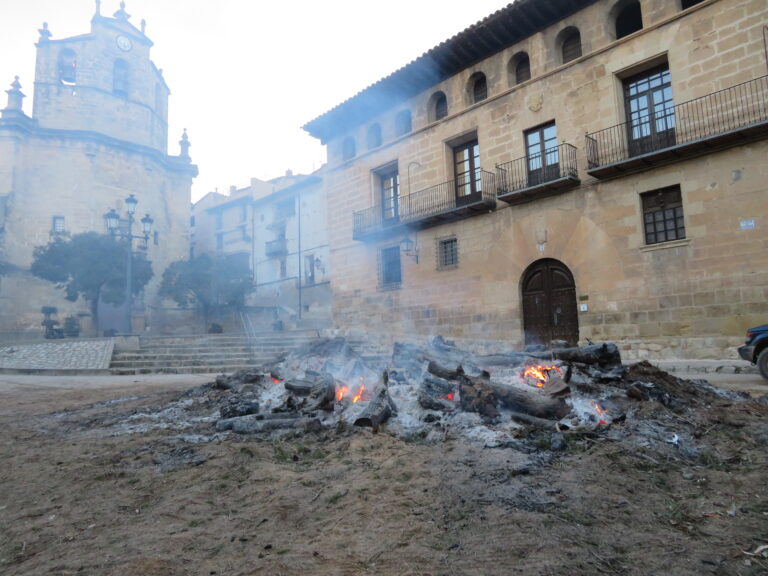
- Sant Antoni (17 January): A festival celebrated throughout Mallorca with correfocs (fire races), demons and bonfires. The village gathers to enjoy a Mallorcan pork barbecue and sample the traditional spinach pie.
- Sa Fira (Last Sunday in April): The great Santa María Fair, with multiple activities ranging from art exhibitions and concerts to the traditional Mobylettes show. It is a platform for showcasing local crafts, products and wines, including cooking demonstrations and tastings.
- Santa Margarita (20th July): Celebrations in honour of the patron saint, marked by the raising of the crimson flag and the ringing of bells. It includes the annual Folklore Games between groups from the village and culminates with a dinner and dancing in the street.
- Festa del Vi Novell (November): Already mentioned, but crucial, this young wine festival is one of the most important in the Binissalem wine region.

Activities and lifestyle
With an official population of around 6,500, Santa María del Camí has been discovered by many as the ideal place to settle. It offers everything you need for day-to-day life, from supermarkets and bakeries to opticians and services, in a small-town setting, but with unbeatable connectivity.

Proximity to Palma is facilitated by an easy and efficient train service that takes only 15 minutes to reach the Intermodal Station, with trains every 20 minutes. Access to Palma (25 minutes), the airport (20 minutes) and Son Espases Hospital (15 minutes) is quick, making the amenities of the capital immediately accessible.

This combination of rural authenticity and urban connectivity has driven demand for property. Townhouses and flats in the centre of the village are as popular as large fincas and properties on the outskirts, attracting a diverse mix of well-established Mallorcan families, young families and international residents, particularly Germans and English, who are looking for a piece of the real Mallorca.

In recent years, the village has attracted international residents, especially Germans and British, who have integrated seamlessly into local life. Catalan and Spanish are heard here as much as English or German, reflecting a cosmopolitan but cohesive community.
In addition, the municipality caters to this growing international population with educational institutions such as the Escuela Montessori de Mallorca, which follows the English national curriculum, and the nearby The Academy International School.
High-level golf
The natural environment of Santa María is ideal for cycling and hiking, but there is also room for other sports. For golf enthusiasts, the proximity to renowned courses adds another attraction to the area:
Golf de Puntiró: Known for its combination of a very modern clubhouse with beautiful old trees, it is a medium-difficulty course with numerous sand bunkers.
Golf Son Gual: Considered one of the best in Mallorca, its difficulty lies in its small lakes and mountainous areas, maintaining strict etiquette and tradition.

Nearby excursions
From Santa María, there are many possibilities for excursions. In just ten minutes you can visit Binissalem, the wine-producing heart of Mallorca; Bunyola, at the foot of the Tramuntana mountains, where olive oil and Palo herbal liqueur are produced; or Marratxí, home to the Mallorca Fashion Outlet shopping centre, ideal for discount shopping.
And although Santa María is inland, the beaches of Palma and Playa de El Arenal are only half an hour away by car, perfect for combining days in the countryside with days at the beach.
What to see in Mallorca
During your visit to the island, here are a number of places that we have included on our map in case you want to add them to your itinerary:
-Paradise beaches and coves
- Cala Mesquida: a beach experience in a still wild setting, far from the hustle and bustle of more urbanised areas.
- Cala Romántica: this is a hidden cove with pine-covered cliffs and crystal-clear blue waters that invite you to lose yourself.
- Cala Blava: a peaceful, family-friendly atmosphere makes this the perfect retreat for those seeking to escape the island’s more crowded beaches.
- Portal Vells: coastal area with crystal clear waters, three picturesque coves and a historic cave.
- Camp de Mar: chosen by travellers seeking dream beaches, quality cuisine and peaceful surroundings.
-Charming Places
- Cala Figuera: charming fishing port, known for its natural beauty and peaceful atmosphere.
- Sa Pobla: a place with cultural heritage and a unique natural environment such as the Parc Natural de s’Albufera.
- S’Illot: a place that combines a unique archaeological past, quiet beaches and a relaxed atmosphere.
- Porto Petro: surrounded by crystal-clear coves and framed by the Mondragó Natural Park.
- Santa Margarita: a town that retains its authentic spirit, largely untouched by mass tourism.
- Estellencs: an idyllic coastal village nestled in Mallorca’s Sierra de Tramuntana mountains.
- Esporles: A village surrounded by holm oak forests, stone houses and paths that wind through the mountains.
-Tourist Attractions
- Artà: here you will find a complete destination, ancient history, charming cobbled streets, unspoilt natural landscapes, wild coves and a unique cultural heritage.
- Sant Elm: once a humble fishing port, it has been transformed over the years into a peaceful tourist destination.
- Sa Ponsa: a cosmopolitan and vibrant place, full of hotels, restaurants, yacht clubs and golf courses.
- Can Picafort: one of the island’s major tourist resorts, just a few decades ago it was a humble fishing village.
- Magaluf: Mallorca’s premier resort, with turquoise waters and fine sandy beaches, modern facilities, shows, theme parks and nightlife.
- Llucmajor: the perfect balance between history, nature, and quality of life, making it an ideal place to visit or live.

A village with soul and balance
Santa María del Camí is, in essence, in Majorca, a meeting point: between the old and the new, between the mountains and the plains, between the local and the international. Its cobbled streets, its lively squares and the aroma of young wine sum up the most authentic Mallorca. Here, every Sunday has the flavour of the market, every November smells of new wine and every walk through the valley reminds you that the heart of the island beats strongly in its inland villages.

Photo Credits
Below are the photo credits in order of appearance. Royalty-free photos will not be listed below:
- Cover Image: Lopezsuarez, CC BY-SA 3.0, via Wikimedia Commons
- Chixoy, CC BY-SA 3.0, via Wikimedia Commons
- Rotget, CC BY-SA 3.0, via Wikimedia Commons
- Rotget, CC BY-SA 3.0, via Wikimedia Commons
- Rotget, CC BY-SA 3.0, via Wikimedia Commons
- click-mallorca.com, CC BY-SA 2.0, via Wikimedia Commons
- CellerMasroig, via cellermasroig.com
- Chixoy, CC BY-SA 4.0, via Wikimedia Commons
- Defisch, CC BY-SA 3.0, via Wikimedia Commons
- Chixoy, CC BY-SA 3.0 ES, via Wikimedia Commons
- Rotget, CC BY-SA 3.0, via Wikimedia Commons
- Rotget, CC BY-SA 3.0, via Wikimedia Commons
- Rotget, CC BY-SA 3.0, via Wikimedia Commons
- Antoni Sureda, CC BY-SA 3.0, via Wikimedia Commons
- © Pascal Dihé / https://www.dihe.eu
- Heuschrecke (Dmitry Tonkonog and Ksenia Fedosova), CC BY-SA 3.0, via Wikimedia Commons
- Rotget, CC BY-SA 4.0, via Wikimedia Commons
- ABC-KNOWLEDGE COMPANY S.L., via abc-mallorca.es
- Rotget, CC BY-SA 3.0, via Wikimedia Commons
- trifolio6, CC BY-SA 3.0, via Wikimedia Commons
- Javier Rodríguez from Palma de Mallorca, España, CC BY-SA 2.0, via Wikimedia Commons


.jpg)