Letur, Albacete: the Andalusian treasure of the Sierra del Segura
Among limestone ravines, fertile valleys and the constant murmur of water, stands one of the most captivating villages in Castilla-La Mancha. Letur, in the Sierra del Segura region, is not just a beautiful corner of southern Albacete: it is a journey back in time, a living testimony to the Andalusian past and a heritage gem where stone, water and history intertwine as if they were one.

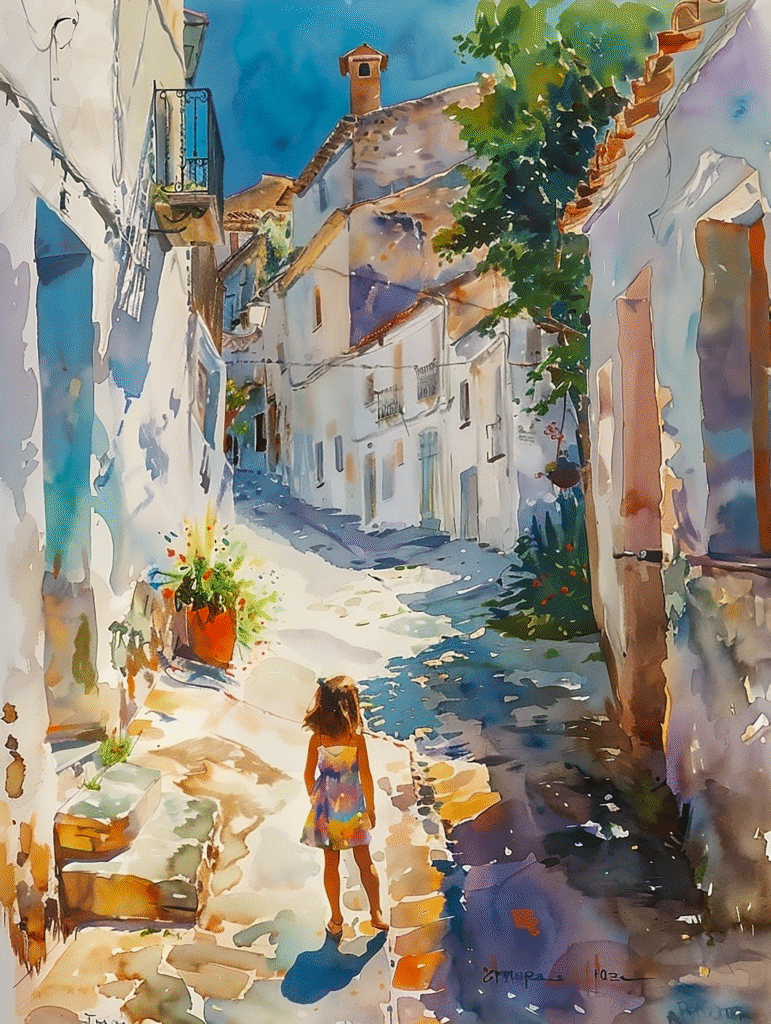
Declared a Historic-Artistic Site in 1983, Letur preserves the best-preserved medieval layout in the entire province. Its cobbled, winding streets, white houses hanging over waterfalls and Mudejar porticos create a setting that seems to have been taken from another century. It is a place to be discovered on foot, guided by the sounds of water, the aromas of the orchards and the serenity that permeates every corner.

A unique enclave between water and stone
Letur is located in a privileged setting, at an altitude of over 700 metres, perched on a hill overlooking the valleys of southern Albacete. Its strategic location explains why it has been inhabited since ancient times: the territory preserves examples of Levantine rock art —declared a World Heritage Site— and remains of Iberian settlements in places such as La Muela, El Macalón and Los Castillicos.

However, the soul of the town was forged during the Andalusian period, when its urban structure adopted the characteristic Islamic layout of narrow streets, slopes, walkways and small interior courtyards. The irrigation systems and ponds that still accompany the sound of water throughout the historic centre also date back to this period.

From the La Molatica viewpoint, one of the most famous natural balconies in the region, you can see this unique geography perfectly: Letur seems to be suspended over a huge living waterfall that grows millimetre by millimetre thanks to the limestone deposits in the water. This tuff formation, unique in Castilla-La Mancha, shapes the spectacular hanging houses of the old town, supported by fossilised rock and petrified moss. This geological formation, still active, supports the houses that boldly overlook the ravine, defying gravity.

The abundance of water is, therefore, the common thread running through the history of Letur. Described in Philip II’s Topographical Relations as a ‘cool and delightful village, cheerful and with plenty of water and freshness’, its water ecosystem not only facilitates life, but defines it, creating a paradise for nature lovers and rural tourism. This environment, which saw the passage of Iberians, Romans, Arabs and Christians, has been irrefutably shaped by the culture that best understood the strategic and productive value of water.

The Andalusian Labyrinth: The Historic-Artistic Site
The heart of Letur, its old town, is an invaluable treasure of Andalusian architecture in Castilla-La Mancha. The excellent preservation of its medieval layout of Muslim origin earned it the declaration of Historic-Artistic Site in 1983, a recognition that underlines the purity of its heritage.

Walking through Letur is to surrender to a labyrinth of winding, narrow and devilishly charming streets. The urban design is not capricious; it responds to the Arab tradition, with its adarves (dead-end alleys) and steep cuestas (slopes) that swirl around the square, the highest part and, in its day, the seat of military power. This layout, of great defensive value, was adopted and inhabited by Christian repopulators after the Reconquista, but the Muslim essence remained unchanged.

Arches, Porticos and Rammed Earth Architecture
A stroll through Letur is a constant search for its emblematic arches and porticos. These architectural elements are the most visible manifestation of the Islamic past and communal life. The architecture is predominantly rammed earth, a technique based on earth, water, lime, together with stone, wood and cane, which creates large white walls, sparse in decoration but robust and adapted to the climate.

- Calle Albayacín: This street is considered the best example of Islamic architecture. It is a dead-end alley with an irregular layout and is home to the famous five porticos or neighbourhood gateways. These gateways, formed by a semicircular arch or stone lintel, served as semi-interior hallways or distributors, connecting several dwellings that shared the space. They represent a typically Moorish model of sociability and spatial utilisation.
- Arco de Las Moreras: This is one of the most significant landmarks, a hybrid between a natural monument and a fortification, as it is a rock arch that supported the old wall, giving access to the walled enclosure. Its location is strategic, right next to the Charco de Los Canales.
- Puerta del Sol: Former entrance to the walled enclosure, facing south. This vaulted passageway, with its two arches, symbolises the history of local resistance, having witnessed the passage of French soldiers during the War of Independence, whom the people of Letura heroically stood up to.
- Arco de San Antonio: Located on Calle de las Ánimas, at the rear of the church, it is a buttress that transforms into an arch as it rests on solid rock, creating one of the most charming and photogenic images of the village.
- The Mudejar Arch on Calle Portalicos: A semicircular arch made of fired clay bricks, possibly predating the church itself (before the 16th century), discovered in the 1980s and suggesting the existence of many more to be revealed.

The layout is further embellished by the characteristic ironwork of local blacksmiths and the distinctive wooden doors, indicative of important local craftsmanship. This complex, which is completely pedestrianised in its old town, needs to be explored ‘leisurely and enjoyed’, as the guides suggest, in order to unravel its labyrinth.

Monuments: Late Gothic, Plateresque and the Absence of the Castle
Despite its deep Andalusian heritage, the centre of Letur is dominated by a series of monuments from the Christian era, many of them of Renaissance or late Gothic origin, which bear witness to the growth and prosperity of the town after the Reconquista, particularly in the 16th century.
Church of Santa María de la Asunción
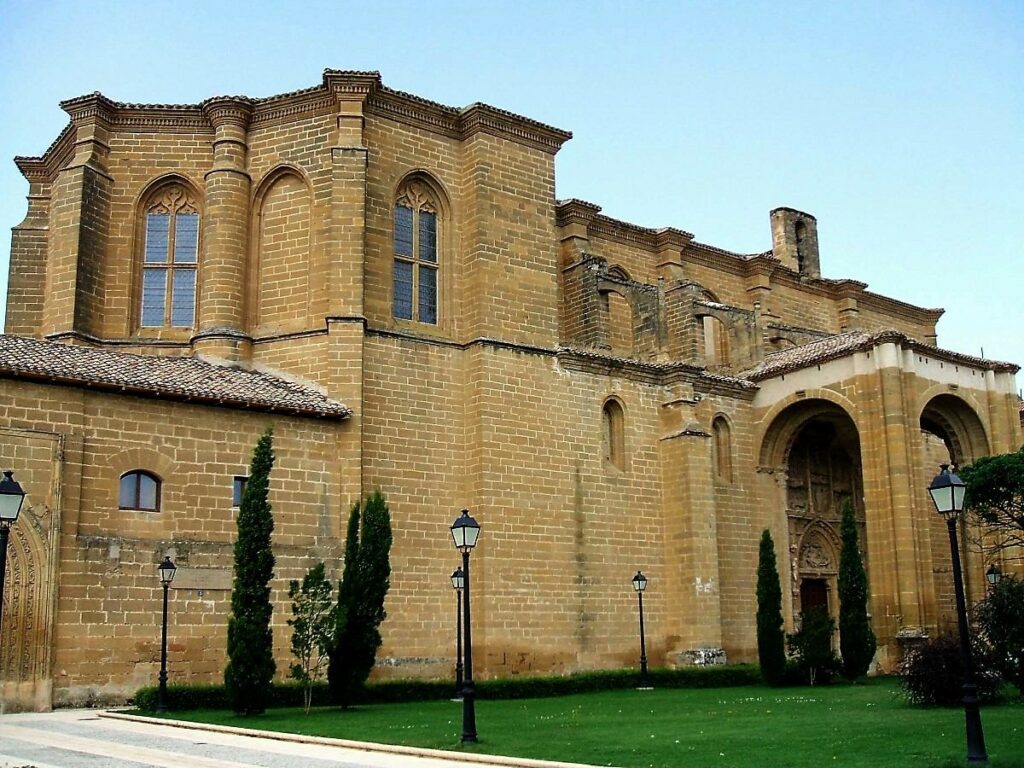
The most emblematic monument in the municipality. Built between the end of the 15th century and the beginning of the 16th century, it combines late Gothic with a Plateresque façade of great elegance. It was declared a Site of Cultural Interest in 1982 and presides over the Plaza Mayor, the heart of the town. From the rear, on Calle de las Ánimas, you can see how the church sits on the living rock, creating one of the most photographed images of Letur.


Town Hall
Directly opposite the church is the Town Hall, a 16th-century Renaissance gem. Its large stone balcony and a curious inscription engraved on its façade stand out: ‘Long live King Amadeo I and the Constitution’, in reference to the short-lived monarch Amadeo of Savoy, one of the few tributes of its kind preserved in Spain.

Hermitages and churches
The monumental complex is complemented by several chapels that show the survival of styles and traditions:
- Chapel of San Bartolomé: A popular 17th-century building located in the hamlet of La Abejuela.
- Chapel of San Sebastián: Only its 16th-century Renaissance façade remains, located on the street of the same name, just before descending to the old town.
- Chapel of El Alto (or La Concepción): Located in the lower part of the town, it has a Renaissance façade similar to that of the church, framed by a recently discovered steep staircase with the inscription ‘Year 1625’. Its tradition is often linked to the Mudejar style, as is the façade of San Sebastián.

La Molatica Viewpoint
A must-see. From this point, you can see the entire orchard and the stream, which winds its way through the vegetation before disappearing into the Segura canyon. At sunset, the lights of the village are reflected on the waterfalls, creating an unforgettable scene.

The Tragic Loss of Letur Castle
The history of the fortifications of Letur is marked by absence. Letur Castle, built in the 12th century during Arab rule, was located in what is now the main square. It was a point of great strategic importance in this border area between the Christian and Muslim kingdoms, coming under the control of the Order of Santiago in 1242, which was responsible for the Christian repopulation in 1454. The fortress, which had four towers, battlements and a continuous balcony, was enclosed by a walled enclosure, which was accessed via a ramp. Inside, a water tank collected water from the Arco de las Moreras stream to distribute it to the population.

Sadly, despite being under legal protection (Decree of 1949 and Law 16/1985 on Spanish Historical Heritage), most of the remains of the castle were demolished in the mid-20th century to make way for residential buildings. Today, only a few remains and the memory of its existence remain. The site occupied by the fortress now houses an old theatre-cinema, which has been converted into the Ethnological Museum.
Water, the protagonist of the landscape
Letur’s title as ‘the village of water’ in the Sierra del Segura is more than just a tourist slogan; it is a vital reality that is evident in every corner, where the murmur of fountains and irrigation channels is a constant.
Irrigation channels, hormas and viewpoints
The Muslim legacy extends beyond the urban layout; it is integrated into the irrigation system and the layout of the agricultural landscape. The municipal area is dotted with irrigation channels, irrigation ponds and hormas (stone walls for agricultural terraces) that demonstrate an ancestral sophistication in water resource management. The Letur stream, which runs through the orchards, collects almost all the water that originates in the municipality.

From the Mirador de La Molatica (and also the Mirador de la Artezuela), you can see the whole orchard, a landscape where the urban layout and the orchards with their hormas merge, constituting a landscape jewel of incalculable historical value.

Natural pools and waterfalls
The Letur stream, a tributary of the Segura river, provides the town with a series of natural sites of immense beauty, ideal for hiking and swimming:
- Letur (or Pradillos) waterfall: A famous waterfall, surprising for its origin. Although it appears natural, it is an artificial tufa formation, created by the waterfall from an old dam for the Los Pradillos power station. The route to this waterfall, about four kilometres from the old town, offers exceptional views and cool caves.

- Charco de Las Canales: Considered the most famous natural pool in the Sierra del Segura and, for many, the most essential place to visit. Its location, within the historic centre, was a luxury before the DANA flood temporarily closed it.

- Charco Pataco: A true oasis of vegetation, it is a water source in the Los Cantalares area that forms another natural pool perfect for cooling off.


Natural heritage and hiking
Letur is not only architectural heritage; it is also a natural paradise for lovers of hiking and rural tourism. Several marked trails depart from the village, allowing you to venture into the heart of the Sierra del Segura.

The Camino del Regalí leads to the impressive Cañón del Segura, a short but spectacular route that runs through pine forests, orchards and abandoned farmhouses. Other trails connect with the districts of La Abejuela, Fuente de Sabina and La Dehesa de Iznar, small villages surrounded by mountains and farmland.
The landscape combines Aleppo pine forests, olive groves and almond crops with abundant wildlife. It is not uncommon to see wild boars, foxes or eagles flying over the cliffs of the valley.

Letur Vivo: Resilience, Culture and the LeturAlma Festival
Letur does not live solely in the past. In recent years, it has consolidated its tourist vocation, offering a wide range of hospitality services which, in busy periods, revive the pulse of the village.
Rock Art and Ancient Memory
Before the modern era, the town was already a cultural epicentre. The aforementioned Levantine Rock Art that adorns the shelters of its municipal area, with examples ranging from figurative to schematic Neolithic art, is an anthropological treasure that connects Letur with the dawn of human civilisation. This art, together with the Iberian archaeological sites of Macalón and La Muela, highlights the continuity of human settlement in this strategic enclave.

LeturAlma: Music and Commitment
The village has gained national notoriety thanks to the LeturAlma festival. Promoted by singer-songwriter Rozalén, a native of the village, this annual event goes beyond musical performances to include exhibitions, workshops and markets. It has become a provincial benchmark in cultural and festive events, attracting a flow of visitors that energises local life.

Resilience in the Face of the DANA
Letur’s recent history includes a chapter of tenacious resistance. The flooding caused by the DANA (Isolated Depression at High Levels) wreaked havoc, affecting the area around the historic centre and, notably, its famous collection of pools, such as the Charco de Las Canales, which had to be temporarily fenced off.

However, this calamity has revealed the resilience of the people of Letur. Despite the breaches and repair work, most of the old town—its arches, porticoes, and intricate framework—remained intact. The response of the community and the tourism sector, with businesses such as the restaurant “El Castillo de Letur” opening even in times of difficulty, has been a symbol that the town is not giving up. The effort to restore paths, such as the one to the Letur Waterfall, and the reopening of establishments such as “Aloha” at the Molatica viewpoint, send a clear message: Letur remains on a war footing and does not want to be forgotten.

Tips for visiting Letur
- Letur is a completely pedestrianised village in its old quarter, so it is recommended to park on Avenida de la Guardia Civil, in Plaza de las Moreras or in the area of the La Molatica viewpoint, always respecting the signs.
- The ideal route starts at the Arco de las Moreras, continues along Calle Albayacín, Cuesta de los Molinos and Puerta del Sol, and then reaches the Plaza Mayor and the Iglesia de la Asunción. From there, it is best to lose yourself in the narrow streets until you reach the La Molatica viewpoint, which offers the best views of the village and its surroundings.
- Any time of year is a good time to visit Letur, although spring is particularly recommended: the gardens and balconies are filled with flowers, the water flows strongly through the irrigation channels and the countryside is at its most beautiful.
- During Holy Week and the Patron Saint’s Festival in August, the village is filled with atmosphere and tradition. In summer, the LeturAlma festival offers a unique experience that combines music, culture and solidarity in an incomparable setting.

Complement your route in Albacete
If you are visiting Albacete, don’t hesitate to lose yourself in other destinations we have on the map:
- Bogarra: A village where you can disconnect, find authenticity, and enjoy natural beauty in its purest form.
- La Gineta: A village with a Gothic church and a tradition of craftsmanship.
- Chinchilla de Montearagón: a town declared a Historic-Artistic Site, which was the capital before Albacete.
- Nerpio: A hidden gem that surprises visitors with its archaeological heritage and natural wealth.
Letur, a treasure to be rediscovered
Letur is much more than just a village in the Sierra del Segura; it is a symphony of stone, lime and water. It is one of the most beautiful villages in Spain because it embodies the rare quality of having preserved, almost intact, the appearance of an Andalusian past that refused to disappear after the Reconquista. It is a historical ensemble where Mudejar architecture blends with Gothic and Christian Renaissance styles, all under the inescapable dominion of the tuff rock on which it is built.

From the silence of Charco Pataco, through the mystery of the porticoes of Calle Albayacín, to the Gothic solemnity of its church and the festive echo of LeturAlma, the town offers a walk that is, at the same time, a lesson in history, geology and culture. The harmonious coexistence of water, nature and the urban layout invites visitors to lose themselves in its pedestrian labyrinth, to discover every arch, slope and rampart, and to enjoy a legacy that has remained alive for millennia.

The town stands, in short, as a testament to the fact that true beauty lies in the perfect fusion between the hand of man and the whims of nature.

Photo Credits
Below are the photo credits in order of appearance. Royalty-free photos will not be listed below:
- Cover Image: Alesper33, CC BY-SA 4.0, via Wikimedia Commons
- Quijotemancha, CC BY-SA 4.0, via Wikimedia Commons
- Mentxuwiki, CC BY-SA 4.0, via Wikimedia Commons
- Kritzolina, CC BY-SA 4.0, via Wikimedia Commons
- Quijotemancha, CC BY-SA 4.0, via Wikimedia Commons
- Castilla-La Mancha, via cultura.castillalamancha.es
- No machine-readable author provided. Lionni assumed (based on copyright claims)., CC BY-SA 3.0, via Wikimedia Commons
- Castilla-La Mancha, via cultura.castillalamancha.es
- Turismo Sierra del Segura, turismosierradelsegura.es
- Castilla-La Mancha, via cultura.castillalamancha.es
- Quijotemancha, CC BY-SA 4.0, via Wikimedia Commons
- Mentxuwiki, CC BY-SA 4.0, via Wikimedia Commons
- Alesper33, CC BY-SA 4.0, via Wikimedia Commons
- No machine-readable author provided. Lionni assumed (based on copyright claims)., CC BY-SA 3.0, via Wikimedia Commons
- Alesper33, CC BY-SA 4.0, via Wikimedia Commons
- Lucas Moreno, via modofestival.es
- Piedad López // JCCM, CC BY-SA 2.0, via Wikimedia Commons
- Castilla-La Mancha, via cultura.castillalamancha.es
- Alesper33, CC BY-SA 4.0, via Wikimedia Commons
- Castilla-La Mancha, via cultura.castillalamancha.es